
Ayurveda, an ancient traditional system of medicine, has described cancer-like syndromes under the headings of Arbuda and Granthi. In this context, Rasayana therapy has been conceptualized as a rejuvenative and immunomodulatory strategy for increasing systemic resilience. Rasayanas have been classically prescribed for their uses in augmenting Ojas, reviving Agni, correcting Dhatu kshaya, and managing the overall physiological imbalance.
The objective of this review is to critically assess the Ayurvedic rationale of Rasayana therapy and explore its potential application as an adjunct therapy in patients undergoing chemotherapy. The classical Ayurvedic concepts were critically assessed in conjunction with the modern preclinical and clinical research data on selected Rasayana drugs and formulations.
There is some experimental and preclinical data to suggest that certain Rasayana drugs such as Ashwagandha (Withania somnifera), Guduchi (Tinospora cordifolia), Amalaki (Emblica officinalis), Shatavari (Asparagus racemosus), and compound preparations like Chyawanprasha may have a role in reducing the toxicities of chemotherapy, modulating the immune system, reducing oxidative stress, and improving the quality of life.
However, the existing data are still inconclusive and varied. Rasayana therapy could provide some supportive benefits as an adjunct to conventional chemotherapy. However, rigorous randomized controlled trials, standardized formulations, and safety profiling are needed before any conclusive clinical recommendations can be made. A combination of traditional Ayurvedic concepts with modern oncological research could help provide a more holistic approach to cancer management.
Keywords: Ayurveda, chemotherapy toxicity, immunomodulation, integrative oncology, quality of life, Rasayana.
INTRODUCTION
Cancer still ranks among the top causes of morbidity and mortality across the world. According to the World Health Organization, cancer was responsible for almost 10 million deaths in 2022. Cancer therefore still poses a significant threat to public health. The recent estimates by the International Agency for Research on Cancer also indicate that the incidence of cancer is increasing and the burden of cancer is expected to rise in the coming decades.
Chemotherapy is still one of the principal systemic therapies for different kinds of cancers. However, chemotherapy has increased the possibilities of survival; yet, its side effects are still possible, which include myelotoxic side effects, mucositis, fatigue, neurotoxicity, organ dysfunction, and quality of life impairment. The side effects of the treatment have already restricted the patient’s loyalty to the treatment regimen and the long-term survival rate. The oncologist of today has become more conscious of the necessity for supportive and complementary approaches to resolve these problems. Integrative oncology attempts to integrate evidence-based complementary therapies and conventional cancer care to achieve symptomatic control, treatment tolerance, and overall well-being improvement. Ayurveda, within this understanding, offers a medical system that is grounded on the notion of restoring balance, improving the immune system, and preserving the vitality of tissues. Rasayana therapy, the branch of Ayurveda dedicated to body rejuvenation, slowing down degeneration, and increasing the natural defence, is a potential source of chemotherapy side effects alleviation by tissue protection, immune response modulation and patient endurance improvement.[1]
Rasayana therapy, the Ayurvedic system of rejuvenation of the body, arresting the process of degeneration, and enhancing the natural defence mechanism, is a promising area for relief in chemotherapy side effects through tissue protection, immune modulation, and patient endurance enhancement. This article explores the scientific and traditional rationale for the use of Ayurvedic Rasayanas as an adjunct in chemotherapy and their role in reinstating the holistic approach to cancer management.[2]
AYURVEDIC PERSPECTIVE OF CANCER AND CHEMOTHERAPY Arbuda and Granthi: Classical concepts
Tumor-like disorders are mentioned in Ayurveda under the titles Arbuda and Granthi. Arbuda is described as being of hard consistency, fixed and immobile, and slowly growing. It can be caused by all three Doshas, with Kapha playing the predominant role. Granthis are those that appear as smaller nodular swellings that have some localized pathology. This pathway has been described in Ayurveda and classic physiology with reference to the ways through Dosha vitiation, Dhatu dushti, Agni dushya, Ama Paka, and Ojas kshaya.[3]
In Ayurveda, cancer is therefore not just a localized overgrowth of tissue but reflects a systemic pathology indicating perturbed internal homeostasis. This proposal is consistent with modern perceptions of cancer as a disorder in immunoregulation, metabolic reprogramming, and systemic inflammation.[4]
Chemotherapy‑induced pathology in Ayurveda
In the view of Ayurveda, chemotherapy may be seen as Visha, and thus, the harmful impact extends to the whole body and not only to the cancer cells. The aggressive treatment, although necessary, disturbs the physiological balance, especially in patients with long-term diseases and weakened tissues. Ayurveda sees these side effects as imbalances of Dosha,Agni, Dhatu, and Ojas, which can explain the symptoms caused by chemotherapy in a logical way.[5]
The major part of the chemotherapeutic agents is accompanied with aggravation of Vata and Pitta Doshas. The vitiation of Vata is a result of tissue catabolism, rapid cellular turnover, and depletion of bodily reserves that cause fatigue, insomnia, neuropathy, pain, tremors, constipation, and weight loss type symptoms. At the same time, an increase in Pitta is also present because of the cytotoxic, inflammatory, and oxidative nature of chemotherapy, causing mucositis, gastritis, nausea, vomiting, stomatitis, alopecia, skin rashes, and hepatotoxicity. Although fully involved in the formation of the tumor initially, Kapha becomes progressively depleted, and thus, its contribution to a loss of strength, immunity, and tissue stability is increased during chemotherapy.[6]
A major factor in the pathological changes caused by chemotherapy is Agni dushti. The chemotherapeutic drugs impair Jatharagni and Dhatvagni as well, causing poor digestion, malabsorption, anorexia, altered taste perception, and metabolic inefficiency. This weakened Agni results in Ama formation, which further blocks Srotas, creates more inflammation, and makes tissue nourishment more difficult. Clinically, this is persistent anorexia, bloating, nausea, and intolerance to food commonly observed in patients undergoing chemotherapy.[7]
Following a prolonged period of Agni impairment, there occurs a gradual Dhatu kshaya, which is considered the main feature of chemotherapy toxicity in Ayurvedic terms. The decrease in Rasa and Rakta Dhatu is associated with dehydration, anemia, immunosuppression, and mucosal fragility. The loss of Mamsa and Meda is accompanied by muscle wasting, weight loss, and cancer-related cachexia. The involvement of Majja Dhatu accounts for neurotoxicity, cognitive impairment, and chemotherapy-induced peripheral neuropathy, whereas the depletion of Shukra Dhatu is responsible for the loss of vitality, reproductive dysfunction, and profound fatigue. The order of the next Jain, et al.: Integrating Rasayana in chemotherapy Ayush Journal of Integrative Oncology | Volume 3 | Issue 1 | January-March 2026 9 Dhatu degeneration closely corresponds with the classical Ayurvedic description of chronic debilitating disorders. On the most profound level, the chemotherapeutic agents may be causing Ojas kshaya, i.e., the loss of the body’s vital essence that is responsible for immunity, resilience, mental stability, and recovery capacity. The clinical signs of Ojas depletion are recurrent infections, delayed healing, extreme fatigue, depression, anxiety, and reduced tolerance to further treatment cycles. Ayurveda considers Ojas kshaya as an essential prognostic factor, and thus, it sensitively indicates the necessity of early supportive intervention.[8]
Hence, Ayurvedic treatment during chemotherapy is not directed at neutralizing the cytotoxic side effects of the therapy but at tissue protection, keeping Agni intact, stopping Dhatu depletion, and reviving Ojas. A lot of emphasis in the treatment is given to Rasayana therapy to strengthen tissues and to make the body immune to the disease, Brimhana methods to energize the Dhatus that have become weak, and Agni deepana and Ama pachana treatments to keep metabolism normal. Such an integrative approach leads to the ability to tolerate the treatment, makes the quality of life better, and recovery becomes easier, which is a way of bringing back equilibrium and strength to patients receiving chemotherapy.[9]
In such a scenario, Ayurveda offers a complex, systemic insight into the pathology caused by chemotherapy, which is in agreement with the reason for the incorporation of Rasayana-based supportive care into the modern integrative oncology systems. Rasayana therapy: Concept and therapeutic scope Rasayana forms one of the eight major branches of Ayurveda and is a holistic therapeutic system by far not only a group of drugs. Rasayana means the refinement of Ojas (essence of all seven dhatus). Rasa being the main nutritious fluid formed after digestion and Ayana meaning path or circulation, therefore it refers to those interventions which enhance the quality, circulation, and transformation of nutrients to nourish all the tissues of the body. The primary aim of Rasayana therapy is to delay the process of aging.[10] Rasayana therapy maintains a person young, active, and delays the process of aging. Rasayana also increases the body’s immunity and satisfies the body in a proper way.[11]
There are many misconceptions about Rasayana therapies, among which the most common one is that it is only meant for old age people. However, this therapy is very effective and helpful in such cases, and therefore, the doctors routinely advise it. Besides this, Rasayana therapy is recommended severely in the treatises for those who are chronic, weaken the body, and consume the tissues. These include disorders characterized by loss of tissues, depletion of Ojas, and immune compromise. Such a conceptual scope makes Rasayana therapy extremely important in cancer diseases, where it is observed that both the disease and its treatment lead to eventual systemic exhaustion.[12]
Classical classification and therapeutic intent
According to Ayurvedic literature, Rasayana is essentially divided into:
- Kutipraveshika Rasayana – a deep rejuvenation of the
body under very strict controlled conditions - Vatatapika Rasayana – typical daily life compatible
practical Rasayana regimens - Kamya Rasayana – promotive Rasayanas used for
strengthening the body and making it more immune to diseases - Naimittika Rasayana disease, specific Rasayanas which
are used as an adjuvant therapy. In the case of cancer, the use of Naimittika and Kamya Rasayana is mainly for helping the body to endure the side effects of chemotherapy and radiotherapy.
Core mechanisms of Rasayana action
Rasayana therapy works through multiple, intricately interconnected mechanisms that are very much in line with current immunonutrition, cytoprotection, and systemic homeostasis concepts.[13]
Enhancement of Agni and nutrient assimilation Agni is the main factor behind the success of Rasayana therapy. The classical Ayurvedic texts very much highlight the fact that Rasayana taken without a functional Agni will not yield any beneficial results. Rasayanas help by stabilizing Jatharagni and Dhatvagni, thus they improve not only digestion and absorption but also intracellular metabolism. In chemotherapy patients, whose condition is often complicated by anorexia, nausea, and malabsorption, along with general metabolic inefficiency, the capacity of the drug to support Agni is of utmost importance. By restoring Agni, the body gets rid of Ama, food and medicines become better tolerated, and tissue nourishment is carried out in the most effective way.[14]
Promotion of Dhatu regeneration and tissue integrity Among the many features of Rasayana therapy, the ability to nourish and regenerate the successive Dhatus is one of the most prominent ones, as nourished Rasa is the best source for the formation of Rakta, Mamsa, Meda, Asthi, Majja, and Shukra.
In cancer patients, the chemotherapy-induced Dhatu kshaya, which can be recognized by the symptoms of anemia, muscle wasting, neuropathy, bone marrow suppression, and reproductive dysfunction, is a major problem. Rasayanas, however, can stop the progression of these disorders and turn the situation around by employing the following means: they elevate the body’s anabolic processes, integrate the cell membranes, and in addition, promote the formation of blood cells and enhance the functions of the nervous and muscular systems.[15]
Augmentation of Ojas and immune competence
Ojas is the essence of all seven Dhatus and is considered the source of immunity, vitality, and psychological stability. Rasayanas are classically referred to as Ojovardhaka, which means that they enhance Ojas directly. In a situation, this is especially a case of relevance in chemotherapy, wherein immune suppression, recurrent infections, delayed healing, and profound fatigue are the most common features. Present-day studies, in fact, support the assertion that most Rasayana drugs have immunomodulatory effects, and thus, they enhance both innate and adaptive immune responses without disturbing immune balance.[16]
Reduction of oxidative stress and inflammation
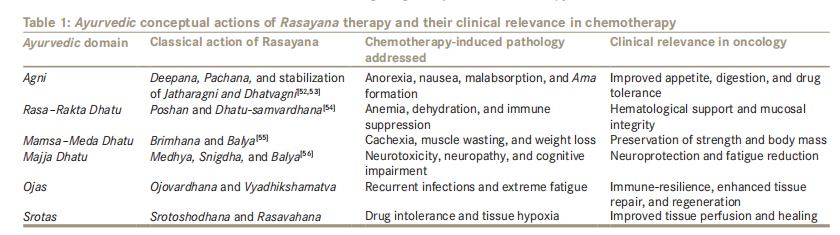
Oxidative stress and inflammation that last for a long time are at the center of chemotherapy-induced toxicity. Rasayanas have been endowed with antioxidant and anti-inflammatory traits in the truest sense of the words, and thus, they can do away with the radicals, protect the cellular membranes, and subside the inflammatory cascades. This, in turn, results in the protection of the organs and the reduction of the mucosal injury. Moreover, the most important thing is that these formulations are cytoprotective rather than cytotoxic, i.e. they save the normal tissues without helping the malignant cells [Table 1].[17]
Rasayana drugs are known for their strong antioxidant and anti-inflammatory properties. They scavenge free radicals and protect cellular membranes, thus regulating the inflammatory process at the tissue level. This protective property maintains organ function, prevents mucosal damage, and helps in overcoming cytotoxic stress. It is pertinent to note that Rasayana drugs are considered cytoprotective agents because they do not promote the growth of malignant cells.[18]
Therapeutic scope of Rasayana in oncology
In integrative oncology, Rasayana therapy should not be considered as a first-line antineoplastic intervention. The main role of Rasayana is to enhance host tolerance to chemotherapy, reduce treatment-related toxicity, preserve immune and metabolic homeostasis, improve quality of life and functional status, and support long-term survivorship.[19-24] Hence, Rasayana becomes a biological buffer, which makes patients capable of enduring aggressive treatments without causing them to experience irreversible systemic depletion.[25]
In integrative oncology, Rasayana therapy is not employed as a direct anticancer therapy. Rather, its application is supportive and noncurative. The main aim of Rasayana therapy is to make the patient more receptive to chemotherapy and to reduce side effects associated with treatments. In addition, it aims to ensure that the patient’s immune and metabolic systems remain stable. Rasayana therapy also plays a role in ensuring the patient experiences a long-lasting recovery during the survivorship stage. This is because, according to Ayurvedic practices, disease can be controlled not only through measures aimed at the pathology but also through the enhancement of the individual’s inherent vitality (Rogi Bala).
Conceptual convergence with modern integrative oncology
The Rasayana model is in line with present-day ideas as those of supportive oncology, immunonutrition, adaptogen therapy, and survivorship care. In fact, by dealing with the internal milieu instead of the tumor only, Rasayana treatment returns a holistic, patient-centered approach that is in harmony with contemporary cancer therapeutics.[26]
PHARMACOLOGICAL AND MOLECULAR BASIS OF RASAYANAS
With the help of experimental pharmacology, molecular biology systems medicine, in-depth research of rasayanas traditional claims has been progressing in the last years.
First, the contemporary research results explain a wide spectrum of biological effects for rasayana which are multitargeted and host-directed, thus allowing them to be used as a highly potent supportive agent application of a combined therapy by chemotherapy.
Second, rasayanas are not to be considered as direct cytotoxic agents against cancer cells; thus, they rather strengthen the body’s immune system by modulating the immune responses, oxidative balance, inflammatory pathways, neuroendocrine regulation, and cellular resilience, ways that are in perfect harmony with the concept of integrative oncology.
Immunomodulation
One of the most clinically important side effects of chemotherapy is immunosuppression. Patients become
susceptible to infections, delayed healing, dose reductions, and treatment interruptions. Rasayana drugs have been reported to show bidirectional immunomodulatory effects; they can both strengthen immune defence and prohibit excessive inflammatory reactions.
The mechanisms of innate immunity, such as enhanced macrophage phagocytic activity, increased antigen presentation, and improved natural killer cell cytotoxicity, are among the effects demonstrated by experimental and clinical studies of Guduchi and Ashwagandha.[27]
These effects are vital for immune surveillance during chemotherapy-induced bone marrow suppression.
Moreover, Rasayanas affect adaptive immunity by altering the T-cell and B-cell responses; thus, immune competence is maintained without overstimulation.[28]
At the molecular level, Rasayana drugs are cytokine network regulators that balance pro‑inflammatory and anti‑inflammatory mediators. They have been reported to reduce the excessive levels of tumor necrosis factor alpha and interleukin 6, while at the same time, they maintain the protective immune signaling. This cytokine modulation can be instrumental in the prevention of chemotherapy-associated inflammatory complications and in the reduction of susceptibility to opportunistic infections. The immunomodulatory effects do not weaken the anticancer activities of chemotherapy, rather they are compatible with the role of safe adjuncts.[29]
Antioxidant and cytoprotective effects
Oxidative stress represents the major one among other causes of the side effects that accompany chemotherapy.
First of all, the most chemotherapeutic agents are the main generators of excessive reactive oxygen species, leading to lipid peroxidation, DNA damage, mitochondrial dysfunction, and apoptosis in normal tissues. Rasayana drugs are full of natural antioxidants and free radical scavengers, which can selectively protect healthy cells from oxidative injury.[30]
Amalaki, being a major Rasayana drug, is made up of very high concentrations of bioactive compounds having a mighty antioxidant capacity. Experimental studies have demonstrated that Amalaki alleviates the oxidative damage in the liver, kidneys, gastrointestinal, and hematopoietic tissues, resulting from the administration of the chemotherapeutic agents. By stabilizing cellular membranes, preserving mitochondrial function, and elevating the levels of endogenous antioxidant enzymes, Rasayanas help in cytoprotection of the body organs.[31]
On top of that, this cytoprotective effect does not mean tumor protection. Rasayanas mostly provide the antioxidant defense capability to normal cells which have regulatory mechanisms intact, whereas cancer cells, which are characterized by an altered redox homeostasis, still sensitive to chemotherapeutic stress. This selective protection is the reason why Rasayanas are able to decrease toxicity without antitumor effect loss.
Anti‑inflammatory and adaptogenic actions Inflammation that is chronic and stress that is not well-regulated have a major share in the treatment-related morbidity of the cancer patients. Chemotherapy is one of the processes that provokes inflammatory cascades, and symptoms such as mucositis, fatigue, myalgia, neuropathy, and psychological distress are some of the clinical manifestations of these cascades. Rasayanas are endowed with anti‑inflammatory and adaptogenic properties, which help the body to adjust to prolonged physiological stress.[32]
Ashwagandha is a perfect example of an adaptogenic Rasayana. Research has shown that it can regulate the hypothalamic pituitary adrenal axis, bring the levels of stress hormones to normal, and lower the inflammation in the whole body. By influencing the stress‑related signaling pathways, Rasayanas have the potential of the cancer patients to the relief of the symptoms such as fatigue, anxiety, sleep disturbances, and cognitive impairment during chemotherapy.[33]
Table 1: Ayurvedic conceptual actions of Rasayana therapy and their clinical relevance in chemotherapy
Ayurvedic domain | Classical action of Rasayana | Chemotherapy-induced pathology addressed | Clinical relevance in oncology
Agni | Deepana, Pachana, and stabilization of Jatharagni and Dhatvagni[52,53] | Anorexia, nausea, malabsorption, and Ama formation | Improved appetite, digestion, and drug tolerance
Rasa–Rakta Dhatu | Poshan and Dhatu-samvardhana[54] | Anemia, dehydration, and immune suppression | Hematological support and mucosal integrity
Mamsa–Meda Dhatu | Brimhana and Balya[55] | Cachexia, muscle wasting, and weight loss | Preservation of strength and body mass
Majja Dhatu | Medhya, Snigdha, and Balya[56] | Neurotoxicity, neuropathy, and cognitive impairment | Neuroprotection and fatigue reduction
Ojas | Ojovardhana and Vyadhikshamatva | Recurrent infections and extreme fatigue | Immune-resilience, enhanced tissue repair, and regeneration
Srotas | Srotoshodhana and Rasavahana | Drug intolerance and tissue hypoxia | Improved tissue perfusion and healing
Anti-inflammatory activities of Rasayanas are among others the complete blockage of inflammatory mediators, the lowering oxidative inflammatory feedback loops, and the immune response stabilization. The benefits of the effects mentioned above are better treatment tolerance, less symptom burden, and faster recuperation between chemotherapy cycles. In Ayurveda, these actions can be seen as Vata Pitta shamana, retention of Dhatu integrity, and Ojas safeguarding.
Integrative interpretation
In general, the pharmacological effects of Rasayanas may be considered as enhancers of biological resilience. By immunomodulation, antioxidant defense, cytoprotection, and adaptogenic regulation of stress, Rasayanas change the systemic effects of chemotherapy to the ones that affect only the tumor. This is a big change from the traditional toxic to the tumor cells strategies to a holistic, integrative oncology model, which places tumor control at the same level as maintaining physiological balance and patient well-being.[34]
EVIDENCE FOR RASAYANAS AS ADJUNCTS IN CHEMOTHERAPY
Various experimental and clinical investigations have been progressively paving the way for the acceptance of Ayurvedic Rasayanas adjunct use with chemotherapy. The present evidences are somewhat transitional but are continuously tending toward a direction where data on Rasayanas consistently depict that they are agents that protect, support, and regenerate without at any time compromising the anticancer effect of the chemotherapeutic agents. This part points toward the summarization of the preclinical findings, clinical observations, and quality of life measures for integrative oncology.
Preclinical evidence
Preclinical studies embracing in vitro systems and animal models have been instrumental in the discovery of the Rasayana drug’s protective effects against the side effects caused by chemotherapy. Experimental evidence in support of Rasayanas reveals that they can protect the normal tissues that are rapidly dividing (bone marrow, gastrointestinal mucosa, renal epithelium, and cardiac muscle) from the induced damage by anticancer drugs; however, at the same time, they do not interfere with the cytotoxic efficacy of the drugs toward the cancer cells.
Rasayana herbal medicines have been shown to alleviate myelosuppression induced by cyclophosphamide. The authors suggest that these outcomes are achieved through the activation of hematopoietic progenitor cells, thereby leading to the improved survival of immune cells and the originating of antioxidant enzymes within the bone marrow microenvironment, thus alleviating oxidative stress.[35]
Similarly, protective effects have been demonstrated in experimental models against nephrotoxicity induced by cisplatin, where Rasayana administration led to lowered serum creatinine levels, better renal histology, and the reduction of tubular damage. The nephroprotective effects are brought about by the antioxidant activity, the modulation of inflammatory pathways, and the stabilization of mitochondrial function.
Rasayanas have demonstrated the capability of lessening myocardial oxidative injury, keeping the levels of cardiac enzymes normal, and preserving the structural integrity of cardiac tissue in the case of doxorubicin-induced cardiotoxicity. To be sure, these cytoprotective effects take place without the chemotherapeutic antitumor efficacy being compromised, thus emphasizing the host-directed and selective nature of Rasayana action.[36]
Preclinical data corroborate the Ayurvedic view that Rasayanas are tissue protectors and resilience enhancers; thus, they antagonize the collateral damage of chemotherapy and at the same time allow tumor-directed cytotoxicity to continue.[37]
Clinical studies
Research on classical Rasayana formulations like Chyawanprasha has been associated with numerous positive impacts, such as improved appetite, body weight, energy levels, and immune system parameters in patients undergoing chemotherapy.[38] Increases in leukocyte counts, decreased frequencies of infections, and better overall health have been among the documented changes; thus, these findings point to the supportive nature of the therapy on immune competence and nutritional status.[39]
Moreover, the changes in hemoglobin concentrations, lessening of fatigue symptoms, and improvement in the tolerability of chemotherapy cycles are some of the findings that have been linked to the immunomodulatory and hematopoietic effects of Guduchi-based formulations. To be sure, the patients who are given the Rasayana combination alongside the disease treatment usually show a lower rate of therapy discontinuations, and the severity of side effects such as mucositis, nausea, and weakness is lessened.
Most notably, these clinical trials convey the message that Rasayanas are generally well-tolerated and present a good safety profile when administered under the guidance of a healthcare practitioner. Although differences in design and outcome between the studies prevent drawing firm conclusions, the consistent pattern of the beneficial effects reported paves the way for more research in the form of properly planned randomized controlled trials (RCTs).
Such clinical studies, albeit small-scale relative to typical drug trials, signal the potential beneficial effect of Rasayana therapy as a supportive treatment in patients who are on chemotherapy. The evidence from both controlled trials and observational studies indicates that Rasayana preparations play a vital role in achieving better clinical outcomes, especially as to the reduction of symptom burdens and increase of treatment tolerance.
Quality of life and survivorship
Quality of life has become a vital goal in cancer treatment in the first place, as cancer patients’ survival rates have raised.
The symptoms associated with chemotherapy continue to be a burden even months after the completion of treatment and impact the patient’s physical, emotional, and social spheres of life. Numerous survivorship challenges have been effectively met through the integrative interventions that have included Rasayana therapy.
Patient-reported outcome measures show that individuals who have received Rasayana-based supportive care have experienced improvements in their physical health, lack of energy, and sleep, as well as emotional stability and functional capacity. Anxiety, depressive symptoms, and treatment-related distress have also been alleviated, which is an indication of the comprehensive effect of Rasayana therapy on the interaction of the mind with the body.
According to research, cancer survivors for a long time may use Rasayanas to regain their energy, bolster their immune system, and become reacquainted with their daily routine. In the light of Ayurveda, it is a matter of returning Ojas, balancing Vata, and slowly filling up the Dhatus that have been depleted the processes that are fundamental to a recovery that lasts and to good health in the future.[34]
Integrative perspective
If we consider the evidence that is available, Rasayanas appear to be a significant factor in supportive oncology care through the means of reducing toxicity, enhancing treatment tolerance, and improving the quality of life. In a sense, Rasayanas are not the agents that directly kill tumors, but their function to save the host’s strength and resilience is very compatible with the current aims of integrative cancer management.
The consistency of animal model results, clinical observations, and patient-centered outcomes provides a strong argument for the use of Rasayana therapy in chemo-based integrative treatment regimens. At the same time, it points to the necessity for fixed preparations, rigorous clinical trials, and co-operation among different disciplines for further confirmation and efficient utilization of their practice.[40]
SAFETY, HERB–DRUG INTERACTIONS, AND STANDARDIZATION
Safely combining Ayurvedic Rasayanas with chemotherapy treatment demands attention to aspects such as toxicological safety, possible herb–drug interactions, and pharmaceutical standardization. Even though Rasayanas are a part of the Ayurvedic system for centuries and are commonly considered safe if properly prescribed, their use in oncology, where patients are given drugs with a narrow therapeutic index, requires a strict, evidence-informed approach.[41]
Safety profile of Rasayanas
Most of the classical Rasayanas are plant-derived and have been used for both diet and medicine for a long time. The results of laboratory toxicological studies and clinical experience indicate that the most common Rasayanas such as Withania somnifera, Tinospora cordifolia, Emblica officinalis, and some polyherbal formulations such as Chyavanprasha are oflow toxicity and are well-tolerated when given within the recommended doses.
Infrequently, the side effects are mild and are related to gastrointestinal intolerance or an incorrect dosage.[42,43]
In the cancer care setting, Rasayanas are normally administered as supportive, nontumoricidal agents; thus, the probability of overlapping toxicities between chemotherapeutic drugs is low. Moreover, it should be emphasized that Rasayanas are not the drugs to be used in high doses or for a long time without the supervision of a doctor during active chemotherapy. The principle of individualization, which takes into account patient constitution (Prakriti), digestive capacity (Agni), disease stage, and medications, is still the basis of safety.
Herb–drug interactions
Concerns about herb–drug interactions are the main focus in integrative oncology. Interactions that interfere with the levels of absorption, metabolism, transport, and elimination of a drug can occur. Nonetheless, most Rasayanas, according to the current experimental and clinical research, seem to exert their effects mainly through immunomodulatory, antioxidant, and adaptogenic mechanisms rather than through direct strong inhibition or induction of cytochrome P450 (CYP) enzymes.
The studies on Withania somnifera and Tinospora cordifolia indicate that there are only slight few CYP450 inhibitions that are of clinical significance at therapeutic doses.
Unlike some botanicals that are known to strongly affect drug metabolism involving cytochrome P450, Rasayanas normally show modulatory rather than disruptive effects on metabolic pathways. Thus, the change in plasma levels of chemotherapy drugs that the patient receives is less likely to happen.[44]
Still, the risk of an interaction is not that which can be completely overlooked, especially, those who are on multidrug regimens or targeted therapies. Hence, one should take the stipulation of choosing Rasayanas carefully, not using them when the peak of cytotoxic infusion is at work. and getting the supervision of a trained doctor who knows both oncology pharmacology and Ayurvedic therapeutics while using them.
Standardization and quality control
Variation in quality of formulation, phytochemical content, and manufacturing practices is a major point of objection for the endorsement of Rasayanas into the mainstream of oncology. Differences in plant species, geographical sourcing, harvesting conditions, processing methods(Samskara), and storage can all have a large impact on pharmacological activity and safety.
Present integrative oncology practice insists on the use of standardized, Rasayana preparations that have passed quality control and are produced under Good Manufacturing Practices(GMP). The precision of Ayurvedic formulations has been increased due to the progress in analytical methods such as chromatographic fingerprinting, marker compound quantification, and contamination screening.
It is especially in cancer that the standardization is emphasized so that one can have the same results with each new batch, be certain of the absence of heavy metals or adulterants, and have therapeutic outcomes that can be predicted. The role of regulatory oversight and pharmacopeial standards is vital in enabling the clinical application of Rasayanas to be safe.
Clinical governance in integrative oncology
Safe use of Rasayana therapy in chemotherapy by means of a cross-disciplinary governance-based strategy is a must. The team should comprise oncologists, Ayurvedic physicians, and pharmacologists. Some of the key elements are:
- Complete medication history and interaction evaluation
- Use of evidence‑based Rasayanas with established
safety profiles
- Standardized preparations from good‑quality
manufacturers
- Continuing observation for the occurrence of side
effects and treatment tolerance
- This method safeguards the patient while allowing the
therapeutic intent of both conventional and traditional interventions to coexist.[45]
Integrative perspective
By the means of integrative oncology, Rasayanas may be considered as a group of support interventions with a low risk and a high benefit, if they are employed in a careful manner. Their inclusion into the models of evidence-based integrative cancer care is justified by their safety profile and the use of host-directed mechanisms of action. First of all, it is necessary to solve the problem of herb–drug interactions and standardization by means of scientific evaluation and regulatory compliance to be accepted in the clinical practice and to be used as a source of wider utility.[46]
CLINICAL INTEGRATION FRAMEWORK
The successful integration of Rasayana therapy with chemotherapeutic regimens requires a well-defined, evidence-based clinical framework that harmonizes Ayurvedic principles with modern oncology standards.
Integrative oncology does not support the parallel or unsupervised use of traditional medicines; instead, it emphasizes coordinated, patient-centered care aimed at maximizing therapeutic benefit while ensuring safety and treatment efficacy.[47]
Individualized Rasayana selection
- Ayurveda is fundamentally based on individualized
treatment according to Prakriti (constitutional type), Agni, disease stage, and tissue involvement. The selection of Rasayana in cancer patients should consider the following:
- Patient constitution and strength (Rogi bala)
- Stage of cancer and treatment intent (curative vs.
palliative)
- Type of chemotherapy and anticipated toxicities
- Presence of comorbidities and baseline organ
function.[48]
For example, Vata-predominant patients with Dhatu kshaya may benefit from Brimhana-oriented Rasayanas, whereas Pitta‑predominant patients with inflammatory toxicities may benefit from cooling and antioxidant Rasayanas.
Such personalization improves treatment tolerance and therapeutic relevance, reflecting the integration of precision medicine with Ayurvedic individualized care.
Timing and sequencing of administration
Proper timing of Rasayana administration is essential to avoid potential interference with chemotherapy. Integrative oncology principles recommend that supportive therapies be timed so that:
- They do not coincide with the peak plasma concentration
of cytotoxic drugs
- Recovery is supported during intercycle periods
- Tissue repair and immune restoration are facilitated
after treatment.
According to Ayurveda, Rasayanas should be administered when Agni is stable and Ama load is minimal. This approach allows Rasayanas to function as host-supportive agents, enhancing resilience and recovery without affecting the pharmacodynamics of anticancer drugs.[49]
Continuous monitoring for safety and efficacy
Clinical integration requires continuous monitoring, similar to other supportive interventions. Monitoring parameters include:
- Hematological indices (hemoglobin and leukocyte
counts)
- Liver and renal function tests
- Treatment‑related adverse events
- Patient‑reported outcomes such as fatigue, appetite,
and quality of life.
This aligns with modern pharmacovigilance principles and the Ayurvedic concept of Yukti (rational therapeutic judgment). Early identification of intolerance or lack of benefit allows timely modification or discontinuation, ensuring patient safety.
Interdisciplinary collaboration
A key component of integrative oncology is collaboration between oncologists, Ayurvedic physicians, pharmacists, and nursing staff. This interdisciplinary approach ensures:
- Accurate medication reconciliation and interaction
assessment
- Unified treatment goals and patient counseling
- Transparent communication regarding benefits and
limitations.
Such collaboration improves patient satisfaction, treatment adherence, and clinical outcomes while ensuring appropriate and evidence-based integration of Rasayana therapy.
Governance and ethical considerations
Clinical integration must follow ethical principles, including informed consent, transparency, and appropriate representation of therapeutic benefits. Rasayana therapy should be used as a supportive adjunct, not as a substitute for chemotherapy. This ethical approach aligns with international integrative oncology standards and helps maintain patient trust.[50]
Integrative interpretation
Within a rational clinical integration framework, Rasayana therapy serves as a host-directed supportive modality that improves treatment tolerance, maintains physiological balance, and enhances quality of life. By combining Ayurvedic individualization with modern clinical governance, integrative oncology enables the safe and effective use of Rasayana therapy while maintaining oncological rigor.[51]
FUTURE DIRECTIONS
Rasayana therapy’s rising popularity in integrative oncology calls for a well-developed, translational research agenda that would enable its evidence-based implementation in regular cancer care. A few experimental and clinical studies have been done to find out the effect of Rasayana therapy, and they give the first promising results.
However, there needs to be a systematic approach to this research to increase Rasayana therapy’s scientific credibility and safety and to provide a guide for its clinical application.
Well‑designed randomized controlled trials
The primary focus of the future research ought to be on methodologically rigorous RCTs exploring the effects of Rasayana therapy accompanying chemotherapy. These trials should have enough participants, use standardized outcome measures, and have the correct control groups.
Apart from tumor response, the major endpoints should consider treatment-related toxicity, immune recovery, quality of life, functional status, and survivorship outcomes.
Considering that Ayurveda is a personalized system of medicine, pragmatic and adaptive trial designs might be especially appropriate as they permit the tailoring of Rasayana interventions while still upholding scientific rigor.
Besides, the inclusion of patient-reported outcomes and long-term follow-up will make the results of these clinical trials even more applicable to everyday oncology practice.[52]
Standardization of Rasayana formulations
Uniform standardization at the level of different Rasayana formulations is one of the main issues that limit the acceptance of Rasayana therapy to a larger extent. Research in this area should mainly be involved in setting up marker compounds, ensuring batch-to-batch consistency, and confirming manufacturing processes as per GMP standards. Compliance with pharmacopeial standards will make studies more reproducible and thus easier for regulators to accept.
Standardization becomes a matter of great concern, especially in the field of cancer treatment, where the predictability of pharmacological effects and safety margins is paramount. The joint initiative of Ayurvedic institutions, pharmacognosy laboratories, and regulatory authorities will be a significant factor in realizing this objective.[53]
Mechanistic and molecular studies
Rasayanas are generally considered to be restorative and immune-enhancing in the traditional view, but detailed mechanistic studies are needed to demonstrate their molecular targets and signaling pathways. Subsequent research should delve into the modulatory effect on immune checkpoints, oxidative stress pathways, inflammatory mediators, mitochondrial function, and neuroendocrine regulation.
System biology, omics-based approaches, and network pharmacology may be used effectively to depict the multitargeted and synergistic character of Rasayana therapy, thus serving as a bridge between traditional holistic concepts and modern molecular science. Such revelations will confirm not only the classical claims but also uncover new therapeutic applications.[54]
Development of integrative clinical guidelines
Rasayana therapy is a part of the best care practice that usually is within the oncology clinic. Any integration of Rasayana therapy into oncology practice, safely and effectively, needs evidence-informed clinical guidelines urgently. The guidelines must incorporate patient selection, time, and sequence use with chemotherapy, dosing principles, safety monitoring, and interdisciplinary coordination.
Consensus-based guidelines involving oncologists, Ayurvedic clinicians, pharmacologists, and public health experts will be the lead to uniformity in practice, clinicians’ increased trust, and protection of patients from misuse. Furthermore, alignment with international integrative oncology frameworks will be an additional advantage for global acceptance.[55]
Integrative perspective
All these forthcoming directions, as a whole, suggest a change in the use of Rasayana therapy in oncology from mere anecdotal toward a structured one, scientifically grounded. Strengthening the evidence base, standardizing interventions, elucidating mechanisms, and formalizing clinical guidance are the ways through which Rasayana therapy can become one of the integrative cancer care’s credible components rather than just a complementary option. This is a must for the mainstream acceptance to be achieved and still the philosophical integrity and holistic strengths of Ayurveda to be kept.[56]
CONCLUSION
Rasayana therapy offers a meaningful, supportive approach in modern cancer care, particularly for patients undergoing chemotherapy. One of the major challenges in oncology is maintaining immune competence, physiological balance, and quality of life during aggressive cytotoxic treatments.
Chemotherapy-induced toxicities such as myelosuppression, fatigue, mucositis, and cachexia significantly affect patient well-being and treatment adherence. Rasayanas, known for their immunomodulatory, antioxidant, and adaptogenic properties, help enhance host resilience and reduce treatment-related toxicity.
The Ayurvedic principles of Agni preservation, Dhatu poshana, and Ojas vardhana provide a strong conceptual foundation for improving systemic strength and recovery, which aligns closely with modern integrative oncology approaches such as supportive care and survivorship medicine. Emerging experimental and clinical evidence suggests that Rasayana therapy can improve treatment tolerance, reduce oxidative stress, and enhance quality of life without compromising the efficacy of conventional cancer treatments.
Importantly, Rasayana therapy is intended to complement, not replace, standard oncological care. When administered under proper clinical supervision and individualized according to patient needs, Rasayanas can serve as a safe and effective adjunct to chemotherapy, contributing to a more holistic and patient-centered model of cancer care.
Thus, Rasayana therapy represents a promising integrative strategy that strengthens host defense, supports recovery, and improves overall well-being. Continued scientific validation and standardization are essential to establish its role in evidence-based integrative oncology practice.
REFERENCES
- Vyas P, Thakar AB, Baghel MS, Sisodia A, Deole Y. Efficacy of Rasayana Avaleha as adjuvant to radiotherapy and chemotherapy in reducing adverse effects. Ayu 2010;31:417-23.
- Gandhi MY, Prasad SB, Kumar V, Soni H, Rawat H, Mishra SK, et al. Quantification of phytochemicals and metal ions as well as the determination of volatile compounds, antioxidant, antimicrobial and antacid activities of the Mimosa pudica L. Leaf: Exploration of neglected and under-utilized part. Chem Biodivers 2023;20:e202301049.
- Thatte UM, Dahanukar SA.Rasayana concept: Clues from immunomodulatory therapy. In: Upadhyay SN, editor. Immunomodulation. New Delhi: Narosa Publishing House; 1997. p. 141-8.
- Gandhi Y, Kumar V, Singh G, Prasad SB, Mishra SK, Soni H, et al. Chemoprofiling and medicinal potential of underutilized leaves of Cyperus scariosus. Sci Rep 2024;14:7263.
- Jha SK, Islam M, Kumar R, Rana L, Saifi MA, Ali S, Alam N. Evaluation of Vernonia amygdalina del. containing phyto constituents a medicinal plant compound as new potential inhibitors of Monkey pox virus using molecular docking analysis. World J Adv Res Rev 2023;17:1112-22.
- Doshi R, Lohiya G. Synthesis, in‑silico design and spectral characterization, elucidation of Cannabis sativa L. cannabaceae containing phytoconstitutents demonstrating novel therapeutic efficacy against epilepsy. 2023.
- Paci A, Veal G, Bardin C, Levêque D, Widmer N, Beijnen JH, et al. Therapeutic drug monitoring and systemic toxicity of anticancer drugs. Clin Pharmacokinet 2014;53:895-922.
- Jha SK, Mishra AK, Kumar V, Dane G, Kumari S, Charde V, et al. Ecological and behavioral impacts of COVID-19 on human existence and potential preventive measures through traditional and alternative medicine-a narrative review. Pharmacol Res Natl Prod 2024;3:100042.
- Stone P, Richardson A, Ream E, Smith AG, Kerr DJ, Kearney N. Cancer-related fatigue: Mechanisms and management. Eur J Cancer 2000;36:2293-303.
- Sonkar V, Jha SK, Tiwari S, Akarsh A, Priya S, Sharan P, et al. Characterization and explanation of the soil fertility state of Sakaldiha block in the Chandauli District of Uttar Pradesh’s industrial area. World J Adv Res Rev 2023;18:63-72.
- Chauhan S, Jha SK, Tamta A, Sharma V, Kumar C, Lohiya G, et al. Descriptive analytical study based on profiling, morphological, pomological and pharmacological traits to identify the genotypes of the promising mango Mangifera indica L. World J Adv Res Rev 2023;19:1544-53.
- Khan R, Maheshwari D, Chauhan S, Lohiya GV, Kumar C, Antil I, et al. Exploring the potential therapeutic value of Solanum lycopersicum L. phytoconstituents for Parkinson’s disease through molecular docking analysis. World J Adv Res Rev 2023;20:488-501.
- Kumar VP, Kuttan R, Kuttan G. Effect of “rasayanas” a herbal drug preparation on cell-mediated immune responses in tumour bearing mice. Indian J Exp Biol 1999;37:23-6.
- Azari AA, Arabi A.Conjunctivitis: A systematic review. J Ophthalmic Vis Res 2020;15:372-95.
- Singh NK, Sengar AS, Jha SK. A review of Ayurvedic measures for preventing COVID-19 and promoting health during pregnancy. J Indian Syst Med 2024;12:61-5.
- Trivedi LM, Saxena S, Sharma S, Ritika, Beniwal M, Jha SK, et al. Characterization, profiling, and molecular docking analysis of phytochemicals derived from Daucus carota for evaluating their potential role in cardiovascular disease (CVD) assessment. World Journal of Advanced Research and Reviews 2023;20:159-75.
- Wu C, Mulakaluri A, Chaurasia P, Suryanarayana S, Singh A, Krauss N, et al. A scoping review of Ayurvedic rasayana adaptogens in oncology. J Ayurveda Integr Med 2024;15:100879.
- Zargar AA, Mehta V, Gupta R, Bhandari K, Sharma MC, Balaji P, et al. Incretin hormones: Mechanisms, therapeutic implications, and future directions in glucose regulation and diabetes management. Curr Proteom 2025;22:100014.
- Jagetia GC, Baliga MS. Tinospora cordifolia protects against radiation-induced oxidative damage in mice. Phytother Res 2002;16:551-5.
- Tamta A, Jha SK. Screening of Germplasms and Population Dynamics of Major Insect Pests of Spring Green Gram Vigna radiata (Linn.) (Doctoral Dissertation, Doctoral Dissertation, Doctoral Dissertation, GB Pant University of Agriculture and Technology, Pantnagar-263145 (Uttarakhand)).
- Singh A, Jha SK, Dwivedi PC, Srivastava U, Pal A. Revolutionizing healthcare: Integrating electronics, AI, traditional, and conventional methods. World J Adv Res Rev 2024;23:2426-34.
- Sandhu JS, ShahB, Shenoy S, Chauhan S, LavekarGS, Padhi MM. Effects of Withania somnifera on muscle strength and recovery: A randomized controlled study. J Altern Complement Med 2010;16:585-90.
- Shrivastav S, Tyagi R, Singh M, Jha S. The effectiveness of curcumin on dysmenorrhea. Int J Med Sci Pharma Res 2022;8:8-12.
- Jha SK, Charde V, Kumar V, Narasimhaji CV.Vitiligo treatment with natural bioactives: A narrative review. Nat Prod J 2025. Epub ahead of print.
- Sharma S, Kumar C, Kushwaha H, Jha SK, Chawla S, Sharma A, et al. Advancing anticancer drug development: Overcoming challenges and exploring new therapeutic strategies. Ayush J Integr Oncol 2025;2:8-27.
- Naik GH, Priyadarsini KI, Bhagirathi RG, Mishra B, Mishra KP, Banavalikar MM, et al. In vitro antioxidant studies on Rasayana formulations. Free Radic Biol Med 2005;38:709-19.
- Mehta V, Zargar AA, Attri P, Jha SK. Bagging the role of herbal drugs in the management of cervical cancer. Ayush J Integr Oncol 2025;2:35-43.
- Jha SK, Gupta A, Huddar VG. Botanical breakthroughs: The growing impact of plant-derived compounds in cancer treatment. Ayush J Integr Oncol 2025;2:62-7.
- Alrumaihi F, Allemailem KS, Almatroudi A, Alsahli MA, Khan A, Khan MA. Tinospora cordifolia alleviates cyclophosphamide-induced immune suppression and systemic toxicity in mice. Curr Pharm Biotechnol 2019;20:1055-63.
- Jha SK, Singh N, Shanker OR, Antil I, Baghel JS, Huddar V, et al. A review on integrative approaches in oncology: Bridging Ayurvedic medicine and modern cancer therapeutics. Front Nat Prod 2025;4:1635197.
- Kumar R, Verma H, Ali M, Midha T, Kumar D, Jha SK. Review of mitigating cancer risk through Ayurvedic practices: A holistic approach to combating sedentarism. Ayush J Integr Oncol 2025;2:86-90.
- Chandrasekhar K, Kapoor J, Anishetty S. A prospective, randomized double‑blind, placebo‑controlled study of safety and efficacy of Withania somnifera in reducing stress and anxiety. Indian J Psychol Med 2012;34:255-62.
- Sharma A, Jha SK, Huddar VG. Integrative role of Ayurvedic phytochemicals in cancer treatment: Targeting signaling pathways, boosting chemosensitivity, and utilizing traditional therapeutics. Ayush J Integr Oncol 2025;2:77-85.
- Sharma R, Martins N, Kuca K, Chaudhary A, Kabra A, Rao MM, et al. Chyawanprash: A traditional Indian bioactive health supplement. Biomolecules 2019;9:161.
- Patel S, Singh S, Gupta AK, Dalimbe AY, Muthoju SM, Pawar AR, et al. Ayurveda and common Indian spices: A natural alternative for cancer therapy. Ayush J Integr Oncol 2025;2:91-102.
- Antil I, Bangarwa S, Jha SK, Gupta AJ, Soni U, Huddar VG, et al. Exploring the chemopreventive and anticancer effects of green tea. Ayush J Integr Oncol 2025;2:158-68.
- Hamza A, Amin A, Daoud S. The protective effect of a purified extract of Withania somnifera against doxorubicin-induced cardiac toxicity in rats. Cell Biol Toxicol 2008;24:63-73.
- Sharma S, Yadav C, Chawla S, Jha SK. Beyond chemotherapy: Exploring the potential of phytomedicine in oncology. Ayush J Integr Oncol 2025;2:133-45.
- Ahlawat A, Chauhan S, Antil I, Jha SK, Huddar VG. Examining the impact of the microbiome on cancer immunotherapy outcomes: A review. Ayush J Integr Oncol 2025;2:118-24.
- Attri P, Zargar AA, Mehta V, Mushtaq SU, Jha SK, Soni U. Genetic basis of cancer: Harnessing natural remedies for therapeutic potential. Ayush J Integr Oncol 2025;2:188-94.
- Chauhan S, Jha SK, Huddar VG, Ahlawat A, Sharma S, Tripathi A, et al. Targeting cancer at the molecular level: A biochemical and medicinal chemistry approach. Ayush J Integr Oncol 2025;2:169-77.
- Upadhyay AK, Kumar K, Kumar A, Mishra HS. Tinospora cordifolia (Willd.) hook. f. and Thoms. (Guduchi) – Validation of the Ayurvedic pharmacology through experimental and clinical studies. Int J Ayurveda Res 2010;1:112-21.
- Shamim S, Ali S, Ali T, Sharma H, Kishor BN, Jha SK. Recent advances in monodisperse gold nanoparticle delivery, synthesis, and emerging applications in cancer therapy. Plasmonics 2025;20:7121-41
- Chawla S, Gupta R, Jha SK, Kashid S, Jha KT. Stereoisomerism in chemistry and drug development: Optical, geometrical, and conformational isomers. Med Chem (Sharjah) 2025. In press.
- Gupta AJ, Huddar VG, Jha SK, Soni U. Traditional wisdom in modern oncology: Ayurvedic pain relief and supportive care. Ayush J Integr Oncol 2025;2:178-87.
- Sandrepogu J, Khandelwal P, Tiwari SK, Jha SK, Chauhan S, Sharma H, et al. A holistic paradigm for cancer care: Merging Ayurveda with contemporary oncology. Ayush J Integr Oncol 2025;2:254-61.
- Witt CM, Balneaves LG, Cardoso MJ, Cohen L, Greenlee H, Johnstone P, et al. A comprehensive definition for integrative oncology. J Natl Cancer Inst Monogr 2017;2017:lgx012.
- Mahto RR, Tiwari SK, Sharma H, Chauhan S, Khandelwal P, Goel P. Ayurvedic formulations in palliative oncology: Complementing pain and symptom management. Ayush J Integr Oncol 2025;2:236-46.
- Dhiman S, Thakur N, Dwivedi PC, Pande P, Jha SK, Lohiya GV. Phytochemicals: Investigating bioactive compounds for antifungal uses and quality issues in functional foods and therapeutics. Afr J Biomed Res 2024;27(3 Suppl):258-68.
- Kligler B, Homel P, Harrison LB, Levenson HD, Kenney JB, Merrell W. Impact of integrative medicine on cancer patient outcomes. Integr Cancer Ther 2011;10:316-24.
- Shamim PT, Khatri N, Yadav AK, Mishra B, Khan MR, Behera SK, et al. Role of human chorionic gonadotropin in frozen-thawed embryo transfer cycles for secretory transformation: A narrative. Eur Chem Bull 2023;12:5477-93.
- Kumar C, Chauhan P, Chauhan S, Jha SK, Lohiya G. Phyto-pharmacognostic experimental study of Epimedium sagittatum and Gloriosa superba L. for the treatment of hypogonadism. Int J Innov Sci Res Technol 2023;8:254-60.
- Raj H, Jha SK, Negi M, Khandelwal P, Chauhan S, Sharma H, et al. Integrative oncology: A comprehensive comparative analysis of herbal and allopathic medicine in cancer treatment. Curr Pharm Res 2026. Epub ahead of print.
- Antil I, Jha SK, Negi M, Sharma H, Tiwari SK.Baicalein from Scutellaria baicalensis as a natural therapeutic agent for glioblastoma. Curr Pharm Res 2026. Epub ahead of print.
- Sharma H, Mahto RR, Jha SK, Chauhan S, Khandelwal P, Tiwari SK. Rasayana-based adjuvant strategies in cancer care: An Ayurvedic-oncologic perspective. Iran J Blood Cancer 2025;17:35-68.
- Patwardhan B, Vaidya AD, Chorghade M. Ayurveda and natural products drug discovery. Curr Sci 2004;86:789-99
