Ayurvedic Management of Diabetes Mellitus with Coexistent Psoriasis Using Virechana Karma: A Case Report
- Raja Ram Mahto- Department of Kayachikitsa, All India Institute of Ayurveda, Sarita Vihar, New Delhi, India.
- Santosh Kumar Bhatted– Department of Kayachikitsa, All India Institute of Ayurveda, Sarita Vihar, New Delhi, India.
- Himani Sharma-Department of Shalakya Tantra, Sanjeevani Ayurveda Medical College, Amroha, Uttar Pradesh, India
- Sudhanshu Kumar Jha– Centre for Integrative Oncology, All India Institute of Ayurveda, Sarita Vihar, New Delhi, India
- Sonam Chauhan– Department of Kayachikitsa, All India Institute of Ayurveda, Sarita Vihar, New Delhi, India.
- , Prachi Khandelwal- Department of Kayachikitsa, All India Institute of Ayurveda, Sarita Vihar, New Delhi, India.
- Sanjay Kumar Tiwari*
- Rupesh Vishwas Gangurde- Department of Kayachikitsa, All India Institute of Ayurveda, Sarita Vihar, New Delhi, India.
- Vidhi Jain– Department of Kayachikitsa, All India Institute of Ayurveda, Sarita Vihar, New Delhi, India.
- Priya Goel– Department of Kayachikitsa, All India Institute of Ayurveda, Sarita Vihar, New Delhi, India.
- Author Email id: sktiwari17394@gmail.com
Article Information
Received: 28-08-2025, Revised: 19-10-2025, Accepted: 08-11-2025, Published: 17-12-2025
Keywords
Diabetes mellitus, Psoriasis, Madhumeha, Prameha, Eka-kushtha, Virechana Karma
ABSTRACT
Background – Diabetes mellitus (Madhumeha) and psoriasis (Ekakushtha) are systemic immune-metabolic diseases with shared pathophysiology encompassing systemic inflammation, oxidative stress, and metabolic dysregulation. Cooccurrence makes management challenging, particularly when patients avoid standard long term pharmacotherapies. Ayurveda provides a holistic approach by means of Shodhana (purificatory procedures) and Shamana (palliative therapies) for the management of these comorbidities.
Case Presentation– In these present cases study depicting a 47-year-old man with 10 years of chronic plaque psoriasis and poorly controlled type 2 diabetes mellitus (HbA1c 9.1%, FBS 142 mg/dL, PPBS 276 mg/dL) who is having generalized weakness and chronic scaly erythematous plaques on extensor surfaces. The patient had not taken allopathic anti-diabetic drugs but used lifestyle modification primarily.
Intervention – Treatment included two phases—first, Virechana Karma (therapeutic purgation) after classical preparatory steps taken such as (Deepana,Pachana, Snehapana with Panchtikta Guggulu Ghrita, Sarvanga Snehana, and Svedana) followed by Sansarjana Krama (post-purgation diet); second, Shamana Chikitsa as per the individual case including oral herbalpreparations (Nishakatakadi Ghanvati, Arogyavardhini Vati, Manjishthadi Kwath, Panchatikta Ghrita) andexternal 777 oil in addition to dietary and lifestyle modifications for metabolic as well as dermatologicalequilibrium.
Outcomes – The patient showed significant regression in psoriatic plaques with reduced erythema, scaling, and pruritus within four months, the PASI score came down to 0 from 7.2, along with considerable enhancement in glycemic control as indicated by reduced fasting and postprandial glucose levels and HbA1c. The energy levels and quality of life of the patient improved without any side effects.
Conclusion – This caseillustrates the therapeutic potential of an Ayurvedic regimen integrating Shodhana and Shamana therapies to successfully manage coexistent type 2 diabetes and chronic plaque psoriasis. It highlights Ayurveda’s holistic ability to manage systemic inflammation and metabolic derangement in intricate comorbidities. Large-scale trials are needed to confirm these results and unravel underlying processes.
INTRODUCTION:
Diabetes mellitus (DM), referred to as Madhumeha in Ayurveda, is a chronic metabolic disorder characterized by persistent hyperglycemia resulting from defects in insulin secretion, insulin action, or both. It is a major global health concern associated with systemic complications and comorbidities.i Ayurveda describes Madhumeha under the broad category of Prameha, which is considered a metabolic syndrome caused by derangement of Kapha dosha, leading to abnormalities in Medas (lipid metabolism), Mamsa, Shukra and Ojas. ii,iii
Alongside metabolic disturbances, patients with diabetes are predisposed to several dermatological conditions. Classical texts have described skin diseases (Kushtha) as important complications associated with Prameha. iv
Psoriasis, a chronic, immune-mediated, inflammatory disorder of the skin, has a global prevalence of 2–3%,presenting commonly as erythematous plaques with silvery scales.v From an Ayurvedic perspective, psoriasis can be correlated with Ekakushtha, a variety of Kushtha, characterized by Aswedanam (absence of sweating), Mahavastu (large lesion size), and Matsyashakalopamam (scaling resembling fish scales).vi Modern research has established psoriasis as a systemic inflammatory disorder with significant metabolic and cardiovascular comorbidities vii. Growing evidence indicates a strong bidirectional link between psoriasis and diabetes, as both conditions share common mechanisms such as chronic systemic inflammation, altered immune response, oxidative stress, and metabolic dysregulation.viii,ix Patients with psoriasis are at higher risk of developing type 2 diabetes, while poorly controlled diabetes may exacerbate psoriatic manifestations x
Thus, the co-existence of DM and psoriasis presents both diagnostic and therapeutic challenges. Conventional treatment often requires a multidisciplinary approach addressing both metabolic and dermatological components.xi Ayurveda, with its holistic approach, provides comprehensive management through Shodhana (purification therapies) and Shamana (palliative therapies), aiming to restore the balance of Dosha and improve systemic health.xii
This case study presents a patient diagnosed with type 2 diabetes mellitus and psoriasis, who was managed with Ayurvedic treatment. The intervention not only improved glycemic control but also led to significant regression in psoriatic symptoms, highlighting the potential of Ayurveda in managing interconnected metabolic and inflammatory disorders.
Patient information – The case involved a 47-year-old male patient, a lawyer by profession, who presented with complaints of generalized weakness persisting for the last 3 years. The weakness was insidious in onset and gradually progressive, often associated with easy fatigability and a sense of heaviness in the body. He has been a known case of psoriasis for the past 10 years, with recurrent erythematous, scaly plaques predominantly affecting the extensor surfaces of the limbs and the scalp. The lesions tend to exacerbate during winters and periods of stress, and are associated with occasional itching and scaling. There is no history suggestive of nail involvement or psoriatic arthritis.
In addition, he was diagnosed with type 2 diabetes mellitus 3 years back, during a routine health evaluation. Since then, he has not taken any allopathic medication for diabetes. Instead, he attempted dietary adjustments and lifestyle modifications, but his symptoms of generalized weakness persisted. He did not report classical diabetic symptoms such as excessive urination, increased thirst, or increased appetite, nor was there any significant weight loss.
There is no family history of psoriasis or diabetes mellitus, and he denied a history of hypertension, thyroid disorder, tuberculosis, or other chronic illnesses. He has never consumed alcohol or tobacco in any form. He also did not take any long-term medications, either for psoriasis or diabetes, from modern medicine. The patient was apparently healthy prior to the onset of psoriasis 10 years ago. The subsequent development of diabetes 3 years back was followed by a gradual progression of persistent weakness. Dissatisfied with his current health status, he visited the Outpatient Department of Kayachikitsa at an Ayurvedic tertiary care centre for further evaluation and management.
Clinical findings
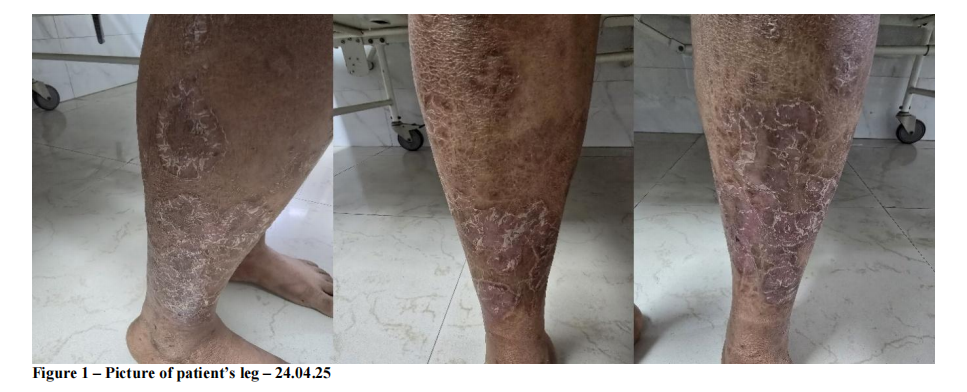
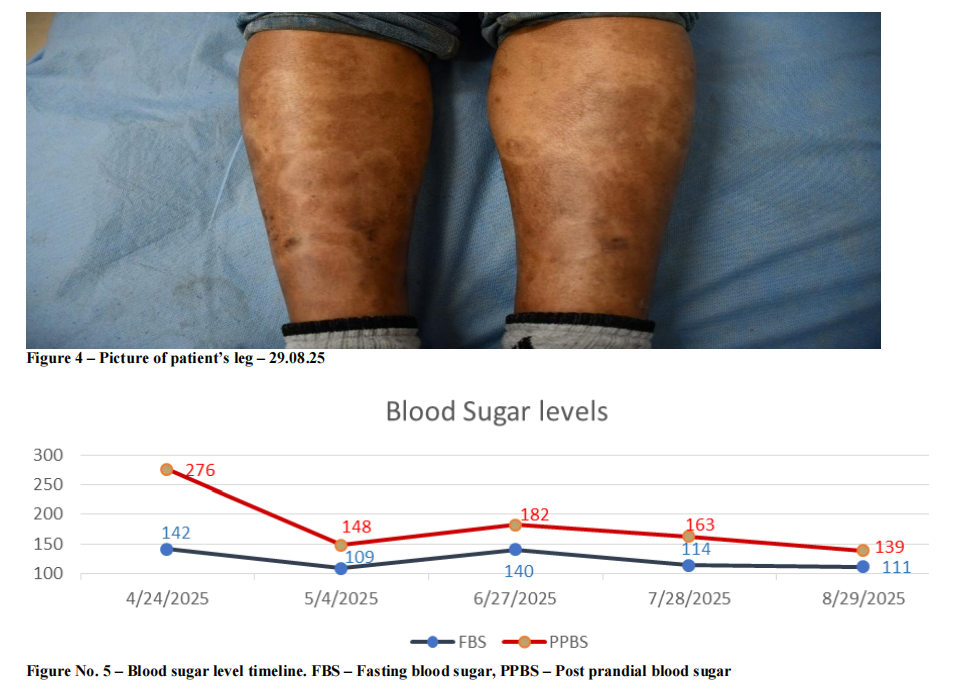
The patient is a chronic plaque psoriasis case of 10 years’ duration, with a history of recurrent, well-delineated erythematous plaques mainly over the extensor aspect of the lower limbs (Figure 1). The lesions were chronic, having silvery-white scales, pronounced dryness, and post-inflammatory hyperpigmentation with violaceous discoloration of the overlying skin. Some plaques were found to show lichenification and thickening of the skin, but no evidence of secondary infection, with sharply demarcated margins. There was occasional pruritus, butsystemic distress was minimal. There was no clinical finding of associated changes in the nails or psoriatic arthritis, and Auspitz sign was not elicitable. The lesion was found to be exacerbated during winters and stress but usually present across seasons. Also, the patient has a history of three years of type 2 diabetes mellitus, incidentally diagnosed during routine assessment and treated conservatively with lifestyle changes. The patient did not have typical diabetic symptoms like polyuria, polydipsia, polyphagia, or loss of weight, and there was no evidence of diabetic-related complications on examination. The vital signs were stable, and no other illnesses were reported at presentation.
Diagnostic Assessment –
The diagnosis in this case was established on the basis of clinical findings and laboratory investigations. The cutaneous examination revealed multiple, well-demarcated erythematous plaques with thick silvery-white scaling and marked dryness, predominantly distributed over the extensor surfaces of the lower limbs (Figure 1). The lesions demonstrated chronicity, post-inflammatory hyperpigmentation, and occasional lichenification, which are classical features of chronic plaque psoriasis. There was no evidence of nail involvement or psoriatic arthritis, and Auspitz sign could not be elicited at this stage. These clinical features are characteristic of plaque psoriasis and are in line with current diagnostic criteria, wherein the diagnosis is primarily clinical and based on the morphology, distribution, and appearance of lesions.
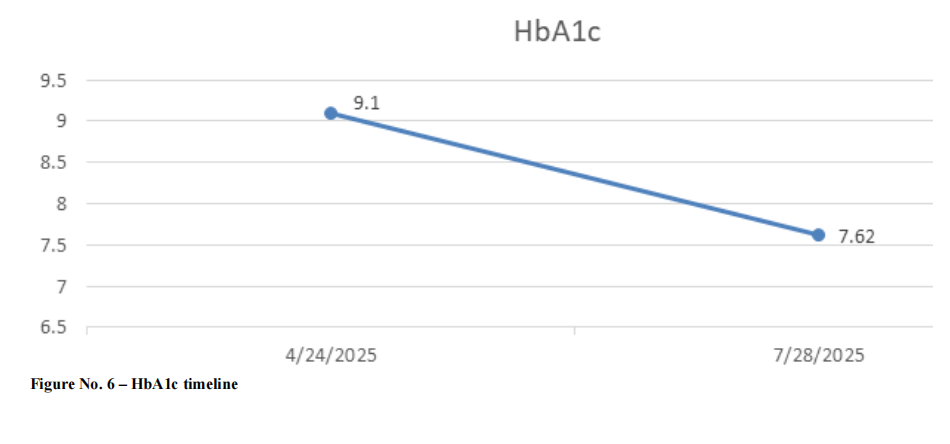
Laboratory evaluation indicated elevated fasting blood sugar (FBS) at 142 mg/dL, postprandial blood sugar (PPBS) at 276 mg/dL, and a Glycated Hemoglobin (HbA1c) of 9.1%. These values confirmed poorly controlled type 2 diabetes mellitus. No additional diabetic complications were identified on examination.
The combination of typical skin lesions and abnormal glycemic indices supported the diagnosis of chronic plaque psoriasis in a patient with coexisting diabetes mellitus. Given the clear clinical presentation, skin biopsy and additional serological investigations were deemed unnecessary for diagnostic confirmation.
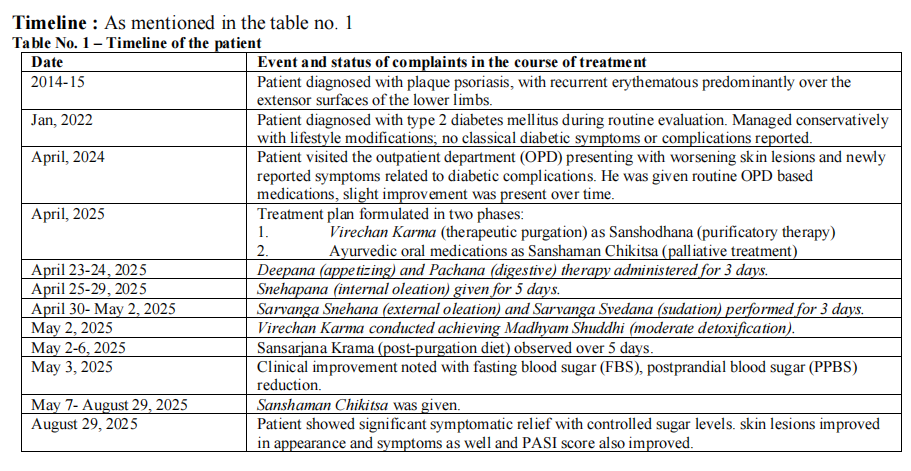
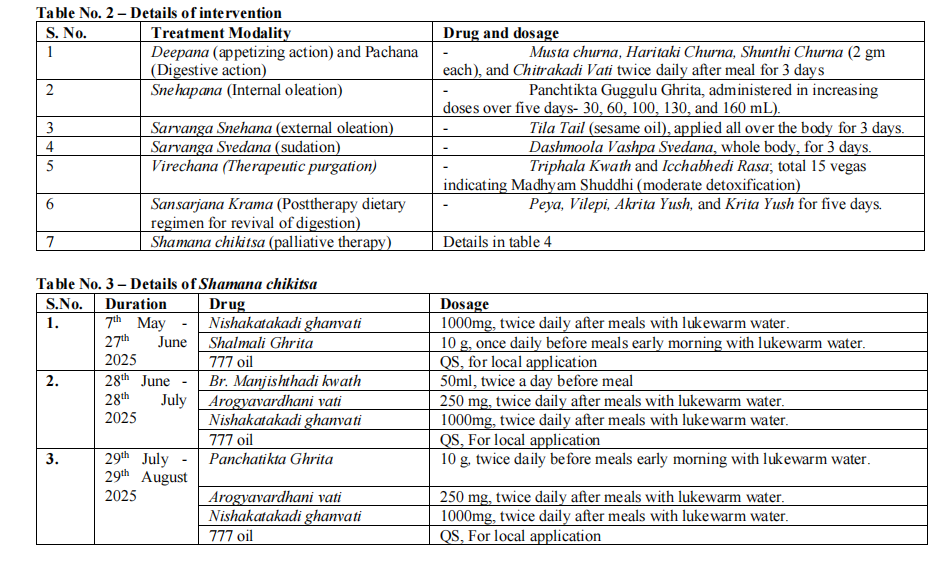
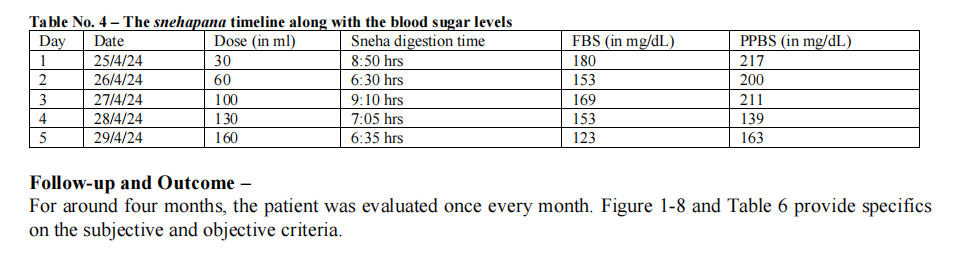
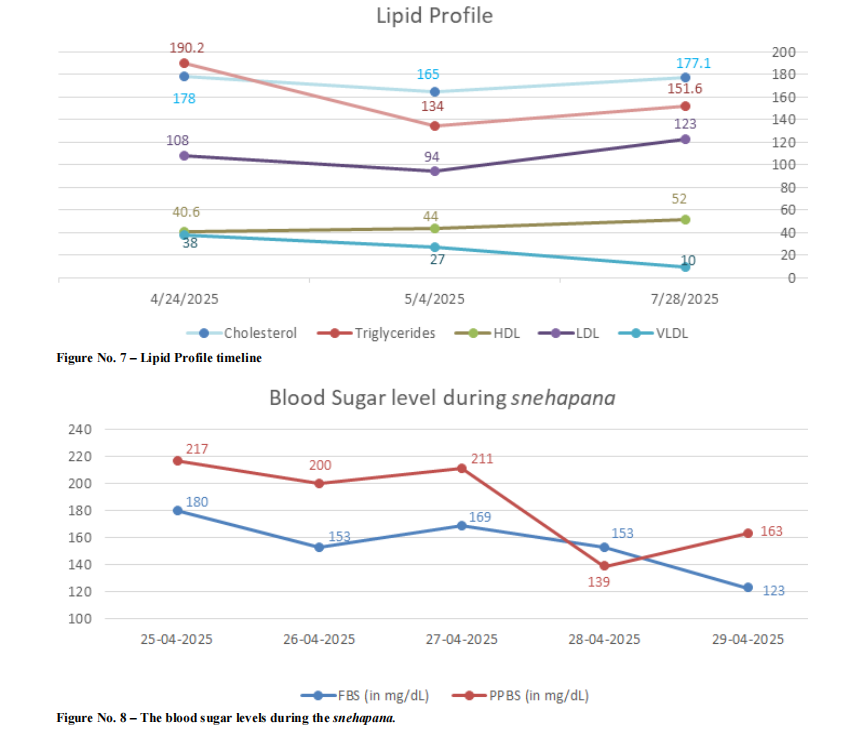
Therapeutic Intervention – After a thorough assessment of the patient’s condition, the treatment proceeded in two phases. The first phase consisted of Shodhana Karma (purificatory therapy), in which Virechana (therapeutic purgation) was administered. Preparatory procedures included Deepana (appetizing action) and Pachana (Digestive action), followed by Snehapana (internal oleation) with Panchtikta Guggulu Ghrita in progressively increasing doses. External therapies comprised Sarvanga Snehana (external oleation) and Sarvanga Svedana (whole-body sudation). Virechana was performed and after Virechana, strict adherence to Sansarjana Krama (graduated dietary regimen) was maintained to restore digestive strength. (Table 2-4) In the second phase, Shamana Chikitsa (palliative therapy) was initiated. Additionally, personalized dietary modifications emphasizing low-carbohydrate intake were recommended to manage glycemic load. Lifestyle adjustments, including moderate physical exercise, were also advised to support metabolic balance. This integrative therapeutic strategy aimed to address both the underlying pathology and associated symptoms while improving overall patient compliance and clinical outcomes.

DISCUSSION:
The co-occurance of diabetes mellitus and psoriasis is increasingly recognized as a clinical challenge because both disorders significant shared pathophysiological processes based on chronic systemic inflammation, oxidative stress, immune dysregulation, and metabolic disorder. Psoriasis, previously considered as a cutaneous condition, is now known to be a systemic inflammatory condition strongly linked to metabolic syndrome, insulin resistance, obesity, and increased cardiovascular risk.xiii,xiv Epidemiologic research has demonstrated that individuals with psoriasis have a significantly higher risk of type 2 diabetes and that diabetes can accentuate the psoriatic process by pro-inflammatory cytokines and endothelial disturbance, resulting in a two-way relationship between the two conditions.xv,xvi.
From the Ayurvedic point of view, Madhumeha/Prameha (diabetes) and Ekakushtha/Kushtha (psoriasis) have a mutual basis of Kapha and Vata vitiation and both are characterized by derangement of Medas (lipid metabolism), Rakta, and Mams Dhatu. Both these conditions having chronicity and immune-metabolic dysregulation suggest Ojas depletion leading to systemic weakness and frequent exacerbations.xvii,xviii Treatment accordingly requires an integrative and holistic strategy against these root imbalances. Here, Virechana Karma, a key Shodhana (purification) treatment, was chosen for its ability to eliminate morbid Pitta and Kapha Doshas, rectify Agni (metabolic and digestive fire), and remove accumulated Ama (toxins). Ancient Ayurvedic scriptures recommend Virechana in both Prameha and Kushtha because of its purgative action, normalization of metabolism, and ability to enhance immune function.xix Current evidence suggests that purgation therapies have the potential to decrease systemic inflammatory burden, normalize gut microbiota, and improve insulin sensitivity, thus favorably affecting both glycemic and dermatological responses.xx,xxi
Ghrita, alongside local application of 777 oil were used. These formulations are known for their Pramehaghna (antidiabetic), Kushthaghna (antipsoriatic), Raktashodhaka (blood purifier), and Rasayana (rejuvenative) actions. Past research has documented the hypoglycemic action of herbal preparations like Nisha Katakadi Yoga and Arogyavardhini Vati,xxii,xxiii and the anti-inflammatory and keratolytic activity of Panchatikta Ghrita and 777 oil in chronic plaque psoriasis.xxiv,xxv Dietary changes with a focus on less carbohydrate intake along with lifestyle modifications like moderate exercise had secondary roles in metabolic control and symptom alleviation.xxvi
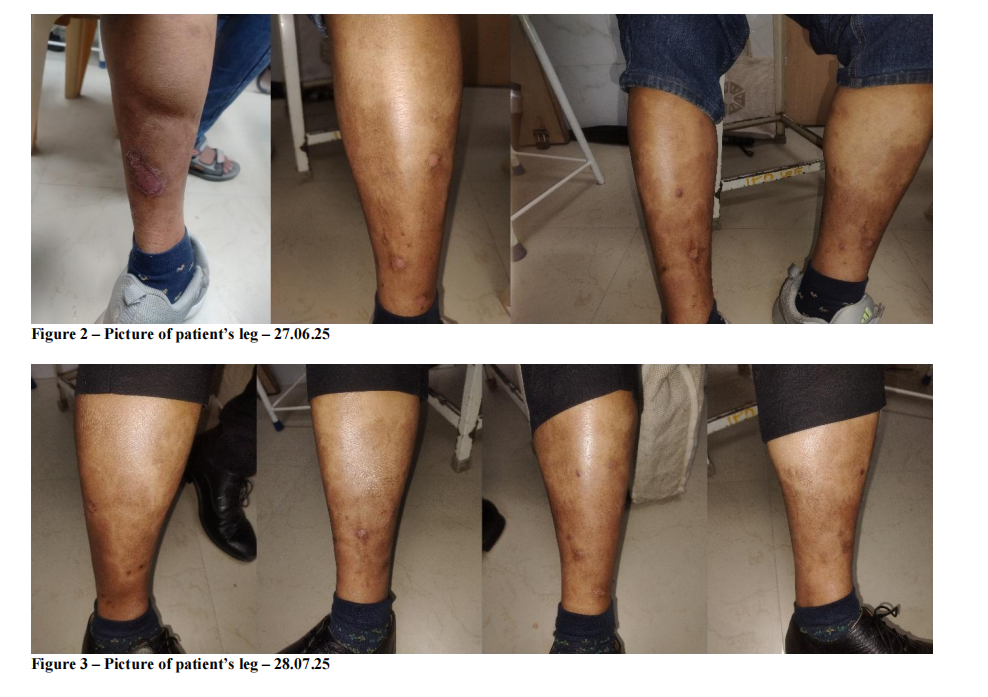
Clinical responses in this patient showed significant improvements in fasting and postprandial glycemic parameters and regression of psoriatic plaques, as indicated by decreases in erythema, scaling, and induration. The integrative regimen allowed for concurrent treatment of metabolic and immune derangement, resulting in dramatic improvements in overall well-being without side effects. Such findings underscore the holistic and efficacy of Ayurveda in chronic comorbid conditions in which conventional pharmacotherapy could induce further metabolic burdens. Together, this case underscores the need for transdisciplinary and personalized management in diabetes associated with chronic plaque psoriasis. By targeting Dosha-Dushya Samprapti (pathogenesis), Ayurveda provides a promising complementary solution to patients with concomitant metabolic-inflammatory conditions.
Larger clinical trials are, however, required to ascertain reproducibility, understand mechanisms, and assess long-term results of such interventions.
CONCLUSION:
The case shows the efficacy of an integrated Ayurvedic protocol involving Virechana Karma and individualized Shamana Chikitsa in the control of coexistent type 2 diabetes and chronic plaque psoriasis. The therapy resulted in considerable changes for the better in glycemic control in terms of lowering fasting and postprandial blood sugar and HbA1c, along with marked regression of psoriatic lesions with reduced erythema, scaling, and dryness. By targeting the underlying causes by detoxification, metabolic boosting, dosha equilibrium, and changes in lifestyle, Ayurveda offered an integrative, long-term platform that enhanced both metabolic and cutaneous outcomes without side effects. Even though a single case, these results suggest the potential of Ayurvedic treatments as add-on options for multifactorial metabolic-inflammatory diseases and merit larger clinical trials to ascertain efficacy and mechanisms.
Declaration Of Patient Consent: The authors certify to have a patient consent form on which the patient has provided consent for the case, photos, and other clinic information to be published by the journal. The patient understands that although all efforts would be made to anonymize him, anonymity cannot be guaranteed. He does not want his name or initials to be published.
Financial support and sponsorship – Nil.
Acknowledgment – All India Institute of Ayurveda, New Delhi, India
If the manuscript was presented as part at a meeting – No
Registration number – NA
Conflict of interest – There are no conflicts of interest.
Author contribution:
Raja Ram Mahto: Conceptualization, Investigation, Supervision.
Santosh Kumar Bhatted: Conceptualization, Investigation, Supervision.
Himani Sharma: Conceptualization, Project Administration, Writing Original Draft.
Sudhanshu Kumar Jha: Conceptualization, Resources, Editing.
Sonam Chauhan: Resources, Editing
Prachi Khandelwal: Resources, Editing.
Sanjay Kumar Tiwari: Conceptualization, Project Administration, Writing Original Draft.
Rupesh Vishwas Gangurde: Conceptualization, Editing.
Vidhi Jain: Conceptualization, Editing.
Priya Goel: Resources, Editing.
REFERENCES:
1.(i)American Diabetes Association. Diagnosis and classification of diabetes mellitus. Diabetes Care. 2014;37(Suppl 1):S81–90.
2.(ii)Agnivesha, Charaka Samhita, revised by Charaka and Dridhabala with the Ayurveda Dipika commentary of Chakrapanidatta. Sutra Sthana 17/77–78. Varanasi: Chaukhamba Sanskrit Sansthan; 2017.
3.(iii) Charaka Samhita, Nidana Sthana 4/44–45 (Prameha Nidana). Varanasi: Chaukhamba Orientalia; 2019.
4. (iv) Sushruta Samhita, Nidana Sthana 6/4 – description of Kushtha as a complication of Prameha. Varanasi: Chaukhamba Surbharati; 2018.
5.(v)Parisi R, Symmons DPM, Griffiths CEM, Ashcroft DM. Global epidemiology of psoriasis: a systematic review of incidence and prevalence. J Invest Dermatol. 2013;133(2):377–85.
6.(vi)Madhava Nidana, Chapter 33 (Kushtha Nidana) – description of Ekakushtha. Varanasi: Chaukhamba Sanskrit Series; 2016.
7.(vii) Boehncke WH, Schön MP. Psoriasis. Lancet. 2015;386(9997):983–94.
8.(viii)Armstrong AW, Harskamp CT, Armstrong EJ. Psoriasis and metabolic syndrome: a systematic review and meta-analysis of observational studies. J Am Acad Dermatol. 2013;68(4):654–62.
9.(ix) Pradhan AD, Manson JE, Rifai N, Buring JE, Ridker PM. C-reactive protein, interleukin 6, and risk of developing type 2 diabetes mellitus. JAMA. 2001;286(3):327–34.
10.(x) Singh S, Young P, Armstrong AW. Relationship between psoriasis and metabolic syndrome: A systematic review. G Ital Dermatol Venereol. 2016;151(6):663–77.11.
11.(xi)Griffiths CEM, Armstrong AW, Gudjonsson JE, Barker JNWN. Psoriasis. Lancet. 1021;397(10281):1301–15.
12.(xii)Patwardhan B, Mutalik G, Tillu G. Integrative Approaches for Health: Biomedical Research, Ayurveda and Yoga. Amsterdam:Elsevier; 2015.
13.(xiii)Boehncke WH, Boehncke S, Tobin AM, Kirby B. The ‘psoriatic march’: a concept of how severe psoriasis may drive cardiovascular comorbidity. Exp Dermatol. 2011 Apr;20(4):303–7.
14. (xiv) Takeshita J, Grewal S, Langan SM, Mehta NN, Ogdie A, Van Voorhees AS, Gelfand JM. Psoriasis and comorbid diseases: Epidemiology. J Am Acad Dermatol. 2017 Mar;76(3):377–90.
15.(xv) Lønnberg AS, Skov L, Skytthe A, Kyvik KO, Pedersen OB, Thomsen SF. Association of psoriasis with the risk for type 2 diabetes mellitus and obesity. JAMA Dermatol. 2016 Jan;152(1):76–82.
16.(xvi) Armstrong AW, Harskamp CT, Armstrong EJ. Psoriasis and metabolic syndrome: A systematic review and meta-analysis of observational studies. J Am Acad Dermatol. 2013 Apr;68(4):654–62.
17.(xvii) Sharma RK, Dash B, editors. Charaka Samhita: Text with English translation and critical exposition. Chikitsasthana 7/30-35.Varanasi: Chowkhamba Sanskrit Series; 2015.
18.(xviii) Tripathi B. Ashtanga Hridayam of Vagbhata with Sarvanga Sundara Commentary. Nidana Sthana, Kushtha Nidana Adhyaya.Varanasi: Chaukhambha Sanskrit Pratishthan; 2015.
19.(xix) Shastri AD. Ayurveda-Tattva-Sandipika Hindi Commentary on Charaka Samhita, Sutrasthana, Virechan Vidhim Adhyaya. Varanasi:Chaukhambha Bharati Academy; 2018.
20.(xx)Sethi J, Yadav D, Dahiya K, Saini V, Sharma S. Effects of Ayurvedic purification therapy (Shodhana Karma) on metabolic parameters in type 2 diabetes: A clinical review. Anc Sci Life. 2016 Jan-Mar;35(3):147–54.
21.(xxi) Xu Z, Chen L, Leung L, Yen Y, Huang C. Effects of purgation therapy on gut microbiota and glucose metabolism in metabolic syndrome. Evid Based Complement Alternat Med. 2019;2019:1–10.
22.(xxii) Zaveri M, Patel S, Patel Z, Patel B. Experimental evaluation of hypoglycemic activity of Ayurvedic formulations. Ayu. 2010 Jul Sep;31(3):376–9.
23.(xxiii) Singh RH. An assessment of the hypoglycemic effect of certain Ayurvedic preparations in diabetes mellitus. Anc Sci Life.1986;5(3):172–5.
24.(xxiv) Parthasarathy N, Subramanian S. 777 oil therapy in psoriasis: A clinical study. Anc Sci Life. 1985 Jan;4(3):168–72.
25.(xxv) Khanna N, Yadav DK, Jaiswal A. Role of Panchatikta Ghrita in the management of chronic skin disorders: A clinical review. J Ayurveda Integr Med. 2018 Jul-Sep;9(3):192–7.
26.(xxvi) Sikandar M, Namra T, Ali Q, Abdussalam, Iqra S, Ghulam A. Impact of Diet and Exercise Interventions on Glycemic Control and Weight Management in Adults with Type 2 Diabetes: A Systematic Review of Randomized Controlled Trials and Observational Studies. Indus Journal of Bioscience Research. 2024;2(02):1072-1082