- Raja Ram Mahto- Department of Kayachikitsa, All India Institute of Ayurveda, New Delhi, India,
- Sanjay Kumar Tiwari– Department of Kayachikitsa, All India Institute of Ayurveda, New Delhi, India,
- Himani Sharma-Department of Shalakya Tantra, Sanjeevani Ayurveda Medical College, Amroha, Uttar Pradesh, India
- Sonam Chauhan– Department of Kayachikitsa, All India Institute of Ayurveda, New Delhi, India,
- Prachi Khandelwal-Department of Kayachikitsa, All India Institute of Ayurveda, New Delhi, India,
- Priya Goel-Department of Kayachikitsa, All India Institute of Ayurveda, New Delhi, India,
Abstract:-
Cancer is a leading cause of global morbidity and mortality, with the World Health Organization reporting that it causes over 10 million fatalities annually. The majority of patients in underdeveloped nations seek medical attention at advanced stages where curative therapy is no longer feasible. Conventional palliative oncology focuses on symptom relief by opioids, corticosteroids, and supplementary medicines; yet, these approaches often result in tolerance, reliance, and systemic toxicity. Moreover, they inadequately address psychological and spiritual anguish. Ayurveda offers a holistic, low-toxicity, and patient-focused approach of Rasayana (rejuvenative), Shamana (palliative), and Sattvavajaya (psycho-spiritual) treatments, along with global palliative care guidelines. This review investigates the philosophical foundations, pharmacological processes, and emerging clinical data supporting the function of Ayurvedic formulations in palliative oncology, emphasizing their potential to enhance symptom management, resilience, and quality of life (QOL). A thorough examination of traditional Ayurvedic texts (Charaka Samhita, Sushruta Samhita, Ashtanga Hridaya) was performed. We examined research on Ayurvedic interventions for cancer-associated pain, tiredness, mucositis, neuropathy, anxiety, and lymphedema. Mechanistic links between Ayurvedic principles(Vata‑Kapha shamana, Agni‑Ojas preservation) and biological benefits, encompassing anti-inflammatory, immunomodulatory, and neuroprotective pathways, were synthesized. Clinical studies and patient-reported outcomes(PROs) (EORTC QLQ-C30) indicate that formulations such as Ashwagandha Rasayana, Triphala Guggulu, Yashtimadhu, and Guduchi Rasayana may alleviate tiredness, mucositis, and enhance emotional well-being. The concurrent use of Vedanasthapana (an analgesic) and Rasayana medicines has shown the capability to reduce opioid dependency, improve immunological function, and increase tolerance to chemotherapy and radiation. These findings reinforce Ayurveda’s status as a supplementary approach, highlighting customized and holistic palliative treatment. Ayurvedic formulas provide a safe, comprehensive, and holistic adjunct to modern palliative treatment. Their incorporation can enhance QOL, emotional stability, and treatment adherence while mitigating the adverse effects of conventional pharmacotherapy. Future objectives include evidence-based standardization, multicentric randomized controlled trials, digital outcome monitoring, and policy-level integration to establish Ayurveda as a recognized component of worldwide palliative oncology.
Keywords: Cancer pain, immunomodulation, integrative oncology, palliative care, Rasayana, Vedanasthapana
INTRODUCTION
Cancer is a primary cause of mortality and morbidity globally. The World Health Organization (WHO) reports that it causes over 10 million fatalities annually.[1] Cancer incidence in India is consistently increasing, with over 1.4 million new cases and over 850,000 fatalities recorded annually.[2] Despite advancements in molecular diagnosis, targeted treatment, and immuno-oncology, around 60%–80% of patients in low- and middle-income countries present at advanced or incurable stages, where the objective is not to cure the condition, but to ensure the patient’s comfort, alleviate their symptoms, and maintain their quality of life (QOL) to the greatest extent feasible.[3] Consequently, palliative care has emerged as a crucial component of comprehensive cancer treatment. Modern palliative oncology predominantly employs pharmacological treatments-opioids, corticosteroids, antidepressants, and supplementary analgesics-to-mitigate pain, dyspnea, nausea, and exhaustion. These medicines are helpful in the short term but are associated with significant issues such as tolerance, dependency, gastrointestinal disturbances, immunosuppression, and cognitive or emotional blunting.[4,5] Furthermore, discussions frequently overlook the emotional, spiritual, and mental distress associated with chronic or terminal disease. As a result, there is a growing desire for integrative, individual-centered treatment approaches that augment pharmaceutical palliation with comprehensive, multimodal therapies aimed at enhancing physical, psychological, and existential well-being. Ayurveda, the traditional Indian medical system, classifies cancer‑like diseases as Arbuda and Granthi, arising from the imbalance of Vata and Kapha doshas, the blocking of micro-channels (Srotorodha), and the depletion of vital essence (Oja-kshaya).[6,7] The management strategies include Vata-Kapha shamana (normalizing imbalanced doshas), Rasayana chikitsa (treatment that enhances well-being and strength), and fortifying both Rogabala (disease resistance) and Rogibala (patient vitality).[8] The Ayurvedic concepts of Dukhahara chikitsa (relief of suffering) and Vyadhi–pratibandhaka chikitsa (disease prevention) closely parallel modern palliative objectives of pain alleviation, functional preservation, and psychological support.[9] The Ayurvedic pharmacopeia offers a comprehensive selection of formulations-Rasayana, Balya, Medhya, Sattvavajaya, and Vedanasthapana dravyas-that modulate inflammation, oxidative stress, immunological function, and neuroendocrine balance. These traits align with contemporary goals in cancer symptom management, including the reduction of treatment-related toxicities, enhancement of resilience, and promotion of psycho-spiritual stability.[10,11] When utilized judiciously in an integrated manner, these drugs may effectively complement contemporary pharmacological palliative treatment and enhance QOL in several aspects. This review delineates the conventional concepts, pharmacological processes, and emerging clinical data supporting the use of Ayurvedic formulations as adjunctive therapies in modern palliative cancer. The focus is on how these therapies might improve contemporary pain and symptom management strategies while fostering resilience and overall well-being in patients with advanced cancer.
CONCEPTUAL FRAMEWORK
Ayurvedic perspective on palliation (Upashamana Chikitsa)
In Ayurveda, Upashamana Chikitsa denotes therapies aimed at alleviating symptoms and discomfort when curative interventions are no longer feasible.[12] Upashamana literally signifies “to pacify or subdue,” referring to the mitigation of Dosha prakopa (aggravated humoral imbalance) and alleviating pain rather than entirely eradicating sickness. In oncology, it corresponds with the modern concept of palliative care, prioritizing comfort, quality of life, and psycho-spiritual well-being throughout advanced stages of illness. Ayurveda delineates four principal therapeutic modalities:
Shodhana (purificatory treatment), Shamana (palliative therapy), Rasayana (rejuvenative therapy), and Sattvavajaya (psychological or spiritual management).[13,14] Shamana and Rasayana are crucial in palliative oncology.
• Shamana Chikitsa restores equilibrium through Deepana-Pachana (enhancing digestion and metabolism), Snehana-Swedana (oleation and sudation), and targeted formulations that alleviate pain and promote bodily stability
• Rasayana Chikitsa rejuvenates Dhatus (tissues), augments Ojas (vital essence), and fortifies immunity, hence enhancing the patient’s resilience against disease andtreatment-induced tiredness[15]
• Sattvavajaya Chikitsa employs meditation, counseling, and mantra-based treatment to assist individuals in regulating their thoughts and fortifying their willpower, therefore alleviating worry, dread, and existential suffering prevalent in terminal disease[16]
• Ahara-Vihara Niyama (dietary and lifestyle control) enhances these therapies by advocating for Laghu-Snigdha Ahara (light but unctuous meals) and sufficient rest to maintain Agni (metabolic fire) and vigor throughout chronic debility.[17] Upashamana Chikitsa embodies a comprehensive framework that encompasses the physical, psychological, and spiritual Mahto, et al.: Ayurvedic in palliative oncology dimensions of suffering, closely paralleling the holistic principles of modern palliative care.
Pathophysiological correlates
According to Ayurveda, malignant conditions(Arbuda and Granthi) arise due to the imbalance of Tridosha, mainly Vata and Kapha, which cause Srotorodha (obstructed channels) and Oja–kshaya (the vital essence is lost).[18] Alongside these three primary derangements, many other pathogenic factors have been indicated that contribute to the Tridoshic imbalance which includes Agnimandya (the digestive fire and metabolic fire are impaired), Ama (metabolic toxins) accumulation, Dhatudushti (vitiation of body tissues), Shukra and Majja Dushti (the reproductive and marrow tissues becoming deranged), Rakta–Pradoshaja conditions (blood vitiation) besides that the lifestyle practices, chronic stress, hereditary predisposition, and exposure to environmental carcinogens. Individually and collectively, they drive the pathogenesis that leads to dosha disturbance, tissue homeostasis impairment, and the genesis and progression of Arbuda. These ailments appear as distinct symptom clusters accompanying the advanced stage of malignancy or oncological therapies:
• Vata predominance: Induces pain, neuropathy, cachexia, dryness, sleeplessness, and tiredness, resembling the neurodegenerative and catabolic manifestations observed in cancer cachexia and chemotherapy-induced neuropathy
• Pitta imbalance: Results in inflammation, mucositis, hepatotoxicity, and gastrointestinal discomfort, all induced by oxidative and inflammatory processes triggered by radiation treatment or cytotoxic agents
•Kapha aggravation: Results in heaviness, swelling, lymphatic congestion, and a sluggish metabolism, akin to lymphedema, fluid retention, and diminished metabolic conditions.[19,20]The persistent imbalances result in Agnimandya (metabolic depression) and Oja–kshaya (vital weariness), representing the terminal pathway of systemic deterioration.[21] Biomedically, these mechanisms are associated with persistent inflammation, mitochondrial malfunction, and immune fatigue seen in advanced malignancies.[22] Thus, therapies that preserve Agni and rejuvenate Ojas-such as Rasayana and Balya formulations-form the cornerstone of Ayurvedic palliation.
Therapeutic goal
The primary objective of Ayurvedic palliation is to safeguard Ayu (life span), Bala (strength), Sukha (comfort), and Sattva Sthiti (mental stability)-the four foundational elements ofenduring existence as delineated by Acharya Charaka. [23] The aim, especially in the context of terminal disease, beyond simple life prolongation; it is the maintenance of harmony among the body, mind, and awareness. This comprehensive perspective strongly coincides with the WHO’s definition of palliative care, which emphasizes the whole treatment of physical, psychological, social, and spiritual suffering.[24] Upashamana Chikitsa offers a perennial conceptual analogy to contemporary palliative models byprioritizing compassionate care, dignity, and QOL rather than therapeutic objectives.
AYURVEDIC PREPARATIONS FOR TARGETED
SYMPTOM ALLEVIATION
Ayurveda provides a comprehensive method for mitigating pain and suffering in terminal illnesses, emphasizing the restoration of physiological balance, mental serenity, and vitality. Traditional approaches in palliative oncology seek to correct Vata–Kapha imbalance, Agnimandya (metabolicdysfunction), and Oja–kshaya (depletion of vitality), which are essential to addressing cancer-related pain, exhaustion, mucositis, neuropathy, and anxiety. These multi-herbal therapies exhibit intersecting mechanisms – anti-inflammatory, neuroprotective, adaptogenic, and immunomodulatory-connecting ancient Rasayana principles with contemporary pharmaceutical understanding.
Pain associated with cancer and neuropathy
Key Formulations: Yograja Guggulu, Dashmoola Taila, Bala Taila, and Ashwagandha Rasayana.
Cancer-associated pain and neuropathy are mostly Vata-prakopa-janya (Vata-aggravated) symptoms manifesting as tingling, burning, or stiffness.
•Yograja Guggulu comprises Guggulu (Commiphora mukul),Triphala, Trikatu, and Dashmoola. It possesses analgesic(Vedanasthapana), anti‑inflammatory (Shothahara), and Vata-reducing properties.[25,26] and some plants like Mimosa pudica L
• Dashmoola Taila and Bala Taila provide Sneha-Samskara (nourishment and lubrication), mitigating neuromuscular rigidity[27]
• Ashwagandha Rasayana (Withania somnifera) acts as an adaptogen and neuroprotectant by regulating GABAergic activity and diminishing oxidative stress.[28] Clinical trials have demonstrated significant improvement in pain and nerve conduction in chemotherapy-induced neuropathy following the administration of Withania somnifera extracts as adjuncts.[29]Mahto, et al.: Ayurvedic in palliative oncology Ayush Journal of Integrative Oncology | Volume 2 | Issue 4 | October-December 2025 239
Fatigue and cachexia
Key formulations: Ashwagandharishta, Shatavari Ghrita, and Chyavanaprasha. Klama, or cancer-related fatigue, and Dhatu–kshaya, or cachexia, are both believed to result from diminished amounts of Agni and Ojas.
• Ashwagandharishta restores vitality by regulating cortisol levels and facilitating hemoglobin production[30]
•Shatavari Ghrita nourishes tissues and alleviates dryness in mucous membranes that may occur during chemotherapy and radiation therapy[31]
•Chyavanaprasha, a polyherbal Rasayana containing Amalaki, Pippali, and Ghee, enhances mitochondrial efficiency and antioxidant levels, hence strengthening host resilience.[32] Clinical data support the use of Rasayana Dravyas in mitigating tiredness and improving the QOL for patients receiving cytotoxic therapies.[33]
Chemotherapy‑induced mucositis
Key formulations: Yashtimadhu Taila, Triphala Guggulu, Amalaki Rasayana– Mucositis and ulceration occurring postchemotherapy are predominantly classified as Pittaja diseases.
•Yashtimadhu (Glycyrrhiza glabra) demonstrates Ropana – (wound healing) and Pittashamana (anti‑inflammatory) effects due to its glycyrrhizin and flavonoid components[34]
•Triphala possesses antibacterial and epithelial-regenerative properties due to the presence of gallic and ellagic acids[35]
• Randomized controlled trials (RCTs) confirm that Triphala mouthwash significantly reduces the severity of oral mucositis in patients with head-and-neck cancer[36]
• Amalaki Rasayana facilitates epithelial regeneration and alleviates oxidative damage, aligning with the cytoprotective aims of Rasayana therapy.[37]
Nausea and vomiting
Key formulations: Eladi Vati and Dhanyaka Shunthi Churna– According to Ayurveda, nausea induced by chemotherapy is attributed to Agnimandya.
• Shunthi (Zingiber officinale) enhances stomach motility and influences serotonin (5‑HT3) receptors, hence diminishing emetic reflexes[38]
• Dhanyaka (Coriandrum sativum) aids in digestion and alleviates spasms
• Eladi Vati is a combination of aromatic and digestive herbs that aids in alleviating flatulence.[39] Clinical meta-analyses indicate that ginger consumption can reduce the incidence and intensity of chemotherapy-induced nausea by 40%–50%.[40]
Anxiety and sleep disturbances
Key formulations:
•Brahmi Vati, Saraswatarishta,TagaradiChurna– Psycho-emotional abnormalities in cancer patients correlate with Sattva–vishama avastha (mental instability) and Vata–pitta vitiation.
•Brahmi (Bacopa monnieri) and Tagara (Valeriana wallichii) serve as Medhya Rasayanas, promoting neurotransmitterbalance and alleviating oxidative stress in neural pathways[41]
• Saraswatarishta, a polyherbal tonic including Ashwagandha and Shankhapushpi, promotes Sattvavajaya (mental stability) and enhances sleep quality.[42] Recent research confirms the anxiolytic and sedative effects of Bacopa and Valeriana extracts in alleviating cancer-related anxiety and insomnia.[43]
Lymphedema and edema
Key formulations: Punarnavadi Guggulu and Dashmoola – Kwatha recognized for their shothahara and mutrala properties(anti‑inflammatory and diuretic), are employed to address lymphedema resulting from Kapha–Vata aggravation and lymphatic stasis.
•Punarnava (Boerhaavia diffusa) acts as a lymphagogue and antifibrotic by obstructing transforming growth factor beta signaling and promoting diuresis[44]
•Dashmoola Kwatha reduces cytokine levels (tumor necrosis factor-alpha [TNF-α], interleukin [IL]-6) and enhances microcirculation.[45]A pilot study indicated a significant reduction in limb circumference and pain ratings in breast cancer-related lymphedema with these formulations.[46]
Integrative perspective
Ayurvedic medicines provide a multi-target characteristic, enabling them to concurrently modulate inflammation, oxidative stress, gut microbiota, and brain responses at the systems level. These traditional formulations can assist with intricate symptom clusters such as pain, exhaustion, and mucositis by utilizing opioids, corticosteroids, and chemotherapeutic drugs. They can facilitate the management of therapy and enhance psycho-spiritual well-being. Mahto, et al.: Ayurvedic in palliative oncology 240. This comprehensive approach demonstrates that Ayurveda may offer Sukha–prada chikitsa, a therapy that restores comfort, dignity, and equilibrium across all facets of life.
MECHANISTIC INSIGHTS (INTEGRATIVE
BIOMEDICAL CORRELATION)
Ayurvedic formulations used in palliative oncology have multi-target, systems-level effects that align with contemporary processes linked to cancer-related symptom clusters (pain, tiredness, mucositis, neuropathy, anxiety) and treatment toxicities. Their activities, when integrated with conventional therapy, enhance tolerance and QOL by influencing inflammatory signaling, redox equilibrium, neuroendocrine regulation, immune surveillance, and the gut–brain axis.
Anti‑inflammatory and antioxidant pathways
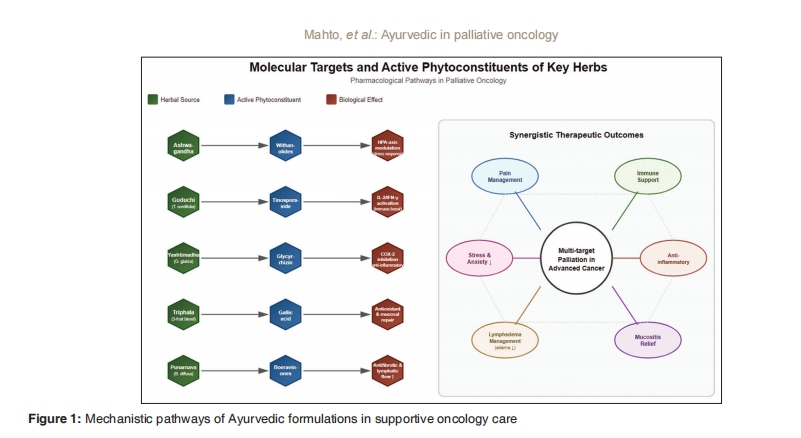
Curcumin (Haridra), withanolides (Ashwagandha), glycyrrhizin (Yashtimadhu), and piperine (Maricha) impede canonical inflammatory pathways(NF‑κB, COX-2, TNF-α/IL-6) and enhance endogenous antioxidant mechanisms (SOD, catalase, glutathione peroxidase), thus alleviating nociceptive sensitization, mucosal injury, and metabolic oxidative stress.[47-50] These varied effects resemble the Ayurvedic objectives of Vata–Pitta shamana and Ama–pachana, aimed at reducing inflammation and maintaining cellular redox balance.
Neuro‑modulatory and adaptogenic effects
Ashwagandha and Brahmi (Bacopa) demonstrate GABAergic potentiation, serotonergic enhancement, and modulation of the hypothalamic–pituitary–adrenal axis -axis, leading to reduced cortisol levels and enhancements in stress, sleep, and fatigue-essential for symptom relief and coping in advanced disease.[51-53] These effects promote Sattvavajaya (mind-body stability) and support analgesic and anxiolytic sparing with conventional medicines.
Immunomodulation and host defense
Rasayana substances, such as Guduchi (Tinospora cordifolia) and Amalaki (Emblica/Phyllanthus emblica), enhance NK-cell cytotoxicity, macrophage function, and antigen presentation; they also modify cytokine profiles (↑IL‑2, IFN-γ; ↓IL‑6), thus promoting immune homeostasis during chemotherapy and radiotherapy while diminishing susceptibility to infections and fatigue.[54-56] This aligns with Oja-vardhana and Vyadhi-pratibadhaka (augmenting vitality and illness resistance).
Regulation of the gut–brain axis and microbiome
Triphala and Shunthi (ginger) modulate the gut-brain axis by modifying microbiota, increasing short-chain fatty acid levels, enhancing barrier function, and supporting vagal tone, so reducing nausea, mucositis, dyspepsia, and mood disorders.[57,58] These findings align with Deepana-Pachana and Agnideepana, which restore digestive vigor and systemic resilience.
4.5 Synergism with standard oncology care
When used with guideline-compliant therapies, polyherbal formulations provide additional advantages that do not compromise the efficacy of cancer therapeutics and enhance quality-of-life metrics.[59,60] These advantages encompass reduced tiredness, mucositis, neuropathy, and some indicators of hepatic impairment resulting from chemotherapy. This illustrates Samprapti-vighatana (disruption of pathogenesis) by concurrent manipulation of inflammatory, neuroendocrine, immunological, and metabolic pathways.
EVIDENCE REVIEW
A number of randomized trials, prospective studies, and systematic reviews suggests that specific Ayurvedic formulations can improve QOL, alleviate treatment toxicities (including mucositis, neuropathy, and fatigue), and foster immune homeostasis when used as adjuncts to conventional oncologic care, generally evaluated through validated instruments such as the EORTC QLQ-C30 and toxicity grading scales [Figure 1].
The effect of Rasayana on the overall quality of life
Rasayana regimens (e.g., Chyavanaprasha, Ashwagandharishta, Guduchi preparations) have demonstrated improvements in general health, quality of life, tiredness, hunger, and emotional functioning, presumably via antioxidant, mitochondrial, and immunomodulatory processes.Narrative and systematic syntheses in integrative cancer corroborate these multidomain benefits and suggest improved treatment tolerance with the inclusion of Rasayana. [11,61-63]
Ashwagandha for cancer‑related fatigue
In cohorts receiving radiotherapy for breast cancer, Withania somnifera (Ashwagandha) reduced chronic fatigue syndrome (CRF) and improved sleep and vitality compared to controls, exhibiting a favorable safety profile aligned with its adaptogenic and HPA axis-modulating properties.[64-66] Both mechanistic and clinical data support Ashwagandha as a potential adjuvant for CRF, contingent upon proper management of drug-herb interactions.
Triphala/Yashtimadhu for chemoradiation‑induced mucositis
RCTs indicate that Triphala mouthwash improves WHO-grade severity and delays the start of oral mucositis
in head-and-neck cancer patients receiving radiation, either exceeding or augmenting normal rinses.[67] Rinses containing Yashtimadhu (Glycyrrhiza) have mucoprotective and anti-inflammatory effects, promoting rapid ulcer healing and symptom relief.[68] These correspond with theconventional Ropana/Pittashamana indicators.
Guduchi as an immunorestorative supplement
Tinospora cordifolia (Guduchi) has shown improvements in leukocyte recovery, decreased incidence of infections, and stabilization of hematologic parameters in both open-label and observational studies during cytotoxic therapy, consistent with experimental evidence on macrophage activation and cytokine balance (↑IL‑2/IFN‑γ; ↓IL‑6).[69,70] Despite its potential, there is a necessity for superior-quality RCTs.
Meta‑analyses and extensive evaluations of integrative approaches
Journals such as Integrative Cancer Therapies and Frontiers in Oncology publish umbrella and systematic reviews that compile evidence for integrative adjuncts, including Ayurvedic practices, which assist with pain, cancer-related fatigue, appetite, sleep, anxiety, and overall quality of life, typically demonstrating good safety when standardized products and pharmacovigilance areemployed.[61-63,71]
Concise synthesis table
• QOL: Rasayana adjuncts → ↑ Global quality of life,
↓ fatigue (moderate evidence)
• CRF: Ashwagandha → ↓ EORTC fatigue scores; improved sleep (low-moderate evidence; small RCTs)
• Mucositis: Triphala/Yashtimadhu rinses diminish the severity and development of the condition and accelerate mucosal healing (moderate evidence)
• Immune support: Guduchi → seems to enhance cell counts and reduce infections (low-moderate evidence; requires RCTs). The signals are generally favorable; nevertheless, they are constrained by restricted sample sizes, intergroup variations, and variable standards. To formulate guideline-level recommendations, future multicenter RCTs must focus on essential outcomes (QOL, PROs, toxicity, biomarkers) while closely monitoring safety.
INTEGRATION MODEL WITH MODERN
PALLIATIVE CARE
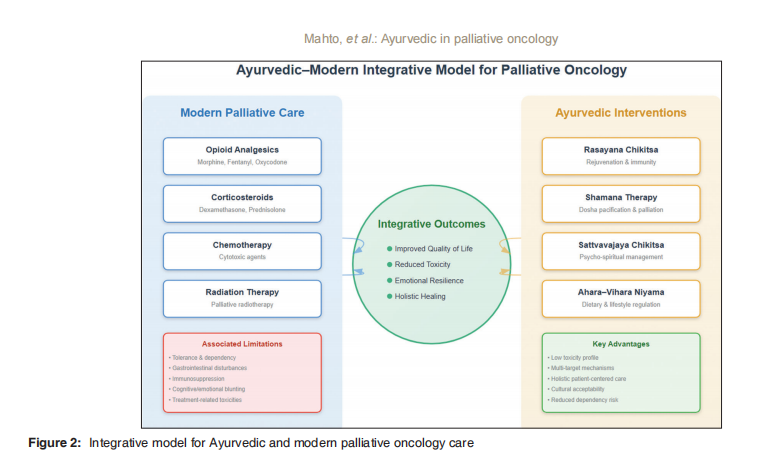
An actionable integration model must prioritize patient-centeredness, adhere to established standards, and prioritize safety. It must maintain Ayurvedic individualization (Prakriti, Dosha profile) and adhere to oncology standards (Good Clinical Practice [GCP], pharmacovigilance, shared documentation) [Figure 2].
Clinical workflow
Integration begins with a comprehensive assessment of oncological status (stage, intent, ECOG), symptomatology (pain, fatigue, mucositis, neuropathy, nausea, insomnia), and validated quality of life indicators (e.g., EORTC QLQ‑C30), alongside Ayurvedic profiling (Prakriti/Dosha, Agni, Ojas, Bala).[61,71-73]A decision pathway links symptoms to constitutional patterns (e.g., Vata → pain/neuropathy; Pitta → mucositis/
hepatotoxicity; Kapha → edema/fatigue) and selectstargeted formulations (e.g., Vedanasthapana, Ropana, Shothahara, Medhya Rasayana) with dosage, schedule, and duration aligned with oncology regimen (chemotherapy/ radiotherapy/immunotherapy).[61,72]
Monitoring loops amalgamate biomedical parameters (toxicity levels, laboratory findings) with Ayurvedic reassessment, enabling dynamic titration or de-escalation and immediate stoppage upon safety alerts.[71,73]
Collaborative strategy
A multidisciplinary team-comprising an oncologist, Ayurvedic physician, palliative-care expert, nurse, pharmacist, and psycho-oncologist-conducts collaborative rounds and tumour boards to determine herb-drug scheduling, dosage timing, and rescue plans.[72,74,75] Shared data (EHR entries for Prakriti, chosen formulations, initiation/cessation dates, adverse drug reactions) and patient education materials (language-appropriate, risk/benefit analysis, self‑monitoring checklists) improve adherence and reduce polypharmacy risks.[74,60] Integrative clinics or integrated AYUSH-oncology units enable referral paths and data collecting for outcomes research when feasible.[60,75]
Safety and standardization
Use only Good Manufacturing Practice (GMP)‑certified formulations that adhere to the Ayurvedic Pharmacopoeia of India. These items must undergo batch testing for identification and purity, utilizing methods such as HPTLC or ICP-MS where applicable, and vendors should be subjected to audits.[76] Develop a pharmacovigilance package comprising a preinitiation interaction assessment (CYP/P-gp), a baseline liver and renal function test, periodic laboratory evaluations aligned with the chemotherapy/radiotherapy regimen, adverse drug reaction forms, and documentation of the timing of herbal and pharmaceutical intake (for instance, staggering oral chemotherapy administration by several hours).[60,77] Implement cessation criteria for critical toxicities (e.g., transaminitis, coagulopathy, severe mucositis) and delineate a re-challenge protocol where appropriate.[77]
Ethical and regulatory considerations
All integrative care must comply with Good Clinical Practice (GCP) under the supervision of an Independent Ethics Committee or Institutional Review Board. For proposed study, registration with the Clinical Trial Registry India is mandatory, accompanied by explicitly stated outcomes (QOL, toxicity grades, PROs) and data safety monitoring.[78,79] Informed consent must explicitly delineate adjunctive goal, possible herb-drug interactions, monitoring measures, and data exchange; privacy and autonomy are of utmost importance, especially in advanced conditions.[78] Programs must adhere to the WHO’s standards for quality, safety, and evidence development in traditional
Figure 2: Integrative model for Ayurvedic and modern palliative oncology careMahto, et al.: Ayurvedic in palliative oncology and complementary medicine. They must to establish local safety registries and empirical datasets to assist individuals in adhering to the rules.[73,76]
DISCUSSION
Ayurvedic medicines might augment contemporary palliative oncology by alleviating complex symptomatology (including pain, exhaustion, mucositis, neuropathy, and anxiety), enhancing host resilience, and conforming to patient-centered, culturally sensitive therapy. Opioids, steroids, and conventional adjuvants are crucial; yet, their extended use is constrained by tolerance, dependence, and systemic toxicity. Ayurvedic approaches-anchored on Vedanasthapana, Rasayana, Sattvavajaya, aind Agni-Oja preservation-offer a supplementary, multi-faceted option with a positive safety profile when standardized and well monitored.[80-82] Opioids and nonsteroidal anti-inflammatory drugs offer rapid analgesia but are constrained by side effects (constipation, sedation, respiratory depression), tolerance, and possible immunological suppression with prolonged usage.[80] Vedanasthapana agents, including Yograja Guggulu, DashmoolaTaila, Bala Taila, and AshwagandhaRasayana, control Vata, downregulate inflammatory mediators(TNF‑α, IL-6, COX‑2), and have neuroprotective benefits in preclinical and early clinical investigations. They have a decreased risk of reliance and are more effective for long-term palliation.[26,81-83] The practical implication serves as an adjunct rather than a substitution strategy: Employ Vedanasthapana formulations to mitigate opioid dependence, treat neuropathic elements, and improve functionality. Rasayana treatment integrates immunity, metabolism, and mitochondrial function, all of which are crucial for tolerance in advanced illness. Chyavanaprasha, Guduchi Rasayana, and Amalaki Rasayana enhance antioxidant defences (SOD, glutathione), strengthen lymphocyte function, and improve tiredness and quality of life in preliminary studies and reviews.[84-87] These therapies function as metabolic modulators to alleviate cachexia by enhancing appetite, optimizing digestion (Agni), and accelerating recovery from anabolic activities. They collaborate effectively with nutritional guidance and exercise as permitted.[33] Cancer-related distress, which includes anxiety, sleeplessness, and existential suffering are frequently insufficiently handled. Sattvavajaya encompasses therapy, meditation, mantras, and behavioral modification strategies, facilitating psycho-spiritual equilibrium. Medhya Rasayanas (Brahmi, Shankhapushpi, Tagara) exhibit GABAergic and serotonergic modulation with favorable tolerability.[87-89] Integrating these with psycho-oncology might enhance sleep, mood, coping mechanisms, and preserve dignity in the latter stages of life. Strengths: Multi-target mechanisms; cultural acceptance; typically, benign safety when GMP-grade drugs and pharmacovigilance are employed; possible cost-effectiveness in resource-limited settings.[90] Limitations encompass heterogeneity in formulations and dose, limited single-center studies, potential publication bias, insufficient mapping of herb‑drug interactions, and the requirement for batch uniformity and stringent safety monitoring.[26,33,82-91] Ayurvedic bundles can mitigate the intensity of symptoms and treatment-related toxicities (such as mucositis, neuropathy, and exhaustion) when integrated with guideline-based palliative care, without compromising the efficacy of cancer therapy. Further research is necessary to validate effect estimates and establish core outcome sets.[61,84] Some of the plants also Mimosa pudica L.[92] and Cyperus scariosus[93] also some plants can cure and treatable like monkey pox and cancer,[94] Cannabaceae[95] also useful in some studies to treat carcinoma, studies also demonstrated COVID-19 and cancer tretament,[96,97] some studies on Mangifera indica L. demonstrated high efficacy treatment on cancer[98] also some studies on cancer as well as Parkinson[99] along with conjunctivitis,[100] Covid,[101] cardiovascular disease,[102] Germplasms,[103] AI,[104] Diabetes,[1105] Dysmenorrhea,[106] Vitiligo,[107] Stereoisomerism in cancer treatment,[108] GC-MS/MS and HR-LCMS-QTOF (modern studies in curing cancer),[109] major studies on cancer demonstrated high value reports on cancer treatment either through conventional therapy,[110] and traditional studies.[111-125]
Future directions
Priorities include:
(i) multicenter RCTs employing standardized GMP formulations and core outcomes (EORTC QLQ-C30, toxicity grades, PROs, biomarkers);
(ii) real-world pharmacovigilance registries and herb-drug interaction dashboards;
(iii) translational studies examining immunometabolism and gut–brain mechanisms; and
(iv) implementation research concentrating on team-based integrative pathways and equity-by-design access models.
This type of research can transition Ayurveda from a supplementary role to full validation and integration within palliative oncology.
CONCLUSION
Ayurvedic formulations, especially those grounded on Rasayana, Shamana, and SattvavajayaChikitsa, offer a low-toxicity, Mahto, et al.: Ayurvedic in palliative oncology patient-centered, and philosophically coherent approach to palliative cancer. Their multimodal interventions-comprising analgesic, anti‑inflammatory, immunomodulatory, metabolic, and psycho-spiritual dimensions-offer relief that beyond conventional pharmacological treatment and aligns with the global shift toward integrative, compassionate, and dignity-preserving care. These treatments fortify the body by enhancing Agni, safeguarding Ojas, and equilibrating Doshas. They facilitate adherence to consistent therapy and alleviate the burden of symptoms. Ayurveda can enhance quality of life, symptom tolerance, and emotional equilibrium without compromising biomedical safety when implemented within evidence-based integrative protocols that incorporate standardized GMP-grade formulations, pharmacovigilance, and interdisciplinary cooperation.
Financial support and sponsorship
Nil.
Conflicts of interest
There are no conflicts of interest.
REFERENCES
1. World Health Organization. Cancer Fact Sheet. Geneva: WHO; 2023.
2. Indian Council of Medical Research. National Cancer Registry Programme Report 2022. New Delhi: ICMR; 2022.
3. GLOBOCAN 2020. Global Cancer Statistics. Lyon: International Agency for Research on Cancer (IARC); 2021.
4. Fallon M, Cherny NI, Hanks G. Oxford Textbook of Palliative Medicine. 6th ed. Oxford: Oxford University Press; 2022.
5. Paice JA, Ferrell BR. The management of cancer pain. CA Cancer J Clin 2011;61:157-82.
6. Tripathi B. Charaka Samhita of Agnivesha. [Chikitsa Sthana 7/11-14]. Vol II. Varanasi: Chaukhambha Surbharati Prakashan; 2015.
7. Sushruta. Sushruta Samhita. Nidana Sthana 11/12-15. Varanasi: Chaukhambha Sanskrit Sansthan; 2016.
8. Sharma PV. Dravyaguna Vijnana. Vol II. Varanasi: Chaukhambha Bharati Academy; 2018.
9. Shastri SN. Charaka Samhita. Sutra Sthana 30/26-27. Varanasi: Chaukhambha Sanskrit Series; 2020.
10. Bhat S, Sharma H, Patwardhan B. Integrative oncology and palliative care: Role of Ayurvedic Rasayana formulations. J Ayurveda Integr Med 2021;12:455-62.
11. Dhawan D, Singh R. Ayurveda in supportive and palliative cancer care: A systematic review. Integr Cancer Ther 2020;19:1-15.
12. Sharma PV. Charaka Samhita of Agnivesha. Sutra Sthana 16/39. Varanasi: Chaukhambha Bharati Academy; 2018.
13. Vagbhata. Ashtanga Hridaya. Sutra Sthana 1/24-28. Varanasi: Chaukhambha Orientalia; 2016.
14. Dash B, Sharma R. Caraka Samhita: Text with English Translation. Vol II. New Delhi: CCRAS; 2017.
15. Tripathi B. Charaka Samhita. Chikitsa Sthana 1/7-9. Varanasi: Chaukhambha Surbharati Prakashan; 2015.
16. Shastri SN. Ashtanga Hridaya. Sharira Sthana 1/10-14. Varanasi: Chaukhambha Sanskrit Series; 2020.
17. Murthy KR. Sushruta Samhita of Sushruta. Chikitsa Sthana 24/4-6. Varanasi: Chaukhambha Orientalia; 2015.
18. Sushruta. Sushruta Samhita. Nidana Sthana 11/3-5. Varanasi: Chaukhambha Sanskrit Sansthan; 2016.
19. Sharma H, Patwardhan B. Integrative Ayurvedic approaches for symptom palliation in oncology. JAyurveda Integr Med 2021;12:611-20.
20. Pandey MM, Rastogi S, Rawat AK. Ayurvedic understanding of Ojas and its clinical significance. Anc Sci Life 2013;33:12‑7.
21. Sharma H. Agnimandya and Oja-kshaya in chronic disease. Anc Sci Life 2017;36:81-9.
22. Mantovani A, Allavena P, Sica A, Balkwill F. Cancer-related inflammation. Nature 2008;454:436‑44.
23. Charaka. Charaka Samhita. Sharira Sthana 1/138. Varanasi:Chaukhambha Bharati Academy; 2017.
24. World Health Organization. Palliative Care Fact Sheet. Geneva: WHO; 2023.
25. Sharma PV. Rasatarangini. Delhi: Motilal Banarsidass; 2015.
26. Sahu A, Rathee S, Jain SK, Patil UK. Exploring the promising role of guggulipid in rheumatoid arthritis management: An in-depth analysis. Current Rheumatology Reviews 2024;20:469-87.
27. Tripathi B. Charaka Samhita. Chikitsa Sthana 28/56-60. Varanasi: Chaukhambha Surbharati; 2015.
28. Akanksha SR, Islam A, Arora R, Singh H, Sharma A. Update on the preclinical and clinical assessment of Withania somnifera: from ancient Rasayana to modern perspectives. Traditional Medicine Research 2022;7:46.
29. Mehla J, Gupta P, Pahuja M, Diwan D, Diksha D. Indian medicinal herbs and formulations for Alzheimer’s disease, from traditional knowledge to scientific assessment. Brain sciences 2020;10:964.
30. Ghildiyal S, Rai S, Rajagopala S. Ashwagandha (Withania somnifera (L.) Dunal): Clinical Experiences. InAshwagandha (pp. 376-391). CRC Press
31. Gohri S, Waziri A, Alam MS. Charu bharti and garima sahu. Ghee: chemistry, technology, and health aspects. 2023;13:73-89.
32. Singh AP, Chaudhary A, Saifi A, Sharma A. Chyawanprash: A trendingayurvedic product in the modern healthcare. Current Traditional Med 2025;11:e270224227455.
33. Patwardhan B, Mutalik G, Tillu G. Integrative Approaches for Health.Amsterdam: Elsevier; 2015.
34. Mamgain RK, Gupta M, Mamgain P, Verma SK, Pruthi DS, Kandwal A, et al. The efficacy of an ayurvedic preparation of yashtimadhu (Glycyrrhiza glabra) on radiation-induced mucositis in head-and-neck cancer patients: A pilot study. Journal of CancerResearch and Therapeutics 2020;16:458-62.
35. Rao S, Kini V, Hegde SK, Meera S, Rao P, George T, et al. Ayurvedicdrug triphala in combination with providone iodine mitigates radiation induced mucositis in head and neck cancer patients without affecting the tumor response. Indian Journal of Otolaryngology and Head & Neck Surgery 2023;75:1480-9.
36. Gundeti MS, Srikanth N, Dedge A, Khanduri S, Dave P, Tripathi AK, et al. Ayurveda and plant-based interventions for cancer management: a systematic review. Journal of Drug Research in Ayurvedic Sciences 2017;2:74-90.
37. Ashraf AH, Sarkar K, Sobhana SR, Chalil L, Sen A, Mitra A. Pharmacological insights and therapeutic potential of Amalaki Rasayana: A comprehensive review. Journal of Drug Research in Ayurvedic Sciences 2024;9(Suppl 2):S160-6.
38. Sharma R, Katru P, Sharma A. Exploring Ayurveda’s Novel Approach in the Management of Alcohol Withdrawal Syndrome. AYUHOM 2024;11:210-5.
39. Kazi-Chishti M, Syed WH, Chishti N. Exploring herbal nutraceuticals: unlocking potential in nausea and vomiting prevention-a comprehensive review. Bulletin of Pharmaceutical Sciences Assiut University 2024;47:723-49.
40. Stephen Adeyemi O, Emmanuel Rotimi D, Demilade Fatinukun H, Oluwadamilare Adeogun V, Owen Evbuomwan I, Lateef Adebayo O, et al. Antioxidant and inflammatory-modulating properties of ginger and bitterleaf teas. International Journal of Environmental Health Research 2024;34:4122-36.
41. Gonugade VB, Chate SS, Tubaki BR, Thakur R. Efficacy of ayurveda Mahto, et al.: Ayurvedic in palliative oncology medications, Brahmi vati and Saraswatarista, in generalized anxiety disorder-a randomized controlled trial. Journal of Ayurveda and Integrative Medicine 2024;15:101033.
42. Acharya MR. Clinical indications of Saraswatarishta an experiential and scientific view. Journal of Ayurveda and Integrated Medical Sciences 2021;6:158-60.
43. Aswar U, Patil R, Akotkar L, Pawar A. Molecular Mechanism of Action of Phytoconstituents in Neuropsychiatric Disorders. InNeuroPhytomedicine 2024. p. 83-113. CRC Press.
44. Vendrapati RR, Bhat S, Bindu KH, Mahadevaswamy SR, Abdul Latheef SS, Kalaivanan D, et al. A comprehensive review of selected traditional medicinal plants: Status, phytochemistry, medicinal properties, cultivation, and demand. Pharmacognosy Reviews 2024;18.
45. Abraham B, Reshmitha TR, Navami MM, George L, Venugopalan VV, Nisha P. Phytochemical rich extract from the spent material generated from Industrial Dashamoola preparation (a medicinal Ayurvedic decoction) with antioxidant, antidiabetic and anti-inflammatory potential. Industrial Crops and Products 2020;151:112451.
46. Chauhan M, Katiyar P, Gupta H, Antal S. A role of evidence-based Ayurvedic medicines. Integrated Pathy 2025. p. 107-147. Academic Press
47. Aggarwal BB, Sung B. Pharmacological basis for the role of curcumin in chronic diseases: An age-old spice with modern targets. Trends Pharmacol Sci 2009;30:85-94.
48. Gupta SC, Patchva S, Aggarwal BB. Multi-targeting by curcumin. Nat Prod Rep 2011;28:1937-55.
49. Kaur P, Singh B, Arora S. Antioxidant and anti‑inflammatory potential of piperine and glycyrrhizin. Phytother Res 2020;34:3243-53.
50. Jurenka JS. Anti-inflammatory properties of curcumin, a major constituent of Curcuma longa: A review of preclinical and clinical research. Altern Med Rev 2009;14:141-53.
51. Chandrasekhar K, Kapoor J, Anishetty S. A randomized, double-blind study of Ashwagandha root extract for stress/anxiety. Indian J Psychol Med 2012;34:255-62.
52. Tamta A, Dadri GB, Jha SK. Implications of green technology for climate change mitigation minimizing waste and pollution. TIDEE TERI Inf Dig Energy Environ 2023;22:476.
53. Lopresti AL, Smith SJ, Malvi H, Kodgule R. Ashwagandha and stress physiology: A clinical investigation. PLoS One 2019;14:e0222658.
54. Saha S, Ghosh S. Tinospora cordifolia and chemotherapy-induced toxicity: Immunomodulatory role. Phytomedicine 2020;67:153162.
55. Baliga MS, Dsouza JJ. Emblica officinalis in health and disease. Food Res Int 2011;44:1768-75.
56. Nair V, Arjuman A, Tiwari S. Immunomodulatory potential of Rasayana plants. J Ethnopharmacol 2015;161:182-92.
57. Peterson CT, Denniston K, Chopra D. Therapeutic uses of triphala in ayurvedic medicine. The Journal of Alternative and Complementary Medicine 2017;23:607-14.
58. Shen CL, Wang R, Yakhnitsa V, Santos JM, Watson C, Kiritoshi T, et al. Gingerol-enriched ginger supplementation mitigates neuropathic pain via mitigating intestinal permeability and neuroinflammation: gut-brain connection. Frontiers in Pharmacology 2022;13:912609.
59. Mundada P, Makhija D, Mata S, Kachare K, Manathottathil A, Sharma A, et al. Effectiveness of ayush rasayana A and B on the quality of life of older adults: Protocol for a cluster randomized controlled trial. JMIR Research Protocols 2024;13:e58186.
60. Sharma H, Patwardhan B. Integrative approaches for symptom palliation in oncology. J Ayurveda Integr Med 2021;12:611-20.
61. Kotecha R, Takami A, Espinoza JL. Ayurvedic medicine in integrative oncology: evidence and challenges. Front Oncol 2021;11:646998.
62. Mazzocco K, Milani A, Ciccarelli C, Marzorati C, Pravettoni G. Evidence for choosing qigong as an integrated intervention in cancer care: An umbrella review. Cancers 2023;15:1176.
63. Patwardhan B, Mutalik G, Tillu G. Integrative Approaches for Health: Biomedical Research, Ayurveda and Yoga. Amsterdam: Elsevier; 2015.
64. Biswas SJ, Bhattacharjee N, Khuda-Bukhsh AR. Ashwagandha improves cancer-related fatigue during radiotherapy: Randomized study. J Ayurveda Integr Med 2013;4:183-8.
65. Lopresti AL, Smith SJ, Malvi H, Kodgule R. Ashwagandha and stress physiology: Clinical investigation. PLoS One 2019;14:e0222658.
66. Tripathi YB, Chaurasia S. Neuroprotective/antioxidant basis of Withania somnifera in fatigue. Phytomedicine 2020;68:153169.
67. PatelV, AcharyaR, DoleV. Triphala mouthwash in radiotherapy-induced oral mucositis: Randomized controlled trial. Oral Oncol 2014;50:221-6.
68. Gupta A, Tandon S, Singh A. Glycyrrhiza (Yashtimadhu) mouthwash for mucositis: Clinical and pharmacological perspectives. Indian J Pharmacol 2019;51:350-5.
69. Pandey MM, Rastogi S, Rawat AK. Tinospora cordifolia as an immunorestorative in cancer patients on chemotherapy. AYU 2019;40:22-9.
70. Sharma V, Pandey D, Chauhan PS. Immunomodulatory profile of Tinospora cordifolia: Systematic pharmacological review. J Ethnopharmacol 2022;283:114722.
71. Ben-Arye E, Shavit E, Wiental H, Schiff E, Agour O, Samuels N. Overcoming communication challenges in integrative supportive cancer care: The integrative physician, the psycho-oncologist, and the patient. Complementary therapies in medicine 2016;29:9-15.
72. Hui D, Bruera E. Models of integration of oncology and palliative care. Annals of palliative medicine 2015;4:898.
73. World Health Organization. WHO Global Report on Traditional and Complementary Medicine 2019. Geneva: WHO; 2019.
74. Nesari T, Nesari M, Dharmarajan P, Yadav R, Huddar V, Gupta P, et al. India’s journey in mainstreaming ayush in primary health care-from tradition to integration. Frontiers in Medicine 2025;12:1629515.
75. Kotecha R, Espinoza JL, Takami A. Integrative oncology in practice: Global survey of collaborative care models. Support Care Cancer 2021;29:4321-30.
76. Ministry of AYUSH, Govt of India. Good Manufacturing Practices (GMP) for ASU Medicines. New Delhi: Ministry of AYUSH, Govt of India; 2020.
77. Ramos-Esquivel A, Víquez-Jaikel Á, Fernández C. Potential drug-drug and herb-drug interactions in patients with cancer: a prospective study of medication surveillance. Journal of oncology practice 2017;13:e613-22.
78. Shamim PT, Khatri N, Yadav AK, Mishra B, Khan MR, Behera SK, et al. Role of human chorionic gonadotropin in frozen-thawed embryo transfer cycles for secretory transformation: A narrative review. EurChem Bull 2023;12(8 (Special issue)): 5477-93.
79. Clinical Trials Registry-India (CTRI). Guidelines for Registration of AYUSH-based Clinical Trials. New Delhi: ICMR-NIMS; 2021.
80. Paice JA, Ferrell B. The management of cancer pain. CA Cancer J Clin 2011;61:157-82.
81. Singh R, Tiwari S, Gupta SK. Pharmacodynamic study of Vedanasthapana drugs in pain modulation. AYU 2021;42:95-102.
82. Patwardhan B, Mashelkar RA. Traditional medicine-inspired approaches to drug discovery. Drug Discov Today 2020;25:794-802.
83. D’Cruz M, Andrade C. Potential clinical applications of Ashwagandha (Withania somnifera) in medicine and neuropsychiatry. Expert review of clinical pharmacology. 2022;15:1067-80.
84. Sharma H, Patwardhan B. Rasayana as immunonutrient therapy in cancer care. J Ayurveda Integr Med 2021;12:623-31.
85. Pandey MM, Rastogi S, Rawat AK. Immunomodulatory role of Tinospora cordifolia: A review. J Ethnopharmacol 2022;283:114667.
86. Acharya R, DoleV. Clinical outcomes of Amalaki Rasayana in oxidative stress disorders. Phytother Res 2021;35:3751-9.
87. Tiwari S, Mishra R, Sharma D. Medhya Rasayanas in mental health and palliative care. J Ayurveda Integr Med 2020;11:311-8.
88. Pase MP, Kean J, Sarris J, Neale C, Scholey AB, Stough C. The cognitive-enhancing effects of Bacopa monnieri: a systematic review of randomized, controlled human clinical trials. The Journal of Alternative and Complementary Medicine 2012;18:647-52.
89. Lopresti AL, Smith SJ, Malvi H, Kodgule R. An investigation into Mahto, et al.: Ayurvedic in palliative oncology the stress-relieving and pharmacological actions of an ashwagandha (Withania somnifera) extract: A randomized, double-blind, placebo controlled study. Medicine 2019;98:e17186.
90. Kotecha R, Takami A. Cost-effectiveness of Ayurveda in integrative oncology: Indian experience. Front Oncol 2022;12:894531.
91. Sharma V, Gupta A, Patwardhan B. Designing multicentric trials for Ayurvedic oncology interventions. J Tradit Complement Med 2023;13:413-23.
92. Gandhi MY, Prasad SB, Kumar V, Soni H, Rawat H, Mishra SK, et al. Quantification of phytochemicals and metal ions as well as thedetermination of volatile compounds, antioxidant, antimicrobial and antacid activities of the Mimosa pudica L. Leaf: Exploration of neglected and under-utilized part. Chem Biodivers 2023;20:e202301049.
93. Gandhi Y, Kumar V, Singh G, Prasad SB, Mishra SK, Soni H, et al. Chemoprofiling and medicinal potential of underutilized leaves of Cyperus scariosus. Sci Rep 2024;14:7263.
94. Jha SK, Islam M, Kumar R, Rana L, Saifi MA, Ali S, et al. Evaluation of Vernonia amygdalina Del. containing phyto constituents a medicinal plant compound as new potential inhibitors of Monkey pox virus using molecular docking analysis. World J Adv Res Rev 2023;17:1112-22.
95. Jha SK, Kumar C, Bharadwaj S, Chauhan P, Doshi R, Lohiya G. Synthesis, in-silico design and spectral characterization, elucidation of Cannabis sativa L cannabaceae containing phyto constitutents demonstrating novel therapeutic efficacy against epilepsy. World J Adv Res Rev 2023;18:1280-93.
96. Jha SK, Mishra AK, Kumar V, Dane G, Kumari S, Charde V, et al. Ecological and behavioral impacts of COVID-19 on human existence and potential preventive measures through traditional and alternativemedicine –A narrative review. Pharmacol Res Nat Prod 2024;3:100042.
97. Sonkar V, Jha SK, Tiwari S, Akarsh A, Priya S, Sharan P, et al. Characterization and explanation of the soil fertility state of Sakaldiha block in the Chandauli District of Uttar Pradesh’s industrial area. World J Adv Res Rev 2023;18:63-72.
98. Chauhan S, Jha SK, Tamta A, Sharma V, Kumar C, Lohiya G, et al. Descriptive analytical study based on profiling, morphological, pomological and pharmacological traits to identify the genotypes of the promising mango Mangifera indica L. World J Adv Res Rev 2023;19:1544-53.
99. Khan R, Maheshwari D, Chauhan S, Lohiya GV, Kumar C, Antil I, et al. Exploring the potential therapeutic value of Solanum lycopersicum L. phytoconstituents for Parkinson’s disease through molecular docking analysis. World J Adv Res Rev 2023;20:488-501.
100. Sonawane SM, Lohiya GV, Rao AK, Beniwal M, Chavan SU, Aparadh VM, et al. Conjunctivitis in unusual populations: A review of rare cases and challenges in diagnosis and management. World J Adv Res Rev 2023;19:1326-36.
101. Singh NK, Sengar AS, Jha SK. A review of Ayurvedic measures for preventing COVID-19 and promoting health during pregnancy. J Indian Syst Med 2024;12:61-5.
102. Trivedi LM, Saxena S, Sharma S, Beniwal M, Jha SK, Rao AK, et al. Characterization, profiling, and molecular docking analysis of phytochemicals derived from Daucus carota for evaluating their potential role in cardiovascular disease (CVD) assessment. World J Adv Res Rev 2023;20:159-75.
103. Tamta A, Jha SK. Screening of Germplasms and Population Dynamics of Major Insect Pests of Spring Green Gram Vigna radiata (Linn.) (Doctoral Dissertation, Doctoral Dissertation, Doctoral Dissertation, GB Pant University of Agriculture and Technology, Pantnagar-263145 (Uttarakhand)).
104. Singh A, Jha SK, Dwivedi PC, Srivastava U, Pal A. Revolutionizing healthcare: Integrating electronics, AI, traditional, and conventional methods. World J Adv Res Rev 2024;23:2426-34.
105. Zargar AA, Mehta V, Gupta R, Bhandari K, Sharma MC, Balaji P, et al. Incretin hormones: Mechanisms, therapeutic implications, and future directions in glucose regulation and diabetes management. Curr Proteom 2025;22:100014.
106. Shrivastav S, Tyagi R, Singh M, Jha S. The effectiveness of curcumin on dysmenorrhea. Int J Med Sci Pharma Res 2022;8:8-12.
107. Jha SK, Charde V, Kumar V, Narasimhaji CV. Vitiligo treatment with natural bioactive: A narrative review. Nat Prod J 2025;16:55-70.
108. Chawla S, Gupta R, Jha SK, Shamim, Kashid S, Jha KT. Stereoisomerism in Chemistry and Drug Development: Optical, Geometrical, and Conformational Isomers. Med Chem 2025. doi: 10.2174/0115734064366389250923044201. Epub ahead of print.
109. Badal R, Ranjan S, Jha SK, Kumar L, Patel AK, Yadav P, et al. GC-MS/ MS and HR-LCMS-QTOF analysis of various extracts of Saraswata
Ghrita: A comprehensive dataset on phytochemical compounds. Data in Brief 2025;61:111675.
110. Shamim, Ali S, Ali T, Sharma H, Kishor BN, Jha SK. Recent advances in monodisperse gold nanoparticle delivery, synthesis, and emerging applications in cancer therapy. Plasmonics 2025;20:7121-41.
111. Sharma S, Kumar C, Kushwaha H, Jha SK, Chawla S, Sharma A, et al. Advancing anticancer drug development: Overcoming challenges and exploring new therapeutic strategies. Ayush J Integr Oncol 2025;2:8-27.
112. Mehta V, Zargar AA, Attri P, Jha SK. Bagging the role of herbal drugs in the management of cervical cancer. Ayush J Integr Oncol 2025;2:35-43.
113. Jha SK, Gupta A, Huddar VG. Botanical breakthroughs: The growing impact of plant-derived compounds in cancer treatment. Ayush J Integre Oncol 2025;2:62-7.
114. Jha SK, Singh N, Shanker OR, Antil I, Baghel JS, Huddar V, et al. A review on integrative approaches in oncology: Bridging Ayurvedic medicine and modern cancer therapeutics. Front Nat Prod 2025;4:1-20.
115. Kumar R, Verma H, Ali M, Midha T, Kumar D, Jha SK. Review of mitigating cancer risk through Ayurvedic practices: A holistic approach to combating sedentarism. Ayush J Integr Oncol 2025;2:86-90.
116. Sharma A, Jha SK, Huddar VG. Integrative role of Ayurvedic phytochemicals in cancer treatment: Targeting signaling pathways, boosting chemosensitivity, and utilizing traditional therapeutics. Ayush J Integr Oncol 2025;2:77-85.
117. Patel S, Singh S, Gupta AK, Dalimbe AY, Muthoju SM, Pawar AR,et al. Ayurveda and common Indian spices: A natural alternative for cancer therapy. Ayush J Integr Oncol 2025;2:91-102.
118. Singh V, Mandal P, Kaur N, Bora D, Gupta R, Kumar A, et al. Synthesis, characterization, and binding interactions of rhodanine-3-acetic acid based compound for latent fingerprint development. J Forensic Sci 2025;8:36-45.
119. Antil I, Bangarwa S, Jha SK, Gupta AJ, Soni U, Huddar VG, et al. Exploring the chemopreventive and anticancer effects of green tea. Ayush J Integr Oncol 2025;2:158-68.
120. Sharma S, Yadav C, Chawla S, Jha SK. Beyond chemotherapy: Exploring the potential of phytomedicine in oncology. Ayush J Integr Oncol 2025;2:133-45.
121. Ahlawat A, Chauhan S, Antil I, Jha SK, Huddar VG. Examining the impact of the microbiome on cancer immunotherapy outcomes: A review. Ayush J Integr Oncol 2025;2:118-24.
122. Attri P, Zargar AA, Mehta V, Mushtaq SU, Jha SK, Soni U. Genetic basis of cancer: Harnessing natural remedies for therapeutic potential. Ayush J Integr Oncol 2025;2:188-94.
123. Chauhan S, Jha SK, Huddar VG, Ahlawat A, Sharma S, Tripathi A, et al. Targeting cancer at the molecular level: A biochemical and medicinalchemistry approach. Ayush J Integr Oncol 2025;2:169-77.
124. Raj H, Sharma S, Tripathi A, Huddar VG, Jha SK. Herbal medicine in cancer therapy: A omprehensive review of phytoconstituents, mechanisms, and clinical applications. Ayush J Integr Oncol2025;2:146-57.
125. Gupta AJ, Huddar VG, Jha SK, Soni U. Traditional wisdom in modern oncology: Ayurvedic p