Jonah Sandrepogu -Department of Kayachikitsa, All India Institute of Ayurveda, Government of India, New Delhi, India
Prachi Khandelwal – Department of Kayachikitsa, All India Institute of Ayurveda, Government of India, New Delhi, India
Sanjay Kumar Tiwari– Department of Kayachikitsa, All India Institute of Ayurveda, Government of India, New Delhi, India
Sudhanshu Kumar Jha– Centre of Integrative Oncology, All India Institute of Ayurveda, Government of India, New Delhi, India
Sonam Chauhan -Department of Kayachikitsa, All India Institute of Ayurveda, Government of India, New Delhi, India
Himani Sharma -Department of Shalakya Tantra, Sanjeevani Ayurvedic Medical College, Amroha, Uttar Pradesh, India
Priya Goel – Department of Kayachikitsa, All India Institute of Ayurveda, Government of India, New Delhi, India
Abstract – Cancer continues to be among the largest health concerns globally and is not solvable with just conventional biological treatment, so this review discusses the development of a framework of comprehensive cancer care integrating Ayurvedic principles with modern oncology. While modern oncology has improved diagnostic and therapeutic modalities, such as surgery, chemotherapy, radiotherapy, targeted therapy, and immunotherapy, these approaches have their own side effects, which do not take into consideration the overall health of the patient. Ayurveda is a comprehensive system of health care and is an excellent complementary approach to conventional cancer care because its goals are to balance tridosha (bioenergies – Vata, Pitta, and Kapha), maximize agni (digestive/metabolic fire), eliminate ama (toxins), and retain ojas (vitality). This review systematically addresses the effectiveness of Ayurvedic formulations, specifically Curcuma longa (turmeric), Withania somnifera Linn. (Ashwagandha), and Tinospora cordifolia Linn. (Guduchi), with therapeutic interventions, such as Panchakarma, dietary changes, and lifestyle changes to enhance therapeutic effects and reduce treatment-related toxicities. The review proposes an integrative framework combining traditional and modern scientific evidence, framed in the context of Prakriti-based personalized approach and current modern precision medicine. New research and clinical evidence support that incorporating integrative approaches may enhance treatment effectiveness and reduce side effects.
Keywords: Ayurveda, cancer management, holistic approach, integrative medicine, modern oncology, panchakarma
INTRODUCTION
Cancer is, in many ways, a faceless struggle: too many medical appointments, too many complex scans, and too many treatments that, while potentially beneficial for you, seem more numbing than healing. Beyond its acute or chronic physiological impact, many researchers have demonstrated the considerable emotional and psychological toll of cancer diagnosis and treatment. For example, we know that anxiety, depression, fear of recurrence, and the feeling of loss of control can all be significant burdens for patients.[1] During this emotional and clinical storm, there is often a yearning for an approach that acknowledges not only the disease but also the person with the disease. This is where the ancient knowledge of Ayurveda can align with the modern precision of oncology – in a compassionate, integrative dialog that considers both the mind and body, and can provide hope and a pathway to resilience and healing of the whole person.[2]
Ayurveda revolves around the idea that true health springs from balance – between the doshas (Vata, Pitta, and Kapha), the body’s elemental humors; between tissues (dhatus); and the channels (srotas) [3] that nourish them. Disease, Ayurveda teaches, arises when this harmony is disrupted, leading to weakened “agni” (digestive/metabolic fire), stagnant toxins (ama), and impaired vitality (ojas).[4] By contrast, modern oncology wields rigorous tools rooted in biology and technology: from surgery and chemotherapy to radiotherapy, immunotherapy, targeted agents, and precision medicine. These treatments have revolutionized cancer survival and control, yet they often come with significant side effects, risk of resistance, or diminishing returns in advanced stages.[2] Hence, what does a bridge between these two worlds look like? Contemporary integrative oncology studies are increasingly exploring how Ayurvedic botanicals such as Withania somnifera Linn. (Ashwagandha), Curcuma longa Linn. (turmeric), Phyllanthus emblica Linn. (Amalaki), and Piper nigrum Linn. (black pepper) may enhance cancer therapies by offering antiproliferative, immune-boosting, and anti-inflammatory benefits.[5-8] Clinical initiatives – from mindfulness and lifestyle support to dietary and herbal integration – are also showing promise in improving patient well-being, easing chemo-related symptoms, and enhancing quality of life.[6,9]
This harmonious approach does not claim that Ayurveda replaces modern medicine – but rather, that together, they can form a person-centered model. By weaving holistic care into technological precision, we aim to support not only tumor control but also resilience, recovery, and human dignity.[4,6,9]
IMPORTANCE OF INTEGRATING BOTH APPROACHES FOR CANCER MANAGEMENT
The complexity of cancer demands more than a one-dimensional approach. While modern oncology offers precise diagnostics and evidence-based treatments that directly target malignant cells, it can sometimes overlook the equally vital aspects of patient well-being, emotional resilience, and posttreatment recovery. Ayurveda, with its time-tested principles of balance, detoxification, and rejuvenation, addresses these broader dimensions of health.[10]
By integrating both approaches, patients may benefit from a comprehensive care plan – where modern interventions control and reduce tumor burden, and Ayurvedic methods strengthen immunity, reduce side effects, and restore physiological harmony.[10] This dual strategy acknowledges that healing is not only about eradicating disease but also about restoring the individual’s overall vitality and quality of life.[10]
THESIS STATEMENT
An integrative approach that consolidates Ayurveda and modern oncology has the potential to revolutionize cancer care. An integrative model that brings together the rigorous scientific process that terminologies of modern treatment convey with the whole-body, person-centered spirit of Ayurveda can support enhanced treatment outcomes, reduced toxicity from treatment, and healing of the person physically, mentally, and spiritually. Recent research and clinical studies validate this integrative approach. Integrative protocols of Ayurvedic phytoconstituents and Ayurvedic procedures plus chemotherapy or radiotherapy have efficacy in reducing treatment-related toxicities, ameliorating chemoresistance, and facilitating an improved overall response to modern therapy.[10,11] Clinical trials and observational studies show a degree of improvement in the quality of life, anxiety, depression, and overall performance from patients receiving Ayurvedic adjunct therapies from their oncologist during or after conventional cancer treatments.[12,13] This integrated synergism leads to the amelioration of the disease while allowing for self-agency in their journey through recovery.[10,11]
UNDERSTANDING CANCER IN AYURVEDA
Ayurvedic perspective on the causes of cancer
In Ayurveda, cancer-like conditions are often correlated with the concept of Arbuda (tumors, benign or malignant) and Granthi (nodular swellings). These are believed to arise from a prolonged imbalance of the three doshas – Vata (air and ether elements), Pitta (fire and water elements), and Kapha (water and earth elements) – leading to vitiation of body tissues (Dhatu dushti – pathological changes in tissues) and obstruction of microchannels (Srotorodha – microcirculatory blockages).[14]
A weakened digestive fire (agni – metabolic activity) results in the accumulation of toxins (ama – metabolic waste), which in turn disturbs immunity (ojas – vital energy). Chronic exposure to incompatible diet (Viruddha ahara – incompatible food combinations), unhealthy lifestyle habits, emotional stress, and environmental toxins are considered key contributors to carcinogenesis in Ayurvedic thought.[14,15]
Principles of diagnosis and treatment in Ayurveda
Ayurvedic diagnosis involves both a detailed physical examination and an assessment of the patient’s constitution (Prakriti – body constituent) and dosha imbalance. Tools such as pulse examination (Nadi pariksha – pulse diagnosis), inspection of the tongue, and evaluation of symptoms[16] guide the physician in identifying the root cause of the disease. Treatment aims to remove the cause (Nidana parivarjana – eliminating etiological factors), restore dosha balance, and strengthen immunity. Panchakarma (five detoxification therapies) is often recommended for cleansing, followed by Rasayana[17] (rejuvenative therapy) to restore vitality. Herbal formulations such as Ashwagandha (W. somnifera Linn.), Guduchi (Tinospora cordifolia), turmeric (C. longa Linn.), and Amalaki (P. emblica Linn.) are used for their adaptogenic, anti-inflammatory, and immune-modulatory properties.[10,18]
Role of diet and lifestyle in cancer prevention and management
Diet (Ahara) and lifestyle (Vihara) hold a central place in Ayurveda for preventing and managing chronic diseases, including cancer. A diet tailored to an individual’s constitution (Prakriti – body constituent) supports metabolic balance and prevents dosha aggravation. Fresh, seasonal, and wholesome foods are encouraged, while processed, incompatible, or heavy meals are avoided. Lifestyle practices such as regular physical activity, yoga, meditation, and adequate rest help reduce stress and strengthen the body’s natural defenses. Preventive strategies also emphasize Dinacharya (daily routine) and Ritucharya (seasonal regimen), which align human activities with natural cycles, fostering long-term health and resilience against disease.[17,19]
UNDERSTANDING CANCER IN MODERN ONCOLOGY
Overview of current cancer treatment methods
Modern oncology approaches cancer through a multidisciplinary framework that combines surgery, radiation therapy, and systemic treatments such as chemotherapy, targeted therapy, immunotherapy, and hormone therapy. Surgery remains the cornerstone for solid tumors, aiming to remove cancerous tissue completely. Radiation therapy uses high-energy beams to destroy cancer cells while sparing surrounding healthy tissue. Chemotherapy involves cytotoxic drugs that target rapidly dividing cells, while targeted therapy focuses on specific molecular pathways essential for cancer growth.[2]
Immunotherapy harnesses the patient’s immune system to recognize and attack cancer cells, offering new hope in previously resistant cancers. Hormone therapy is particularly effective in hormone-sensitive malignancies such as breast and prostate cancers.[2]
Limitations and side effects of conventional cancer treatments
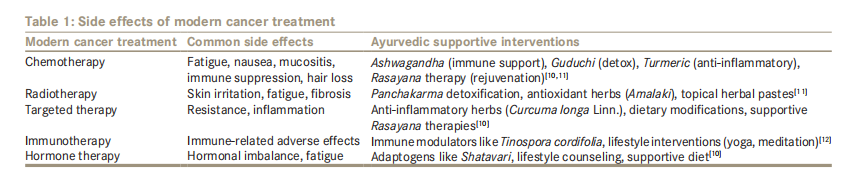
While modern treatments have significantly improved survival rates, they are not without limitations. Chemotherapy and radiation, though effective, often damage healthy cells, leading to side effects such as fatigue, nausea, hair loss, immune suppression, and organ toxicity. Targeted therapies, while more precise, can still result in resistance over time as cancer cells adapt. Immunotherapy, despite its breakthroughs, may cause immune-related adverse effects that can be severe or life-threatening. Furthermore, the emotional and financial burden of prolonged treatment can significantly impact the patient’s quality of life[2,20,21] [Table 1].
Evidence for supportive care in Ayurveda
Recent clinical and observational studies show that Ayurveda, as an adjunct to chemotherapy and radiotherapy, can reduce fatigue, nausea, neuropathy, mucositis, immune suppression, and hair loss, while improving general well-being and resilience among cancer patients. Notable herbs and therapies such as Ashwagandha, Guduchi, Amalaki, and Rasayana protocols have demonstrated efficacy in reducing specific side effects and enhancing quality of life outcomes. In addition, mind–body interventions like yoga and dietary modifications help manage emotional distress and support holistic recovery.[10,11]
- The results of a comparative clinical trial (n = 100) indicated that the administration of W. somnifera (Ashwagandha) in conjunction with chemotherapy significantly reduced levels of fatigue and increased
functioning overall, according to standardized quality-of-life instruments[11]
- Integrative Rasayana therapy in conjunction with radiation improved recovery and protected patients from skin damage[11]
- Clinical studies of herbal interventions such as Guduchi, turmeric, Amalaki, and Shatavari have observed immune-modulation, detoxification, and anti-inflammation, leading to reduced common side effects such as mucositis, myelosuppression, and emotional distress[10,11]
- Ayurvedic mind–body therapies (yoga, meditation) offered emotional and psychosocial support, and reductions in anxiety and improved psychological resilience, in cancer patients.[12,13]
Importance of personalized medicine in cancer care
Personalized medicine, defined as organizing cancer care based on the patient and tumor’s genotype, is the future of cancer care. Genomic profiling allows oncologists to identify driver mutations (or changes in DNA) associated with tumorigenesis to ultimately provide the most effective and least intensive therapy.[22,23] Personalized medicine moves beyond the “one-size-fits-all” philosophy for cancer patients, providing a cure for every unique patient, even among the same tumor classifications. Personalized medicine improves treatment precision, increases survival rates, and improves quality of life.[24,25]
Ayurveda further supports this model by considering the concept of Prakriti, which is the constitutional type of an individual, as well as the diseased state (Vikriti) in clinical evaluation and management.[1,19] Recent ayurgenomic studies have generated molecular and genetic links between Prakriti types and variations in immune function, metabolism, and drug response.[26,27] In addition to practical models for consideration, studies inquiry integration of Prakriti-based profiling with contemporary precision oncology may assist in optimizing treatment selection, adverse events prediction, and enhancing therapeutic effect among individuals with cancer.[1] Similarly, Ayurveda encompasses polyherbal, Rasayana formulations and provides holistic support to medicinal methods based on and individualized to the patient’s constitution and integrates adjunct support as part of therapeutic residue to improve tolerability, minimize toxicity, and improve quality of life.[1,28]
BRIDGING AYURVEDA AND MODERN ONCOLOGY
Integration of Ayurvedic principles into modern oncology practice
Integrating Ayurveda into modern oncology involves aligning time-tested holistic principles with evidence-based cancer care protocols. Ayurvedic concepts such as balancing doshas (functional energies), detoxification through Panchakarma, and immune enhancement through Rasayana therapy can complement conventional treatments.[28,29]
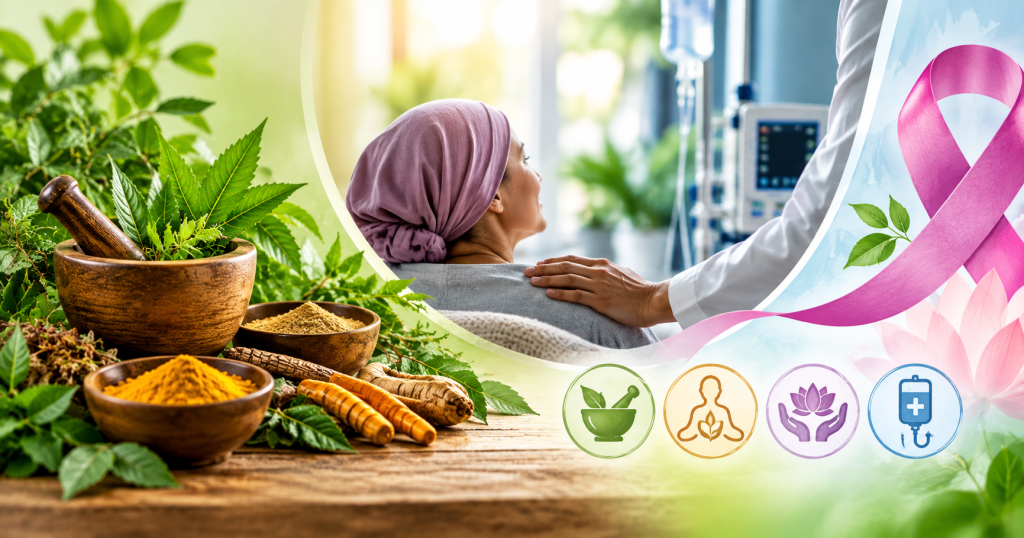
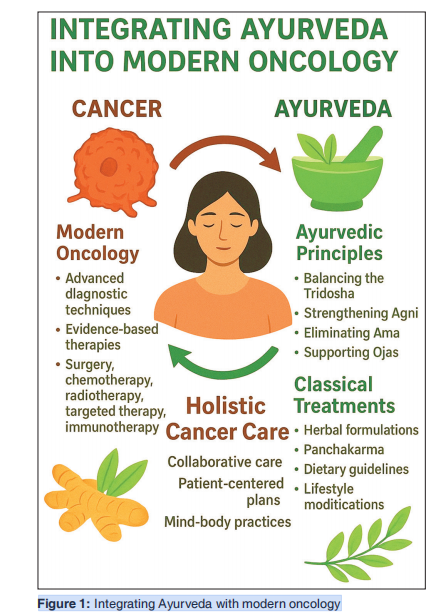
Many cancer centers now offer integrative oncology programs where Ayurvedic dietary guidance (Ahara), lifestyle modifications (Vihara), yoga, meditation, and herbal formulations are incorporated alongside surgery, chemotherapy, radiation, or targeted therapies.[28,30] This multimodal approach ensures not only tumor-directed treatment but also patient-centered care that supports emotional, spiritual, and physical well-being [Figure 1].[31,32]
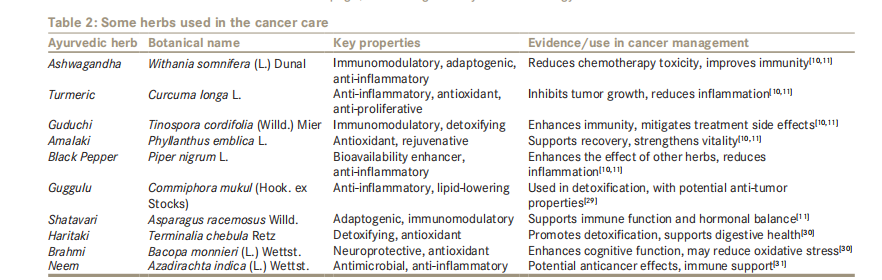
Some Key Herbs used in cancer treatment are summarized in Table 2.
Case studies demonstrating successful outcomes with a holistic approach
Several clinical studies have demonstrated the positive impact of integrating Ayurveda with modern oncology. For example, in a randomized controlled trial involving 60 patients with head-and-neck cancer receiving concurrent chemoradiation therapy, those who used an adjunct Ayurvedic herbal mouthwash (Draksha-Guduchyadi Kashaya, administered as kavala or gargling) demonstrated a delayed onset and significantly reduced severity of oral mucositis compared with those receiving standard care. Notably, only one patient in the Ayurveda group developed grade III mucositis, whereas 17 patients in the control group experienced this severity level, with statistically significant differences emerging from week 2 onward (P = 0.000). Similarly, a case report of a patient with high-grade lymphoma who received Ayurvedic Rasayana therapy as an alternative to chemotherapy showed measurable improvements in quality of life, as reflected by increased scores on the Functional Assessment of Cancer Therapy–General (FACT-G) questionnaire, enhanced performance status on the Eastern Cooperative Oncology Group (ECOG) scale, and evidence of partial tumor regression confirmed through positron emission tomography–computed tomography (PET-CT) imaging over an 8-month treatment period. These examples highlight the value of individualized, holistic care models in integrative oncology, addressing not only disease management but also supporting the patient’s overall health and recovery.[33,34]
IMPLEMENTING A HOLISTIC APPROACH TO CANCER MANAGEMENT
Importance of Interdisciplinary collaboration between Ayurvedic practitioners and oncologists
A truly holistic approach to cancer management requires effective collaboration between Ayurvedic practitioners
and oncologists. This partnership fosters an environment where the strengths of both systems – Ayurveda’s focus on balance, prevention, and whole-person care, and modern oncology’s precision in diagnosis and tumor-targeted treatment[35] – are harnessed for optimal patient outcomes. Interdisciplinary collaboration ensures that therapies are not only safe and evidence-informed but also culturally sensitive and tailored to patient preferences. Regular communication between teams can help in monitoring progress, avoiding potential herb–drug interactions, and reinforcing patient confidence in the treatment plan.[36]
Developing personalized treatment plans for cancer patients
Personalized cancer care integrates modern genomic insights with Ayurveda’s Prakriti-based individualized approach to tailor treatments that maximize effectiveness and minimize side effects. Ayurvedic guidance on diet, lifestyle, herbs, and detoxification complements conventional therapy, creating a patient-centered plan addressing both disease and holistic well-being.[37]
Incorporating mind–body practices such as yoga and meditation into cancer care
Mind–body practices such as yoga, meditation, and pranayama are integral to holistic cancer care. These techniques can help manage stress, improve sleep, enhance emotional resilience, and promote overall well-being.[38] Clinical studies have shown that yoga can reduce fatigue, improve mood, and enhance physical function in cancer survivors, while meditation-based interventions can lower anxiety, depression, and perceived stress levels.[39] Incorporating these practices into routine cancer care not only complements medical treatments but also empowers patients to actively participate in their healing journey.[38,39]
Several medicinal plants, such as Mimosa pudica L.[40] and Cyperus scariosus, [41] have shown significant therapeutic potential. Evidence suggests that certain species exhibit curative or supportive activity against conditions such as monkeypox and cancer.[42] Plants belonging to the Cannabaceae family[43] have also been reported to possess anticancer properties, with studies indicating their usefulness in managing carcinoma. Additional research highlights promising outcomes in the treatmentof coronavirus disease 2019 (COVID-19) and various soil-related cancer issues.[44,45]
Studies on Mangifera indica L. reveal strong anticancer efficacy,[46] along with activity against Parkinson’s disease,[47] conjunctivitis,[48] COVID-19,[49] cardiovascular disorders,[50] and diabetes.[51] Other investigations explore its relevance to germplasm improvement,[52] artificial intelligence-based applications,[53] dysmenorrhea,[54] vitiligo,[55] and stereoisomeric approaches in cancer therapy.[56] Advanced analytical tools such as Gas Chromatography–Tandem Mass Spectrometry (GC-MS/MS) and High-Resolution Liquid Chromatography–Mass Spectrometry–Quadrupole Time-of-Flight (HR-LCMS-QTOF) have further contributed to modern research in cancer treatment.[57]
Overall, extensive studies spanning conventional therapies[58] and traditional medicinal practices[59-73] underscore the substantial potential of these plants in managing cancer and other complex diseases.
FUTURE DIRECTIONS AND CHALLENGES
As integrative oncology gains global recognition, the future holds significant potential for bridging Ayurveda and modern cancer care. Advances in phytochemical research, molecular biology, and genomics can help validate and optimize Ayurvedic interventions for specific cancer types. Collaborative clinical trials are essential to establish evidence-based protocols, determine safe dosage ranges, and assess long-term outcomes of combined therapies. Technological innovations, such as artificial intelligence and big data analytics, may further refine personalized treatment plans by integrating biomedical and Ayurvedic diagnostic parameters.
However, challenges remain. These include regulatory differences between traditional and modern medicine, variability in herbal preparation quality, and skepticism within certain segments of the medical community. Overcoming these barriers requires robust research, cross-disciplinary education, and open-minded dialog between practitioners. Global health policies must also encourage safe integration, ensuring that patient safety, ethical considerations, and cultural values remain at the forefront.
CONCLUSION
Cancer is more than a disease – it is a life-altering journey that challenges the body, mind, and spirit. The integration of Ayurveda and modern oncology offers a promising pathway toward more comprehensive, compassionate, and effective cancer care. By merging the precision of contemporary medicine with the holistic wisdom of Ayurveda, we can move toward a model that not only fights disease but also nurtures resilience, restores balance, and supports the whole person. The future of cancer care lies in embracing diversity in medical systems, fostering collaboration, and empowering patients to take an active role in their healing. Such an integrative, patient-centered approach has the potential to transform cancer management, turning a diagnosis into an opportunity for holistic healing and renewed vitality.
Financial support and sponsorship
Nil.
Conflicts of interest
There are no conflicts of interest.
REFERENCES
- Pitman A, Suleman S, Hyde N, Hodgkiss A. Depression and anxiety in patients with cancer. BMJ 2018;361.
- Sung H, Ferlay J, Siegel RL, Laversanne M, Soerjomataram I, Jemal A, et al. Global cancer statistics 2020: GLOBOCAN estimates of incidence and mortality worldwide for 36 cancers in 185 countries. CA Cancer J Clin 2021;71:209-49.
- Rastogi S. Building bridges between Ayurveda and modern science. Int J Ayurveda Res 2010;1:41-6.
- Patwardhan B, Warude D, Pushpangadan P, Bhatt N. Ayurveda and traditional medicine: A global perspective. Evid Based Complement Alternat Med 2005;2:465-73.
- Aggarwal BB, Sundaram C, Malani N, Ichikawa H. Curcumin: The Indian solid gold. Adv Exp Med Biol 2007;595:1-75.
- Balachandran P, Govindarajan R. Cancer—An ayurvedic perspective. Pharmacol Res 2005;51:19-30. doi:10.1016/j.phrs.2004.04.010.
- Tandon N, Yadav SS. Contributions of Indian Council of Medical Research (ICMR) in the field of medicinal plants and traditional medicine. Indian J Med Res 2017;145:469-81.
- Baliga MS, Dsouza JJ. Amla (Emblica officinalis Gaertn), a wonder berry in the treatment and prevention of cancer. Eur J Cancer Prev 2011;20:225-39.
- Ramamoorthy A, Janardhanan S, Jeevakarunyam S, Jeddy N, Eagappan S. Integrative oncology in Indian subcontinent: An overview. J Clin Diagn Res 2015;9. doi:10.7860/JCDR/2015/12185.5714.
- Jha SK, Singh SK, Gorain M, Verma A, Patra A, Kundu GC, Binimelis R. Bridging Ayurvedic medicine and modern cancer therapeutics. Front Nat Prod 2025;2:1635197. doi:10.3389/fntpr.2025.1635197.
- Deshmukh S, Nagane N, Kulkarni A, Ghati A, Ingale P. Effect of an Ayurvedic formulation on quality of life and adverse effects in breast cancer patients receiving chemotherapy: A randomized controlled study. Support Care Cancer 2014;22:681-9. doi:10.1007/s00520-013-2017-x.
- Arnold JT, Smith CA. Integrating ayurvedic medicine into cancer research and patient care: effects on quality of life and psychosocial variables. J Ayurveda Integr Med 2023;14:100777. doi:10.1016/j.jaim.2022.100777.
- Mao JJ, Pillai GG, Andrade CJ, Ligibel JA, Basu P, Cohen L, et al. Integrative oncology: Addressing the global challenges of cancer prevention and treatment. CA Cancer J Clin 2022;72:144-64. doi:10.3322/caac.21706.
- Jain R, Kapur P, Kaur S. Ayurveda and cancer. Pharmacogn Res 2010;2:393-401. doi:10.4103/0974-8490.75460.
- Balachandran P, Govindarajan R. Cancer – An Ayurvedic perspective. Pharmacol Res 2005;51:19-30.
- Rastogi S. Ayurvedic diagnosis and treatment principles for cancer. Int J Ayurveda Res 2010;1:149-53.
- Patwardhan B, Warude D, Pushpangadan P, Bhatt N. Ayurveda and traditional Chinese medicine: A comparative overview. Evid Based Complement Alternat Med 2005;2:465-73. doi:10.1093/ecam/neh140.
- Dhruva A, Hecht FM, Miaskowski C, Kaptchuk TJ, Bodeker G, Abrams D, et al. Correlating traditional Ayurvedic and modern medical perspectives on cancer: Results of a qualitative study. J Altern Complement Med 2014;20:364-70. doi:10.1089/acm.2013.0259.
- Huang Z, Chavda VP, Bezbaruah R, Uversky VN, Sucharitha P, Patel AB, et al. An Ayurgenomics approach: Prakriti-based drug discovery and development for personalized care. Front Pharmacol 2022;13:866827. doi:10.3389/fphar.2022.866827.
- Tamta A, Dadri GB, Jha SK. Implications of green technology for climate change mitigation minimizing waste and pollution. TIDEE TERI Inf Dig Energy Environ 2023;22:476.
- Cancer Research Institute. Immunotherapy side effects. Cancer Research Institute 2025. Available from: https://www.cancerresearch.org/immunotherapy-side-effects. [Last accessed on 2025 Aug 30].
- Pal RS. Transforming cancer care through personalized medicine. Cancer Treat Rev 2025;48:102-13.
- Singh D. Personalized medicine: An alternative for cancer treatment. Biomed Pharmacother 2024;147:112658.
- Jenča A, Mills DK, Ghasemi H, Saberian E, Forood AMK, Petrášová A, et al. Herbal therapies for cancer treatment: A review of phytotherapeutic efficacy. Biologics 2024;18:229-55. doi:10.2147/BTT.S484068.
- Huang Z, Chavda VP, Bezbaruah R, Uversky VN, Sucharitha P, Patel AB, Chen ZS. An Ayurgenomics approach: Prakriti-based drug discovery and development for personalized care. Front Pharmacol 2022;13:866827. doi:10.3389/fphar.2022.866827.
- Giridharan S, Yoga as a therapeutic intervention in cancer care: An umbrella review of systematic reviews and meta-analyses. Cureus 2024;16. doi:10.7759/cureus.62668.
- Sagar S, Sabharwal M. Rasayana therapy in Ayurveda: Potential role in cancer supportive care. Ayushdhara 2025;12:234-46.
- Makrigiannakis A, Vrekoussis T, Zoumakis E, Kalantaridou SN, Jeschke U. The role of human chorionic gonadotropin in implantation: A mini-review of molecular and clinical evidence. Int J Mol Sci 2017;18:1305. doi:10.3390/ijms18061305.
- Sharma H, Chandola H. Role of integrative Ayurveda in modern oncology. J Ayurveda Integr Med 2025;16:68-77.
- Vyas P, Thakar AB, Baghel MS, Sisodia A, Deole Y. Efficacy of Rasayana Avaleha as adjuvant to radiotherapy and chemotherapy in reducing adverse effects. Ayu 2010;31:417-23.
- Saniya K, Dinesh S, Bhat S, Belani R, Bhatt AR. Comparative evaluation of an ayurvedic oral rinse and soda-salt mouthwash for oral complications in head and neck cancer patients undergoing chemoradiotherapy: A randomized controlled trial. J Ayurveda Integr Med 2023;14:100805. doi:10.1016/j.jaim.2023.100805.
- Gandhi A, Master S, Bhise V. When nature meets oncology: unraveling herb-drug interactions in cancer therapy. Int J Mol Sci 2025;26:10494. doi:10.3390/ijms262110494.
- Giridharan S, Yoga as a therapeutic intervention in cancer care: An umbrella review of systematic reviews and meta-analyses. Cureus 2024;16. doi:10.7759/cureus.62668.
- Vyas P, Thakar AB, Baghel MS, Sisodia A, Deole Y. Efficacy of Rasayana Avaleha as adjuvant to radiotherapy and chemotherapy in reducing adverse effects and improving tolerance in cancer patients. Ayu 2010;31:417-23. doi:10.4103/0974-8520.82029.
- Joshi R, Mao JJ, Cohen L, Ghelman R, Mustian KM, Puthiyedath R, et al. Interdisciplinary collaboration in integrative oncology: Bridging Ayurveda and modern medicine. Current Oncology Reports 2025;27:239-49. doi:10.1007/s11912-024-01487-2.
- Posadzki P, Watson LK, Ernst E. Herb–drug interactions: An overview of systematic reviews. British Journal of Clinical Pharmacology 2013;75:603-18. doi:10.1111/j.1365-2125.2012.04350.x.
- Patwardhan B, Gehlot S, Singh G, Rathore H. Ayurveda and genomics: Integrative approach to personalized cancer care. J Cancer Res Clin Oncol 2025;151:1761-73.
- Cramer H, Lauche R, Klose P, Dobos G, Paul A, Langhorst J. Yoga for improving health-related quality of life, mental health, and cancer-related symptoms in patients: A systematic review and meta-analysis. Integrative Cancer Therapies 2024;23:15347354231124537. doi:10.1177/15347354231124537.
- Carlson LE, Garland SN. Impact of mindfulness-based interventions on anxiety, depression, and stress in cancer patients. Curr Opin Support Palliat Care 2025;19:21-7.
- Gandhi MY, Prasad SB, Kumar V, Soni H, Rawat H, Mishra SK, et al. Quantification of phytochemicals and metal ions as well as the determination of volatile compounds, antioxidant, antimicrobial and antacid activities of the Mimosa pudica L. Leaf: Exploration of neglected and under-utilized part. Chem Biodivers 2023;20.
- Gandhi Y, Kumar V, Singh G, Prasad SB, Mishra SK, Soni H, et al. Chemoprofiling and medicinal potential of underutilized leaves of Cyperus scariosus. Sci Rep 2024;14:7263.
- Jha SK, Islam M, Kumar R, Rana L, Saifi MA, Ali S, et al. Evaluation of Vernonia amygdalina del. containing phyto constituents a medicinal plant compound as new potential inhibitors of Monkey pox virus using molecular docking analysis. World J Adv Res Rev 2023;17:1112-22.
- Jha SK, Kumar C, Bharadwaj S, Kalpana, Vishakha, Chauhan P, et al. Synthesis, in-silico design and spectral characterization, elucidation of Cannabis sativa L. (Cannabaceae) containing phytoconstituents demonstrating novel therapeutic efficacy against epilepsy. World J Adv Res Rev 2023;18:1280-93. doi:10.30574/wjarr.2023.18.2.0968.
- Jha SK, Mishra AK, Kumar V, Dane G, Kumari S, Charde V, et al. Ecological and behavioral impacts of COVID-19 on human existence and potential preventive measures through traditional and alternative medicine – A narrative review. Pharmacol Res Nat Prod 2024;3:100042.
- Sonkar V, Jha SK, Tiwari S, Akarsh A, Priya S, Sharan P, Sharan A. Characterization and explanation of the soil fertility state of Sakaldiha block in the Chandauli District of Uttar Pradesh’s industrial area. World Journal of Advanced Research and Reviews 2023;18:63-72. doi:10.30574/wjarr.2023.18.1.0471.
- Chauhan S, Jha SK, Tamta A, Sharma V, Kumar C, Lohiya G, et al. Descriptive analytical study based on profiling, morphological, pomological and pharmacological traits to identify the genotypes of the promising mango Mangifera indica L. World J Adv Res Rev 2023;19:1544-53.
- Khan R, Maheshwari D, Chauhan S, Lohiya GV, Kumar C, Antil I, et al. Exploring the potential therapeutic value of Solanum lycopersicum L. phytoconstituents for Parkinson’s disease through molecular docking analysis. World J Adv Res Rev 2023;20:488-501.
- Sonawane SM, Lohiya GV, Rao AK, Beniwal M, Chavan SU, Aparadh VM, et al. Conjunctivitis in unusual populations: A review of rare cases and challenges in diagnosis and management. World J Adv Res Rev 2023;19:1326-36.
- Singh NK, Sengar AS, Jha SK. A review of Ayurvedic measures for preventing COVID-19 and promoting health during pregnancy. J Indian Syst Med 2024;12:61-5.
- Trivedi LM, Saxena S, Sharma S, Beniwal M, Jha SK, Rao AK, et al. Characterization, profiling, and molecular docking analysis of phytochemicals derived from Daucus carota for evaluating their potential role in cardiovascular disease (CVD) assessment. World J Adv Res Rev 2023;20:159-75.
- Zargar AA, Mehta V, Gupta R, Bhandari K, Sharma MC, Balaji P, et al. Incretin hormones: Mechanisms, therapeutic implications, and future directions in glucose regulation and diabetes management. Curr Proteom 2025;22:100014.
- Tamta A, Jha SK. Screening of Germplasms and Population Dynamics of Major Insect Pests of Spring Green Gram Vigna radiata (Linn.) (Doctoral dissertation, Doctoral Dissertation, Doctoral Dissertation, GB Pant University of Agriculture and Technology, Pantnagar-263145 (Uttarakhand)).
- Singh A, Jha SK, Dwivedi PC, Srivastava U, Pal A. Revolutionizing healthcare: Integrating electronics, AI, traditional, and conventional methods. World J Adv Res Rev 2024;23:2426-34.
- Shrivastav S, Tyagi R, Singh M, Jha S. The effectiveness of curcumin on dysmenorrhea. Int J Med Sci Pharma Res 2022;8:8-12.
- Jha SK, Charde V, Kumar V, Narasimhaji CV. Vitiligo treatment with natural bioactive: A narrative review. Nat Prod J 2025. In press.
- Chawla S, Gupta R, Jha SK, Kashid S, Jha KT. Stereoisomerism in Chemistry and Drug Development: Optical, Geometrical, and Conformational Isomers. Medicinal Chemistry (Shariqah (United Arab Emirates)).
- Badal R, Ranjan S, Jha SK, Kumar L, Patel AK, Yadav P, et al. GC-MS/MS and HR-LCMS-QTOF analysis of various extracts of Saraswata Ghrita: A comprehensive dataset on phytochemical compounds. Data Brief 2025;61:111675.
- Dykman LA, Khlebtsov NG. Gold nanoparticles in biomedical applications: Recent advances and perspectives. Chemical Society Reviews 2012;41:2256-82. doi:10.1039/c2cs15306c.
- Sharma S, Kumar C, Kushwaha H, Jha SK, Chawla S, Sharma A, et al. Advancing anticancer drug development: Overcoming challenges and exploring new therapeutic strategies. Ayush J Integr Oncol 2025;2:8-27.
- MehtaV, ZargarAA, Attri P, Jha SK. Bagging the role of herbal drugs in the management of cervical cancer. Ayush J Integr Oncol 2025;2:35-43.
- Jha SK, Gupta A, Huddar VG. Botanical breakthroughs: The growing impact of plant-derived compounds in cancer treatment. Ayush J Integr Oncol 2025;2:62-7.
- Jha SK, Singh N, Shanker OR, Antil I, Baghel JS, Huddar V, et al. A review on integrative approaches in oncology: Bridging Ayurvedic medicine and modern cancer therapeutics. Front Nat Prod 2025;4:1635197. doi:10.3389/fntpr.2025.1635197.
- Kumar R, Verma H, Ali M, Midha T, Kumar D, Jha SK. Review of mitigating cancer risk through Ayurvedic practices: A holistic approach to combating sedentarism. Ayush J Integr Oncol 2025;2:86-90.
- Sharma A, Jha SK, Huddar VG. Integrative role of Ayurvedic phytochemicals in cancer treatment: Targeting signaling pathways, boosting chemosensitivity, and utilizing traditional therapeutics. Ayush J Integre Oncol 2025;2:77-85.
- Patel S, Singh S, Gupta AK, Dalimbe AY, Muthoju SM, Pawar AR, et al. Ayurveda and common Indian spices: A natural alternative for cancer therapy. Ayush J Integr Oncol 2025;2:91-102.
- Singh V, Mandal P, Kaur N, Bora D, Gupta R, Kumar A. Synthesis, characterization, and binding interactions of rhodanine-3-acetic acid-based compound for latent fingerprint development. J Forensic Sci 2025. Epub ahead of print.
- Antil I, Bangarwa S, Jha SK, Gupta AJ, Soni U, Huddar VG, et al. Exploring the chemopreventive and anticancer effects of green tea. Ayush J Integr Oncol 2025;2:158-68.
- Sharma S, Yadav C, Chawla S, Jha SK. Beyond chemotherapy: Exploring the potential of phytomedicine in oncology. Ayush J Integr Oncol 2025;2:133-45.
- Ahlawat A, Chauhan S, Antil I, Jha SK, Huddar VG. Examining the impact of the microbiome on cancer immunotherapy outcomes: A review. Ayush J Integr Oncol 2025;2:118-24.
- Attri P, Zargar AA, Mehta V, Mushtaq SU, Jha SK, Soni U. Genetic basis of cancer: Harnessing natural remedies for therapeutic potential. Ayush J Integr Oncol 2025;2:188-94.
- Chauhan S, Jha SK, Huddar VG, Ahlawat A, Sharma S, Tripathi A, et al. Targeting cancer at the molecular level: A biochemical and medicinal chemistry approach. Ayush J Integr Oncol 2025;2:169-77.
- Raj H, Sharma S, Tripathi A, Huddar VG, Jha SK. Herbal medicine in cancer therapy: A comprehensive review of phytoconstituents, mechanisms, and clinical applications. Ayush J Integr Oncol 2025;2:146-57.
- Gupta AJ, Huddar VG, Jha SK, Soni U. Traditional wisdom in modern oncology: Ayurvedic pain relief and supportive care. Ayush J Integr Oncol 2025;2:178-87.