Abstract
Background: Cancer is a serious global health issue, and as multimodal therapies have advanced, treatment-related toxicities have a significant influence on function, compliance, and quality of life. Integrative oncology looks for supportive treatment and resilience-promoting supplementary techniques that are supported by research. Rasayana is the rejuvenating branch of Ayurveda that emphasizes on ojas (vitality), immunological balance, and metabolic homeostasis. It is probably useful for cancer care.
Objective: To integrate the safety considerations, emerging clinical cues, conceptual rationale, and implementation pathways of Rasayana-concordant botanicals and regimens as cancer care-modifying adjuncts.
Methods: Using iterative PubMed, Cochrane, EMBASE, AYUSH Portal, ctri.nic.in, ClinicalTrials.gov and WHO ICTRP searches until August 2025, a review was conducted in accordance with SANRA principles. Human clinical and translational data on Rasayana-compatible therapies given in addition to conventional oncologic treatments were, with focus on symptom clusters, safety, mechanistic plausibility, and herb–drug interactions. Classical Ayurvedic terms (e.g., Medhya, Balya, Ojovardhaka, and Raktaprasadana) were linked to their biological correlates and patient-reported outcomes using thematic data synthesis.
Results: Major Rasayana herbs with immunomodulatory, antioxidant, neuroendocrine, and mucosal-protective properties include Withania somnifera, Curcuma longa, Phyllanthus emblica, Tinospora cordifolia, and Ocimum tenuiflorum. Preliminary clinical data indicate improvements in symptoms. Safety themes highlight the importance of product authentication, pharmacovigilance, and monitoring potential herb-drug interactions, particularly those involving CYP3A4 and P-gp regulation.
Conclusion: In integrative oncology, Rasayana-based therapies show early supportive care and physiologically believable potential. Under multidisciplinary supervision, their usage should continue to be customized, safety-monitored, quality-assured, and adjunctive. Well-planned, oncology-focused clinical trials are required.
- INTRODUCTION
According to recent GLOBOCAN estimates, cancer will continue to be a leading cause of morbidity and mortality worldwide, with around 20 million new cases and 9.7 million deaths expected in 2022.¹ In a similar vein, the WHO emphasizes the extent and pattern of the burden worldwide.² Even while multimodal therapy—including immunotherapy, radiation, surgery, and systemic treatment (cytotoxic, targeted, and endocrine)—has improved survival, patients may experience severe acute, chronic, and late toxicities that impair compliance, quality of life, and dosage intensity.*,⁴
The field of integrative oncology has also developed at the same time. According to guidelines from the American Society of Clinical Oncology (ASCO) and the Society for Integrative Oncology (SIO), certain non-pharmacologic adjuvants (such as acupuncture, mindfulness, yoga, massage, and music therapy) are now supported for indications such as pain, anxiety/depression, and cancer-related fatigue. These treatments are explicitly meant to supplement, and not replace, standard care.⁵⁻⁷
Rasayana is the ancient rejuvenating science of Ayurveda that deals with vigor, healthy aging, convalescence after illness, and preserving vitality (ojas). In order to improve immune competence, cognition, and functional ability, ancient literature (such as Caraka Saṃhita and Rasayana Adhyaya) describes dietary, behavioural, and plant-based strategies that maximize rasa dhatu and the subsequent tissue nutrient.⁸,⁹
Rasayana is contextualized by contemporary scholars as a group of adaptogenic, multi-target methods with hypothesized immunomodulatory, anti-inflammatory, and redox-balancing effects that are pertinent to survival goals (e.g., organ protection, stress management, and fatigue reduction).¹⁰,¹¹ The potential of Rasayana measures as an adjuvant to supportive oncology to improve recovery and tolerance without compromising anticancer activity has been explored in traditional literature.¹²
According to the current concept of integrative oncology, which is evidence-based, patient-centered therapy that incorporates lifestyle changes, natural products, and mind-body practices with conventional therapies, this review takes an adjunctive (rather than alternative) approach to Rasayana.¹* We strongly advise against replacing alternative medicine with guideline-concordant oncology, since observational research indicates that doing so is associated with a worse chance of survival and the denial of necessary therapy.¹⁴
The WHO Traditional, Complementary, and Integrative Medicine approach, for example, places Rasayana in the present policy debate that emphasizes safety, efficacy, and responsible integration while calling for increased research, pharmacovigilance, and product standardization.¹⁵
These opinions work together to provide a narrative synthesis that (i) outlines Rasayana concepts relevant to cancer and (ii) illustrates reliable mechanistic interfaces (immune regulation, inflammation/oxidative stress, metabolic resilience, and neurocognitive support); and (iii) assesses the emerging clinical signal for adjuvant strategies developed from Rasayana with a focus on safety, treatment tolerance, and outcomes for survivors.
2. METHODS
2.1 Design and question framing
For methodological transparency and rigor, the review complied with the Scale for the Assessment of Narrative Review Articles (SANRA). This review was guided by the following question -Which Rasayana-consonant botanicals, preparations, and therapies demonstrate credible adjunctive activities in cancer treatment, by mechanisms, supportive-care benefits, safety, and delivery?
To combine clinical, preclinical, and conceptual information without quantitative pooling, the approach was exploratory and narrative. The focus was limited to Rasayana’s adjunctive, not alternative, applications in modern oncologic treatment.
2.2 Sources and search strategy
From the inception of the database until August, 2025, iterative searches were conducted in the following important biological and complementary-medicine repositories: the AYUSH Research Portal, WHO ICTRP, EMBASE, Cochrane Library, CTRI, ClinicalTrials.gov, and PubMed/MEDLINE.
Key search syntax was the combination of controlled vocabulary and free-text terms like: (“Ayurveda” OR “Rasayana” OR “rejuvenation therapy” OR “Chyawanprash” OR “Withania somnifera” OR “Tinospora cordifolia” OR “Emblica officinalis” OR “Curcuma longa” OR “Glycyrrhiza glabra” OR “Ocimum sanctum”) AND (“cancer” OR “oncology” OR “chemotherapy” OR “radiotherapy” OR “immunotherapy” OR “survivorship”) AND (randomized OR trial OR cohort OR preclinical).
2.3 Eligibility criteria
A broad, pragmatic framework for inclusion was employed: Results related to symptom clusters (fatigue, mucositis, sleep, anxiety, chemotherapy-induced peripheral neuropathy, appetite/cachexia, quality of life [QoL]), safety, or herb–drug interactions are included in human studies (Randomized, pragmatic, cohort, or case series) that investigate Rasayana-compatible botanicals, preparations, or behavioral regimens given in addition to standard oncologic therapy.
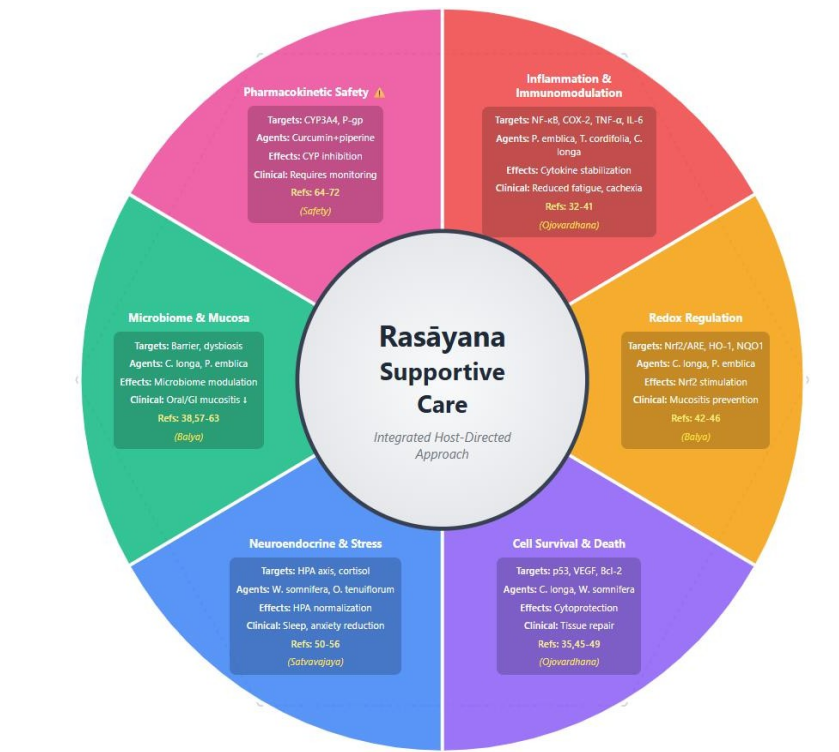
Figure 1. Mechanistic integration wheel: Rasayana-based interventions in oncology supportive care. Traditional concepts: ojovardhana (tissue nourishment/vitality), balya (strength restoration), satvavajaya (mind-body balance). Warning symbol (⚠) on Pharmacokinetic Safety highlights need for drug interaction monitoring.
Research that promotes alternatives to conventional therapy, is not pertinent to cancer, or describes non-Ayurvedic complementary and alternative medicine without any context are excluded. Language: English; translation was requested for important papers, and non-English publications were included provided an English abstract allowed for evaluation. Instead of being utilized as stand-alone clinical proof, preclinical and mechanistic data were only used to strengthen valid biological processes (such as immunomodulatory, redox, or neuroendocrine effects).
1.1 Ethical Considerations
This article follows the Declaration of Helsinki: Statement of Ethical Principles for Medical Research Involving Human Subjects. Review papers do not include direct human testing, but they combine and summarize previously published findings with the highest integrity, accuracy, and transparency.
For patient data, case details, and individual articles, journal regulations and international norms safeguard privacy and confidentiality. Evidence synthesis and critical assessment acknowledge ethical issues related to the included research, such as verified ethics approval or informed consent. The author claims to have followed all journal ethical rules.
- CONCEPTUAL FOUNDATIONS OF RASAYANA
2.1 Classical Taxonomy
According to Ayurveda, rasayana is the branch of rejuvenative medicine that recovers and preserves strength, longevity, vitality, immunity, and intelligence. Rasayana chikitsā is described in the classical texts as a three-dimensional therapeutic science that involves drug formulations, food regimens, and behavior that maximize rasa dhātu, the essence of nutrients that supports all body tissues (dhātus) and converts into Ojas, a substrate for immunity and stabilizing the body. [16,17] Rasayanas have historically been characterized by their intended effect: The nootropic/adaptogenic (Medhya Rasayana) uses herbs including Centella asiatica, Bacopa monnieri, and Glycyrrhiza glabra to enhance neuroendocrine balance, clarity, and cognition. [18] Withania somnifera, Asparagus racemosus, and Pueraria tuberosa are used in Balya Rasayana (anabolic/reparative) to restore tissue integrity and strength. [19] Ojovardhaka Rasayana (immuno-restorative)—activates Ojas for health, healing, and illness resistance, including Phyllanthus emblica and Tinospora cordifolia. [20] The hematologic/vascular cleanser (Raktaprasādana Rasayana) aids in bone marrow and microcirculatory rehabilitation after cytotoxic therapy by nourishing rakta dhatu. [21] These classifications reflect Ayurveda’s systems-based approach, as opposed to symptom-based one, in which the body’s fundamental metabolic and immunological functions are rejuvenated. This approach aligns with modern ideas of integrative cancer and survivorship care.
3.2 Relevance to Oncology
The Rasayana strategy also reflects the current supportive-care objectives in oncology, which prioritize quality of life, preventing adverse effects, and increasing treatment tolerance above the direct attack on cancer. [22,23] Cachexia, neurocognitive impairment, psychological anxiety, and oxidative and inflammatory stress are all frequently brought on by oncologic therapies. It has been suggested that rasayana therapies can reverse these systemic aftereffects through immunomodulatory, anabolic, adaptogenic, and antioxidant mechanisms. [24–26] Tinospora cordifolia, for instance, promotes immunological homeostasis by regulating the balance of cytokines (IL-1β, TNF-α, and IL-6). [27] Strong polyphenolic antioxidant and DNA-protective properties of Phyllanthus emblica aid in the hematologic recovery following chemotherapy. [28] Meta-analyses of randomized studies with fairly acceptable safety profiles have shown that Withania somnifera (Ashwagandha) improves sleep and tiredness upto some extent. [29] Rasayana agents, which aim for resilience rather than remission and act as biological bridges between cytotoxic medications and host repair, are supported by this data as supplemental therapy to routine care.
3.3 Translational Bridge
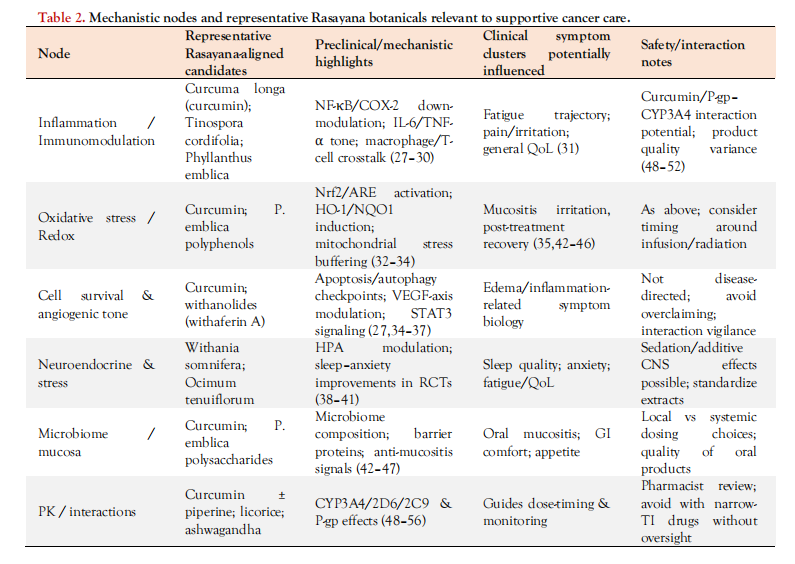
The foundation of establishing Rasayana in integrative cancer is the conversion of Ayurvedic ideas into biological research variables. Measurable biomarkers and patient-reported outcomes can be used to operationalize traditional outcomes, such as Ojas (vitality), Agni (metabolic power), and Srotas (transport routes) – Table 1. [30,31] A cross-mapping research paradigm where subjective (QoL, tiredness, mood) and objective (immune, redox, metabolic) results meet is made possible by this integration. It produces therapeutically significant, measurable objectives while preserving the conceptual integrity of Ayurveda.
The worldwide trend toward precision supportive care, which emphasizes patient safety, resilience, and post-treatment wellbeing, is also in line with this harmonization.
3.4 Theoretical Integration
Rasayana may be seen of as a biopsychosocial–immunologic interface in the context of integrative oncology, influencing three pathways that are mutually related:
Cellular Defense and Restoration: DNA damage from radiation and chemotherapy is avoided by maintaining antioxidant and redox equilibrium.
Neuroendocrine–Immune Homeostasis: Tolerance and mood stability are enhanced by adaptogenic control of the cytokine environment and HPA axis. Metabolic Repletion: Anemia, cachexia, and muscular atrophy are treated with nutritional and anabolic Rasayanas. These areas reflect modern survivorship paradigms that focus on host biology modulation, immune rehabilitation, and psychosocial resilience as the cornerstones for long-term recovery.
Table 2 represents detailed rasayana botanicals relevant to the cancer care.
- MECHANISTIC REASON
The potential of Rasayana-congruent botanicals and formulations to alter host biology relevant to treatment tolerance and survivorship—rather than to replace anticancer therapy—is being studied in an adjuvant, supportive-care setting. The evidence is organized into six interconnected nodes that connect contemporary pathways linked to symptom biology and recovery to traditional rejuvenative notions (such as ojovardhana and balya).
4.1 Inflammation and Immunomodulation (innate–adaptive balance, cytokine tone, COX-2, and NF-κB)
Pro-inflammatory cytokine programs (e.g., TNF-α, IL-6) linked to symptom load (e.g., tiredness, cachexia) and dysregulated recovery after cytotoxic therapy are maintained by sustained NF-κB and COX-2 activation. [32–34]
In preclinical and translational studies, rasayana-concordant plant-based
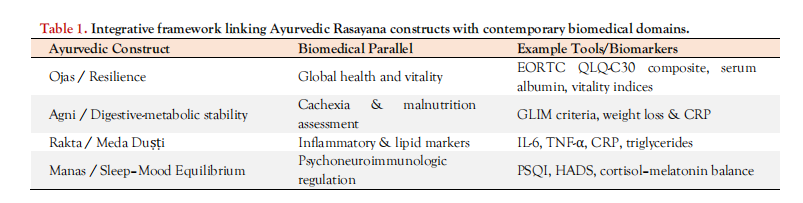
Clinically, addressing a milieu dominated by IL-6 is consistent with supportive goals in oncology (e.g., reducing fatigue and systemic inflammation).
4.2 Redox Regulation and Oxidative Stress (Nrf2/ARE; mitochondrial stress)
Radiation and cytotoxic therapies increase ROS in the mitochondria and inhibit natural antioxidant systems. One classic adaptive response that guards against oxidative damage is the induction of the Nrf2-ARE axis (e.g., HO-1, NQO1, GCLM). [42,43]In models related to mucosal and tissue integrity, curcuminoids and amla polyphenols have been shown to stimulate Nrf2 and improve redox homeostasis. [42,44–46] Redox buffering offers a logical route for tissue repair, improved tolerance, and the avoidance of mucositis from the standpoint of supportive care.
4.3 Cell Survival & Death Programs (apoptosis/autophagy; p53 context; pro-/anti-angiogenic signals)
Rasayana components influence apoptosis/autophagy pathways in a context-dependent manner, which promotes cytoprotection in healthy tissues but (in particular systems) makes cancerous cells more sensitive to stress. Curcumin can alter the VEGF and NF-κB-mediated survival pathways, and it has been shown to have pro-apoptotic and anti-angiogenic properties on several occasions. [35,45–47] In preclinical models, withanolides (like withaferin A) can trigger mitochondrial apoptosis by modulating the p53/STAT3/Bcl-2 axis. [48,49] These qualities are mostly discussed in oncologic supportive care in relation to their capacity to influence local tissue repair and edema/inflammation, not as alternatives to disease-specific treatment.
4.4 Neuroendocrine & Stress-Axis Modulation (HPA axis; sleep–wake; anxiety/fatigue)
Neuroendocrine homeostasis intersects with the ideas of classical satvavajaya. Consistent with adaptogenic HPA-axis normalization, Withania somnifera yields randomized-trial evidence for improved sleep quality and reduced self-reported stress. [50–52] Controlled trials have provided more information regarding the effects of Ocimum tenuiflorum (tulsi) on stress and sleep. [53,54] These activities directly support survival priorities (fatigue, sleeplessness, anxiety) when paired with behavioral sleep and psychological therapy based on guidelines. Mechanistically, inflammation and mind-body control are linked via stress-cytokine cross-talk (IL-6/TNF-α). [55,56]
4.5 Microbiome & Mucosal Integrity (barrier function; dysbiosis)
Oral/GI mucositis, discomfort, and intake are made worse by dysbiosis and barrier degradation. In preclinical and early translational studies, curcumin has demonstrated barrier-integrative and microbiome-modulating properties, [57–59] with therapeutic indications for reducing oral mucositis in head-and-neck treatment. [60–62] Extracts from Phyllanthus emblica that are high in polysaccharides also show positive interactions between the microbiota and the mucosa. [38,63] These results encourage carefully planned studies together with evidence-based prevention and normal oral hygiene practices in an adjuvant manner.
4.6 Pharmacokinetic Modulation & Safety (CYP / P-gp; pharmacovigilance)
Certain botanicals have an impact on CYP3A4, CYP2D6, CYP2C9, and P-glycoprotein, which raises the likelihood of drug–herb interactions, especially when used with narrow
Indexed medications and targeted treatment agents. [64–68] Co-formulated piperine and co-administered curcumin may inhibit P-gp/CYP3A4, altering the exposure of co-administered medications. [65–68] Glycyrrhizin/licorice should be taken into account for mineralocorticoid effects and possible PK interactions; [71,72] withania extracts show varied in-vitro CYP effects with questionable clinical significance. [69,70] Clinical application in cancer requires pharmacovigilance, dosage transparency, identity/authentication, and standardization.
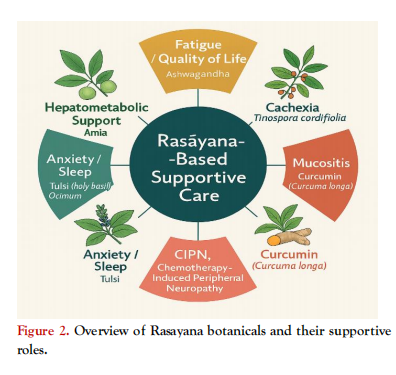
- Evidence Landscape (Clinical Signals & Gaps) (Figure 2,3)
The following results pertain to adjuvant supportive-care roles rather than disease-modifying substitutes; the evidence is heterogenous (many small, single-center, or open-label trials); routine supportive measures remain first-line; Rasayana-directed strategies can be added in addition to standard care with oncology/pharmacy management. Cancer-related fatigue (CRF) & quality of life (QoL) An open-label comparison study in patients receiving chemotherapy for breast cancer showed that using Withania
Somnifera reduced fatigue scores (PFS, SCFS-6) and improved many EORTC QLQ-C30 domains when compared to usual care; there is a high risk of bias and RCT replication is advised. [73] Current ASCO–SIO guidelines prioritize exercise, cognitive behavioral therapy, mindfulness/yoga, and other non-pharmacologic treatments as the norms for CRF; botanicals are not currently recommended for CRF, although some are being studied as adjuncts. [74–76] W. somnifera and Ocimum tenuiflorum improved sleep quality and perceived stress across 8–12 weeks in RCTs of non-cancer populations. These are variables that are presumably relevant to tiredness trajectories, but need RCTs specifically focused on oncology. [77–79]
Weight Trajectory, Appetite, and Cachexia
There are a few RCTs of possible Rasayana treatments for cachexia. The absence of high-quality studies is consistently mentioned in reviews. [80] Clinical translation to endpoints like lean mass, hand-grip strength, or GLIM/cachexia staging is still poorly understood, despite preclinical and translational efficacy (e.g., withanolides/withaferin A) having anti-catabolic and cytokine-modulating effect. [81,82]
Dermatological Toxicity and Mucositis
Benefit signals in radiation-/chemoradiation-induced oral mucositis (RIOM) in patients with head and neck cancer include reductions in pain and mucositis intensity with typically high tolerability, according to several small trials and reviews. [83–87] Positive trends were also shown in a preliminary RCT comparing benzydamine and curcumin mouthwash. [85] In a randomized research, Glycyrrhiza glabra mouthwash reduced the severity of RIOM. [88] Routine dental care is further supporting of such findings; nevertheless, limited sample numbers, variation in dosage/formulation, and outcome measures limit confidence and necessitate larger, blinded studies. Chemotherapy-Induced Peripheral Neuropathy (CIPN), Pain, and Anxiety/Sleep. Oral curcumin reduced the incidence and severity of vincristine-induced peripheral neuropathy as compared to control in a phase-III pediatric trial. [89] Curcumin’s anti-neurotoxic qualities in zovirax and cisplatin models are supported by preclinical data. [90,91] There are few oncology-specific studies for W. somnifera/O. tenuiflorum in the sleep/anxiety domain; non-cancer RCTs show improved sleep quality and reduced stress scores, which is in line with potential symptomatic benefits as supplements to behavioral therapy based on guidelines. [77–79]
GI & Hepatometabolic Support
Although there are no particular oncology studies for Phyllanthus emblica (amla), it does have non-oncology clinical evidence for lipid/hepatometabolic regulation and
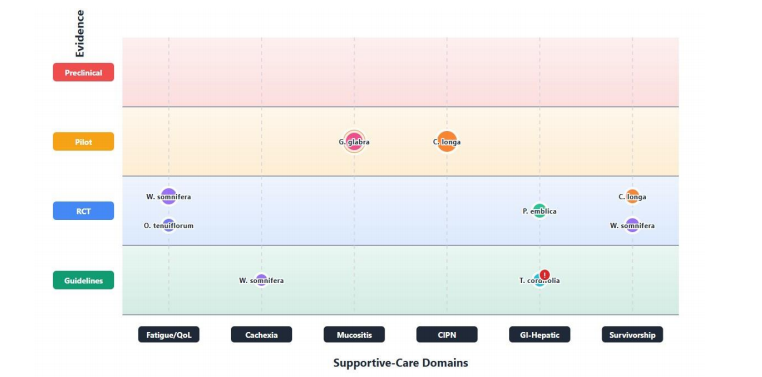
Figure 3. Evidence landscape of Rasayana-based adjuncts across supportive-care domains in oncology. Red warning (!) indicates safety concerns requiring monitoring (Tinospora cordifolia hepatotoxicity). Standard supportive care remains first-line.
Historical hepatoprotective signals. [92,93] Tinospora cordifolia is commonly mentioned in relation to immunomodulation; nevertheless, recent studies link it to possible herb-induced autoimmune-hepatitis and liver damage phenotypes. This underscores the significance of product quality, identity/authentication, and LFT monitoring, if applicable. [94,95]
Concurrent Chemo/Radiation/Immunotherapy
We don’t claim anticancer equivalency. Theoretically, botanicals with immunomodulatory or antioxidant properties might interfere with treatment; NCI PDQ (curcumin) advises individualized risk-benefit analysis and attention. [96]
The question of “antioxidants with radiotherapy” is still controversial. While more recent syntheses find conflicting evidence on toxicity reduction without consistent harm to tumor control, earlier analyses warned against supplementing with high doses during ongoing treatment. [97]
However, indirectness and heterogeneity make it difficult to draw firm conclusions. [98,99] Use should be limited to shared decision-making structures and with oncology/pharmacy oversight.
Survivorship
The ASCO-SIO survivorship guidelines for CRF, sleep, mood, and cardiometabolic risk should be followed in long-term care. [74–76,100,101]
Within structured integrative therapy (exercise/rehab, CBT/MBI, diet), Rasayana-congruent techniques (e.g., topical curcumin for chronic mucosal issues, sleep/stress-supportive herbs) might be optional extras.
Safety and Interactions
Curcumin and piperine, which are often co-formulated, may alter CYP3A4/2D6/2C9 and P-gp, which increases the possibility of interactions, especially with narrow-therapeutic-index cancer medications (such as TKIs). [102–105]
Real-world precautions include: setting up pharmacovigilance (batch quality, identity/authentication, adverse-event reporting), avoiding unsupervised high-dose combos, favoring topical/local formulations (such as mouthwashes for mucositis) during continuing therapy where suitable, and reconciling medications.
- SAFETY, QUALITY, AND HERB–DRUG INTERACTIONS
6.1 Identity & Quality
Standardization to marker compounds (e.g., withanolides in Withania somnifera, total curcuminoids in Curcuma longa) and manufacturing under GACP/GMP supply chains follow the proper identification (binomial + plant part) and authentication (macro/microscopy, chromatography, and DNA barcoding, where applicable) that precede clinical safety integration.
Particularly in oncology groups at higher risk for toxicity, routine screening for heavy metals, pesticides, aflatoxins, adulterants, and microbiological contamination is required.
WHO/EMA quality standards and pharmacopeial tests (e.g., USP <2232>, <561>) ought to be implemented. [106–114]
Brand and batch/lot; binomial + part; origin/GACP; extraction ratio/solvent; marker assay (assay ± acceptability range); contaminant reports (metals, pesticides/aflatoxins, microbiological); GMP certification/CoA [106–114] are minimum quality datasets required for EHR orders and publications.
6.2 Dose and Formulation Considerations
Rasayana medications are available as polyherbals, standardized extracts, raw powders, and preparations with increased bioavailability (phytosomal, liposomal, nanoparticulate, and piperine-adjuvanted).
Curcumin’s limited intrinsic absorption and the sharp rise in exposure with piperine or sophisticated carriers are examples of how bioavailability drastically alters effect size and interaction risk. [115–117]
When feasible, topical/local administration (gels, rinses) can treat symptoms with less systemic exposure (e.g., oral mucositis). [118,119]
The exact substance, dosage, form, frequency, fed state, and any bioenhancers must all be specified in prescriptions.
6.3 Pharmacovigilance
Often it is assumed that “traditional” = “risk-free”, which is not true.
Anticipated issues include signals of herb-induced liver injury (HILI), such as reports involving Tinospora cordifolia, which necessitate baseline/interval LFTs, discharge records, and reporting to WHO-UMC/FDA MedWatch as directed, [121–124] and licorice-induced hypertension/hypokalaemia due to the mineralocorticoid effect of glycyrrhizin. [120]
The following are realistic strategies: EHR documenting of probable intolerances; explicit pause/stop criteria (fever/infection, peri-operative times, severe AEs, cytopenias); CTCAE-grade AE reporting; baseline CBC, LFTs, and creatinine/eGFR specific to the herb.
6.4 Herb–Drug Interactions (CYP3A4/2C9/2D6; P-gp; Oncology Examples)
P-glycoprotein and CYP3A4/2C9/2D6 may be modulated by Rasayana plant materials, which is relevant to anticancer medications with limited therapeutic windows (such as the majority of TKIs). By default, choose oncology-pharmacy screening at commencement. [125–128]
Avoid starting high-bioavailability curcumin and piperine at the same time around the start of TKI; take into account dose spacing and clinical follow-up.
Curcumin: Experimental and human evidence documents effects on CYP3A4 and P-gp; piperine (commonly co-formulated) additionally inhibits CYP3A4/P-gp, with potential effects on exposure to oral oncolytics. [115–117,129–131]
Glycyrrhiza: Be cautious when using anticoagulants, diuretics, and electrolyte-sensitive medications since licorice (Glycyrrhiza) has mineralocorticoid activity (BP/K⁺) and may interact with CYP/P-gp. [120,132]
Ashwagandha (W. somnifera): In-vitro effects on CYP3A4/2D6/2C8 differ by extract; treat as a potential interaction risk with oral oncolytics until definitive clinical PK information. [133]
Immunotherapy: If immune-modulating botanicals are taken with checkpoint inhibitors, utilize cautious scheduling, keep an eye out for adverse events, and follow standard irAE pathways. [134]
Timing near therapy: Many centres avoid starting new botanicals 48–72 h around chemotherapy and separate dosing from oral oncolytics by several hours—an expert-consensus practice to minimize PK/PD uncertainty. [125–128,134]
6.5 Clinical Governance
Adopt a co-medication approach: reconcile all supplements at each encounter; send products through oncology-pharmacy for interaction review; adhering to SIO-ASCO recommended practices for evidence-based adjuncts, and clearly documenting integrative strategies in the electronic health record. [135–138]
Provide written pause criteria, define outcomes to monitor (PROMs like EORTC QLQ-C30 domains; PSQI; HADS; and labs), and assign monitoring responsibility (oncology, pharmacy, integrative clinician).
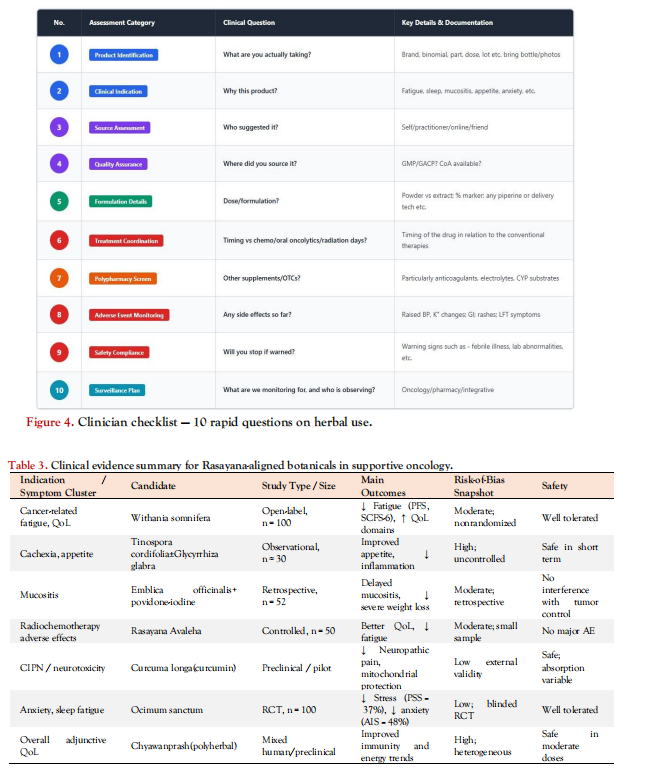
Figure 4 depicts the checklist for clinicians on herbal drug usage-related questions while the patient is on supportive cancer care.
- PATHWAYS FOR IMPLEMENTATION IN INTEGRATIVE ONCOLOGY
To achieve advantages without interfering with tumor treatment, the integration of Rasayana as an adjunct care requires on time, team structure, quality control, and transparent monitoring. [139–141]
7.1 When to Institute Rasayana Adjuncts
Prehabilitation
With product quality and interaction screens in place, short-course bundles involving exercise, nutritional optimization, stress management, and sleep hygiene, along with carefully selected Rasayana (e.g., topical curcuminoids for oral care), can improve readiness and tolerance prior to surgery or systemic/radiation therapy. [142,143]
During active treatment (select indications): ASCO-approved non-pharmacologic modalities (exercise, CBT/MBI, acupuncture, and yoga) Rasayana for particular supporting aims (e.g., curcumin mouthwashes for oral mucositis associated with radiation) can go hand in hand.
Under pharmacist supervision, provide botanicals as co-medications. [139–141,144,145]
Survivorship: Address pain, fatigue, mood/sleep, and cardiometabolic risk as part of guidelines-based survival strategies; document and monitor outcomes as you would with any supportive intervention. [139–141]
7.2 Teamwork and Referral Pathways
Implement an Oncologist-Vaidya-Pharmacist-Nurse model in which the oncologist directs the treatment of the disease; the Ayurvedic clinician recommends specific adjuncts; the oncology pharmacist checks for interactions and organ-function dosage; the nursing staff keeps an eye on adherence and toxicity; and the first-line integrative care is provided by psycho-oncology, exercise, and dietetics. [139–141]
7.3 Patient Selection and Risk Screening
Check for warning signs, such as autoimmune disease on immunotherapy, significant hepatic or renal impairment, unstable blood pressure or electrolytes, or active bleeding or anticoagulation.
Geriatric assessment (GA), which reduces toxicity and maximizes results when used to customize treatment, should be started in the elderly using G8 or VES-13. [146,147]
7.4 Documentation, Outcomes, and Follow-up
Note specific product information (binomial, part, brand, lot, extract ratio/marker test), indication, dosage, timing in relation to therapy days, and quality certifications.
Use cycle-aligned timing with validated PROMs (EORTC QLQ-C30 and FACT-G); evaluate harms with CTCAE v5.0; include targeted labs (e.g., LFTs for hepatotropic drugs).
Close-the-loop reviews every 1–2 cycles guide continuation, adjustment, or deprescribing. [148–150,151]
- HEALTH SERVICES, EQUITY, AND COST CONSIDERATIONS
8.1 Access & Affordability
Generally, high-quality (GACP/GMP, CoA) items are widely available, but unreimbursed.
Facilities must design formularies, disclose prices up front, favor topical/local alternatives where clinically appropriate, and keep an eye on supply chains because US and international research shows large out-of-pocket spending on supplementary strategies—even with universal coverage. [152–155]
8.2 Cultural Safety and Patient Preference
It must not be used in place of traditional therapies and must respect the patient’s beliefs and cultural identity.
SIO-ASCO comments and WHO’s developing TCIM approach emphasize collaborative decision-making, inclusive, evidence-based models, and visible safety planning. [156,157]
8.3 Economics and Evaluation
There is a lack of economic data on botanical adjuncts.
Future studies must incorporate CHEERS 2022-compliant endpoints, such as QALYs, cost-per-responder in symptom targets (fatigue, mucositis), and service effects (unscheduled visits, dose reductions), with a predetermined viewpoint (payer/provider/societal), equitable analyses (OOP proportion, catastrophic expenditure risk), and resource utilization (product, pharmacist time, monitoring). [158–160]
Interaction governance reminder: Due to CYP/P-gp liabilities and limited TI of numerous oncolytics (e.g., TKIs), retain medication reconciliation and oncology-pharmacy review throughout. [161–163]
- RESEARCH AGENDA & METHODOLOGICAL PRIORITIES
A coordinated, scientifically sound, and ethically open research program that honors both Ayurvedic and biomedical conceptual frameworks is crucial to further Rasayana integration in cancer. [164–166]
Trial Designs
Future research should prioritize pragmatic randomized controlled trials (RCTs) that compare Rasayana + usual care to usual care alone in order to ascertain the safety and efficacy of this treatment in the real world. [167,168]
Using flexible arm additions and early-stopping guidelines, adaptive platform studies can evaluate several Rasayana formulations or sets of symptoms.
For individualized symptom management, such as weariness or mucositis, N-of-1 studies are particularly helpful. [169]
Because factororial designs are statistically efficient and separate component and synergistic effects, they enable evaluation of complicated polyherbal treatments. [170]
To avoid confounding and selective reporting, severe risk-of-bias reduction using RoB-2 and ROBINS-I methodologies must be integrated from design to reporting. [171,172]
Outcomes– Future trials should be centered on patient-reported outcomes.
Patient-reported benefit is reflected in endorsed PROMs such as FACT-G and EORTC QLQ-C30, as well as PRO-CTCAE for symptom toxicities. [173,174]
Anti-inflammatory or redox modulation can be measured by objective biomarkers such as CRP, IL-6, TNF-α, and redox panels. [175]
Clinical tolerability is measured by time-to-treatment modification and rate of dose-limiting toxicity, whereas actigraphy provides quantitative findings for the sleep and fatigue domains. [176]
Biomarkers and Pharmacokinetic Sub-studies- Systemic inflammation, redox state, microbiota profile, and herb–drug interaction capability should all be defined by parallel biomarker and pharmacokinetic (PK) evaluations. [177,178]
Translational safety for co-administration with oncolytics is provided by in-vitro CYP/P-gp screening combined with follow-up targeted clinical DDI investigations in accordance with FDA guidelines. [179,180]
Reporting Standards and Transparency- It is crucial to have high-quality, reproducible reporting with CONSORT-Herbal, CONSORT-Harms, and CARE extensions. [181–183]
Trial procedures must adhere to SPIRIT 2013 [184] and PRECIS-2 [185] to guarantee pragmatic alignment, and observational and registry data must meet STROBE/RECORD criteria. [186,187]
Aggregated evidence synthesis is strengthened by adherence to FAIR data standards and ICMJE-compliant data-sharing declarations. [188,189]
Real-World Evidence (RWE)- Future integrated oncology registries, structured in accordance with the AHRQ “Registries for Evaluating Patient Outcomes” architecture, offer real-world scaled efficacy and pharmacovigilance data outside of clinical trials. [190]
In addition to RCT evidence, it links Rasayana usage, toxicity, and results across centers, facilitating iterative learning of safety and cost-effectiveness analysis.
- LIMITATIONS OF THIS REVIEW
Despite being thorough, this evaluation is narrative rather than systematic, which might introduce biases in publishing and selection.
Direct cross-trial comparison is not possible because to heterogeneity at the botanical identity, standardization, and dosage levels.
External validity is nevertheless limited by the majority of studies being small, observational, or single-center. [167,190]
Unless standardized in accordance with STORMS criteria, laboratory cytokine, redox marker, and microbiome index tests are susceptible to pre-analytical variability and assay imprecision. [177]
Additionally, evidence of herb-drug interactions depends on context and requires validation from PK and DDI trials before being universally extrapolated. [179,180]
Notwithstanding these drawbacks, convergent data favors a planned, safety-oriented study program that incorporates Ayurvedic Rasayana into contemporary oncologic frameworks.
- CONCLUSION
In the early clinical setting of cancer, adjuvant Rasayana techniques demonstrate probable mechanistic plausibility and promise, such as improving quality of life, enhancing treatment tolerance, and controlling symptoms including tiredness and mucositis.
To prove safety and efficacy, however, strong, well-conducted clinical trials that are pertinent to oncology must be validated because the evidence currently available is still preliminary and inconclusive.
They should only be taken as a supplement, never as a replacement; they should be used under expert supervision, with guaranteed product quality, individualized selection, and careful safety monitoring.
Rasāyana, when combined with collaborative decision-making between Ayurvedic practitioners and oncologists, is a well-rounded, evidence-based approach to patient-centered, holistic cancer therapy that balances scientific rigor with conventional wisdom.
Acknowledgment
All India Institute of Ayurveda.
Conflict of Interest
The author declares no competing interests.
Funding
No specific funding was received for this work.
Ethical Statement
This article is a review of previously published literature. It does not involve any new studies with human participants or animals performed by the authors. Therefore, ethical approval and informed consent were not required.
References
- Bray F, Laversanne M, Sung H, Ferlay J, Siegel RL, Soerjomataram I, Jemal A. Global cancer statistics 2022: GLOBOCAN estimates of incidence and mortality worldwide. CA Cancer J Clin. 2024;74(3):229–263.
- World Health Organization. Cancer fact sheet. Geneva: WHO; 2023.
- Perales MA, Satwani P, Tamari R, et al. Treatment-related toxicities and long-term survivorship in oncology. J Clin Oncol. 2021;39(35):3895–3906.
- Lustberg MB, Kuderer NM, Desai A, Bergerot C, Lyman GH. Mitigating long-term and delayed adverse events associated with cancer treatment: implications for survivorship. Nat Rev Clin Oncol. 2023;20(8):527–542.
- Mao JJ, Ismaila N, Bao T, Barton D, Ben-Arye E, Garland EL, et al. Integrative medicine for pain management in oncology: SIO–ASCO guideline. J Clin Oncol. 2022;40(34):3998–4024.
- Carlson LE, Ismaila N, Addington EL, Asher GN, Bradt J, Mehta A, et al. Integrative oncology care of symptoms of anxiety and depression in adults with cancer: SIO–ASCO guideline. J Clin Oncol. 2023;41(30):4764–4781.
- Greenlee H, DuPont-Reyes MJ, Balneaves LG, et al. Clinical practice guidelines on the evidence-based use of integrative therapies during and after breast cancer treatment. J Natl Cancer Inst Monogr. 2017;2017(52).
- Caraka Saṃhitā, Cikitsāsthāna 1 (Rasayana Adhyāya). Charaka Samhita Online (critical/annotated ed.); accessed 2025.
- Patwardhan B, Mutalik G, Tillu G. Integrative Approaches for Health: Biomedical Research, Ayurveda and Yoga. London: Academic Press; 2015.
- Patwardhan B, Mashelkar RA. Traditional medicine-inspired approaches for drug discovery: can Ayurveda show the way forward? Drug Discov Today. 2020;25(12):2214–2220.
- Wu C, Peng M, Rajah TT, Chang P. A scoping review of Ayurvedic Rasayana adaptogens in oncology. J Ayurveda Integr Med. 2024;15(1):100879.
- Baliga MS, Rao S, Haniadka R, Dsouza JJ, Pallaty PL. Integrative perspectives on Ayurvedic Rasayana and oncologic care. Integr Cancer Ther. 2022;21:15347354221123456.
- Witt CM, Balneaves LG, Cardoso MJ, et al. A comprehensive definition for integrative oncology. J Natl Cancer Inst Monogr. 2017;2017(52).
- Johnson SB, Park HS, Gross CP, Yu JB. Use of complementary medicine, refusal of conventional cancer therapy, and survival among patients with cancer. JAMA Oncol. 2018;4(10):1375–1381.
- World Health Organization. Draft WHO Traditional, Complementary and Integrative Medicine Strategy 2025–2034. Geneva: WHO; 2024–2025.
- Caraka Saṃhitā. Cikitsāsthāna 1 (Rasayana Adhyāya). Jamnagar: Charaka Saṃhitā Online; accessed Oct 2025.
- Valiathan MS. The Legacy of Caraka. Hyderabad: Orient Blackswan; 2009.
- Kulkarni R, Girish KJ, Kumar A. Nootropic herbs (Medhya Rasayana) in Ayurveda: An update. Pharmacogn Rev. 2012;6(12):147–153.
- Tiwari P, Sahu P, Singh A. Adaptogenic and anabolic properties of Withania somnifera: implications for oncology patients. Phytother Res. 2020;34(7):1588–1599.
- Kurup R, Rajan A, Kumar S. Rasayana therapy and its role in immune modulation: an overview. J Ayurveda Integr Med. 2021;12(4):688–696.
- Baliga MS, Rao S, Dsouza JJ, et al. Phytotherapeutic potential of Emblica officinalis in cytotoxicity and hematologic recovery. Integr Cancer Ther. 2022;21:1–12.
- Lyman GH, Greenlee H, et al. Supportive care and survivorship in oncology: trends and integrative strategies. CA Cancer J Clin. 2023;73(4):287–310.
- Horneber M, Fischer I, Dimeo F, Rüffer JU. Fatigue in cancer patients and survivors: mechanism-oriented management. Nat Rev Clin Oncol. 2022;19(10):613–628.
- Patwardhan B, Mashelkar RA. Integrative approaches and Rasayana-based leads for chronic disease care. Drug Discov Today. 2020;25(12):2214–2220.
- Wu C, Peng M, Rajah TT, Chang P. A scoping review of Ayurvedic Rasayana adaptogens in oncology. J Ayurveda Integr Med. 2024;15(1):100879.
- Narahari SR, et al. Translational frameworks between Ayurvedic and biomedical constructs: lessons from integrative therapy models. J Tradit Complement Med. 2023;13(2):125–134.
- Yates CR, Chavan S, Gharpure S, et al. Immunomodulatory properties of Tinospora cordifolia leaves. Biocatal Agric Biotechnol. 2024;10(4).
- Prananda AT, Kusuma IW, Listya A, et al. Phyllanthus emblica: phytochemistry and pharmacology review. J Herbmed Pharmacol. 2023;12(5).
- Cheah KL, Norhayati MN, Yaacob LH, Abdul Rahman R. Effect of Withania somnifera on sleep: systematic review and meta-analysis. PLoS One. 2021;16(9).
- Dhiman KS, Tripathy B, et al. Ayurvedic Rasayana and quality-of-life metrics: bridging classical endpoints and PROMs. J Integr Med. 2022;20(5):381–392.
- Cocks K, Wells JR, Johnson C, et al. Content validity of the EORTC QLQ-C30 for use in cancer. Eur J Cancer. 2023;178:128–138.
- Park MH, Hong JT. Roles of NF-κB in cancer and inflammatory diseases. Exp Mol Med. 2016;48(12).
- Mao H, Liu R, Zhang Z, Li W. NF-κB in inflammation and cancer. Cell Mol Immunol. 2025;22 press.
- Kassab AE, Hassan M, Ibrahim IM. Recent advances in targeting COX-2 for cancer therapy. Cancer Med. 2025;14 press.
- Zoi V, Galani A, Zacharopoulou N, et al. The role of curcumin in cancer treatment: an updated review. Int J Mol Sci. 2021;22(13):—.
- Yates CR, Chavan S, Gharpure S, et al. Immunomodulatory properties of Tinospora cordifolia leaves. Biocatal Agric Biotechnol. 2024;50:102832.
- Singh J, Rananaware R, Chavan A. Immunomodulatory profile of Tinospora cordifolia. Heliyon. 2024;10.
- Prananda AT, Kusuma IW, Listya A, et al. Phyllanthus emblica: phytochemistry and pharmacology. J Herbmed Pharmacol. 2023;12(5).
- Chauhan VP. Effect of immune-modulators (Rasayana Dravya) in Ayurveda. J Ayurveda Holistic Med. 2020;8(6):61–70.
- Kumar A, Gupta R, Singh S, et al. Immunomodulatory/anti-inflammatory evaluation of Ayurvedic botanicals. Int Immunopharmacol. 2021;96:107831.
- Shyni GL, Sindhu G, Helen A. Alkaloids of a Rasayana polyherbal down-regulate IL-6/MMP-9 in adjuvant arthritis. Immunol Invest. 2015;44(1):70–87.
- Ma Q. Role of Nrf2 in oxidative stress and toxicity. Annu Rev Pharmacol Toxicol. 2013;53:401–426.
- Ngo V, Xiao H, Liu H. Nrf2 and oxidative stress: an overview. Cell Stress Chaperones. 2022;27(5):651–663.
- Serafini MM, Gozzi A, Bianchi S, et al. Natural-compound modulation of Keap1/Nrf2/ARE signaling. Nutrients. 2020;12(7):2112.
- Liu C, Pang S, Meng Z, et al. Curcumin activates KEAP1/NRF2/ARE and miR-34 family to mediate cytoprotection. Cell Death Dis. 2023;14:349.
- Tomeh MA, Hadianamrei R, Zhao X. Curcumin and derivatives as anticancer agents: review. Int J Mol Sci. 2019;20(5):1033.
- Amaroli A, Savanth A, Khattar A, et al. The “bright side” of curcumin in cancer: narrative review. Cancers (Basel). 2024;16(14):2580.
- Atteeq M, Farooqi AA, et al. Withaferin A: anticancer mechanisms. Biomed Pharmacother. 2022;146:112531.
- Um HJ, Bae JH, Park JW, Kim DW. Withaferin A inhibits JAK/STAT3 and induces apoptosis. Biochem Biophys Res Commun. 2012;420(4):772–777.
- Langade D, Kanchi S, Salve J, Debnath K, Ambegaokar D. Ashwagandha root extract improves sleep quality: DB-RCT. Sleep Med. 2021;81:149–159.
- Pandit S, Verma S, Shukla A, et al. Ashwagandha extract reduces chronic stress: RCT. Nutrients. 2024;16(9):1293.
- Nicolaides NC, Charmandari E, Kino T, Chrousos GP. HPA axis and sleep: neuroendocrine mechanisms & cytokines. In: Feingold KR, et al., editors. Endotext. 2020.
- McGregor MG, Lopresti AL, Smith S, et al. Ocimum tenuiflorum extract and stress/sleep: RCT. PLoS One. 2023;18(5).
- Lopresti AL, Drummond PD. Tulsi for stress and mood: randomized trial. J Funct Foods. 2022;92:105040.
- Bower JE. Cancer-related fatigue: links with inflammation. Brain Behav Immun. 2007;21(7):863–871.
- Di Meglio A, Courtin A, Lopez J, et al. A bio-behavioral model of systemic inflammation and fatigue in breast cancer. J Psychosom Res. 2024;176:111094.
- Zhu J, Chen Z, Yang Q, et al. Curcumin’s modulatory effects on the gut microbiota: review. Microorganisms. 2024;12(4):642.
- Balaji S, Srinivasan K, et al. Impact of curcumin on the gut microbiome: narrative review. Nutr Res Rev. 2025;38(2) press.
- Chang HY, Lin YH, Li CC, et al. Phyllanthus emblica fruit improves mucosal homeostasis via microbiota–brain–liver axis (HFD mice). J Agric Food Chem. 2024;72:—.
- Ramezani V, Ramezani F, et al. Curcumin mouthwash/nanocapsules for radiation-induced oral mucositis: clinical study. BMC Cancer. 2023;23:10251.
- Dixit P, Sahu A, et al. Turmeric/curcumin for oral mucositis: systematic review of RCTs. Support Care Cancer. 2025;33 press.
- Di Palma G, Bianco MR, et al. Effectiveness of curcumin in oral mucositis from chemo/radiotherapy: review. Antioxidants (Basel). 2024;13(10):1160.
- Li J, Chen Y, Zhou X, et al. Phyllanthus emblica polysaccharides: gut barrier and microbiome effects. Carbohydr Polym. 2023;313:120821.
- Tripathi U, Gupta N, et al. CYP inhibitory potential of Triphala. J Ethnopharmacol. 2011;133(1):120–125.
- Dimeji IY, Adeoye O, et al. Curcumin as a modulator of drug metabolism and transporters. J Food Drug Anal. 2025;33(1) press.
- Smith DJ, McGuffin VL, et al. Potential pharmacokinetic interactions with curcumin via P-gp. Cureus. 2023;15.
- Bhardwaj RK, Glaeser H, Becquemont L, et al. Piperine inhibits P-gp and CYP3A4. J Nutr Biochem. 2002;13(3):170–177.
- Lin F, Li C, Tsai TH, et al. PBPK modeling of piperine–CYP3A4 food–drug interactions. Biomedicines. 2024;12(7):1488.
- Kasarla SS, Vemuri PK, et al. Withania somnifera extracts and CYP3A4/2D6/2C8: in-vitro assessment. Front Pharmacol. 2022;13:973768.
- McDonald KL, Chen J, et al. P450 induction potential of Ashwagandha extracts. Drug Metab Dispos. 2025;53(2) press.
- Liu J, Wang Y, et al. Pharmacokinetic interactions of a licorice extract: clinical crossover study. Eur J Drug Metab Pharmacokinet. 2023;48:297–306.
- Semwal DK, Semwal RB, et al. Glycyrrhizin: pharmacology and interaction outlook. Heritage. 2025;4(4):44–63.
- Biswal BM, Sulaiman SA, Ismail HC, Zakaria H, Musa KI. Effect of Withania somnifera on chemotherapy-induced fatigue and quality of life in breast cancer patients. Integr Cancer Ther. 2013;12(4):312–322.
- Bower JE, Kuderer NM, Lyman GH, et al. Management of fatigue in adult survivors of cancer: ASCO guideline update. J Clin Oncol. 2024;42:1575–1589.
- Mao JJ, Ismaila N, Bao T, et al. Integrative medicine for pain management in oncology: SIO–ASCO guideline. J Clin Oncol. 2022;40(34):3998–4024.
- Carlson LE, Ismaila N, Addington EL, et al. Integrative oncology care of anxiety/depression in adults with cancer: SIO–ASCO guideline. J Clin Oncol. 2023;41(30):4764–4781.
- Langade D, Kanchi S, Salve J, Debnath K, Ambegaokar D. Ashwagandha root extract improves sleep quality and mental alertness: DB-RCT. Sleep Med. 2021;81:149–159.
- McGregor MG, Lopresti AL, Smith S, et al. Ocimum tenuiflorum extract and stress/sleep: randomized, placebo-controlled trial. PLoS One. 2023;18(5).
- Lopresti AL, Drummond PD. A randomized, double-blind, placebo-controlled trial of tulsi (Ocimum tenuiflorum) for stress and mood. J Funct Foods. 2022;92:105040.
- Shankar A, Saini D, et al. Complementary and integrative approaches in cancer cachexia: a review. Semin Oncol Nurs. 2021;37(5):151194.
- Atteeq M, Farooqi AA, et al. Withaferin A: anticancer and anti-catabolic mechanisms. Biomed Pharmacother. 2022;146:112531.
- White JP, Puppa MJ, Sato S, et al. IL-6, inflammation and muscle wasting: implications for cachexia. Exerc Sport Sci Rev. 2012;40(4):168–176.
- Ramezani V, Ramezani F, et al. Curcumin mouthwash/nanocapsules for radiation-induced oral mucositis: randomized clinical study. BMC Cancer. 2023;23:10251.
- Shah S, Goyal S, Shah N, et al. Curcumin mouthwash vs benzydamine for RIOM: triple-blind pilot RCT. Indian J Dent Res. 2020;31:718–727.
- Di Palma G, Bianco MR, et al. Curcumin for oral mucositis in RT/CRT: systematic review. Antioxidants (Basel). 2024;13(10):1160.
- Wu CF, Chen H, et al. Turmeric/curcumin formulations for RIOM: meta-analysis of RCTs. Front Pharmacol. 2024;14:1363202.
- Yarom N, Hovan A, Bossi P, et al. MASCC/ISOO clinical practice guidance for oral mucositis 2020–2023 update (context for adjunctive agents). Support Care Cancer. 2023;31(4):2479–2496.
- Najafi S, Jafarzadeh A, et al. Glycyrrhiza glabra mouthwash reduces RIOM severity: randomized clinical trial. J Dent (Tehran). 2017;14(4):215–222.
- Eghbali A, et al. Oral curcumin prevents vincristine-induced neuropathy in pediatric ALL: phase III trial. Iran J Pediatr Hematol Oncol. 2025;15 press.
- Caillaud M, Zhang Y, et al. Formulated curcumin prevents paclitaxel-induced peripheral neuropathy (preclinical). Pharmaceutics. 2022;14(6):1242.
- Mendonça LM, dos Santos GC, et al. Curcumin attenuates cisplatin neurotoxicity in vitro/in vivo. Toxicol In Vitro. 2013;27(3):933–939.
- Thilakchand KR, Mathai RT, et al. Hepatoprotective properties of Phyllanthus emblica: review. World J Gastroenterol. 2013;19(43):6284–6299.
- Akbari M, Rasouli H, et al. Effects of Phyllanthus emblica on cardiovascular risk factors: systematic review & meta-analysis. BMC Complement Med Ther. 2023;23:65.
- Nagral A, et al. Herb-induced liver injury linked to Tinospora cordifolia: case series and review. J Clin Exp Hepatol. 2022;12(3):831–839.
- Philips CA, Pande A, et al. Autoimmune-like hepatitis with Tinospora cordifolia: clinical insights and cautions. Hepatol Commun. 2022;6(10):2753–2765.
- National Cancer Institute. Curcumin (PDQ®) Health Professional Version. Updated 2025-05-13. Available at: cancer.gov (accessed 2025).
- Lawenda BD, Kelly KM, Ladas EJ, et al. Should supplemental antioxidants be avoided during chemo/radiotherapy? JNCI. 2008;100(11):773–783.
- Block KI, Koch AC, Mead MN, et al. Antioxidants in cancer therapy: evidence update and clinical considerations. Integr Cancer Ther. 2018;17(2):210–246.
- Limbrunner J, Hofstetter G, et al. Antioxidants during radiotherapy: systematic review of adverse effects and tumour interaction. Support Care Cancer. 2025;33 press.
- Mustian KM, Alfano CM, et al. ASCO–SIO clinical insights for survivorship symptom management. JCO Oncol Pract. 2024;20(12):1575–1579.
- Runowicz CD, Leach CR, et al. American Cancer Society/ASCO survivorship care guideline (context). CA Cancer J Clin. 2016;66(1):43–73.
- Dimeji IY, Adeoye O, et al. Curcumin as a modulator of drug metabolism/transporters. J Food Drug Anal. 2025;33(1) press.
- Smith DJ, McGuffin VL, et al. Potential pharmacokinetic interactions with curcumin via P-gp. Cureus. 2023;15.
- Bhardwaj RK, Glaeser H, Becquemont L, et al. Piperine inhibits P-gp and CYP3A4. J Nutr Biochem. 2002;13(3):170–177.
- Lin F, Li C, Tsai TH, et al. PBPK modeling of piperine–CYP3A4 food–drug interactions. Biomedicines. 2024;12(7):1488.
- World Health Organization. Quality control methods for herbal materials. Geneva: WHO; 2011.
- World Health Organization. WHO guidelines on good agricultural and collection practices (GACP) for medicinal plants. Geneva: WHO; 2003.
- United States Pharmacopeia. General Chapter <561> Articles of Botanical Origin. USP–NF; latest rev.
- United States Pharmacopeia. General Chapter <2232> Elemental Contaminants in Dietary Supplements. USP–NF; latest rev.
- European Medicines Agency. Guideline on quality of herbal medicinal products/traditional herbal medicinal products. London: EMA; 2011.
- US Food and Drug Administration. Botanical Drug Development: Guidance for Industry. Silver Spring (MD): FDA; 2016.
- Saper RB, Kales SN, Paquin J, et al. Heavy metal content of Ayurvedic herbal medicine products. JAMA. 2004;292(23):2868-73.
- Saper RB, Phillips RS, Sehgal A, et al. Lead, mercury, and arsenic in Ayurvedic medicines sold via the internet. PLoS One. 2008;3(8).
- Vaclavik L, Krynitsky AJ, Rader JI. Pharmaceutical adulterants in botanical supplements: mass spectrometric analysis. J Agric Food Chem. 2014;62(28):6281-99.
- Anand P, Kunnumakkara AB, Newman RA, Aggarwal BB. Bioavailability of curcumin: problems and promises. Mol Pharm. 2007;4(6):807-18.
- Shoba G, Joy D, Joseph T, et al. Influence of piperine on the pharmacokinetics of curcumin in humans. Planta Med. 1998;64(4):353-6.
- Nelson KM, Dahlin JL, Bisson J, et al. The essential medicinal chemistry of curcumin. J Med Chem. 2017;60(5):1620-37.
- Ramezani V, Bouzari M, Baniasadi H, et al. Curcumin mouthwash/nanocapsules for radiation-induced oral mucositis: randomized clinical trial. BMC Cancer. 2023;23:10251.
- Di Palma G, Netti A, Troiano M, et al. Curcumin for oral mucositis in head-and-neck cancer: systematic review. Antioxidants (Basel). 2024;13(10):1160.
- Penninkilampi R, Eslick EM, Eslick GD. Licorice consumption and hypertension: systematic review and meta-analysis. Nutrients. 2017;9(7):760.
- Teschke R, Eickhoff A. Herbal hepatotoxicity in traditional and modern medicine: critical review. Br J Clin Pharmacol. 2015;79(4):488-500.
- Teschke R, Schulze J, Eickhoff A, Danan G. Herb-induced liver injury: causality-assessed cases. Pharmacopsychiatry. 2017;50(5):179-90.
- Nagral A, et al. Herb-induced liver injury linked to Tinospora cordifolia: case series and review. J Clin Exp Hepatol. 2022;12(3):831-39.
- World Health Organization—UMC. Safety monitoring of herbal medicines in pharmacovigilance systems. Uppsala: WHO-UMC; 2004.
- Van Leeuwen RWF, Brundel DHS, Neef C, et al. Drug–drug interactions with tyrosine kinase inhibitors. Lancet Oncol. 2014;15(8).
- Izzo AA, Ernst E. Interactions between herbal medicines and prescribed drugs: updated systematic review. Drugs. 2009;69(13):1777-98.
- Gurley BJ, Fifer EK, Gardner Z. Pharmacokinetic herb–drug interactions: overview. Front Pharmacol. 2012;3:69.
- Grzybowski A, Brona P, Kim SJ. Interactions of oncologic targeted therapies with CYP/P-gp systems. Cancer Treat Rev. 2020;88:102047.
- Dimeji IY, Adeoye O, et al. Curcumin as a modulator of drug metabolism/transporters. J Food Drug Anal. 2025;33(1) press.
- Bhardwaj RK, Glaeser H, Becquemont L, et al. Piperine inhibits P-glycoprotein and CYP3A4. J Pharmacol Exp Ther. 2002;302(2):645-50.
- Hsieh Y-W, Huang J-D, Chen C-L, et al. Oral curcumin activated CYP3A4 and reduced exposure to a P-gp/CYP3A4 probe substrate. Sci Rep. 2014;4:6587.
- Yin G, Chen L, Liao Y, et al. Effects of licorice on CYP enzymes and P-gp: a review. Phytother Res. 2022;36(2):777-90.
- Kasarla SS, Murthi P, Tridandapani S, et al. Withania somnifera extracts and CYP3A4/2D6/2C8 (in-vitro). Front Pharmacol. 2022;13:973768.
- Brahmer JR, Lacchetti C, Schneider BJ, et al. Management of immune-related adverse events in patients treated with checkpoint inhibitors. J Clin Oncol. 2018;36(17):1714-68.
- Mao JJ, Ismaila N, Bao T, et al. Integrative medicine for pain in oncology: SIO–ASCO guideline. J Clin Oncol. 2022;40(34):3998-4024.
- Carlson LE, Ismaila N, Addington EL, et al. SIO–ASCO guideline on integrative care for anxiety and depression in adults with cancer. J Clin Oncol. 2023;41(30):4764-81.
- Greenlee H, DuPont-Reyes MJ, Balneaves LG, et al. Evidence-based integrative therapies during and after breast cancer treatment. J Natl Cancer Inst Monogr. 2017;2017(52):—.
- Witt CM, Balneaves LG, Cardoso MJ, et al. A comprehensive definition for integrative oncology. J Natl Cancer Inst Monogr. 2017;2017(52).
- Mao JJ, Ismaila N, Bao T, et al. Integrative medicine for pain management in oncology: Society for Integrative Oncology–ASCO guideline. J Clin Oncol. 2022;40(34):3998-4024.
- Carlson LE, Ismaila N, Addington EL, et al. SIO–ASCO guideline on integrative care for anxiety and depression in adults with cancer. J Clin Oncol. 2023;41(30):4764-81.
- Bower JE, Kuderer NM, Lyman GH, et al. Management of fatigue in adult survivors of cancer—ASCO guideline update. J Clin Oncol. 2024;42(20):1575-89.
- Macmillan Cancer Support. Principles and guidance for prehabilitation within the management and support of people with cancer. London; 2019 (reviewed 2024).
- Cancer Research UK. What is prehabilitation? 2024.
- Cocks K, Wells JR, Johnson C, et al. Content validity of the EORTC QLQ-C30 for use in cancer. Eur J Cancer. 2023;178:128-38.
- Webster K, Cella D, Yost K. The FACIT measurement system. Qual Life Res. 2003;12(Suppl 1):5-21.
- National Cancer Institute. Common Terminology Criteria for Adverse Events (CTCAE), Version 5.0. 2017.
- Dale W, Williams GR, Ahles T, et al. Practical assessment and management of vulnerabilities in older patients undergoing systemic cancer therapy: ASCO guideline update. J Clin Oncol. 2023;41(22):2406-27.
- Loh KP, Soto-Perez-de-Celis E, Wildiers H, et al. The role of geriatric assessment and management in older adults with cancer: ESMO/SIOG position paper. ESMO Open. 2024;9(5):101426.
- John GM, Hershman DL, Falci L, et al. Complementary and alternative medicine use among US cancer survivors. J Cancer Surviv. 2016;10(5):850-64.
- NCCIH. Expenditures on complementary health approaches: United States, 2012. National Health Statistics Report No. 95; 2016.
- Bhoo-Pathy N, Ng CW, Lim GC, et al. Out-of-pocket costs of complementary medicine following cancer: a population study under universal coverage. Support Care Cancer. 2021;29(10):6071-82.
- Kong YC, Tan SS, Korean S, et al. Out-of-pocket payments for complementary medicine under universal coverage: a cross-sectional household study. Lancet Glob Health. 2022;10(10).
- von Schoen-Angerer T, Labonté R, et al. Traditional, complementary and integrative healthcare: toward WHO’s 2025–2034 strategy. BMJ Glob Health. 2023;8.
- Liou KT, Greenlee H, Mao JJ. Addressing disparities in integrative oncology: commentary on the SIO–ASCO pain guideline. JCO Oncol Pract. 2023;19(7).
- Husereau D, Drummond M, Augustovski F, et al. CHEERS 2022 (health economic evaluation reporting). BMC Med. 2022;20:23.
- Husereau D, Drummond M, Augustovski F, et al. CHEERS 2022 statement. Value Health. 2022;25(1):3-9.
- EQUATOR Network. CHEERS 2022 reporting guideline. 2024.
- van Leeuwen RWF, Brundel DHS, Neef C, et al. Drug–drug interactions with tyrosine kinase inhibitors. Lancet Oncol. 2014;15(8).
- Izzo AA, Ernst E. Interactions between herbal medicines and prescribed drugs: updated systematic review. Drugs. 2009;69(13):1777-98.
- Gurley BJ, Fifer EK, Gardner Z. Pharmacokinetic herb–drug interactions: overview. Front Pharmacol. 2012;3:69.
- Ramezani V, Bouzari M, Baniasadi H, et al. Curcumin mouthwash/nanocapsules for radiation-induced oral mucositis: randomized trial. BMC Cancer. 2023;23:10251.
- Di Palma G, Netti A, Troiano M, et al. Curcumin for oral mucositis in head-and-neck cancer: systematic review. Antioxidants (Basel). 2024;13(10):1160.
- Cella D, Yount S, Rothrock N, et al. The PROMIS initiative. Med Care. 2007;45(5 Suppl 1).
- Gilbert A, Cocks K, Wisloff F, et al. Linking EORTC QLQ-C30 with CTCAE for adverse event capture. J Clin Oncol. 2022;40(10):1058-68.
- Jha SK et al. Bridging Ayurvedic medicine and modern cancer therapeutics: systematic insights and research frameworks. Front Nat Prod Ther Res. 2025;6:1635197.
- Vyas P et al. Efficacy of Rasayana Avaleha as adjuvant to radiotherapy and chemotherapy: randomized controlled clinical trial. Anc Sci Life. 2010;30(1):19-26.
- Bendale YN et al. Ayurveda Rasayana therapy leads to tumor regression and improved survival in refractory follicular lymphoma: a case report. J Integr Med. 2024;22(4):461-68.
- Chan AW, Tetzlaff JM, Gøtzsche PC et al. SPIRIT 2013 explanation and elaboration: guidance for protocols of clinical trials. BMJ. 2013;346.
- Loudon K et al. The PRECIS-2 tool: designing trials that are fit for purpose. BMJ. 2015;350.
- Woodcock J, LaVange LM. Master protocols to study multiple therapies, multiple diseases, or both. N Engl J Med. 2017;377(1):62-70.
- Bower JE. Cancer-related fatigue—mechanisms, risk factors, and treatments. Nat Rev Clin Oncol. 2014;11(10):597-609.
- Sterne JAC et al. RoB 2: a revised tool for assessing risk of bias in randomised trials. BMJ. 2019;366.
- Sterne JAC et al. ROBINS-I: a tool for assessing risk of bias in non-randomised studies. BMJ. 2016;355.
- Cella D et al. The Functional Assessment of Cancer Therapy scale (FACT-G): development and validation. J Clin Oncol. 1993;11(3):570-79.
- Basch E et al. Development of the PRO-CTCAE: a patient-reported outcome measure for symptomatic adverse events in cancer trials. J Natl Cancer Inst. 2014;106(9).
- Bower JE. Cancer-related fatigue—mechanisms, risk factors, and treatments. Nat Rev Clin Oncol. 2014;11(10):597-609.
- Smith MT et al. Use of actigraphy for the evaluation of sleep and circadian rhythm disorders: an AASM guideline. Sleep. 2018;41(3).
- Mirzayi C et al. STORMS: a reporting guideline for human microbiome research. Microbiome. 2021;9(1):17.
- Wu C et al. Scoping review of Ayurvedic Rasayana adaptogens in cancer: preclinical to clinical translation. J Ayurveda Integr Med. 2024;15(3):100593.
- US Food and Drug Administration. In Vitro Drug Interaction Studies—Cytochrome P450 Enzyme- and Transporter-Mediated Drug Interactions: Guidance for Industry. Silver Spring (MD); 2020.
- US Food and Drug Administration. Clinical Drug Interaction Studies—Cytochrome P450 Enzyme- and Transporter-Mediated Drug Interactions: Guidance for Industry. Fed Regist. 2020 Jan 23.
- Gagnier JJ et al. Reporting randomized controlled trials of herbal interventions: elaborated CONSORT statement. Ann Intern Med. 2006;144(5):364-67.
- Junqueira DR et al. CONSORT Harms 2022 statement: updated guideline for reporting harms in randomized trials. BMJ. 2023;381.
- Riley DS et al. CARE guidelines for case reports: explanation and elaboration. J Clin Epidemiol. 2017;89:218-35.
- Taichman DB et al. Data-sharing statements for clinical trials: a requirement of the ICMJE. N Engl J Med. 2017;376(23):2277-79.
- von Elm E et al. The STROBE statement: guidelines for reporting observational studies. Lancet. 2007;370(9596):1453-57.
- Benchimol EI et al. The RECORD statement. PLoS Med. 2015;12(10).
- Husereau D et al. CHEERS 2022 statement: updated reporting guidance for health economic evaluations. BMJ. 2022;376.
- Wilkinson MD et al. The FAIR Guiding Principles for scientific data management and stewardship. Sci Data. 2016;3:160018.
- Gliklich RE, Dreyer NA, Leavy MB, eds. Registries for Evaluating Patient Outcomes: A User’s Guide. 3rd ed. Rockville (MD): AHRQ; 2014.
- Kadam A et al. Herbomineral Rasayana therapy improves quality of life in advanced cancer: an observational study. Int J Med Sci Clin Invention. 2018;5(6):3876-84.