Abstract
Background: Ayurveda, the ancient Indian system of medicine, promotes holistic health by maintaining balance among physical, mental, and spiritual aspects. Rooted in classical texts like the Charaka Samhita, it emphasizes individualized nutrition, daily lifestyle practices, and herbal therapies to sustain well-being.
Objective: This review aims to critically examine Ayurveda’s foundational principles Svasthya, Ahara, Agni, Prakriti, and Rasayana and compare them with contemporary scientific perspectives, highlighting integrative opportunities with modern personalized medicine.
Methods: Classical Ayurvedic sources were analyzed alongside modern scientific studies on nutrition, metabolism, and genomics. Network pharmacology and systems biology frameworks were explored to link traditional pharmacology with molecular mechanisms.
Findings: Ayurveda’s focus on individualized care aligns with genomic insights into metabolic diversity. Prakriti-based nutrition supports personalized diets, while Rasayana therapies enhance longevity and resilience. Network pharmacology reveals Ayurveda’s multi-target therapeutic potential, bridging ancient and modern biomedical systems.
Conclusion: Integrating Ayurvedic wisdom with modern biosciences can advance personalized, preventive, and sustainable healthcare models for the future.
Keywords: Ayurveda, Prakriti, Agni, Rasayana, Personalized Medicine, Network Pharmacology.
1. Introduction
1.1 The Historical Foundations and Evolution of Ayurveda
Ayurveda is a time-honoured medical system with origins tracing back to the second century BCE. Its philosophical foundations lie in the Vaisheshika and Nyaya schools of logic and metaphysics, both integral to the broader Hindu intellectual tradition. Ayurveda maintained a close association with the Samkhya framework of manifestation, even as the Vaisheshika and Nyaya schools evolved as distinct philosophical systems [1]. The Vaisheshika school emphasized diagnosis and treatment based on inference and perceptual observation of the patient’s condition, whereas the Nyaya school advocated that therapeutic intervention should begin only after a comprehensive understanding of the disease and the patient’s state had been achieved [2].
In Sanskrit philosophy, Vaisheshika classifies the fundamental attributes of existence into six categories: Dravya (substance), Vishesha (particularity), Karma (activity), Samanya (generality), Samavaya (inherence), and Guna (quality) [3]. The integration of Nyaya and Vaisheshika principles, collectively known as the Nyaya–Vaisheshika school, played a crucial role in shaping and disseminating early Ayurvedic [4]. According to Hindu mythology, Brahma, the creator of the universe, is believed to have imparted the knowledge of holistic medicine to sages for the welfare of humanity, establishing him as the divine originator of Ayurveda. This knowledge was transmitted orally and textually through generations of scholars and healers. The Shlokas, or metrical verses, documented the therapeutic uses of herbs and their curative properties [5].
Ayurvedic tradition draws heavily from the four sacred Vedas—Rig, Yajur, Sama, and Atharva which contain some of the earliest references to medicinal plants. The Rig Veda describes 67 plants in detail, while the Atharva Veda and Yajur Veda mention 293 and 81 species, respectively. According to classical accounts, the sage Atreya acquired this sacred knowledge from Lord Indra, who had received it from Lord Brahma [6].
Among the major Ayurvedic treatises, the Sushruta Samhita focuses primarily on surgical techniques, while the Charaka Samhita provides a comprehensive exposition of Ayurvedic theory and practice. Edited and expanded by Charaka and later scholars, it builds upon the foundational teachings of Agnivesha. Over centuries, these classical works were translated and disseminated across cultures, influencing Buddhist, Greek, Chinese, Arabic, and Persian medical traditions. Later compilations such as Nighantu Granthas, Madhava Nidana, and Bhava Prakasha further enriched the Ayurvedic corpus, although the Charaka Samhita remains its most authoritative and revered text [7].
Fundamental Principles and Therapeutic Practices of Ayurveda
According to Ayurveda, the cosmos is composed of five fundamental elements: air (Vayu), water (Jala), space (Aakash), earth (Prithvi), and fire (Agni). These five elements, collectively known as the Pancha Mahabhoota, combine in various proportions to form the Tridoshas, which are the three primary humors that regulate physiological and psychological functions in the body [8]. The Tridoshas include Vata, Pitta, and Kapha, and each contains five subtypes that govern specific bodily processes. Vata Dosha controls cellular transport, electrolyte balance, and waste elimination, and becomes aggravated under dry conditions. Pitta Dosha regulates body temperature, digestion, vision, and thirst, and increases with heat. Kapha Dosha, responsible for lubrication, tissue cohesion, and joint function, is stimulated by the consumption of sweet and fatty foods. In Ayurvedic physiology, Vata governs catabolism, Pitta metabolism, and Kapha anabolism [9].
In Ayurveda, health is defined as a state of equilibrium among the Tridoshas and other vital components, while disease arises from imbalance. Two principal methods are recommended to maintain or restore this balance: aligning with nature and following divine wisdom [10]. The Saptadhatus, or seven essential bodily tissues, include rasa (plasma), rakta (blood), mamsa (muscle), meda (fat and connective tissue), asthi (bone), majja (bone marrow), and shukra (reproductive tissue). Each Dhatu performs a distinct physiological function. Rakta Dhatu governs circulation, Meda Dhatu supports muscular and adipose tissue, Majja Dhatu maintains the skeletal structure, and Shukra Dhatu sustains reproductive capacity [11].
In addition to the Dhatus, Ayurveda recognizes three primary waste products known as Tri Malas: purisha (feces), mutra (urine), and sveda (sweat), along with Agni, the digestive and metabolic fire [12]. The efficient elimination of Mala is vital for health, as their accumulation can result in disorders such as arthritis, asthma, constipation, or skin inflammation. Jatharagni, the principal digestive fire, governs nutrient absorption and microbial balance, and its disturbance can lead to gastrointestinal issues such as ulcers, diarrhea, or indigestion [13].
Ayurvedic treatments are individualized, considering each person’s Dosha constitution, lifestyle, environment, and medical condition. Among the major therapies, Pancha Karma is a cornerstone practice aimed at purification (shodhana), rejuvenation (rasayana), and longevity (chiranjivi) [13]. It consists of five primary procedures: Vamana (therapeutic emesis), Virechana (purgation), Basti (medicated enema), Rakta Moksha (blood detoxification), and Nasya (nasal therapy). These procedures are implemented in three sequential phases: preparation (Poorva Karma), treatment (Pradhan Karma), and restoration (Paschat Karma) [14]. The preparatory phase involves snehana (oleation with clarified butter or medicinal oils) and swedana (induced perspiration through steam therapy). Vamana is typically induced using curd, rice, licorice, and honey, while Virechana employs natural laxatives such as senna, castor oil, or psyllium seed. Medicated enemas may use oils or decoctions prepared from sesame or anise [15].
Ayurveda is a comprehensive medical system encompassing eight classical branches collectively known as Ashtanga Ayurveda: Kayachikitsa (internal medicine), Bhootavidya (psychiatry), Kaumar Bhritya (pediatrics), Rasayana (geriatrics and rejuvenation), Vajikarana (aphrodisiacs and eugenics), Shalya Tantra (surgery), Shalakya Tantra (otorhinolaryngology and ophthalmology), and Agada Tantra (toxicology). The enduring global relevance of Ayurveda lies in its extensive understanding of herbs, minerals, and animal products, combined with its holistic and preventive approach to health and disease management [16].
Foundational Texts in Ayurveda
The Development and Importance of the Charaka Samhita within Ayurvedic Philosophy
The Charaka Samhita is a foundational component of Ayurvedic practice and philosophy, forming one of the three principal treatises that constitute the Brihattrayi. It is regarded not only as a comprehensive synthesis of medical knowledge but also as a vital manual of Ayurvedic principles and clinical practice [17]. Scholars and researchers have continuously sought to validate and reinterpret the concepts outlined in this ancient text through contemporary scientific frameworks, demonstrating its enduring relevance. The Charaka Samhita is also recognized as one of the earliest treatises to address the philosophy and methodology of medical research within Ayurveda [18].
This seminal Sanskrit text evolved through the contributions of three key figures across distinct historical periods. The original work, known as the Agniveshatantra, was composed by Maharshi Agnivesha around 1000 BCE. Approximately in 200 BCE, Acharya Charaka, or possibly a group of eminent Vaidyas (traditional physicians), revised and expanded the treatise, incorporating new observations and interpretations [19]. Later, around 400 CE, Acharya Dridhabala completed the editing and compilation of the text, ensuring its preservation and continuity. His contributions underscore the systematic effort made by successive generations to refine and safeguard Ayurvedic wisdom [20], [21].
The Charaka Samhita, along with the Sushruta Samhita, is one of the two extant classical texts of Ayurveda from ancient India. Together, they represent the intellectual foundation of traditional Indian medical thought. The Brihattrayi, or “Great Triad” of Ayurvedic literature, includes the Charaka Samhita, the Sushruta Samhita, and the Ashtanga Hridaya, which collectively form the cornerstone of ancient Indian medical science [22]. The Agnivesha Samhita, from which the Charaka Samhita originated, is widely considered one of the earliest comprehensive medical compendia. Between 100 BCE and 200 CE, Charaka refined and reorganized this earlier work, producing the version that has survived to the present day. The Charaka Samhita comprises 122 chapters organized into eight sections, covering a broad range of topics including anatomy, physiology, pathology, diagnostics, and therapeutics. It elaborates on ancient concepts concerning the human body, the origins and mechanisms of disease, and the methods of prevention and cure [23]. Furthermore, the text extends beyond clinical medicine to emphasize the importance of medical ethics, education, and the tripartite collaboration among patient, physician, and nurse as essential for effective recovery. It also underscores the necessity of proper hygiene, balanced diet, and preventive care as fundamental pillars of good health [24].
Concepts of Health and Nutrition
The Concept of Svasthya: Optimal Health in Ayurveda
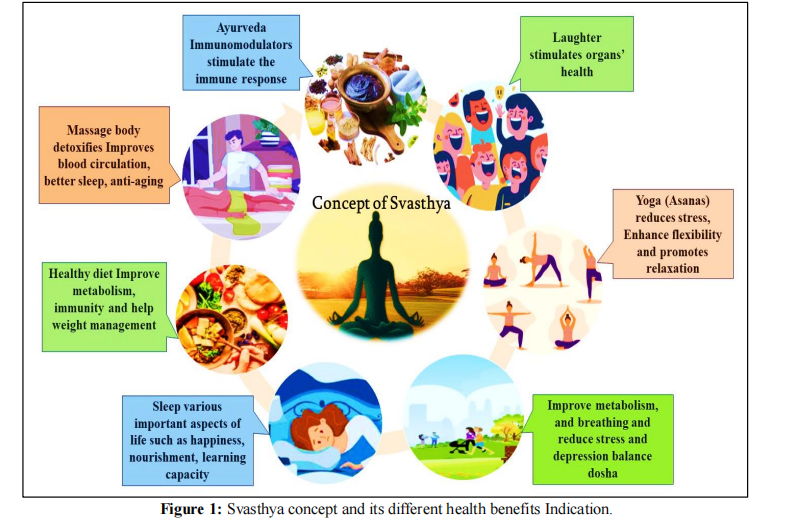
Svasthya (the concept of health, as illustrated in Figure 1) is a central concept in Ayurveda, signifying a state of being firmly established in one’s natural constitution. It represents the highest form of well-being, in which an individual’s physical, mental, and spiritual dimensions exist in complete harmony. To achieve this state, the body’s various systems structural, physiological, metabolic, excretory, sensory, and cognitive must function in synchronized balance. True health, according to Ayurveda, is not merely the absence of disease but the attainment of self-awareness, stability, and inner contentment [25].
The Dasa Vidha Pariksha outlines ten parameters used in Ayurveda to assess an individual’s health status. These include ahara (diet), desa (geographical environment), bala (physical strength), kala (time or seasonal influence), agni or anala (digestive and metabolic efficiency), prakriti (genetic and constitutional makeup), vaya (chronological age), sattva (mental strength and clarity), satmya (habitual adaptation or tolerance), and dusya (quality and state of bodily tissues). The concept of sattva, which represents mental capacity and emotional resilience, is particularly emphasized for its influence on physical health and overall vitality [26], [27].
Although these parameters primarily serve as diagnostic tools, they also provide an integrated framework for evaluating a person’s holistic well-being and adaptive capacity. By assessing both physiological and psychological dimensions, the Dasa Vidha Pariksha embodies Ayurveda’s comprehensive approach to understanding health as a dynamic equilibrium between the body, mind, and environment [28].
1.2 Ahara: The Pillar of Life in Ayurveda
Ayurveda identifies three essential pillars for maintaining optimal health: Ahara (food intake), Nidra (sleep), and Brahmacharya (regulated sexual conduct). Among these, Ahara is considered the most fundamental, as it provides nourishment, supports tissue regeneration, and sustains physiological balance. Classical Ayurvedic texts, composed between 300 BCE and 700 CE, contain detailed discussions on the properties of food and beverages, emphasizing their therapeutic roles and safety [29]. These texts classify food according to factors such as taste (rasa), inherent qualities (guna), potency (virya), post-digestive effect (vipaka), and specific physiological actions (karma). Additionally, considerations such as method of preparation, quantity, timing of consumption, and environmental context are recognized as determinants of food compatibility and overall health [30].
Ayurveda provides a comprehensive set of dietary guidelines based on an individual’s digestive capacity (agni), constitution (prakriti), and the intrinsic nature of the food consumed. The system emphasizes moderation and mindfulness, advising that both the quantity and quality of food be adjusted according to one’s metabolism, age, season, and activity level [31]. Foods are broadly categorized by their compatibility with the body and mind, following the principles of Tridosha and the theory of the Pancha Mahabhuta (five great elements) [32]. According to Ayurvedic philosophy, transformation occurs in all substances through the dynamic interaction, combination, and separation of these five elemental constituents earth (Prithvi), water (Jala), fire (Agni), air (Vayu), and space (Aakash). This continuous process of change sustains both the individual body and the larger cosmos, reflecting Ayurveda’s holistic view of nutrition as a bridge between the physical and the spiritual dimensions of life.
1.2.1 Food Classification in Ayurveda: The Role of Rasa and Dravya Guna Sastra
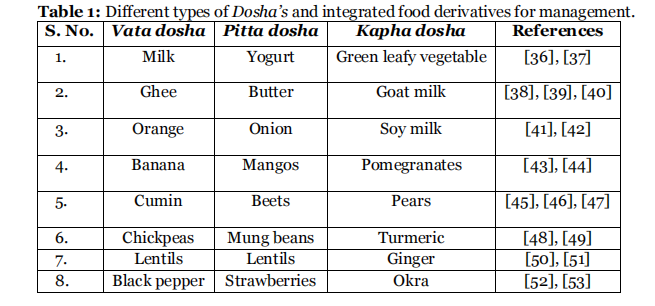
Rasa, or the sensory perception of taste, is a fundamental principle in Ayurveda used for the classification of food substances, as illustrated in Table 1. According to Ayurvedic theory, there are six primary tastes: sweet, sour, salty, pungent, bitter, and astringent. Each taste possesses inherent characteristics (guna) that influence its effects on the body and mind. These gunas, together with other attributes such as virya (potency or post-digestive effect) and karma (therapeutic action), determine the physiological and pharmacological outcomes of consuming a particular substance [33].
The classification system encompassing rasa, guna, virya, vipaka (final metabolic transformation), and karma represents a comprehensive framework for understanding the nature and effects of all substances, whether dietary or medicinal. This multidimensional approach is not confined solely to food; it also extends to herbal formulations, minerals, and other therapeutic agents [34]. The systematic study of these material properties forms the basis of Dravya Guna Shastra, the Ayurvedic science of pharmacology, which integrates sensory, functional, and energetic aspects of substances. This discipline provides a scientific foundation for Ayurvedic pharmacy and establishes a holistic methodology for evaluating both nutritional and therapeutic efficacy [35].
1.3 The Psychological Impact of Food in Ayurveda
The influence of Ayurvedic food classification on individuals’ psychological dispositions is a fascinating aspect to consider. Ayurveda states that lust, anger, greed, desire, attachment, and ego are six psychological emotions that have a subtle connection to the manifestation of disease [54]. The types of food consumed have a significant influence on various psychological conditions. By analyzing this link through the lens of the Sattva, Rajas, and Tamas states of awareness, a deeper understanding can be achieved. A Sattva state is characterized by satisfaction and clarity, a Rajas state by enthusiasm and restlessness, and a Tamas state by inertia and sluggishness. Food can induce specific mental states, which in turn affect a person’s emotional and psychological well-being [55], [56].
1.4 Metabolic and Physiological Concepts
1.4.1 Agni: The Vital Energy of Metabolism in Ayurveda
Agni, the vital energy that drives the body’s metabolic processes, holds great importance in Ayurvedic medicine and overall well-being. The initial stage of the digestive process involves the physical structures within the gastrointestinal tract. The second phase encompasses metabolism specific to individual tissues, and the final stage represents the fundamental level of metabolism [57]. Vipaka is a significant concept that influences the body in a particular sequence. Typically, the taste of a food substance persists in the mouth after digestion; however, in multi-taste compounds, the flavor undergoes transformation during metabolism, serving as an indicator of its systemic effects. For example, amla (Indian gooseberry) initially possesses a sour taste but leaves a mild sweetness after digestion. Although its acidity can elevate Pitta levels, its sweet post-digestive effect helps to pacify Pitta. Furthermore, Ayurveda emphasizes that the influence of a substance (dravya) varies depending on the underlying tissue (dhatu) and contextual factors such as location, time, and environmental conditions [58].
1.5 Ayurvedic Classification and Processing of Food: Morphological Features and Physiological Actions
Ayurveda categorizes meals according to their physical attributes and the physiological effects they produce. Various groups of foods are discussed based on their impact on the body, including grains, pulses, processed foods, meats and meat products, fruits, salts, supplements, different forms of water, milk and dairy products, oils, and alcoholic beverages [59]. This classification also considers seasonal variation and geographical origin. Ayurvedic texts provide detailed insights into the science of food processing [60]. The Pancha Mahabhuta hypothesis examines ingredients in various forms, including raw, dried, smoked, grilled, pickled, and steamed foods, along with their adjuvants and additives. The pharmacological properties of a substance can change depending on the method of preparation. For instance, the digestive system perceives puffed rice as lighter as and less taxing than cooked or flaked rice [61], [62].
Ayurveda also highlights the significant influence of food processing on nutritional and therapeutic properties. For example, curd, which is generally regarded as heavy and potentially harmful, can be transformed into a wholesome drink by churning it to separate the butter. When the resulting buttermilk is stored for two days in an earthen vessel, its taste changes from sweet to astringent, producing a nourishing substance that supports digestive health. This preparation is considered beneficial for individuals suffering from hyperacidity, irritable bowel syndrome (IBS), fissures, hemorrhoids, and certain forms of diarrhea or dysentery [63].
1.6 The Influence of Prakriti on the Effect of Food in Ayurveda
The effect of food on the body is largely determined by an individual’s Prakriti, which refers to their inherent constitution. Each person possesses a unique combination of physical, physiological, and psychological characteristics that define their Prakriti. Vata, Pitta, and Kapha are the three primary constitutional types by which individuals are categorized, and these classifications are closely related to their taste preferences [64]. Different constitutions exhibit distinct taste inclinations, which can significantly influence the effect of food on the body [65]. For instance, individuals with a Pitta constitution tend to prefer bitter and astringent tastes, whereas those with a Vata constitution are drawn to sour and salty flavors. In contrast, individuals with a Kapha constitution are inclined towards astringent, bitter, and pungent tastes. To maintain physiological balance, it is recommended that individuals consume foods compatible with their constitution. Deviating from this principle may cause internal imbalances and predispose one to disease. Regular consumption of foods that are excessively acidic, bitter, or astringent may accelerate aging and degeneration in individuals with a Vata-dominant constitution [66], [67].
1.7 Understanding Incompatibilities in Ayurveda: A Unique Perspective on Food
A fascinating component of Ayurveda is its understanding of the incompatibilities between different food materials and processing methods. Ayurvedic texts describe eighteen types of incompatibilities, determined by factors such as the inherent strength of substances, methods of preparation, quantity or dosage, manner of consumption, and timing or seasonal variations [68].
These incompatibilities are illustrated through examples such as the combination of acidic fruits with milk, the equal proportion of honey and ghee (clarified butter), and the concurrent consumption of milk with horse gram, jackfruit, or fish. Ayurveda also advises against practices such as heating honey, which may appear harmless but are considered detrimental due to changes in the substance’s inherent properties [69].
Although modern science may not offer a direct explanation for these observations, Ayurveda interprets them as manifestations of Viruddha Ahara incompatibility arising from the intrinsic nature and interaction of the materials involved [70].
2. Dietary Guidelines and Supplements
2.1 Wholesome Supplements and Dietary Guidelines in Ayurveda: Enhancing Disease Management
Ayurvedic literature provides extensive knowledge on beneficial supplements and dietary recommendations, which are particularly relevant in the management of various illnesses. For example, pomegranate, amla (Indian gooseberry), and buttermilk are considered effective pathya ahara (wholesome foods) for treating conditions such as iron-deficiency anemia. Moreover, the modification of dietary substances can significantly alter their potency, safety, and pharmacological effects [71]. For instance, curd is generally regarded as unsuitable in cases of dosha imbalance. Ayurveda prescribes precise guidelines for its consumption, including avoiding it at night or during specific seasons such as spring, summer, and autumn. To counteract its potential adverse effects, it is recommended to consume curd with sugar candy, green gram soup, or honey [72]. In addition, Ayurveda provides personalized dietary guidelines tailored to each disease and individual constitution, taking into account the effects of specific foods and medications. Patients suffering from cough are advised to consume certain vegetables such as garlic and cardamom, along with spices like long pepper and ginger [73].
Condiments prepared with puffed paddy are also recommended. The association between particular tastes and disease progression is clearly described, indicating that such tastes should be avoided during treatment. Furthermore, detailed guidance is provided regarding nourishing foods during the recovery phase to support restoration of strength and facilitate complete healing [74].
2.2 The Role of Food in Ayurveda: Nourishment for Body, Mind, and Spirit
Ayurveda places great importance on the profound influence of food on human well-being, recognizing meals as carriers and harmonizers of prana, the vital life energy. Every food item possesses distinct energetic and flavor characteristics that exert specific effects on body tissues, influencing both the development and management of disease [75].
Adhering to Ayurvedic dietary principles is considered essential for maintaining health and preventing chronic disorders. According to Ayurvedic philosophy, food is not merely a combination of proteins, fats, vitamins, and carbohydrates; it also nourishes the mind and spirit, serving as a conduit for the absorption of nature’s intelligence. The concept of Agni, or the body’s metabolic fire, underscores the importance of proper digestion and assimilation of nutrients. A strong Agni ensures efficient absorption and elimination, resulting in the formation of ojas, a vital biological essence that sustains both mental and physical strength [76], [77]. It promotes systemic harmony and enhances the flow of vibrant life energy, or prana. Both Acharya Charaka and Sushruta Acharya emphasized the crucial role of diet in determining health and disease. They advocated the practice of mindful eating, asserting that wholesome food supports tissue growth and vitality, while unhealthy dietary habits contribute to the onset of lifestyle-related ailments. Maharshi Sushruta further highlighted the profound impact of diet on the body, mind, memory, vigor, and longevity, emphasizing its transformative potential in sustaining overall wellbeing [78].
3. Linguistic and Scientific Analysis of Agni
3.1 Decoding the Essence of Agni in Ayurveda: An Intriguing Linguistic Perspective
In Ayurveda, the term Agni holds profound significance, representing the intricate mechanisms of transformation and assimilation that operate within the human body. Etymologically, the word Agni is derived from three linguistic roots: “A” signifies the root i, meaning “to go”; “G” stems from the roots ajna, meaning “to shine,” or daha, meaning “to burn”; and “Ni” denotes “to carry.” Collectively, these roots express that Agni pervades all domains, facilitating transformation, combustion, assimilation, illumination, and growth [79]. This linguistic interpretation underscores the multifaceted and dynamic nature of Agni, elucidating its role as the coordinating force that governs numerous physiological and metabolic processes in the body. A deeper understanding of the subtle connotations associated with Agni enriches the comprehension of its vital role within Ayurvedic theory and practice [80].
3.2 Unravelling the Significance of Agni in Ayurveda: Bridging Ancient Wisdom with Modern Science
In Ayurveda, Agni refers to the fundamental concept of fire, symbolizing the dynamic processes of digestion and metabolism that occur within the body (types of Agni illustrated in Table 2). Associated with the Pitta dosha, Agni represents the catalytic heat that drives all physiological functions [81]. As an essential element of life, Agni serves as an indicator of health, and its depletion can lead to serious or even fatal outcomes. It governs various aspects of vitality, including nourishment, complexion, strength, and overall sustenance. The maintenance of Agni in equilibrium is vital for preserving health, as it directly influences digestion, metabolism, and nutrient absorption [82].
Furthermore, Agni plays a pivotal role in the pathogenesis of diseases, since its impairment is associated with the onset of numerous disorders. From a therapeutic perspective, the assessment of Agni assists in determining appropriate treatment strategies, including the selection of medications, dosage, and timing of administration [83], [84]. The efficacy of cleansing therapies such as Panchakarma is also dependent on the individual’s Agni status. In addition, the function of Agni extends beyond basic physiology, encompassing vital bioenergetic and biochemical transformations essential for sustaining overall health. Emerging studies on the interaction between Agni and the gut microbiome highlight promising avenues for integrating traditional Ayurvedic insights with modern biomedical research to enhance therapeutic interventions [85].
4. Understanding Tastes in Ayurveda
4.1 Exploring the Dynamics of Tastes in Ayurveda: A Comprehensive Guide to Optimal Nutrition
In Ayurveda, the concept of Rasa, meaning taste, elucidates the intricate relationship between food and physical nourishment. Each taste, when consumed in appropriate quantities, contributes to health, vitality, and overall well-being. For instance, sweet-tasting foods enhance energy levels, promote strength, and improve skin complexion [86]. However, excessive consumption aggravates Kapha dosha and may lead to conditions such as obesity. The sour taste stimulates digestive activity, refreshes the mind, and increases salivary secretion, although overindulgence can cause heartburn and indigestion. Salt, when used in moderation, maintains electrolyte balance and supports energy metabolism, yet excessive intake can elevate blood pressure and cause fluid retention [87].
The pungent taste aids digestion, circulation, and vitality, but overuse may result in fatigue and excessive thirst. Bitter foods such as turmeric and dandelion evoke distinct taste sensations and confer therapeutic benefits including fever reduction and pancreatic stimulation, though excessive intake can lead to dizziness. Astringent foods such as underripe bananas and pomegranate promote absorption and exert binding effects, but prolonged or excessive consumption may result in constipation and blood coagulation [88]. Ayurveda places great emphasis on proper dietary combinations to prevent indigestion and the accumulation of toxins. Ayurvedic culinary practice is a systematic and scientific approach to balancing dietary elements to maintain optimal health, offering comprehensive guidance on nutrition and digestion [88], [89].
4.1.1 Six Basic Tastes (Shadrasa)
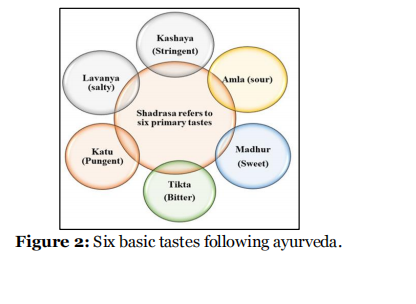
The concept of Shadrasa (Figure 2), or the six fundamental tastes in Ayurveda, links taste perception with the elemental composition of substances that influence the body’s doshas and dhatus. According to Ayurvedic principles, sweet, sour, and salty tastes primarily pacify Vata dosha, while astringent, sweet, and bitter tastes alleviate Pitta dosha, and astringent, pungent, and bitter tastes balance Kapha dosha [90].
From a scientific perspective, each taste corresponds to specific molecular constituents essential for physiological functions [91]. Sweet tastes are associated with carbohydrates, sugars, fats, and amino acids; sour tastes with organic acids; salty tastes with mineral salts; pungent tastes with volatile oils; bitter tastes with alkaloids and glycosides; and astringent tastes with tannins. The Ayurvedic classification of tastes thus provides a comprehensive framework for understanding their physiological and biochemical effects, integrating traditional Ayurvedic knowledge with modern nutritional science to advance holistic health research [92].
5 Ayurvedic Body Types
5.1 Understanding Ayurvedic Body Types: Vata, Pitta, and Kapha
The cornerstone of understanding body types and personality traits in Ayurveda, the ancient Indian system of medicine, lies in the concept of Vata, Pitta, and Kapha doshas. These doshas, or biological energies, regulate both mental and physical processes and play a pivotal role in developing personalized strategies for health and well-being [93].
5.1.1. Kapha Dosha:
Kapha, representing the combination of the earth and water elements, imparts solidity, stability, and moisture to the physical body. Individuals predominantly influenced by Kapha are generally calm, nurturing, and compassionate, though they may also display attachment and possessiveness [94]. Kapha types typically have a sturdy physique and a tendency toward weight gain. They often exhibit features such as thick, smooth skin, an oily complexion, and wavy hair. Due to their slower metabolism, they require lighter meals despite maintaining a consistent appetite [95].
5.1.2. Vata Dosha:
Vata, associated with the elements of space and air, governs all movement and physiological activities in the body. It is considered the most dynamic of the three doshas because it stimulates both Pitta and Kapha [96]. Vata individuals are often spontaneous, creative, and energetic, yet when imbalanced, they may experience anxiety, restlessness, or mood instability. Physically, Vata types tend to have a slender frame, dry skin, and prominent joints and bones. They generally prefer sweet and spicy foods to maintain warmth and energy balance [97].
5.1.3. Pitta Dosha:
Pitta, embodying the elements of fire and water, governs metabolism, digestion, and energy production. It influences qualities such as intelligence, determination, and emotional intensity. Individuals with a Pitta constitution usually have a medium build, fair to ruddy skin, and lustrous hair. Owing to their strong metabolism, they experience frequent hunger and often crave sweet or bitter foods to balance internal heat [98].
6 Research and Ontological Perspectives
6.1 Research into Ayurvedic Concepts
Ayurvedic scholars and practitioners have increasingly recognized a considerable gap in systematic efforts to study and interpret the foundational principles of Ayurveda [99]. This shortfall hinders the integration of traditional knowledge with modern scientific validation, thereby constraining Ayurveda’s global acceptance and practical implementation within contemporary healthcare systems. Bridging this gap through rigorous, interdisciplinary research holds the potential to revitalize Ayurvedic science, reinforcing its relevance and applicability within evolving medical frameworks [100].
6.2 Exploring Ontological Perspectives: Ayurveda and Biomedicine
Ontology, the systematic exploration of the nature of reality, manifests differently across various systems of knowledge. In Ayurveda, the understanding of reality is guided by multiple epistemological approaches, including Pratyakṣa Pramāṇa (direct perception), Āptopadeśa (authoritative testimony), Anumāna (inference), and Yukti (logical reasoning). This framework contrasts with the reductionist and empirically driven methodologies rooted in Galilean and Cartesian philosophies that underpin modern biomedicine. However, comparing the ontologies of Ayurveda and biomedicine remains complex due to fundamental differences in terminology, conceptual scope, and epistemological orientation [101].
Ayurvedic concepts such as Pañcamahābhūta (five great elements), Tridoṣa (Vāta, Pitta, Kapha), and Agni lack direct biomedical equivalents, posing challenges to establishing one-to-one correspondences [102]. Despite these difficulties, comparative analysis of the foundational principles of both systems offers valuable insights into their distinct yet complementary ways of perceiving and interpreting existence. Such an examination not only enhances cross-disciplinary understanding but also fosters the potential for integrative frameworks that respect both ancient wisdom and contemporary scientific paradigms [103].
6.3 Contrasting Paradigms: Ayurveda and Biomedicine
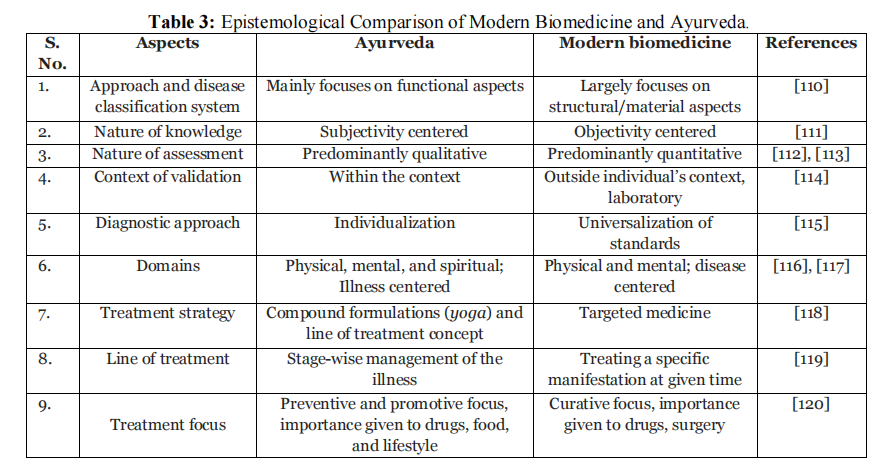
Ayurveda and modern biomedicine represent two distinct paradigms of healing, each grounded in different epistemological and methodological approaches to understanding the human body. Ayurveda adopts a holistic, multifactorial, and individualized perspective on health and disease, whereas modern biomedicine follows a structural, mechanistic, and objective framework [104]. Ayurveda relies on refined sensory perception and intuitive reasoning to recognize natural patterns, emphasizing personalized, immunity-centered, and gradual therapeutic strategies. In contrast, biomedicine employs technological tools to investigate genes, molecules, and organs, emphasizing standardized pharmacological treatments within an institutionalized system [105].
Ayurveda focuses primarily on the functional relationships between living organisms and their environment, integrating both physiological and ecological dimensions of health. Biomedicine, by comparison, concentrates on the molecular mechanisms and structural bases of health and disease [106]. Ayurvedic principles, such as the Tridoṣa theory, offer a comprehensive framework for understanding and managing illness through natural substances and lifestyle regulation, while biomedicine tends to analyze biological systems at cellular and molecular levels [107]. Although contemporary systems biology seeks to adopt a more integrative approach, it still operates within a predominantly reductionist paradigm, relying on computational models to synthesize simplified datasets. Despite their methodological differences, both Ayurveda and biomedicine contribute valuable insights into healthcare, offering complementary perspectives that, when integrated, can enhance the understanding and treatment of human health [108].
7 Epistemological Comparisons
Ayurveda’s epistemology is grounded in experiential pramāṇas such as pratyakṣa (perception) and anumāna (inference), emphasizing the holistic balance of doṣas within individuals and their environment. In contrast, Western medicine is founded on empiricism, reductionism, and logical positivism, deriving knowledge through controlled experimentation, statistical validation, and objective measurement [109].
8 Genetic Basis and Prakriti
8.1 Ayurvedic Constitution: Prakriti and Its Genetic Basis
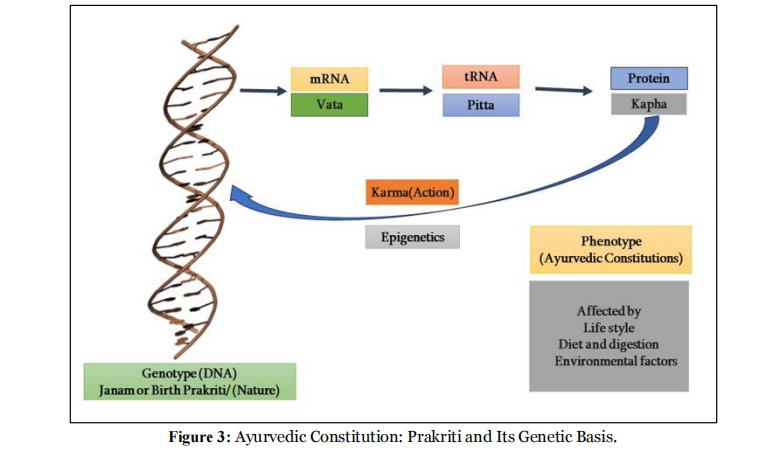
Ayurveda employs a distinctive classification system centered on three primary constitutional types, or Prakriti, known as Vata, Pitta, and Kapha. These classifications are based on anatomical, physiological, and psychological characteristics and are believed to remain stable from birth to death. In recent years, scientific research has explored the genetic foundations of Prakriti, leading to the emergence of a new interdisciplinary field known as Ayurgenomics. Ayurgenomics investigates the genetic and biochemical correlations underlying different Prakriti types [121].
Prakriti categories and specific genetic polymorphisms, including HLA-DRB1 and CYP2C19 genotypes. These findings have established a foundation for personalized and preventive healthcare approaches, in which dietary, lifestyle, and therapeutic interventions can be tailored according to an individual’s Prakriti. Furthermore, research on gene expression patterns has revealed intriguing links between Prakriti types and physiological responses (Figure 3 depicts the relationship between Prakriti and its genetic basis). For example, variations in the expression of the EGLN1 gene, which plays a role in high-altitude adaptation, have been found to differ among Prakriti types in response to hypoxic conditions [122].
Prakriti, birthplace, and body mass index (BMI), highlighting the complex interplay between genetic factors, environmental influences, and phenotypic traits. Exploring the Ayurvedic constitution and its genetic basis opens new avenues for understanding personalized health management and underscores the potential of Ayurgenomics in shaping the future of individualized medicine [123].
9. Rasayana: Traditional and Modern Perspectives
9.1 Exploring Rasayana: Ayurvedic Perspectives and Contemporary Research
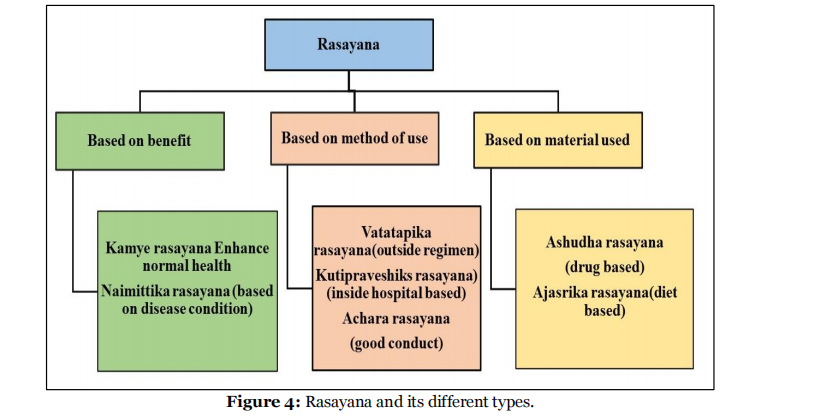
Rasayana (Figure 3 depicts Rasayana and its types), a specialized branch of Ayurveda, focuses on interventions aimed at enhancing overall quality of life and promoting longevity. It encompasses a wide variety of substances, including herbs, animal derivatives, metals, and minerals, as well as intangible approaches such as meditation, mindfulness, and lifestyle modification. Rasayanas are applied across preventive, promotive, and curative domains of health. Their mechanisms of action involve regulating metabolic activity (Agnivyapara), purifying physiological channels to improve tissue perfusion (Srotoshodhana), and nourishing bodily tissues (Poshana) [124].
Although the principles of Rasayana align broadly with rational preventive health practices, rigorous experimental validation of these traditional concepts remains challenging. Nevertheless, the growing global interest in anti-aging and rejuvenation has inspired modern scientific inquiry into Rasayana therapies, particularly in the context of age-related diseases such as Alzheimer’s, Parkinson’s, and arthritis. Contemporary bioassay techniques, including in vitro analyses and small organism models, have facilitated the examination of Rasayana effects at physical, physiological, and molecular levels [125].
Multiple studies have demonstrated the diverse pharmacological activities of Rasayana agents, highlighting their antioxidant, adaptogenic, anti-inflammatory, anticancer, and anthelmintic properties. For instance, pomegranate—traditionally regarded as a Rasayana fruit—has been shown to extend both lifespan and health span in fruit fly models. Similarly, compounds such as Pippali and Amla enhance bioavailability by stimulating Agni, thereby improving digestion and nutrient absorption. Preclinical research on Medhya Rasayana formulations, which include Ayurvedic nootropics such as Ashwagandha, turmeric, and Brahmi, has yielded promising results in reducing amyloid-β plaque accumulation associated with Alzheimer’s disease [124].
Such findings underscore the relevance of Rasayana principles to contemporary biomedical research, offering valuable insights into the use of diet and botanicals for the prevention of neurodegeneration and the promotion of healthy aging. Ultimately, the scientific exploration of Rasayana provides a crucial bridge between traditional Ayurvedic wisdom and modern integrative medicine, opening new avenues for evidence-based approaches to longevity and holistic well-being [92].
10. Dravya Guna Sastra and Modern Bioscience
10.1 Exploring Dravya Guna Sastra: Bridging Ayurvedic Pharmacology and Modern Bioscience
Dravya Guna Shastra, known as the “science of material properties” in Ayurveda, forms the foundational basis of Ayurvedic pharmacology. It classifies substances according to their sensory attributes and pharmacodynamic effects on the body. The classification system is based on the principles of Rasa (taste), Guna (properties), Virya (potency), and Vipaka (post-digestive effect), which collectively determine the therapeutic actions of a substance [126].
Ayurveda recognizes six fundamental tastes: Madhura (sweet), Amla (sour), Lavana (salty), Katu (pungent), Tikta (bitter), and Kashaya (astringent). Each taste contributes to sensory experience and physiological balance when consumed in moderation. Imbalance in the intake of these tastes may disrupt dosha equilibrium, leading to disorders such as obesity or hyperacidity. Specific tastes are therapeutically employed to correct dosha disturbances for example, bitter-tasting formulations are used to pacify Pitta dosha in febrile conditions [127].
In contrast, modern bioscience traditionally identifies four primary tastes sweet, sour, salty, and bitter without initially assigning pharmacological significance to them. Recent research, however, has begun to uncover potential correlations between taste and pharmacological function. Beauchamp et al. demonstrated that the anti-inflammatory properties of compounds like oleocanthal in olive oil are linked to sensory experiences of pungency, offering new insight into the intersection of flavor and pharmacology [128].
Similarly, Joshi et al. proposed hypotheses connecting Ayurvedic taste combinations with specific enzyme active sites in the body. Palmer described taste as a chemical stimulus that initiates signal transduction through G-protein-coupled receptors (GPCRs), elucidating the molecular mechanisms of taste perception relevant to pharmacology [129].
Although these interdisciplinary findings have advanced understanding, challenges remain in establishing direct correlations between Ayurvedic Rasas and modern pharmacological principles, as highlighted by Rath et al. Their review emphasizes the importance of exploring structure–function relationships in bioactive compounds. Ultimately, the study of Dravya Guna Shastra presents a compelling convergence between Ayurvedic pharmacology and contemporary bioscience, offering new possibilities for elucidating the therapeutic mechanisms of Ayurvedic formulations within modern scientific frameworks [130].
11. Network Pharmacology
11.1 Embracing Complexity: The Role of Network Pharmacology in Drug Discovery
With the evolving pharmaceutical landscape, network pharmacology has emerged as a promising and transformative paradigm. This approach departs from the traditional model of drug development, which focuses on targeting individual pathways through specific ligands, and instead acknowledges the complexity of interactions that occur within biological systems. The conventional concept of “one drug–one target–one disease” is increasingly being challenged, as pharmacological mechanisms are now understood to operate through intricate, interconnected networks of molecular interactions, more accurately resembling a dynamic system of multiple locks and keys [131].
11.2 Underutilized Medicinal Plants: Phytochemical Insights, Molecular Docking, and Bioactive Applications’ Therapeutic Potential
The broad spectrum of bioactive compounds found in medicinal plants has recently attracted significant scientific interest. Current research explores the origins, functions, and extraction technologies of phytochemicals for their potential use in nutraceuticals and functional foods. Studies have shown that compounds such as apigenin and α-bisabolol exhibit higher glide energy and docking scores than conventional synthetic drugs, highlighting their strong bioactive potential. Plants such as Cyperus scariosus and Mimosa pudica L. are often underappreciated despite possessing notable nutritional, medicinal, bioactive, and enzyme-inhibitory properties [132].
Molecular docking studies have been conducted to investigate the potential of phytoconstituents in preventing diseases such as monkeypox, cardiovascular disorders, epilepsy, and conditions linked to Solanum lycopersicum L. In parallel, researchers are evaluating traditional Ayurvedic interventions for COVID-19 management, including their effects on pregnant women and ocular complications such as conjunctivitis. Investigations involving Mangifera indica L. have also shown therapeutic promise. Future studies are exploring links between ciprofloxacin and Ayurvedic principles, as well as the impact of soil quality on medicinal plant growth and pest-related agricultural challenges. Novel formulations, such as transdermal patches containing Ocimum sanctum Linn. extract, have demonstrated encouraging results [133].
Recent evidence underscores the role of phytochemicals in antifungal applications and in addressing quality issues associated with functional foods and therapeutics. Modern toxicological methods, including adverse outcome pathway (AOP) modeling and high-throughput screening, are being applied to evaluate the safety and efficacy of these compounds. Qualitative and biochemical analyses of primary and secondary metabolites have further refined phytochemical screening techniques. Polyherbal formulations, long central to Ayurvedic therapeutics, are gaining renewed attention in this context [134].
Using advanced omics technologies, researchers are exploring these formulations for novel drug discovery. Instead of focusing solely on single molecular targets, the trend is shifting toward holistic approaches that recognize the complexity of disease mechanisms. Recent network pharmacology studies of classical Ayurvedic medicines have demonstrated the synergistic effects of multiple bioactive components. By adopting a network-centric framework, modern drug discovery is moving beyond reductionism to elucidate the molecular mechanisms underlying traditional formulations. This integrative strategy offers a promising avenue for enhancing therapeutic efficacy and addressing the multifaceted nature of human disease [135].
Conclusion
This review provides an in-depth analysis of the historical background, philosophical principles, and therapeutic methods of Ayurveda, while also drawing comparisons to contemporary scientific knowledge. Closely observing its evolution and ongoing significance within the Ayurvedic tradition, underscores the paramount importance of the Charaka Samhita as a fundamental basis for Ayurvedic therapy. To attain whole well-being, it is crucial to prioritize the notion of Svasthya, which refers to the state of ideal health, and the significance of Ahara, which denotes sustenance. The article explores the classification of Ayurvedic food and its impact on psychological well-being. It also delves into the intricacies of Agni, which refers to the body’s metabolic energy. To gain a deeper understanding of Ayurveda’s comprehensive approach to nutrition and diet, this paper examines the impact of Prakriti (constitution) on health and provides a novel perspective on food incompatibilities. This literature explores the integration of ancient knowledge and current scientific advancements by examining recent studies on Rasayana (therapies for rejuvenation) and the genetic foundation of Prakriti. Furthermore, the research proposes a comprehensive approach to developing medications and therapeutic interventions by connecting Ayurvedic pharmacology with modern bioscience through the lens of Dravya Guna Sastra and network pharmacology. This assessment highlights the potential of Ayurveda to combine traditional wisdom with contemporary methods in order to address complicated issues. The text explores the potential of Ayurveda to significantly influence holistic health management and contemporary medical techniques.
Acknowledgment
The authors sincerely acknowledge their respective institutions for providing the necessary facilities and academic support to carry out this review work. The authors are also grateful to colleagues and peers for their constructive suggestions during the preparation of the manuscript.
Author Contribution
SKJ; Conceptualization of the review, MN; Literature search, KS; Article screening, DS; Critical analysis, HS; Manuscript drafting, PK; Figure and table preparation, SC; Interpretation of literature, SD; Scientific editing, IA; Reference management, HR; Comparative evaluation, KP; Language editing, AT; Final proofreading, SKT; Supervision and final approval.
Conflict of Interest
The authors declare no conflict of interest.
Source of Funding
There is no funding available to conduct this study.
Declarations
The authors declare that they used AI language tools (ChatGPT and Grammarly Premium) to enhance this manuscript’s linguistic clarity and readability. They carefully reviewed and edited all generated text to ensure accuracy and alignment with the research’s intended meaning.
References
1. M. Kaur and T. R. Chakraborty, “The Journey of Ayurvedic medicines to nutraceuticals,” 2025. doi: 10.31989/ffhd.v15i7.1656.
2. H. Chen et al., “Comparative analysis of Chinese classical prescriptions and global traditional polyherbal formulations: insights from the database of global polyherbal formulation (GPFD),” Chinese Med. (United Kingdom), 2025, doi: 10.1186/s13020-025-01145-7.
3. P. Ganguly, S. Dutta, N. Debnath, and K. Jana, “CONCEPT OF MEDICINAL LEECH THERAPY OR HIRUDOTHERAPY IN AYURVEDIC AND MODERN ASPECT,” Int. Ayurvedic Med. J., 2025, doi: 10.46607/iamj2313022025.
4. Sanjeev Arora and Dr. Ravindra Kumar Varma, “The Evolution of Biosciences in India: From Ancient Wisdom to Modern Advancements,” J. Sci. Innov. Nat. Earth, 2025, doi: 10.59436/jsiane.321.2583-2093.
5. K. K. Esezah, T. Patience, A. Savina, and G. Anywar, “Natural products in antidiabetic drug discovery: a historical perspective,” in Antidiabetic Drug Discovery from Natural Products, 2025. doi: 10.1016/B978-0-443-30086-8.00018-8.
6. S. Kumar, S. Punam, N. Kanwar, and M. Sharma, “Evolution of drugs VIS-A-VIS socio legal aspect: A historical perspective,” Int. J. Health Sci. (Qassim)., 2022, doi: 10.53730/ijhs.v6ns7.11861.
7. D. D. Hunt, “Nursing and Medicine in Ancient Times,” in Fast Facts About the Nursing Profession, 2018. doi: 10.1891/9780826131393.0002.
8. Raj Narayan, Manohar Ram, and Ramnihor Tapsi Jaiswal, “Applied aspect of Samanya-Vishesh Siddhanta in General Aspects,” J. Ayurveda Integr. Med. Sci., 2025, doi: 10.21760/jaims.10.6.38.
9. D. BAJPAI, “Ayurveda: Ancient Wisdom for Modern Well-Beings,” WORLD J. Appl. Sci. Res., 2023, doi: 10.59467/wjasr.2022-23.12-13.21.
10. P. Rani, P. Kumar Mishra, B. Sharma, and J. Meena, “HARMONY IN HEALING: EXPLORING THE SYNERGY OF AYURVEDA AND WESTERN MEDICINE IN MANAGING DIABETES,” Int. Ayurvedic Med. J., 2023, doi: 10.46607/iamj3811082023.
11. P. Prajapati, S. Dubey, R. Mishra, R. K. Shukla, and S. Sharma, “Tridosha Paradigm in Cancer pathogenesis : Integrating Ayurvedic Principles with Modern Oncology,” J. Ayurveda Integr. Med., 2024.
12. S. Sen, A. K. Sen, and A. B. More, “Principios Ayurvédicos para el bienestar holístico: A Comprensivo Guía para la salud de un adulto,” AYUSHDHARA, 2024.
13. V. Kumar Chhandak, N. Dabi, and K. Chand Barulia, “Ayurveda’s Role in Promoting Health and Sustainability: A One Health Perspective,” Int. J. Innov. Sci. Res. Technol., 2025, doi: 10.38124/ijisrt/25mar1397.
14. Manisha Dev and Pallavi Chandel, “Nanostructured Lipid Carriers in Pulmonary Drug Delivery: Progress and Prospects,” Curr. Pharm. Res., vol. 1, no. 1, pp. 131–143, 2025, doi: 10.63785/cpr.2025.1.1.131143.
15. D. badonya -, P. A. -, S. N. T. -, and P. P. -, “Role of Chikitsa Sutrani to Formulation a Treatment Protocol,” Int. J. Multidiscip. Res., 2024, doi: 10.36948/ijfmr.2024.v06i05.29264.
16. Aakansha Suryawanshi and Babita Sharma, “Agni in Ayurveda – A Comprehensive Review of its Role and Interrelations with Physiological Factors,” J. Ayurveda Integr. Med. Sci., 2025, doi: 10.21760/jaims.10.10.14.
17. T. Sangeeta, M. B. Gundakalle, and V. Singh, “A Literature Review on Water Purification Methods in Ayurveda: Insights from the Brihattrayee Texts,” Int. Res. J. Ayurveda Yoga, 2025, doi: 10.48165/irjay.2025.80310.
18. V. Singh, S. Parwe, P. Sawarkar, P. Shrivastav, and M. Nisargandha, “Role of Panchakarma in Non- Communicable Diseases,” Int. J. Life Sci. Pharma Res., 2023, doi: 10.22376/ijlpr.2023.13.2.sp1.l17-l23.
19. D. Singh Thakur, Y. Pandey, and A. Professor, “‘KESHA SHARIR IN CLINICAL AYURVEDA: AN IN-DEPTH STUDY OF HAIR ANATOMY, PHYSIOLOGY, AND KESHA PRAKRUTI ASSESSMENT,’” Int. J. Res. Anal. Rev., 2024.
20. P. K. Sahoo and S. Fiaz, “Conceptual analysis of diabetic retinopathy in Ayurveda,” 2017. doi: 10.1016/j.jaim.2016.12.003.
21. S. K. Kushwaha, P. Chandel, T. Singh, M. Thakur, and U. Pradesh, “Formulation and Evaluation of a Multicomponent Herbal Shampoo for Enhanced Hair and Scalp Health Department of Pharmacy , IIMT College of Medical Sciences , IIMT University , Ganga Nagar , Meerut- School of Pharmacy , Deshbhagat University Amloh Road , Ma,” Curr. Pharm. Res., vol. 1, no. 3, pp. 373–383, 2025.
22. Swati Sandwal and Yogesh Kumar Pandey, “Therapeutic potential of Sandhaniya Maha Kashaya: A Critical Review of Ayurvedic Literature and Pharmacological Insights,” J. Ayurveda Integr. Med. Sci., 2025, doi: 10.21760/jaims.9.12.15.
23. D. A. K. Manohar and D. A. K. B. , Dr. B.L. Saini, “Importance of Panchvidha Kashaya Kalpana in Ayurveda: A Review Study,” Int. J. Res. Publ. Rev., 2024.
24. A. Saroch, A. Upadhyay, D. Singh, P. Yadav, G. Ruknuddin, and P. Prajapati, “Analytical Profiling of Agnimantha Shilajatu Yoga: A Comprehensive Study Using Advanced Techniques,” Ann. Ayurvedic Med., 2025, doi: 10.5455/aam.236333.
25. M. M. Mathpati, U. Payyappallimana, D. Shankar, and J. D. Porter, “‘Population self-reliance in health’ and COVID-19: The need for a 4th tier in the health system,” 2022. doi: 10.1016/j.jaim.2020.09.003.
26. U. Payyappallimana and P. Venkatasubramanian, “Exploring ayurvedic knowledge on food and health for providing innovative solutions to contemporary healthcare,” 2016. doi: 10.3389/fpubh.2016.00057.
27. P. Chandel, T. Singh, A. Sharma, F. Sahib, and M. Gobindgarh, “Emerging Biomarkers for Early Detection of Alzheimer ’ s Disease : Progress and Challenges School of Pharmacy , Deshbhagat University , off to NH-44 , Amloh Road , Mandi Gobindgarh District,” Curr. Pharm. Des., vol. 1, no. 3, pp. 364–372, 2025.
28. E. Bennetts, “Una aproximación inicial a la dimensión terapéutica de la filosofía de la India,” Rev. Int. Estud. Asiáticos, 2025, doi: 10.15517/qxptjk46.
29. P. Deegwal and D. C. Sharma, “Understanding Nidra and Nidranasha: A Comprehensive Ayurvedic Review,” Int. J. Heal. Sci. Res., 2025, doi: 10.52403/ijhsr.20250510.
30. D. V. S. -, P. C. R. Y. -, and D. S. Y. -, “Ahara Vidhi Vidhana: Ayurvedic Concepts of Food Consumption and Their Relevance in the Modern Age,” Int. J. Multidiscip. Res., 2024, doi: 10.36948/ijfmr.2024.v06i01.13415.
31. D. P. Gandhe and D. R. Urade, “Concept of Viruddha Aahara – As per Ayurveda perspective.,” Int. J. Pharm. Res. Appl., 2024, doi: 10.35629/4494-0906174176.
32. Robin Singh, “Revolutionizing Antimicrobial Therapies Through Biofilm-Targeted Nanomedicine,” Curr. Pharm. Res., vol. 1, no. 1, pp. 78–97, 2025, doi: 10.63785/cpr.2025.1.1.7897.
33. S. Kelkar, Manoj Nimbalkar, Arun Bhatkar, Ashvin Bagde, and Sonali Fulkar, “Panchamahabhut Siddhant : Conceptual Review and it’s Applications in Ahar, Vihar and Aushadha,” J. Ayurveda Integr. Med. Sci., 2025, doi: 10.21760/jaims.10.7.21.
34. M. Makwana, N. Rathi, and P. Patani, “DARKSIDE OF NUTRACEUTICALS,” J. Popul. Ther. Clin. Pharmacol., 2023.
35. A. Sharma, V. R. Solanki, and M. Muzzamel, “A REVIEW ON UNDERSTANDING DAILY CARCINOGEN EXPOSURE THROUGH AGAD TANTRA: INSIGHTS INTO GARAJANYA DUSHI VISHA, AND THEIR PREVENTION AND MANAGEMENT,” Int. J. Res. Ayurveda Pharm., 2025, doi: 10.7897/2277-4343.165193.
36. M. Rondanelli et al., “Nutrition, physical activity, and dietary supplementation to prevent bone mineral density loss: A food pyramid,”
2022. doi: 10.3390/nu14010074.
37. M. R. Bhise, V. Trivedi, S. Devi, A. Kumar, T. Jayendra, and K. Sunand, “Graphene Quantum Dots in Cancer Diagnostics and Therapeutics : Advances in Biosensing , Imaging , and Treatment Applications,” Curr. Med. Sci., no. 0123456789, 2025, doi: 10.1007/s11596-025-00155-8.
38. A. J. Pandya and K. M. Ghodke, “Goat and sheep milk products other than cheeses and yoghurt,” Small Rumin. Res., 2007, doi: 10.1016/j.smallrumres.2006.09.007.
39. P. Vishvakarma et al., “Nanocarrier Mediated Delivery of Gepotidacin : A Novel Triazaacenaph- thylene Antibiotic Targeting Drug-Resistant Bacterial Infections,” Anti-Infective Agents, pp. 1–18, 2026, doi: 10.2174/0122113525430497251211145738.
40. R. Ahmad et al., “Mechanistic insights into the neuroprotective effects of Radix Astragali (Huang Qi): Bridging Traditional Chinese Medicine and modern pharmacology,” Pharmacol. Res. – Mod. Chinese Med., vol. 17, no. July, p. 100711, 2025, doi: 10.1016/j.prmcm.2025.100711.
41. L. Ávila Castañón, J. Pérez López, B. E. Del Río Navarro, M. A. Rosas Vargas, L. Lerma Ortiz, and J. J. L. Sienra Monge, “Food hypersensitivity by skin test in allergic patients at Hospital Infantil de Mexico Federico Gomez,” Rev. Alerg. Mex., 2002.
42. S. Ali, S. A. Ali, S. Shamim, and N. A. Farooqui, “Emerging Trends in the Pathogenesis, Diagnosis, and Management of Human Metapneumovirus-Associated Respiratory Infections,” Anti-Infective Agents, vol. 24, 2025, doi: 10.2174/0122113525396349251011213223.
43. S. Saeed et al., “Bioconversion of fruit peels, a waste product of industrial processing into itaconic acid by solid-state fermentation with Aspergillus niger and RSM statistical design to use for optimization process parameters,” Biomass Convers. Biorefinery, 2025, doi: 10.1007/s13399-025-06532-6.
44. S. A. Ali, S. Ali, and S. Shamim, “Role of Artificial Intelligence in Transforming Diagnosis, Treatment, and Patient Care: A Review,” Curr. Pharmacogenomics Person. Med., vol. 23, 2025, doi: 10.2174/0118756921404728251019182202.
45. Q. Zhou, Z. Liu, F. Liu, Y. Guo, and X. Li, “Determination of desmedipham residue in 21 foods by HPLC-MS/MS combined with a modified QuEChERS and mixed-mode SPE clean-up method,” J. Food Compos. Anal., 2021, doi: 10.1016/j.jfca.2021.104004.
46. I. Jahan, S. Ali, J. Hak, S. Shamim, M. Kumar, and T. Ali, “Emerging Trends in Magnetic Nanoparticle Delivery, Synthesis and Applications in Biomedicine,” Drug Deliv. Lett., vol. 16, pp. 1–17, 2025, doi: 10.2174/0122103031400035251014115919.
47. K. Singh et al., “Emerging Applications and Innovations in Emulgel Technology for Enhanced Topical Drug Delivery,” Drug Deliv. Lett., vol. 15, pp. 1–16, 2025, doi: 10.2174/0122103031384904250930153320.
48. S. S. Walia et al., “Designing Resource-Efficient and Environmentally Safe Cropping Systems for Sustainable Energy Use and Economic Returns in Indo-Gangetic Plains, India,” Sustain., 2022, doi: 10.3390/su142114636.
49. [49] R. Singh, S. Shamim, S. Ali, R. Kumar, and T. Ali, “A Global Public Health Review of the Mumps Virus: Epidemiology, Pathogenesis, and Advances in Vaccination,” Anti-Infective Agents, vol. 24, 2025, doi: 10.2174/0122113525412555250922164155.
50. E. H. Mohamed, H. M. Ebeid, I. S. Ashoush, K. F. Mahmoud, and S. A. Albehairy, “Nano-Capsulation of Ginger, Red Cabbage and Broccoli Ball Mill Extracts As Sources of Anti-Oxidant and Anti-Cancer and Application in Lentil Soup Powder,” Egypt. J. Chem., 2023, doi: 10.21608/EJCHEM.2022.154781.6692.
51. A. Shrivastava et al., “Heart Failure Management in the Modern Era: A Comprehensive Review on Medical and Device-based Interventions,” Curr. Cardiol. Rev., vol. 21, no. 6, pp. 1–14, 2025, doi: 10.2174/011573403×338702250226075044.
52. R. G. Johnson, L. L. Madson, M. D. Edgerton, E. Bell, and J. Deikman, “Nucleic acids and polyproteins useful for generating transgenic plants with enhanced agronomic traits.,” 2009
53. S. et al. Singh, K., Gupta, J. K., Chanchal, D. K., Khan, S., Varma, A., Shanno, K., Kumar, S., & Shamim, “Deciphering the Genetic Landscape: Exploring the Relationship Between HLA-DQA1, HLA-DQB1, and HLA-DRB1 Genes in Diabetes Mellitus,” Curr. Pharmacogenomics Person. Med., vol. 21, no. 3, pp. 1–11, 2024, doi: 10.2174/0118756921310081240821065036.
54. M. Ahari, R. Sharma, R. Zahir, and O. Prakash Sharma, “Management of Mandala Kushtha (Psoriasis) through Ayurveda – A Case Study,” Int. Res. J. Ayurveda Yoga, 2025, doi: 10.48165/irjay.2025.80706.
55. A. Lagad, V. Gogate, and J. Varghese, “Ayurvedic management of Klaibya (Impotency) – A case study,” Int. J. Ayurvedic Med., 2025, doi: 10.47552/ijam.v16i1.5363.
56. A. Anand et al., “Neuroprotective Efficacy and Complementary Treatment with Medicinal Herbs: A Comprehensive Review of Recent Therapeutic Approaches in Epilepsy Management,” CNS Neurol. Disord. – Drug Targets, vol. 24, no. 1, pp. 60–73, 2024, doi: 10.2174/0118715273332140240724093837.
57. V. Prabhakaran and C. R. Yadav, “Genomic Insights into the Correlation between Gut Microbiota and Dehagni A Review,” Int. Res. J. Ayurveda Yoga, 2024, doi: 10.48165/irjay.2024.70802.
58. V. R. Sanjay Ingale, V. S. Ashok Pati, and V. S. Lungare, “Understanding rasa and Its Impact on Digestion and Metabolism,” Int. J. Pharm. Res. Appl., 2024, doi: 10.35629/4494-0905934936.
59. S. Moghe and L. Jindal, “Convo-Neur-Net: Allopathic Treatment v/s Ayurvedic Healing Practices: Their Role in Assessing Tibia and Femur Integrity,” in Lecture Notes in Networks and Systems, 2026. doi: 10.1007/978-3-032-02949-2_7.
60. Mohita Thakur, “Importance of In-Process Quality Control for Product Safety and Integrity in Pharmaceutical Packaging,” Curr. Pharm. Res., vol. 1, no. 2, pp. 116–124, 2025, doi: 10.63785/cpr.2025.1.2.225232.
61. J. Sim et al., “Research design : qualitative, quantitative, and mixed methods approaches,” Remote Sens., 2024.
62. P. Kumar et al., “Fused Deposition Modeling 3D‑Printed Scafolds for Bone Tissue.pdf,” Appl. Biochem. Biotechnol., vol. 12, no. 22, pp. 1–11, 2024, doi: 10.54085/ap.2023.12.2.19.
63. D. Balnave et al., “Dietary plant bioactives for poultry health and productivity,” Poult. Sci., 2014.
64. A. P. and P. M., “A review of comprehensive study on medicinal plants of polyherbal formulation – Churna,” Asian J. Pharm. Clin. Res., 2013.
65. Tarmeen Ali, “Nanomedicine Approaches to Overcome Barriers in Pulmonary Drug Delivery for Respiratory Diseases,” Curr. Pharm. Res., vol. 1, no. 1, pp. 30–44, 2025, doi: 10.63785/cpr.2025.1.1.3044.
66. Muttu (Neeta) Kadeangadi, Jagannath C. Huddar, Shilpa Nimbal, and Meghavati Awati, “A case control study on Asheelaneeya Dravya Dadhi and its role as Nidana of Mukhapaka with special reference to Karya Karana Siddhanta,” J. Ayurveda Integr. Med. Sci., 2023, doi: 10.21760/jaims.8.8.4.
67. Shamim, S. Ali, T. Ali, H. Sharma, B. N. Kishor, and S. K. Jha, “Recent Advances in Monodisperse Gold Nanoparticle Delivery, Synthesis, and Emerging Applications in Cancer Therapy,” Plasmonics, no. 0123456789, 2025, doi: 10.1007/s11468-024-02732-4.
68. A. K. Mishra, R. Singh, S. Jain, V. A. Charde, C. Y. Jagtap, and C. V. Narasimhaji, “Insights into food incompatibilities: Ayurveda and modern perspectives,” J. Drug Res. Ayurvedic Sci., 2024, doi: 10.4103/jdras.jdras_183_24.
69. M. R. Khan, D. Kumar, S. Shamim, K. Sunand, S. Sharma, and G. Rawat, “Ethnopharmacological relevance of Citrus limon (L.) Burm. f. as adjuvant therapy,” Ann. Phytomedicine An Int. J., vol. 12, no. 2, pp. 169– 179, 2023, doi: 10.54085/ap.2023.12.2.19.
70. S. Koshle, S. Inchulkar, S. Bhagat, and C. Ghatge, “ROLE OF VIRUDDHA AHARA IN AARTAVAKSHAYA: AN AYURVEDIC REVIEW,” Int. J. Res. Ayurveda Pharm., 2025, doi: 10.7897/2277-4343.165182.
71. S. M. Bhujbal, “Therapeutic Nutrition in Ayurveda for Hepatology,” in Therapeutic Nutrition in Ayurveda, 2023. doi: 10.1201/9781003345541-9.
72. N. Ujjaliya, S. Dash, and S. Kumar Jain, “A REVIEW ON NUTRACEUTICALS IN AYURVEDA,” Ujjaliya al. World J. Pharm. Pharm. Sci. WORLD J. Pharm. Pharm. Sci. SJIF Impact Factor, 2018.
73. Rani Khan et al., “Formulation and Characterisation of Herbal Ethosomal Gel of Luliconazole and Clove Oil for Modified Drug Diffusion to the Skin,” World J. Adv. Res. Rev., vol. 18, no. 4, pp. 488–501, 2025, doi: 10.1016/j.jaim.2024.100947.
74. A. K. Gupta et al., “A trans-disciplinary agro-ecology strategy to grow medicinal plants,”
2025. doi: 10.1016/j.jaim.2024.100985.
75. Subhi A, Srivastava A, Sharma KK, and Anand N, “Review of Metabolic Syndrome (Santarpana Janya Vyadhi) and its Management by Virechana Karma and Vyoshadi Saktu,” J. Nat. Ayurvedic Med., 2024, doi: 10.23880/jonam-16000447.
76. Roshani Bhatia, Ram Kumar, and Anukriti Guar, “Critical Analysis of Kaumaragara, Kaumaradhara, Kridabhoomi and Kridanaka w.s.r. to NICU, Care Taker, Playground and Toys in Children,” AYUSHDHARA, 2024, doi:10.47070/ayushdhara.v11i5.1721.
77. T. Ali, “Chromatography and Spectroscopic Characterization of Nano-Carrier Pharmaceuticals,” Pharm. Nanotechnol., 2024, doi: 10.2174/0122117385319695240911115239.
78. S. Kumari, Ashadeep, and Sudesh Kumar Bhambu, “Ahara (Diet) in Ayurveda: Principles of a Balanced Meal,” J. Ayurveda Integr. Med. Sci., 2025, doi: 10.21760/jaims.10.7.17.
79. K. Meena, H. K. Singhal, D. K. Rai, and A. K. Yadav, “Decoding Autism through Ayurveda: A Holistic Exploration of Pathophysiology and Therapeutics,” J. Complement. Altern. Med. Res., 2025, doi: 10.9734/jocamr/2025/v26i8695.
80. Priyana T V and Nithyashree C T, “Decoding the Role of Ama and Agni in Ocular Disorders: An Ayurvedic Insight into Pathogenesis and Treatment,” J. Ayurveda Integr. Med. Sci., 2025, doi: 10.21760/jaims.10.10.23.
81. H. M, A. Vijayalakshmi, R. Purohit, and S. Padyana, “A STUDY TO EVALUATE THE INFLUENCE OF AGNI ON ANALYTICAL PARAMETERS OF VAMANA KARMA.,” Int. Ayurvedic Med. J., 2024, doi: 10.46607/iamj0112042024.
82. Anupama Gopeendran, R Manoj, and Divya Devi M, “Aggressive Behaviour Based on the Types of Agni Bala Among Young Adults,” Int. J. Ayurveda Pharma Res., 2024, doi: 10.47070/ijapr.v12i2.3134.
83. D. S. K. Bhatnagar, “Role of Agni in Mansika Roga: A Comprehensive Review,” Int. J. Sci. Res. Eng. Manag., 2025, doi: 10.55041/ijsrem47084.
84. H. S. S. & A. B. Pawan Kumar, Shamim, Mohammad Muztaba, Tarmeen Ali, Jyoti Bala, “Fused Deposition Modeling 3D‑Printed Scafolds for Bone Tissue.pdf,” 2024, Springer Nature. doi: 10.1007/s10439-024-03479-z.
85. Parsingh Solanki, Vishal Verma, Rita Marwaha, and Swatantra Kumar Chourasia, “Exploring Koshtha and Koshthanga according to Sushruta and their Clinical Correlation,” J. Ayurveda Integr. Med. Sci., 2025, doi: 10.21760/jaims.10.7.32.
86. L. Pecis and B. Ge, “The bittersweet taste of family business: exploring the dynamics gendering and racializing entrepreneurship,” Entrep. Reg. Dev., 2025, doi: 10.1080/08985626.2025.2459232.
87. T. H. Silva and D. Silver, “Using graph neural networks to predict local culture,” Environ. Plan. B Urban Anal. City Sci., 2025, doi: 10.1177/23998083241262053.
88. D. P. G. Latasha Chhavi Malhotra, “The Impact of Modern Preferences on Restaurant Choices: Lifestyle, Culinary Expectations and Regional Dynamics,” South East. Eur. J. Public Heal., 2025.
89. K. Singh et al., “Recent Advances in the Synthesis of Antioxidant Derivatives: Pharmacological Insights for Neurological Disorders,” Curr. Top. Med. Chem., vol. 24, no. 22, pp. 1940–1959, 2024, doi: 10.2174/0115680266305736240725052825.
90. N. Pradiprao Adgokar and E. E. Mojes, “IMPORTANCE OF SHADRASATMAKA AAHAR IN DIET ACCORDING TO AYURVEDA,” Adgokar al. World J. Pharm. Res. World J. Pharm. Res. SJIF Impact Factor, 2019.
91. K. Singh et al., “Deciphering the Genetic Landscape: Exploring the Relationship Between HLA-DQA1, HLA-DQB1, and HLA-DRB1 Genes in Diabetes Mellitus,” Curr. Pharmacogenomics Person. Med., vol. 21, pp. 1–11, 2024, doi: 10.2174/0118756921310081240821065036.
92. A. Saini, A. Kadu, M. Dholariya, and R. jajoria, “A Holistic Perspective on Nutrition: An Integrated Review of Ayurvedic and Modern Dietary Science,” Int. J. Multidiscip. Res., 2025, doi: 10.36948/ijfmr.2025.v07i05.56190.
93. Ashwani Kumar, Garima Balahia, Kavita Chambyal, and Rakesh Kumar Thamman, “Conceptual Study of Prakriti and Its Role in Maintaining Health: A Review Article,” J. Ayurveda Integr. Med. Sci., 2025, doi: 10.21760/jaims.10.9.20.
94. H. Sharma, A. P. Singh, D. Pathak, D. Taumar, and V. Chaudhary, “The Role of approved Kinase Inhibitors in Cancer Treatment : Medicinal Chemistry and Pharmacological Insights,” Med. Chem. (Los. Angeles)., pp. 1–18, 2025, doi: 10.2174/0115734064404334251024112120.
95. Priyanka Daria, Priyanka Verma, and Yadav C. R., “A clinical study of Guru and Snigdha Guna of Kapha Dosha and its applied aspect in Yuvana Pidika w.s.r to Manjistha Ghan Vati and Arjunatvak Lepa,” J. Ayurveda Integr. Med. Sci., 2025, doi: 10.21760/jaims.10.2.5.
96. J. Kumar et al., “CFTR mRNA-Based Gene Therapy for Cystic Fibrosis: A Mutation-Agnostic Strategy to Restore Ion Transport Function,” Curr. Gene Ther., no. January, pp. 1– 18, 2025, doi: 10.2174/0115665232413980251103133741.
97. Bijita Majumder and Sukalyan Ray, “Studies on Functions of Vata Dosha- A Novel Approach,” Int. J. Ayurveda Pharma Res., 2022, doi: 10.47070/ijapr.v10isuppl2.2542.
98. V. Potnis D., U. Gokral M., and D. Kale R, “Adverse Drug Reactions And Pitta Dosha: An Ayurvedic Perspective,” PDEAS Int. J. Res. Ayurved Allied Sci., 2024, doi: 10.63778/pdeasijraas-arjcpl/2024_83020.
99. A. P. Singh et al., “Revolutionizing Drug and Gene Delivery: Cutting-Edge Smart Polymers for Precision Release,” Curr. Gene Ther., no. January, pp. 1–19, 2025, doi: 10.2174/0115665232390238251121074917.
100. N. Pratibha, M. E, and V. K. MV, “Ayurvedic practice, education and research, beyond dilemmas and confessions,” 2023. doi: 10.1016/j.jaim.2023.100814.
101. J. Nayak, “Ayurveda research: Ontological challenges,” J. Ayurveda Integr. Med., 2012, doi: 10.4103/0975-9476.93942.
102. P. Chandel, S. Shamim, and S. Ali, “A Comprehensive Review on Nanoemulsions for Improved Bioavailability and Therapeutic Efficacy in Gastrointestinal Disorders,” Drug Deliv. Lett., no. August, pp. 1–18, 2021, doi: 10.2174/0122103031410345251205075031.
103. J. Nayak, “Ayurveda research: Ontological challenNayak, J. (2012) Ayurveda research: Ontological challenges. Journal of Ayurveda and integrative medicine, 3 (1), pp.17–20.ges.,” J. Ayurveda Integr. Med., 2012.
104. P. Kumar et al., “Trends of Nanobiosensors in Modern Agriculture Systems,” Appl. Biochem. Biotechnol., vol. 197, no. 1, pp. 667–690, 2024, doi: 10.1007/s12010-024-05039-6.
105. D. Khatua, A. A. Sekh, R. Kutum, M. Mukherji, B. Prasher, and S. Kar, “Classification of Ayurveda constitution types: a deep learning approach,” Soft Comput., 2023, doi: 10.1007/s00500-023-07942-2.
106. S. A. Ali, S. Ali, S. Rastogi, B. Shivhare, and M. Muztaba, “A Comprehensive Review on Advancements in Nanocarriers-Based Peptide Delivery for Cancer Therapeutics,” Micro Nanosyst., vol. 17, no. 4, pp. 283–297, 2025, doi: 10.2174/0118764029358553250325040749.
107. P. D. Gupta, “Pharmacogenetics, pharmacogenomics and ayurgenomics for personalized medicine: A paradigm shift,” 2015. doi: 10.4103/0250-474X.156543.
108. M. Mukerji and B. P. R. Asher, “Ayurgenomics : a New Approach in Personalized and Preventive Medicine,” Sci. Cult., 2011.
109. B. Pathak, D. Tiwari, and D. Tiwari, “Bridging Traditional Knowledge and Modern Technology: Artificial Intelligence in Anatomy Education for Ayurveda,” J. Ayurveda Campus, 2025, doi: 10.51648/jac150.
110. A. N. Patel et al., “An explainable transfer learning framework for multi-classification of lung diseases in chest X-rays,” Alexandria Eng. J., 2024, doi: 10.1016/j.aej.2024.04.072.
111. A. P. Spoth, “Transgender Lived Experience in Social Work: A Critical Discourse Analysis,” Affil. – Fem. Inq. Soc. Work, 2024, doi: 10.1177/08861099241254058.
112. E. Conrad-Rooney et al., “Analysis of nature-related themes and terminology in U.S. climate assessments,” Clim. Change, 2025, doi: 10.1007/s10584-025-03899-3.
113. S. Chawla, R. Gupta, S. K. Jha, and K. T. Jha, “Stereoisomerism in Chemistry and Drug Development: Optical, Geometrical, and Conformational Isomers,” Med. Chem. (Los. Angeles)., 2025, doi: 10.2174/0115734064366389250923044201.
114. O. Nomura, Y. Soma, H. Kijima, and Y. Matsuyama, “Adapting the Motivated Strategies for Learning Questionnaire to the Japanese Problem-Based Learning Context: A Validation Study,” Children, 2023, doi: 10.3390/children10010154.
115. D. V. D. Srivastava, D. V. Kumar, and K. Kausar, “Exploration the Potential of Artificial Intelligence in Ayurveda Diagnostics through the Machine Learning Approach,” Saudi J. Econ. Financ., 2024, doi: 10.36348/sjef.2024.v08i03.001.
116. Soniya Seshan, Man Mohan Sharma, and Ved Prakash, “Integration of Artificial Intelligence in Ayurveda Diagnostics,” J. Ayurveda Integr. Med. Sci., 2025, doi: 10.21760/jaims.9.11.30.
117. A. et al. Kumar, J., M., T., Musayev, “Stimuli‑responsive Hydrogels for Targeted Antibiotic Delivery in Bone Tissue Engineering,” AAPS PharmSciTech, vol. 26, no. 217, pp. 1–23, 2025, doi: https://doi.org/10.1208/s12249-025-03218-0.
118. yoga dwi Utami, “Manajemen program kelas unggulan untuk meningkatkan citra madrasah,” Molecules, 2020.
119. M. M. M. Gottlieb et al., “Preface,” J. Autism Dev. Disord., 2021.
120. NCT01606267, “Evaluation of Integrated Community Case Management in Ethiopia,” https://clinicaltrials.gov/show/NCT01606267, 2012.
121. Dr.Aswathy V J and Dr.Subin.V R, “AYURVEDA AND EPIGENETICS: FOUNDATIONS FOR PREVENTIVE AND PRECISION HEALTHCARE,” Kottakkal J. Ayurvedic Med. Res., 2025, doi: 10.64541/kjamr.vol1.iss3.37.
122. S. Singh, S. Gehlot, and N. K. Agrawal, “Basis of disease manifestation: A molecular and Ayurvedic approach with an integrated concept of Ayurgenomics,” 2019. doi: 10.18311/jnr/2019/23331.
123. Shraddha Shelke and Babita Sharma, “Critical appraisal to evidence basis on Prakriti and its scientific correlation,” J. Ayurveda Integr. Med. Sci., 2024, doi: 10.21760/jaims.9.5.36.
124. R. Balan, P.Y. Ansary, and Shincymol V.V, “Exploring Ayurvedic strategies- An in-depth examination of neurodegenerative diseases.,” Kerala J. Ayurveda, 2025, doi: 10.55718/kja.359.
125. G. Kumar and D. C. Sharma, “A Review of Physiological Changes in Night Shift Workers in Relation to Nidra Vega Dharana,” Int. J. Heal. Sci. Res., 2025, doi: 10.52403/ijhsr.20250413.
126. J. Logananthan, M. Sanket Pajai, S. Dutta, P. Dilip Barhate, and S. Palve, “Traditional Ayurvedic Formulations: Bridging Ancient Knowledge and Modern Pharmacology,” Cuest. Fisioter., 2025, doi: 10.48047/r61znk77.
127. S. Maravi and D. S. V. -, “The Hemostatic Potential of Shonitasthapana Mahakashaya: A Scientific Appraisal Bridging Ayurvedic Principles with Modern Pharmacology,” Int. J. Multidiscip. Res., 2025, doi: 10.36948/ijfmr.2025.v07i06.57750.
128. M. H. Parab, A. Mittal, and V. A. Kangralkar, “Integrative Network Pharmacology: Evaluating the Therapeutic Potential of Ayurvedic Herbs and Formulations,” J. Adv. Sci. Technol., 2025, doi: 10.29070/xcjvsd35.
129. B. V. Cheriyan et al., “Deciphering the Neuroprotective Role of Ksheerabala: Bridging Modern Medicine and Ayurveda Through Reverse Pharmacology,” Int. J. Ayurvedic Med., 2025, doi: 10.47552/ijam.v16i3.5970.
130. P. K. D sayyad, V. S. R. Virendra S Rathod, M. R. D Rathod, M. B. R. Rathod, M. R. S Rathod, and M. . K. N. K. Mr., Kunal N Koli, “A Review on Role of Ayurveda in Modern Drug Discovery: Bridging Traditional Wisdom with Scientific Innovation,” Int. J. Pharm. Res. Appl., 2025, doi: 10.35629/4494-100410631068.
131. “Abstracts of the 17th International Symposium on Bioluminescence and Chemiluminescence ‐ (ISBC 2012),” Luminescence, 2012, doi: 10.1002/bio.2341.
132. A. Singh, D. Ohri, O. Wolkenhauer, N. K. Gautam, S. Gupta, and K. P. Singh, “Exploring the Therapeutic Potential of Moringa oleifera Against Lung Cancer Through Network Modeling and Molecular Docking Analysis,” Int. J. Mol. Sci., 2025, doi: 10.3390/ijms262010191.
133. A. S. Shinde, V. V. Ingole, S. P. Rasale, and S. R. Katade, “Balanites aegyptiaca (L.) Delile: a review of its traditional uses, phytochemistry and biological activities,” 2025. doi: 10.1016/j.phyplu.2025.100848.
134. A. Cherbal, Y. Abboud, R. Lakroun, D. Nafa, E. C. Aytar, and S. Khaldi, “Unlocking the Anti-Inflammatory Potential of Sourdough: Phytochemical Profile, Functional Investigation, and Molecular Docking Insights into Key Bioactive Compounds,” Plant Foods Hum. Nutr., 2025, doi: 10.1007/s11130-025-01345-4.
135. P. Seenivasan, U. Palanikumar, A. U. Thangavelu, and R. Balasubramanian, “Identification and in-silico analysis of phytochemicals from Phyla nodiflora (L.): Potential bioactive compounds for therapeutic applications,” Plant Sci. Today, 2025, doi: 10.14719/pst.5908
Authors-
¹Sudhanshu Kumar Jha, ¹Mansi Negi, ¹Kishan Singh, ²Divaker Shukla, ³Himani Sharma, ¹Prachi Khandelwal, ¹Sonam Chauhan, ¹Sanjay Kumar Tiwari*, ⁴Sonali Dhiman, ⁵Ishika Antil, ⁵Himani Raj, ⁵Khushi Pandey, ⁵Awijeet Tiwari
¹ All India Institute of Ayurveda (AIIA), Government of India, New Delhi – 110076, India.
² Department of Pharmacognosy and Phytochemistry, Pharmacy Academy, Faculty of Pharmacy, IFTM University, Lodhipur-Rajput, Pakbara, Delhi Road, Moradabad – 244102, Uttar Pradesh, India.
³ Sanjeevani Ayurvedic Medical College, Gajraula, Amroha, Uttar Pradesh – 244235, India.
⁴ Department of Pharmaceutics, University Institute of Pharmaceutical Sciences, Chandigarh University, Mohali, Punjab – 140413, India.
⁵ Department of Research and Development, Scientistic Era Pvt. Ltd., Bahadurgarh, Haryana – 124507, India.