Abstract
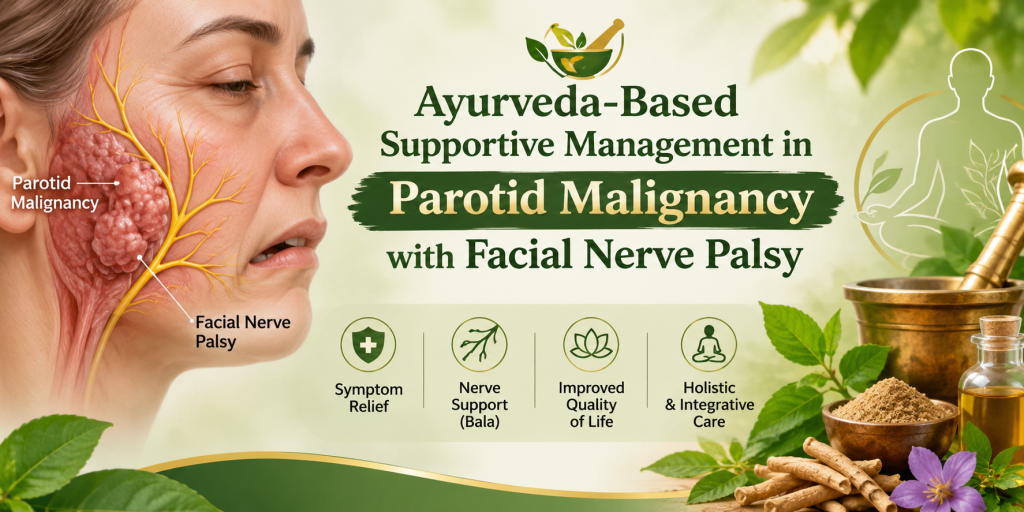
Facial nerve palsy in the setting of a parotid mass is a high-risk clinical presentation and is frequently associated with aggressive salivary gland malignancy and perineural invasion. Symptom burden during multimodal oncology care is substantial, highlighting the need for safe, coordinated supportive care.
A 51-year-old male presented with a progressively enlarging right parotid mass, otalgia, weight loss, and facial weakness graded as House–Brackmann IV at first oncology evaluation. Imaging suggested perineural involvement and nodal disease; fine-needle aspiration cytology/biopsy and postoperative histopathology supported a diagnosis of high-grade mucoepidermoid carcinoma of the parotid gland with perineural and lymphovascular invasion (clinical stage cT3N2M0).
The patient underwent radical parotidectomy with facial nerve sacrifice and neck dissection, followed by adjuvant radiotherapy.
The presentation was interpreted within an Ayurvedic framework as Mamsa–Raktaja Granthi/Arbuda with Vata Prakopa manifesting as Ardita, accompanied by Agnimandya and Ojakshaya features. Baseline documentation included Prakriti/Vikriti, Agni, Koshtha, Bala, Sara, Srotas involvement, and Manas status.
An Ayurveda-based supportive care protocol (Rasayana, Deepana–Pachana, Medhya/Nidra support, Anulomana, and local mucosal soothing measures) was delivered for 12 weeks alongside conventional oncology care, with herb–drug interaction screening and safety monitoring.
Clinically meaningful improvements were documented in pain intensity, sleep quality, appetite, fatigue, and quality-of-life scores. Radiotherapy-associated mucositis and xerostomia were mild and manageable. Facial motor recovery was limited due to surgical nerve sacrifice; however, facial tone and coping improved. No serious adverse events attributable to the Ayurvedic regimen were observed.
This case illustrates the feasibility of a structured Ayurveda-based supportive approach integrated with standard management of advanced parotid malignancy, emphasizing objective symptom outcomes, safety monitoring, and oncology coordination.
Keywords: Arbuda, Ardita, Ayurveda, facial nerve palsy, Granthi, integrative oncology, mucoepidermoid carcinoma, parotid malignancy.
INTRODUCTION
Parotid gland malignancies are uncommon but clinically significant tumors arising from the major salivary glands, accounting for a small proportion of head and neck cancers. Despite their relatively low incidence, they present substantial clinical challenges due to their anatomical proximity to the facial nerve and other critical neurovascular structures.[1-4]
The presence of facial nerve palsy, persistent pain, or rapidly enlarging parotid masses is widely recognized as an alarming clinical indicator and often correlates with aggressive tumor behavior, including perineural invasion and advanced-stage disease.[5-8] Such manifestations are considered major prognostic warning signs, as they frequently indicate tumor infiltration along neural pathways and are associated with poorer outcomes, higher recurrence rates, and reduced overall survival.[9-14] Consequently, early recognition and prompt diagnostic evaluation are essential to guide appropriate therapeutic strategies.
The standard management of parotid gland malignancies primarily involves surgical excision, typically through superficial or total parotidectomy depending on tumor extent.[15-18] Preservation of the facial nerve is prioritized whenever oncologically safe; however, in cases where the nerve is directly invaded by the tumor, partial or complete sacrifice of the facial nerve may be necessary to achieve clear surgical margins.[19-21]
Postoperative management frequently includes adjuvant radiotherapy, particularly in patients presenting with high-risk pathological features such as high-grade histology, positive or close surgical margins, lymph node metastasis, extracapsular nodal extension, and evidence of perineural or lymphovascular invasion. These combined treatment approaches aim to improve local control and long-term survival but may also contribute to significant treatment-related morbidity.[22-25]
Multimodal treatment strategies including surgery, radiotherapy, and occasionally chemotherapy often lead to a considerable symptom burden that affects multiple aspects of a patient’s life. Patients commonly experience complications such as facial dysfunction, dysphagia, xerostomia, nutritional challenges, fatigue, sleep disturbances, psychological stress, and reduced social functioning. These factors collectively impair overall quality of life (QoL) and highlight the need for comprehensive supportive care strategies that extend beyond conventional oncological interventions.[26-29]
Integrative oncology has emerged as a patient-centered approach that combines evidence-based conventional cancer treatments with complementary supportive therapies aimed at improving symptom management, functional recovery, and psychological well-being.[30] Within this framework, traditional medical systems such as Ayurveda offer holistic health perspectives that emphasize individualized assessment and restoration of systemic balance.[31,32]
Ayurvedic evaluation involves multiple diagnostic parameters including Prakriti (constitutional type), Vikriti (current imbalance), Agni (digestive and metabolic capacity), Koshtha (bowel constitution), Bala (physical strength), Ojas (vital essence related to immunity and resilience), Srotas (body channels), and Manas (mental state). Based on these assessments, personalized supportive interventions including dietary regulation, herbal formulations, Rasayana therapies, lifestyle modifications, and mind–body practices may be recommended to enhance physiological resilience and improve patient well-being.[33-37]
When applied as an adjunct to standard oncological care under appropriate clinical supervision, Ayurvedic supportive strategies may contribute to symptom relief, better tolerance of cancer treatments, improved nutritional status, and enhanced psychological stability. Such integrative approaches aim not to replace conventional cancer therapies but to complement them by addressing the multidimensional needs of patients, ultimately supporting improved QoL and holistic recovery during and after cancer treatment.
CASE REPORT
Patient Information
The patient was a 56-year-old male schoolteacher from a middle socioeconomic background, resident of Amroha, Uttar Pradesh. He presented with a progressively enlarging swelling in the right preauricular/parotid region for 4 months, which was initially small but gradually increased in size and became more noticeable to the patient and family members.
Over the subsequent weeks, he developed dull, persistent otalgia along with a sense of heaviness and discomfort on the right side of the face for 2–3 months, which intermittently disturbed his daily activities. Approximately 6 weeks before presentation, he noticed facial asymmetry with deviation of the angle of the mouth, difficulty retaining food and saliva in the oral cavity, and incomplete closure of the right eye, consistent with facial nerve palsy (House–Brackmann [HB] grade IV at initial oncology assessment).
During the same period, he experienced a decline in general well-being, reporting poor appetite, disturbed sleep, and escalating anxiety, and he had an unintentional weight loss of about 8 kg over 3 months, raising concern for a systemic illness.
He had a history of type 2 diabetes mellitus for 8 years (controlled on medication) and mild hypertension, and there was no history suggestive of acute infection, such as high-grade fever or purulent discharge. He was an ex-smoker with an estimated 20 pack-year exposure (quit 5 years ago) and consumed alcohol occasionally. A family history of cancer in a first-degree relative was reported (details unavailable).
The patient expressed marked psychological distress related to the visible facial disfigurement, inability to close the eye, and fear of malignancy, although he had strong family support. With these complaints, he visited the outpatient department of a teaching Ayurveda hospital for further evaluation and supportive management.
CLINICAL FINDINGS
General Examination:
- Eastern Cooperative Oncology Group (ECOG) performance status 1.
- Mild pallor.
- Body mass index (BMI) approximately 22 kg/m² (reduced from baseline).
Local Head–Neck Examination:
- Right parotid mass measuring approximately 6 cm × 5 cm, with a firm consistency, irregular surface, and fixation to deeper planes; no skin ulceration.
- Trismus with approximately 2-finger mouth opening.
- Cervical lymphadenopathy: right level II (2 cm × 1.5 cm) and level III (1.5 cm × 1 cm) firm nodes.
Facial Nerve Palsy Assessment:
House–Brackmann (HB) grade IV at presentation (obvious weakness, incomplete eye closure, and asymmetry at rest), with Bell’s phenomenon and oral incompetence. Corneal protection was advised (artificial tears and nighttime taping).
DIAGNOSTIC ASSESSMENT
Fine-Needle Aspiration Cytology/Biopsy: Consistent with high-grade carcinoma with features compatible with mucoepidermoid carcinoma.
Imaging (Computed Tomography/Magnetic Resonance Imaging): Heterogeneously enhancing right parotid mass with extension towards the stylomastoid foramen and radiologic suggestion of perineural spread along the facial nerve course; nodal disease in ipsilateral neck levels II–III.
Postoperative Histopathology: High-grade mucoepidermoid carcinoma with perineural and lymphovascular invasion; nodal metastasis in multiple nodes with extracapsular extension; margins reported clear.
Final Diagnosis: High-grade mucoepidermoid carcinoma of right parotid gland, clinical stage cT3N2M0 (Stage IVA), presenting with facial nerve palsy (HB grade IV).
Differential Diagnosis Considered: Pleomorphic adenoma, chronic sialadenitis, lymphoma, and idiopathic Bell’s palsy; excluded based on rapid progression, mass effect, imaging features, and cytology/histopathology.
AYURVEDIC ASSESSMENT
The baseline assessments are mentioned in Table 1.
THERAPEUTIC INTERVENTIONS
The patient underwent definitive conventional management in the form of a right radical parotidectomy, during which the facial nerve was sacrificed due to suspected involvement, along with a modified radical/selective neck dissection encompassing levels I–V as per operative planning and intraoperative findings.
Postoperatively, he was managed with standard supportive measures, including analgesics for pain control, antiemetics as required, and routine oral care advice. Given the facial nerve dysfunction and risk of exposure keratopathy, corneal protection measures were instituted, including artificial tears and protective eye care instructions.
In view of high-risk pathological and clinical features, the patient received adjuvant radiotherapy, delivering 66 Gy in 33 fractions to the parotid bed with 54 Gy to the
nodal regions, completed over approximately 6–7 weeks.
During radiotherapy, supportive oncology care focused on maintaining adequate hydration and nutrition, monitoring for mucositis and xerostomia, and managing treatment-related discomfort to ensure treatment compliance.
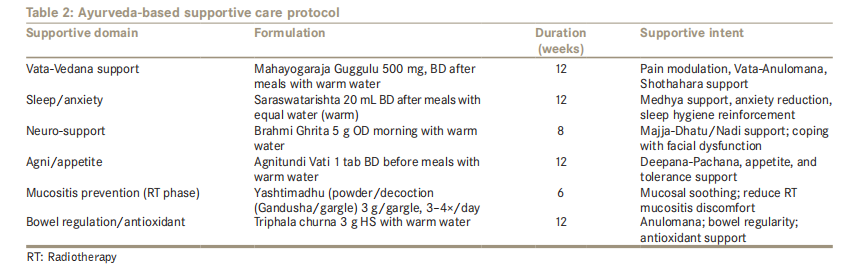
Alongside this, an Ayurveda-based supportive care plan was initiated in the postoperative period and continued throughout radiotherapy for 12 weeks as an adjunct to standard oncology care. The approach was symptom-focused and individualized, guided by a structured Ayurvedic assessment (Prakriti–Vikriti, Agni, Kostha, Bala, Ojas, Srotas, and Manas parameters) with the primary goals of supporting appetite and digestion, improving sleep and coping, reducing pain and fatigue, and assisting overall functional wellbeing during treatment.
To prioritize safety, herbo-mineral preparations were avoided during radiotherapy [Table 2], all interventions were planned in coordination with the oncology team, and dosing was scheduled at least 2 h apart from conventional medicines to minimize interaction risk. The patient was also monitored periodically with complete blood count, liver function test (LFT), and kidney function test (KFT) as part of pharmacovigilance to detect any adverse effects early.
Diet and Lifestyle
The patient was advised to take warm, soft, moist, high-protein foods that are easy to swallow and to avoid irritating foods such as spicy, acidic, or hard items during radiotherapy (RT). Other recommendations included adequate hydration, alcohol and tobacco cessation, gentle pranayama (Nadi-Shodhana) for 10–15 minutes per day, sleep hygiene, and eye protection measures.
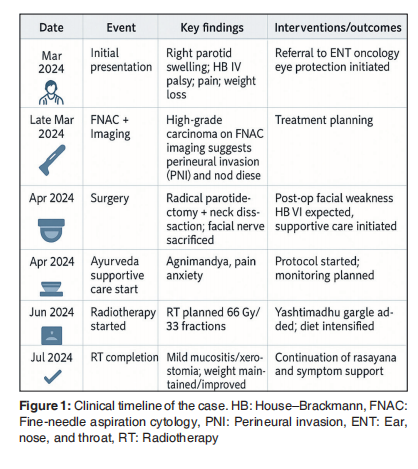
TIMELINE
The timeline of the patient is mentioned in Figure 1.
FOLLOW-UP AND OUTCOMES
The prespecified outcome measures were pain (Numeric Rating Scale, 0–10), sleep quality (Pittsburgh Sleep Quality Index, PSQI), appetite (Visual Analog Scale, 0–10), fatigue (Brief Fatigue Inventory), weight, quality of life [European Organisation for Research and Treatment of Cancer Quality of Life Questionnaire-Core 30 (EORTC QLQ-C30), with the Head and Neck module where available], and serial House–Brackmann (HB) grade, as detailed in Table 3.
Adverse Events
No serious adverse events attributable to the Ayurvedic medicines were recorded. Mild transient bloating was noted in week 1 and resolved with dose adjustment. LFT/KFT remained within normal limits on periodic testing.
DISCUSSION
This case report highlights a clinically significant presentation – parotid malignancy with facial nerve palsy – and documents an adjunctive Ayurveda-based supportive care approach delivered alongside standard surgery and radiotherapy.
Facial nerve paresis/palsy and pain in parotid malignancies correlate with perineural invasion and worse oncologic outcomes, reinforcing the need for urgent diagnostic work-up and multimodality therapy. Surgery remains the cornerstone; guidelines emphasize that the facial nerve should be sacrificed when preoperative palsy or direct invasion is present, followed by risk-adapted adjuvant radiotherapy and consideration of systemic therapy in selected high-risk settings.
The supportive care protocol was designed to address symptom clusters frequently observed in head and neck oncology: pain, sleep disturbance, appetite loss, fatigue, anxiety, bowel irregularity, and radiotherapy-associated mucositis/xerostomia. Ayurveda adds a structured individualized assessment (Prakriti/Vikriti, Agni, Koshtha, Bala, Ojas, Srotas, and Manas), which can be operationalized as a supportive care checklist and linked to measurable outcomes.
In this case, clinically meaningful improvements were noted in pain, sleep, appetite, fatigue, and QoL scores.
Facial motor recovery was limited as expected after facial nerve sacrifice; reported improvements largely reflected better tone/coping rather than true nerve restoration.
Mechanistic plausibility is supported by biomedical literature on individual components used for supportive aims. Licorice (Glycyrrhiza glabra/Yashtimadhu) has clinical evidence for reducing radiotherapy-induced oral mucositis severity in head and neck cancer populations.
Standardized QoL tools (EORTC QLQ-C30 and head and neck modules) enable transparent reporting and cross-study comparability, as recommended in supportive oncology research.
Importantly, integrative practice requires strict safety governance: interaction screening, quality assurance (good manufacturing practice (GMP)/good agricultural and collection practices (GACP) where possible), avoidance of heavy-metal preparations during active oncology therapy, documentation of adverse events, and coordinated care with the oncology team.[38,39]
Limitations include the inherent constraints of single-case reporting, possible placebo and natural recovery effects, and

limited ability to attribute benefit to any single component of a multimodal supportive package. Longer follow-up is needed to correlate supportive outcomes with survivorship trajectories and to ensure oncologic endpoints are not compromised. Future work should evaluate standardized integrative supportive protocols for head and neck cancers through prospective registries and pragmatic trials with clearly defined safety and interaction-monitoring frameworks.[40,41]
CONCLUSION
A structured Ayurveda-based supportive care protocol integrated with standard oncology management for advanced parotid malignancy was feasible and well-tolerated in this case. Improvements were observed in symptom burden and QoL domains, with mild and manageable radiotherapy-related mucositis. Careful documentation, safety monitoring, and multidisciplinary coordination are essential for replicability and responsible integrative oncology practice.
Declaration of patient consent
The authors certify that they have obtained all appropriate patient consent forms. In the form, the patient has given his consent for his images and other clinical information to be reported in the journal. The patient understands that his name and initials will not be published and due efforts will be made to conceal his identity, but anonymity cannot be guaranteed.
Financial support and sponsorship
Nil.
Conflicts of interest
There are no conflicts of interest.
REFERENCES
1. Gagnier JJ, Kienle G, Altman DG, Moher D, Sox H, Riley D; CARE Group. The CARE guidelines: Consensus-based clinical case reporting guideline development. Headache 2013;53:1541-7. doi: 10.1111/head.12246. PMID: 24266334.
2. Gandhi MY, Prasad SB, Kumar V, Soni H, Rawat H, Mishra SK, et al. Quantification of phytochemicals and metal ions as well as the determination of volatile compounds, antioxidant, antimicrobial and antacid activities of the Mimosa pudica L. Leaf: Exploration of neglected and under-utilized part. Chem Biodivers 2023;20:e202301049.
3. Gandhi Y, Kumar V, Singh G, Prasad SB, Mishra SK, Soni H, et al. Chemoprofiling and medicinal potential of underutilized leaves of Cyperus scariosus. Sci Rep 2024;14:7263.
4. Jha SK, Islam M, Kumar R, Rana L, Saifi MA, Ali S, et al. Evaluation of Vernonia amygdalina del. containing phyto constituents a medicinal plant compound as new potential inhibitors of monkey pox virus using molecular docking analysis. World J Adv Res Rev 2023;17:1112-22.
5. Jha SK, Mishra AK, Kumar V, Dane G, Kumari S, Charde V, et al. Ecological and behavioral impacts of COVID-19 on human existence and potential preventive measures through traditional and alternative medicine-a narrative review. Pharmacol Res Natl Prod 2024;3:100042.
6. Sonkar V, Jha SK, Tiwari S, Akarsh A, Priya S, Sharan P, et al. Characterization and explanation of the soil fertility state of Sakaldiha block in the Chandauli District of Uttar Pradesh’s industrial area. World J Adv Res Rev 2023;18:63-72.
7. Chauhan S, Jha SK, Tamta A, Sharma V, Kumar C, Lohiya G, et al. Descriptive analytical study based on profiling, morphological, pomological and pharmacological traits to identify the genotypes of the promising mango Mangifera indica L. World J Adv Res Rev 2023;19:1544-53.
8. Khan R, Maheshwari D, Chauhan S, Lohiya GV, Kumar C, Antil I, et al. Exploring the potential therapeutic value of Solanum lycopersicum L. phytoconstituents for Parkinson’s disease through molecular docking analysis. World J Adv Res Rev 2023;20:488-501.
9. Lohiya GV. Conjunctivitis in unusual populations: A review of rare cases and challenges in diagnosis and management. World J Adv Res Rev 2023;19(03):1326-336.
10. Singh NK, Sengar AS, Jha SK. A review of Ayurvedic measures for preventing COVID-19 and promoting health during pregnancy. J Indian Syst Med 2024;12:61-5.
11. Rao AK, Khan MR. Characterization, profiling, and molecular docking analysis of phytochemicals derived from Daucus carota for evaluating their potential role in cardiovascular disease (CVD) assessment. 2023;20(01):159-75.
12. Zargar AA, Mehta V, Gupta R, Bhandari K, Sharma MC, Balaji P, et al. Incretin hormones: Mechanisms, therapeutic implications, and future directions in glucose regulation and diabetes management. Curr Proteom 2025;22:100014.
13. Tamta A, Jha SK. Screening of Germplasms and Population Dynamics of Major Insect Pests of Spring Green Gram Vigna radiata (Linn.) (Doctoral Dissertation, Doctoral Dissertation, Doctoral Dissertation, GB Pant University of Agriculture and Technology, Pantnagar-263145 (Uttarakhand)).
14. Singh A, Jha SK, Dwivedi PC, Srivastava U, Pal A. Revolutionizing healthcare: Integrating electronics, AI, traditional, and conventional methods. World J Adv Res Rev 2024;23:2426-34.
15. Shrivastav S, Tyagi R, Singh M, Jha S. The effectiveness of curcumin on dysmenorrhea. Int J Med Sci Pharma Res 2022;8:8-12.
16. Jha SK, Charde V, Kumar V, Narasimhaji CV. Vitiligo treatment with natural bioactive: A narrative review. Natl Prod J 2025;16:1-15.
17. Sharma S, Kumar C, Kushwaha H, Jha SK, Chawla S, Sharma A, et al. Advancing anticancer drug development: Overcoming challenges and exploring new therapeutic strategies. Ayush J Integr Oncol 2025;2:8-27.
18. Mehta V, Zargar AA, Attri P, Jha SK. Bagging the role of herbal drugs in the management of cervical cancer. Ayush J Integr Oncol 2025;2:35-43.
19. Jha SK, Gupta A, Huddar VG. Botanical breakthroughs: The growing impact of plant-derived compounds in cancer treatment. Ayush J Integr Oncol 2025;2:62-7.
20. Jha SK, Singh N, Shanker OR, Antil I, Baghel JS, Huddar V, et al. A review on integrative approaches in oncology: Bridging Ayurvedic medicine and modern cancer therapeutics. Front Natl Prod 2025;4:1-20.
21. Kumar R, Verma H, Ali M, Midha T, Kumar D, Jha SK. Review of mitigating cancer risk through Ayurvedic practices: A holistic approach to combating sedentarism. Ayush J Integr Oncol 2025;2:86-90.
22. Sharma A, Jha SK, Huddar VG. Integrative role of Ayurvedic phytochemicals in cancer treatment: Targeting signaling pathways, boosting chemosensitivity, and utilizing traditional therapeutics. Ayush J Integr Oncol 2025;2:77-85.
23. Patel S, Singh S, Gupta AK, Dalimbe AY, Muthoju SM, Pawar AR, et al. Ayurveda and common Indian spices: A natural alternative for cancer therapy. Ayush J Integr Oncol 2025;2:91-102.
24. Antil I, Bangarwa S, Jha SK, Gupta AJ, Soni U, Huddar VG, et al. Exploring the chemopreventive and anticancer effects of green tea. Ayush J Integr Oncol 2025;2:158-68.
25. Sharma S, Yadav C, Chawla S, Jha SK. Beyond chemotherapy: Exploring the potential of phytomedicine in oncology. Ayush J Integr Oncol 2025;2:133-45.
26. Ahlawat A, Chauhan S, Antil I, Jha SK, Huddar VG. Examining the impact of the microbiome on cancer immunotherapy outcomes: A review. Ayush J Integr Oncol 2025;2:118-24.
27. Attri P, Zargar AA, Mehta V, Mushtaq SU, Jha SK, Soni U. Genetic basis of cancer: Harnessing natural remedies for therapeutic potential. Ayush J Integr Oncol 2025;2:188-94.
28. Chauhan S, Jha SK, Huddar VG, Ahlawat A, Sharma S, Tripathi A, et al. Targeting cancer at the molecular level: A biochemical and medicinal chemistry approach. Ayush J Integr Oncol 2025;2:169-77.
29. Shamim, Ali S, Ali T, Sharma H, Kishor BN, Jha SK. Recent advances in monodisperse gold nanoparticle delivery, synthesis, and emerging applications in cancer therapy. Plasmonics 2025;20:7121-41.
30. Chawla S, Gupta R, Jha SK, Kashid S, Jha KT. Stereoisomerism in chemistry and drug development: optical, geometrical, and conformational isomers. Medicinal Chemistry (Shariqah (United Arab Emirates)) 2025.
31. Gupta AJ, Huddar VG, Jha SK, Soni U. Traditional wisdom in modern oncology: Ayurvedic pain relief and supportive care. Ayush J Integr Oncol 2025;2:178-87.
32. Sandrepogu J, Khandelwal P, Tiwari SK, Jha SK, Chauhan S, Sharma H, et al. A holistic paradigm for cancer care: Merging Ayurveda with contemporary oncology. Ayush J Integr Oncol 2025;2:254-61.
33. Mahto RR, Tiwari SK, Sharma H, Chauhan S, Khandelwal P, Goel P. Ayurvedic formulations in palliative oncology: Complementing pain and symptom management. Ayush J Integr Oncol 2025;2:236-46.
34. Dhiman S, Thakur N, Dwivedi PC, Pande P, Jha SK, Lohiya GV. Phytochemicals: Investigating Bioactive Compounds for Antifungal Uses and Quality Issues in Functional Foods and Therapeutics. AJBR 2024;27(3S):258-6.
35. Shamim PT, Khatri N, Yadav AK, Mishra B, Khan MR, Behera SK, et al. Role of human chorionic gonadotropin in frozen-thawed embryo transfer cycles for secretory transformation: A narrative. Eur Chem Bull 2023;12:5477-93.
36. Kumar C, Chauhan P, Chauhan S, Jha SK, Lohiya G. Phyto-pharmacognostic experimental study of Epimedium sagittatum and Gloriosa superba L. for the treatment of hypogonadism. Int J Innov Sci Res Technol 2023;8:254-60.
37. Raj H, Jha SK, Negi M, Khandelwal P, Chauhan S, Sharma H, et al. Integrative oncology: A comprehensive comparative analysis of herbal and allopathic medicine in cancer treatment. Current Pharmaceutical Research (CPR) 2025;1:427-45. doi: 10.63785/2025.1.4.427445.
38. Antil I, Jha SK, Negi M, Sharma H, Tiwari SK. Baicalein from Scutellaria baicalensis as natural therapeutic agent for glioblastoma. Current Pharmaceutical Research (CPR) 2025;1:411-426. doi: 10.63785/2025.1.4.411426.
39. Sharma H, Mahto RR, Jha SK, Chauhan S, Khandelwal P, Tiwari SK. Rasayana-based adjuvant strategies in cancer care: An Ayurvedic-oncologic perspective. Iran J Blood Cancer 2025;17:35-68.
40. Pandey K, Negi M, Tiwari A, Tiwari SK, Sharma H. Turmeric: The golden shield of nature that can treat cancers. J Health Synapse 2026;1:1-8.
41. Sama S, Komiya T, Guddati AK. Advances in the Treatment of Mucoepidermoid Carcinoma. World J Oncol 2022;13:1-7. doi: 10.14740/wjon1412. Epub 2021 Dec 8.