Cancer continues to be a global cause of morbidity and mortality, with a rising incidence expected to reach more than 35 million new cases annually by the year 2050. In India, the load is increasing due to late diagnosis, toxicity of treatment, and economic burden. While contemporary oncology, supported by advances in molecular oncology, has improved survival through chemotherapy, radiotherapy, and targeted/precision therapies, formidable challenges persist, including drug resistance, systemic toxicity, and compromised quality of life (QoL). Complementary and integrative medicine, especially Ayurveda, provides a biopsychosocial, patient-centric model that addresses both physical and psychosocial aspects of cancer treatment. Ayurvedic treatments such as Rasayana Chikitsa, Panchakarma, and phytotherapies (e.g., curcumin, boswellic acids, Withania somnifera, etc.) have shown immunomodulatory, anti-inflammatory, and QoL-improving effects in new clinical and observational studies. Molecular oncology gives mechanistic insights into cancer at the genomic and epigenomic levels, whereas Ayurveda offers a systems-biology approach with an emphasis on personalized, constitution-based therapy (Prakriti). Integrative research merging these paradigms has the potential to maximize therapeutic benefit, reduce treatment-related side effects, and improve survivorship. Translating molecular oncology into Ayurveda necessitates extensive randomized controlled trials, formulation standardization, strong regulatory systems, and transdisciplinary partnerships. Such evidence-based confluence can drive oncology toward a more holistic, patient-orientated paradigm, that not only cures the tumor but heals the individual.
Keywords: Ayurveda, cancer, complementary medicine, integrative oncology, molecular oncology, rasayana
INTRODUCTION
Cancer remains a heavy burden worldwide, with an estimated 20 million new cancer cases and 9.7 million deaths due to cancer worldwide in 2022, and predictions of more than 35 million new cases by the year 2050, a whopping 77% increase. Cancer burden in India reflects this increase: new cancer cases have increased from 1.46 million in 2022 to about 1.57 million in 2025, with a crude incidence rate of 100.4/100,000 population in 2022.[1-3] Lung cancer in male and female breast cancers are the leading types and overall approximately one in nine Indians can expect to get cancer in their lifetime. Late diagnosis is still a significant problem, leading to a high mortality-to-incidence ratio and a very costly outcome – a gross domestic product (GDP) loss of as much as $40 billion by the year 2030. These statistics indicate disturbing epidemiological trends and support the need for more effective cancer management practices.[4]
Even with great leaps and advances in molecular oncology and traditional cancer treatments-surgery, chemotherapy, radiation, and targeted therapy-tremendous shortcomings remain. Routine treatments come with side effects, from fatigue and immunosuppression to organ injury and secondary malignancies, severely decreasing quality of life (QoL) for patients. Moreover, cancer cells’ ability to evolve drug resistance further reduces long-term efficacy, demanding constant adjustments to treatment regimens and hindering sustained remission.[5]
In response to these challenges, Complementary and Integrative Medicine (CIM) has rapidly emerged as a vital adjunct in modern cancer care. Integrative modalities, including meditation, yoga, acupuncture, and dietary interventions, which are increasingly adopted alongside conventional treatments, aim to alleviate symptoms, manage side effects, and improve overall well-being and QoL.[6] Evidence-based clinical guidelines and growing research have established integrative oncology as a legitimate, patient-centered field within cancer care, reflecting both patient demand and practitioner acceptance.[7,8]
Ayurveda, a traditional holistic system of medicine from India dating back more than 5000 years, is a classic CIM example. Ayurvedic theory focuses on balance among the mind, body, and spirit and stresses individualized treatment through the balancing of three innate energies (doshas): Vata, Pitta, and Kapha. Its tenets promote preventive medicine, individualized nutrition, lifestyle changes, herbal therapy, and mind-body therapies such as meditation and yoga. Grounded in the “One Health” philosophy, Ayurveda fosters sustainable wellness that links individual and ecological health, thereby being a viable complementary instrument in molecular oncology’s era.[9,10]
UNDERSTANDING CANCER FROM AN AYURVEDIC PERSPECTIVE
In Ayurveda, cancer is not defined as a monolithic disease but as an expression of intricate pathological activities with derangement of the basic bio-regulatory principles – Tridosha (Vata, Pitta, and Kapha), in combination with Dhatukshaya (depletion of tissue) or, in certain instances, Dhatuvriddhi (pathological overgrowth). A chronic dosha vitiation disturbs the homeostasis of body tissues (Dhatus) and channels (Srotas), with resulting predisposition to malignant transformation.[11] In most interpretations, Kapha dominance favors abnormal tissue growth, Pitta exacerbation causes inflammation and metabolic imbalance, while Vata vitiation allows for swift, uncontrolled dissemination.[12-14]
The concept of Ama, Ojas, and Agni plays a crucial role in the Ayurvedic understanding of carcinogenesis. One of the probable key carcinogenic factors is Ama-a toxic, unmetabolized residue of defective digestion and metabolism, which clogs the channels and deranges tissue nutrition. Chronic ama accumulation, in addition to Ojas (life essence controlling immunity and systemic integrity) depletion, and Agni (digestive and metabolic fire) derangement, deranges the body’s immunity to abnormal cell activity.[15,16]
Classical Ayurvedic texts utilize certain terminologies that conceptually resemble contemporary oncological conditions. Arbuda describes large, fixed, nonpurulent swellings with a predisposition to progressive enlargement, similar to benign or malignant solid neoplasms. Granthi describes smaller, usually nodular swellings, possibly equatable with neoplastic or preneoplastic conditions. Dushta Vrana (chronic ulcerative lesions) can be considered as ulcerative malignancies of the nature of oral or skin cancers.[17-19]
Historical descriptions of tumor-like states occur in canonical Ayurvedic texts. Arbuda is a hard, deep swelling produced by deranged Tridoshas, recurring following surgical excision according to Sushruta Samhita. Charaka Samhita and Ashtanga Hridaya similarly delineate pathological swellings, chronic ulcers, and systemic decline consistent with the clinical patterns of cancer.[20-22]
Such descriptions attest to the ancient doctors’ appreciation of the multicentric nature of tumor pathophysiology and its systemic effects. Furthermore, some ayurvedic methods show conceptualization methods bridging the modern and traditional system depicting in Table 1.
AYURVEDIC THERAPIES IN CANCER SUPPORT
Ayurveda, the traditional Indian medicine, provides an integral system with various modalities that can be supportive to standard cancer therapies. These treatments, namely Rasayana Chikitsa, Panchakarma, and herbal medicine, can have auxiliary roles in immunomodulation, detoxification, tissue repair, and treatment-related adverse effect alleviation.
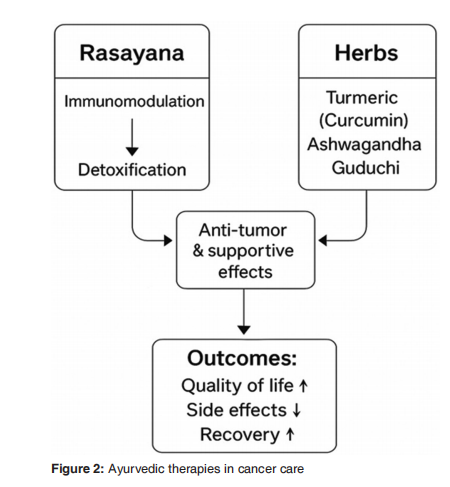
Rasayana Chikitsa, often synonymous with rejuvenation therapy, is the practice of administering specific herbal, mineral, and dietary formulations intended to stimulate immunity and tissue regeneration. Several studies have shown that Rasayana preparations increase macrophage and natural killer (NK) cell activity and raise the levels of immunoglobulins, cytokines, and antioxidant enzymes, thus boosting host resistance against malignancies.[23-25] Through immunomodulatory effects, Rasayana therapies stimulate dormant T-cell activity, restore immune surveillance, replenish Dhatus (tissue elements), and strengthen Ojas (vital energy). Studies have shown Rasayana treatment, including the use of herbal tonics and specific formulations, may improve overall survival, mitigate immune suppression in tumors, and aid recovery after conventional cancer therapies, as shown in Figure 1.[26,27]
Panchakarma includes five therapeutic interventions: Vamana (therapeutic emesis), Virechana (purgation), Nasya (nasal therapy), Basti (enema), and Raktamokshana (bloodletting) aiming to remove sequestered toxins (ama) and balance physiology. This detoxification strategy is theorized to decrease systemic inflammatory load and counteract metabolic imbalances that occur with both cancer and its therapies.[28-31]
Ayurvedic medicinal plants are being studied more and more for their bioactive potential in oncological support.
Curcuma longa (turmeric): Its active component curcumin has significant anti-inflammatory, antioxidant, and antineoplastic properties, such as nuclear factor kappa B signaling inhibition and cancer cell apoptosis induction.[32-34]
Withania somnifera (Ashwagandha): With its adaptogenic and immunomodulatory nature, it can sensitize cancer cells to radiotherapy and chemotherapy and safeguard the normal cells through the reduction of oxidative stress.[35-38]
Tinospora cordifolia: Exhibits immunostimulatory activity through enhanced phagocytic activity and cytokine release, which may boost host resistance to tumor growth and promote recovery following treatment.[39-41]
Integration of Ayurvedic treatments with standard oncology has been found to alleviate adverse effects such as nausea, weakness, and mucositis induced by chemotherapy and radiotherapy in most cases. For instance, Rasayana-based herbal preparations and Gandhaka Rasayana have been found to reduce weakness and enhance the parameters of QoL in radiation-treated cancer patients.[42,43] Similarly, turmeric mouth washes and ashwagandha supplementation have been found to decrease the severity of mucositis and radiation-induced oxidative damage.[44-46] The Rasayana, herbs, Panchakarma, dietary counseling, and targeted herbal/adjuvant therapies help normalize appetite and digestion, relieve nausea and vomiting, proved supportive in recovery from mucositis and fatigue. Hemoglobin and white blood cell count restore quickly, thus helping to tolerate and continue cancer therapy courses, as shown in Table 2 and Figure 2.[47-49]
MOLECULAR ONCOLOGY AND SYSTEMS BIOLOGY
Molecular oncology is a focused, interdisciplinary area of science at the intersection of oncology, genomics, proteomics, and bioinformatics, committed to understanding cancer at a molecular level-discovering genetic and molecular processes driving tumor initiation, growth, and therapeutic vulnerabilities through biomarkers and targeted treatments.[50,51]
Cancer is increasingly understood through crucial genetic changes. Tumor suppressor genes TP53, the so-called


“guardian of the genome,” are mutated in more than 50% of human malignancies, interfering with DNA repair and apoptotic mechanisms.[52,53] Similarly, BRCA1 and BRCA2 play a pivotal role in fixing DNA double-strand breaks; harmful mutations there increase risk for hereditary breast and ovarian cancer through genomic instability.[54-56] In addition, simultaneous mutations in BRCA and TP53 genes greatly accelerate tumourigenesis, reflecting their cooperative functional action in the suppression of tumors.
Precision oncology or targeted medicine seeks to make cancer therapy more personalized according to the individual molecular signatures. It uses genomic technologies such as next-generation sequencing, the identification of biomarkers, and molecular profiling to guide therapies, as evidenced by EGFR-, ALK-, and HER2-targeted therapies in lung and breast cancers, respectively.[57,58]
Precision oncology has significant limitations despite its potential – tumor heterogeneity and adaptive resistance: Shifting genetic profiles within and between tumors and acquired resistance can compromise therapeutic effectiveness.[59,60]
Access and affordability
Sophisticated molecular analysis and targeted therapy may be out of reach in most environments because of cost and infrastructure constraints.[61,62] Most genomic changes have no approved target therapies, so clinical usefulness is restricted outside the trial settings.[63] Handling sensitive genetic data raises privacy concerns, whereas complications in the interpretation of tests and incorporation into clinical practice are further obstacles.[64]
CONVERGENCE POINT: AYURVEDA AND MOLECULAR ONCOLOGY
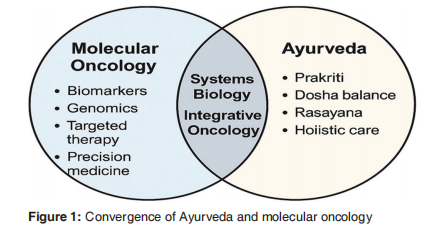
Cancer systems biology describes tumors as complex adaptive systems, with multi-scale molecular and environmental information to explain the disease dynamics and inform therapies. This aligns with Ayurveda’s holistic paradigm, highlighting systemic equilibrium and personalized health trajectories.[65] The classical Ayurvedic framework of Tridosha (Vata, Pitta, Kapha) finds resonance with the interconnected pathways and homeostasis studied in systems biology, fostering a network-based understanding of disease.[66]
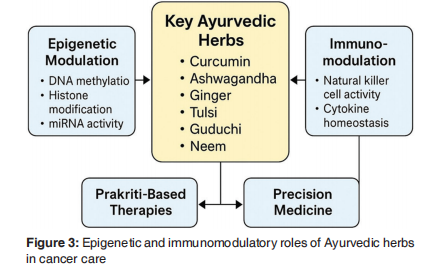
Recent developments underscore the molecular mechanisms of phytochemicals derived from the Ayurvedic plants. Curcumin (from turmeric) and boswellic acids (from Boswellia serrata), for instance, exhibit powerful anti-tumor and chemopreventive action by modulating oncogenic signaling pathways. Mechanistic investigations reveal that these compounds are capable of inducing cell cycle arrest, apoptosis, and suppressing cancer-facilitating proteins through the modulation of microRNAs and gene expression in colorectal and other malignancies. These types of botanicals are rapidly gaining recognition for their potential to target several molecular targets at once, an avenue of action mimicking multi-modal therapy in molecular oncology.[67-69] Epigenetic and immunomodulatory activities of Ayurvedic herbs also fill the gap between the two paradigms. Studies prove that phytochemicals such as curcumin, ashwagandha, and ginger are capable of modulating gene expression by affecting DNA methylation, histone modification, and miRNA activity, thus influencing carcinogenesis, inflammation, and immune response. Immunomodulation by constituents such as Nigella sativa (black cumin) and Echinacea has exhibited increased NK cell activity and cytokine homeostasis, pertinent to enhancing cancer therapy outcomes.[70,71]
Ayurveda’s vision of personalized care is realized through Prakriti-based therapies, which categorize the individuals into constitutional groups and suggest treatment in line with their individual physiological and genetic constitution. This process mirrors the precision medicine model in cancer, where genomic and biomarker analysis directs treatment based on each person’s distinctive genetic and biomarker characteristics. Research implies that combining Prakriti with contemporary genotyping, referred to as “Ayurgenomics,” may improve cancer risk prediction and therapy, taking into account inter-individual heterogeneity in drug response and disease evolution, as shown in Figure 3.[72-74]
Integrative research has started investigating correlations between Prakriti classes and genomic/epigenomic profiles. For instance, Ayurvedic personalized medicine employs single nucleotide polymorphism (SNP) profiles to correlate the constitution types with genetic likelihood.[75,76]
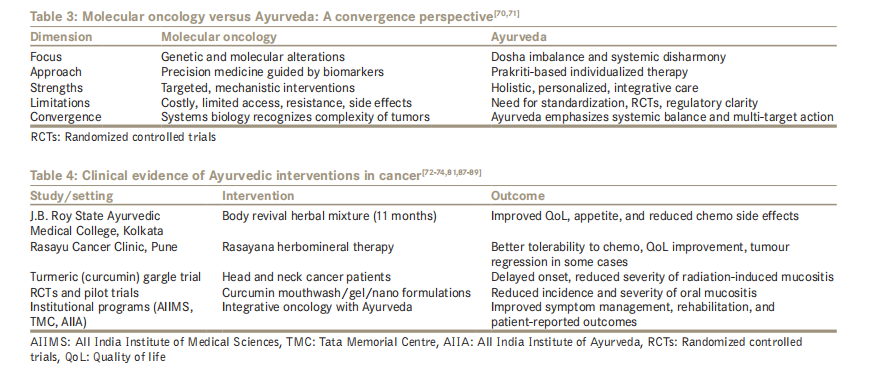
The convergence of molecular oncology and Ayurveda promotes new possibilities for individualized and systems-based cancer treatment, and current studies continue to support the utility of herbal phytochemicals, epigenetic regulation, and constitution-tailored interventions, as shown in Table 3.
CLINICAL EVIDENCE AND CASE STUDIES
Clinical trials on Ayurvedic care in oncology are still a developing area. Systematic reviews and two-part meta-syntheses by Arnold capture the preclinical and clinical evidence to date while demanding strictly translational research programs to prove Ayurvedic modalities in the management of cancer.[77,78] Recent editorials and special issues in a few of the Journals have highlighted the necessity of developing reproducible clinical protocols and implementation models that integrate conventional oncology with evidence-informed Ayurvedic interventions.[79]
Current clinical trials have begun setting the stage for the efficacy of Ayurvedic products as adjuvants in cancer management. As an instance, body revival herbal mixture was tried for 11 months by oncologists at J. B. Roy State Ayurvedic Medical College, Kolkata. There were improvements in QoL scores, performance status, appetite, endurance, and decreased chemotherapy- and radiotherapy-induced side effects such as nausea, tiredness, and mucositis. Blood tests and liver function also improved, without any drug-related adverse events.[80] However, another retrospective analysis from Rasayu Cancer Clinic proved that herbomineral Rasayana treatment aided palliation in advanced cancer patients, with improvements in health-related QoL, improved tolerability to chemotherapy, and even registered tumor regression in individual cases.[81-83]
Randomized and observational trials are scarce but increasing. An Indian single-blind investigational trial described that a turmeric (curcumin) gargle postponed onset and alleviated severity of radiation-induced oral mucositis in patients with head-and-neck cancer, proposing an inexpensive, highly tolerated supportive treatment for mucosal toxicity.[84] Subsequent randomized and pilot trials (including a multicenter pilot randomized clinical trial) have assessed topical curcumin products (mouthwash, gel, and nanocapsules) and have reported decreases in incidence or severity of mucositis and accompanying pain; these findings are supported by recent systematic reviews and meta-analyses that suggest curcumin could be effective for radiation/chemoradiation-induced oral mucositis, but larger studies and formulation standardization are still required.[85-87] Independent of the systemically optimized curcumin now being developed, an initial phase II trial evaluated systemic curcumin in advanced pancreatic cancer (mostly for tolerability and signs of activity) and noted pharmacokinetic and bioavailability issues pertinent to systemic oncology use.[88]
Figure 3: Epigenetic and immunomodulatory roles of Ayurvedic herbs in cancer care
Some Indian centers have tested integrative oncology units and programs that formally integrate AYUSH (including Ayurveda) with conventional cancer treatment. Programmes such as the Tata Memorial Centre’s (TMCs) integrative programmes, multidisciplinary Integrative Cancer Care Units, and collaborative centers (All India Institute of Medical Sciences [AIIMS]/All India Institute of Ayurveda [AIIA]/National Institute of Cancer Prevention and Research partnerships) exemplify operational models for delivery, referral pathways, and research agendas in a tertiary-care setting.[89-92] These institutional reports are useful for lessons on implementation, but most of them are descriptive and not randomized, highlighting the importance of controlled outcome studies. The TMC of Mumbai has launched the Integrative Center for Treatment Research and Education in Cancer, integrating Ayurveda and other traditional modalities into the continuum of cancer care. This model focuses on multidisciplinary team involvement in maximizing health, minimizing toxicity, and improving clinical outcomes. The Center for Integrative Medicine and Research at the AIIMS, New Delhi, is the home for integrated research between conventional oncology and AYUSH systems, establishing Ayurveda’s clinical utility and opening holistic health care streams. The National Cancer Institute at AIIMS Jhajjar is another good example with specific blocks and research collaborations dedicated to Ayurveda’s utility in prevention, management, and translational cancer research in collaboration with AIIA, New Delhi.[91]
Institutional reports and case series outline integrative cancer-care units providing Ayurveda-based supportive therapies (lifestyle/dietary counseling, herbal/topical adjuvants, rasayana programmes, and supervised Panchakarma in rehabilitation environments) in conjunction with medical oncology, radiation, and surgery.[74,93]
A recurring theme in trials and in observational reports is symptom burden, daily functioning, and QoL improvements when Ayurvedic interventions are adopted as adjunct treatment. Small studies and case series describe decreases in mucositis pain, reduced weight loss with head-and-neck radiotherapy, and subjective benefit in fatigue and overall QoL after Rasayana or supportive herbal therapies; systematic reviews mention consistent positive trends in PROs but highlight heterogeneity with regard to endpoints, dosing, and trial quality.[75,94] National research institutions (such as CCRAS/Ministry of AYUSH) have also supported clinical and observational studies related to QoL and supportive outcomes, although most such reports remain unpublished in high-impact journals or as institutional reports.[81]
Clinical data for Ayurvedic adjunct treatment in cancer are promising for symptom management (particularly oral mucositis) and QoL but are limited by small sample sizes, heterogeneous formulations, inconsistent outcome measures, and bioavailability/pharmacokinetic problems for systemic phytochemicals. The discipline requires: (1) Standard Ayurvedic treatments with composition and dosing in evidence, (2) powered randomized controlled trials with prespecified PRO and clinical outcomes, (3) pharmacokinetic and interaction studies to prove safety with chemotherapy and target agents, and (4) implementation research to assess integrative service models in tertiary cancer centers, as shown in Table 4.[72-74,81,87-89]
CONCLUSION
Ayurveda has great potential as an adjunct to contemporary oncology, providing holistic interventions that deal not only with the biological but also psychological and social aspects of cancer treatment. Its long-standing concepts of equilibrium, individualized treatment based on Dosha and Prakriti evaluation, and focus on rejuvenation and detoxification can enhance modern molecular oncology by improving patients’ QoL, reducing side effects from therapy, and enhancing immune integrity.
To fully realize this potential, there is an urgent call for integrative, evidence-based research designs that critically test Ayurvedic therapies using the forte of present scientific methodology while holding reverence for the holistic worldview of traditional medicine. Joint partnerships among conventional oncologists, Ayurvedic health providers, and systems biologists can pave the way for transdisciplinary breakthroughs, which will connect timeless wisdom and molecular science.
In the end, patient-centered, integrative cancer care that integrates Ayurveda’s holistic practice guarantees not just better therapeutic outcomes but also the preservation of patients’ dignity, autonomy, and well-being during the course of their cancer. This meeting point between molecular oncology and complementary Ayurvedic medicine heralds a new era of personalized, comprehensive, and sustainable cancer care.
CHALLENGES AND FUTURE DIRECTIONS
Even though there are promising initial results for Ayurvedic treatments in cancer management, especially for symptom palliation and QoL-well-designed randomized controlled trials are urgently demanded. Priority considerations are standardized formulations (e.g., fixed dosages and bioavailability-controlled phytochemical formulations), clear endpoint definitions, and appropriately powered sample sizes to assess both supportive and disease-modifying effects.
To build the bridges between conventional medicine and evidence-based oncology, regulatory mechanisms have to adapt. Policies acknowledging approved Ayurvedic treatments under oncology supportive care, simplifying approval of quality-controlled drugs, and allowing reimbursement channels are essential to ease integration, especially into public health systems.
The intricacy of combining Ayurvedic insight with molecular oncology requires a transdisciplinary research strategy. Multidisciplinary models that bring together oncologists, Ayurvedic clinicians, systems biologists, pharmacologists, ethicists, and implementation scientists will hasten translatable intelligence. Integrated clinical trial platforms and “bedside-to-bench” feedback mechanisms will strengthen cross-disciplinary perception and slow translational gaps.
Integrative therapy in oncology presents important ethical issues. Robust informed consent procedures need to clearly convey: the level of evidence, benefits, risks or interactions, and Ayurvedic treatments as complementary (not alternative). Patient autonomy also needs to be safeguarded in situations where cultural or societal pressures might influence participation in traditional treatments; institutional ethics review board oversight is required.