Keywords – Madhumehaj Klaibya, Diabetes Mellitus, Erectile Dysfunction, Diabetes Mellitus Induced Erectile Dysfunction, Rasayana, Vajikarana.
Abstract – Background: Erectile dysfunction (ED) is a common and early complication of diabetes mellitus, affecting over half of diabetic men. Ayurveda describes this condition as Madhumehaj Klaibya, arising from Vata–Kapha vitiation, Meda and Shukra Dhatu deterioration, and Ojas depletion. These concepts parallel modern mechanisms of diabetic ED, including endothelial dysfunction, neuropathy, oxidative stress, and impaired nitric oxide signaling.
Objective: To critically analyze the Ayurvedic understanding of Madhumehaj Klaibya and correlate it with contemporary biomedical insights into diabetes-related ED, with emphasis on integrative therapeutic strategies.
Methods: Classical Ayurvedic texts (Charaka Samhita, Sushruta Samhita, Ashtanga Hridaya, Bhavaprakasha) were reviewed to elucidate concepts of Klaibya and Madhumeha. Modern scientific literature from PubMed and the AYUSH Research Portal was analyzed to identify etiopathogenesis and management of diabetic ED. A comparative synthesis was undertaken.
Outcomes: Ayurveda attributes Madhumehaj Klaibya to Kapha–Meda Avarana causing Vata dysfunction, Agnimandya, Shukra Dushti, and Ojas Kshaya—comparable to vascular insufficiency, oxidative damage, and hormonal imbalance. Experimental and clinical studies suggest that Rasayana and Vajikarana therapies (Ashwagandha, Shilajatu, Musali Pak, Gudmar, Gokshura) possess antioxidant, adaptogenic, and androgen-supportive effects. When integrated with PDE-5 inhibitors, hormonal therapy, and lifestyle modification, these approaches may improve metabolic control, nitric oxide bioavailability, and psychosexual well-being.
Conclusion: Madhumehaj Klaibya demonstrates a strong conceptual convergence between Ayurveda and modern biology in diabetic ED. Integrative strategies combining Agnideepana, Srotoshodhana, Rasayana, and Vajikarana with contemporary care offer a holistic, evidence-informed framework. Further multicentric trials, formulation standardization, and biomarker-based validation are warranted.
- Introduction
Ayurveda describes diabetes mellitus as Madhumeha, a chronic metabolic disorder characterized by impaired glucose metabolism and inadequate insulin regulation. Diabetes mellitus represents a major global health challenge, with its prevalence increasing due to longer life expectancy, sedentary lifestyles, and reduced physical activity [1]. Persistent hyperglycemia results in several long-term complications, among which erectile dysfunction, referred to as Klaibya in Ayurveda, is a clinically significant yet underrecognized condition. Men with diabetes develop erectile dysfunction at a younger age and with greater severity than non-diabetic individuals, with prevalence reported in a substantial proportion of affected patients [2].
The pathogenesis of diabetes-related erectile dysfunction is multifactorial. Chronic hyperglycemia induces vascular injury, autonomic neuropathy, endothelial dysfunction, oxidative stress, and psychological disturbances, collectively leading to impaired erectile function. These mechanisms reflect the systemic and progressive nature of diabetic complications [3].
In Ayurvedic literature, diabetes-associated erectile dysfunction is termed Madhumehaj Klaibya. Its pathogenesis is attributed to Vata prakopa, Avarana of Kapha, Shukra dhatu kshaya, and Oja kshaya [4]. Classical texts describe multiple forms of Klaibya, including Doshaja, Sahaja, Vyadhija, Shukrakshaya, and Medoja, based on etiological factors, all fundamentally linked to disturbances of Shukra dhatu. Madhumehaj Klaibya is best understood within the framework of Doshaja and Vyadhija Klaibya, indicating that chronic metabolic derangements adversely affect reproductive and psychological health [5].
Ayurvedic management emphasizes an individualized and holistic approach that includes Shodhana therapies such as Virechana and Snehapana, Shamana therapy using herbal formulations, and Vajikarana therapy aimed at reproductive rejuvenation. These interventions seek to restore doshic balance, nourish Shukra dhatu, enhance Ojas, and improve metabolic function [6]. In contrast, contemporary pharmacological agents primarily provide symptomatic relief and may be associated with limitations and adverse effects. Ayurvedic protocols integrate dietary regulation, lifestyle modification, Panchakarma, Rasayana, and Vajikarana, offering comprehensive management. With the rising prevalence of diabetes-associated erectile dysfunction, a transdisciplinary understanding of Madhumehaj Klaibya supports integrative strategies that address metabolic, psychological, and physiological dysfunctions [7].
- Review of Literature
2.1 Classical Ayurvedic Review
2.1.1 Terminology and Definitions
Ayurvedic literature defines Klaibya as the inability to achieve or maintain satisfactory sexual performance due to disturbances in Shukra dhatu and Ojas, thereby affecting both the physical and psychological dimensions of virility. Madhumeha, a subtype of Prameha, is characterized by Kapha and Meda Avarana, leading to Vata prakopa and Ojas kshaya [8]. Clinically, this manifests as polyuria, fatigue, and progressive tissue depletion. When these chronic metabolic disturbances involve Shukra dhatu, the condition progresses to Madhumehaj Klaibya, corresponding to diabetes mellitus-associated erectile dysfunction. This condition reflects a profound depletion of Ojas and a consequent decline in sexual vitality [9].
2.1.2 Nidana (Etiology)
Apathya ahara and vihara, encompassing unwholesome dietary habits and inappropriate lifestyle practices, along with excessive intake of heavy, oily, and sweet foods, prolonged physical inactivity, and overindulgence in sexual activity, are recognized etiological factors for both Klaibya and Madhumeha. These factors aggravate Kapha and Meda, promote Srotorodha or obstruction of bodily channels, and impair the normal functioning of Vata, thereby disrupting the proper formation and nourishment of Shukra dhatu [10].
Psychological factors such as Chinta, Shoka, and Bhaya are also emphasized in Ayurvedic texts, as they vitiate the Manasika doshas, namely Rajas and Tamas. This disturbance adversely affects mental equilibrium and contributes to Manasika Klaibya, or psychogenic erectile dysfunction, highlighting the integral role of psychological health in sexual function [11].
2.1.3 Samprapti (Pathogenesis)
Kapha and Meda Avarana obstruct the normal movement of Vata, particularly Apana and Vyana Vayu, resulting in dysfunction of Shukravaha and Medovaha srotas [12]. This pathological process leads to Dhatu kshaya and Agnimandya, thereby impairing cellular metabolism and diminishing reproductive vitality. The depletion of Ojas may be conceptually correlated with endothelial dysfunction and heightened oxidative stress observed in diabetes mellitus, while Vata kshaya resembles neurovascular insufficiency that contributes to erectile dysfunction [13], [14].
2.1.4 Lakshana (Clinical Features)
Klaibya is clinically manifested by loss of libido, absence or inadequacy of erection, reduced seminal volume, and persistent fatigue. Madhumeha presents with Prabhuta mutrata or excessive urination, Pipasadhikya or excessive thirst, Kshaya or emaciation, and Daurbalya or generalized weakness. When these conditions coexist, the clinical entity is described as Madhumehaj Klaibya, reflecting the simultaneous presence of sexual and metabolic dysfunction resulting from Vata and Kapha pathology accompanied by depletion of Ojas [15].
2.1.5 Chikitsa (Principles of Management)
Ayurveda emphasizes Shodhana or biopurification, Shamana or palliative therapy, Rasayana or rejuvenation, and Vajikarana or aphrodisiac therapy as the principal components of management. Shodhana procedures such as Virechana and Basti help eliminate Kapha and Meda obstruction and restore the physiological balance of Vata [16].
Rasayana and Vajikarana therapies, including formulations containing Ashwagandha, Kapikacchu, Shilajatu, Musali Pak, and Gokshuradi Guggulu, are employed to replenish Shukra dhatu, enhance physical strength, and support metabolic homeostasis [17]. Lifestyle interventions such as Sattvika ahara, observance of Brahmacharya, and stress management through Sattvavajaya chikitsa complement pharmacological measures by addressing the psychogenic components of Klaibya and promoting overall well-being [18].
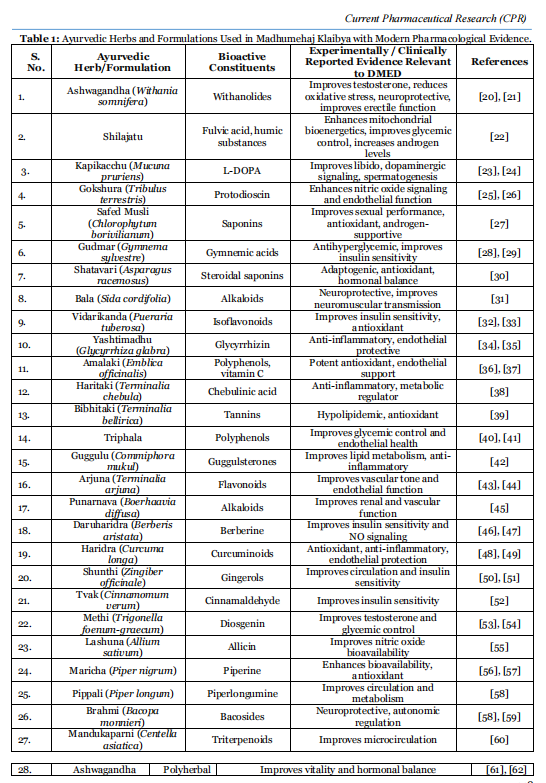
Multiple Ayurvedic herbs and formulations exhibit antihyperglycemic, antioxidant, endothelial-protective, neuroprotective, and androgen-supportive effects relevant to diabetes-associated erectile dysfunction, as summarized in Table 1 [19].

2.2 Contemporary Medical Review
2.2.1 Pathophysiology
Erectile dysfunction is a common chronic complication of diabetes mellitus, affecting approximately thirty five to seventy five percent of men with long standing disease and typically manifesting nearly a decade earlier than in non diabetic populations [67]. The underlying pathophysiology is multifactorial and involves vascular, neurological, endocrine, and psychogenic mechanisms. Persistent hyperglycemia promotes non enzymatic glycation of vascular and neural proteins, leading to endothelial dysfunction, microangiopathy, and autonomic neuropathy [68].
Oxidative stress plays a central role in this process, as sustained elevation of blood glucose generates excessive reactive oxygen species. These reactive species reduce nitric oxide bioavailability, impair endothelial nitric oxide synthase activity, and compromise vasodilation within the corpus cavernosum [69]. In addition, the accumulation of advanced glycation end products increases vascular stiffness and promotes cavernosal fibrosis. Insulin resistance and reduced testosterone levels further aggravate vascular and neural injury. Collectively, these pathological alterations result in impaired relaxation of penile smooth muscle, inadequate cavernosal blood filling, and diminished erectile rigidity [70].
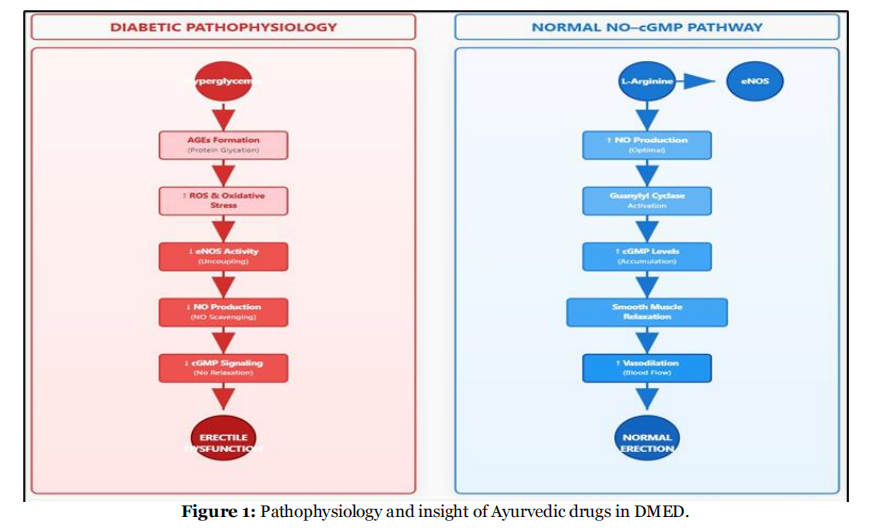
Figure 1. Schematic representation of nitric oxide and cyclic guanosine monophosphate signaling in normal erectile function and diabetic erectile dysfunction [71].
The diabetic pathway illustrates impaired nitric oxide production from endothelial and neuronal nitric oxide synthase due to chronic hyperglycemia, oxidative stress, advanced glycation end products, and reduced synthase activity. This results in diminished activation of soluble guanylate cyclase, reduced cyclic guanosine monophosphate synthesis, and defective protein kinase G signaling, leading to increased intracellular calcium, corpus cavernosum smooth muscle contraction, and erectile failure [72].
In contrast, the normal pathway demonstrates intact neural stimulation with adequate nitric oxide release, efficient cyclic guanosine monophosphate generation, and effective protein kinase G activation, culminating in smooth muscle relaxation and penile erection [73].
The table summarizes key diabetic mechanisms including endothelial dysfunction, insulin resistance, reactive oxygen species mediated cellular injury, neuropathy related loss of neural signaling, and Rho kinase mediated smooth muscle contraction, all contributing to vascular, neural, and corporal impairment in diabetes [74].
2.2.2 Clinical and Experimental Research
Clinical and experimental evidence supports the vascular neurogenic hypothesis of diabetic erectile dysfunction. A comprehensive meta-analysis involving more than twelve thousand men with diabetes demonstrated a markedly higher prevalence of erectile dysfunction compared with non-diabetic controls [75]. Experimental animal models further corroborate these findings by showing reduced nitric oxide cyclic guanosine monophosphate signaling, decreased endothelial nitric oxide synthase expression, and increased oxidative stress within cavernosal tissue. Inflammatory mediators such as tumor necrosis factor alpha and interleukin six have also been implicated in mitochondrial dysfunction and endothelial apoptosis in penile tissue, thereby aggravating vascular and neural impairment [76], [77].
Therapeutic strategies aimed at restoring nitric oxide signaling and achieving optimal glycemic control have demonstrated clinically meaningful benefits. Evidence from clinical studies indicates that strict glycemic regulation, reflected by glycated hemoglobin levels below seven percent, significantly delays the onset and progression of erectile dysfunction [78]. In addition, antioxidant therapy and L arginine supplementation have been shown to improve erectile function scores in men with diabetes, highlighting the importance of targeting oxidative stress and endothelial dysfunction in the management of diabetic erectile dysfunction [79].
2.2.3 Current Management
Contemporary management of diabetic erectile dysfunction emphasizes a multimodal therapeutic approach that integrates pharmacological, hormonal, mechanical, and lifestyle interventions. Phosphodiesterase type 5 inhibitors such as sildenafil, tadalafil, and vardenafil enhance nitric oxide mediated cyclic guanosine monophosphate signaling, thereby facilitating penile vasodilation [80], [81]. However, their therapeutic efficacy is often diminished in men with diabetes because of underlying endothelial dysfunction and peripheral neuropathy. In individuals with hypogonadism, testosterone replacement therapy is recommended to improve libido and augment responsiveness to phosphodiesterase type 5 inhibitors [82], [83].
Mechanical and regenerative modalities are increasingly utilized in refractory cases. These include vacuum erection devices, intracavernosal injections of prostaglandin E1, and low intensity shockwave therapy, all of which have demonstrated clinical benefit in selected patient populations [84].
Non pharmacological strategies remain an essential component of care. Lifestyle modifications such as regular aerobic exercise, dietary optimization, smoking cessation, and weight reduction improve insulin sensitivity, enhance vascular function, and contribute to the restoration of sexual health [85], [86]. Mind body interventions including yoga and meditation have also been shown to increase parasympathetic activity and reduce psychological stress, thereby serving as valuable adjuncts to conventional biological therapies [87].
2.2.4 Integrative Perspective
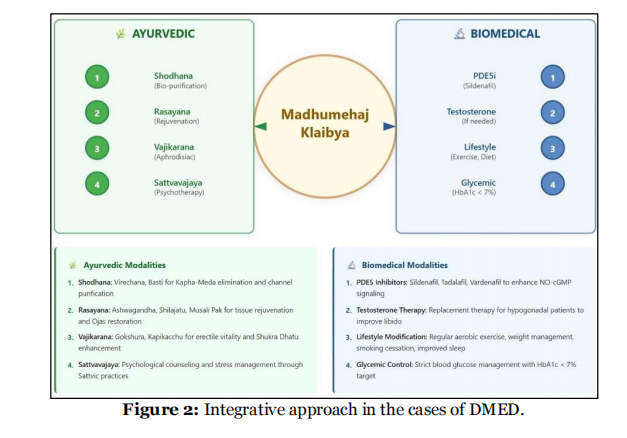
The integration of contemporary pathophysiological insights with classical Ayurvedic principles provides a comprehensive framework for understanding Madhumehaj Klaibya as illustrated in Figure 2 [88]. Modern biomedical approaches primarily emphasize dysregulation of nitric oxide signaling, endothelial dysfunction, and metabolic control, whereas Ayurveda focuses on the restoration of Agni, nourishment of Shukra dhatu, and replenishment of Ojas. The convergence of evidence based biomedical therapies with Rasayana and Vajikarana interventions offers the potential to improve therapeutic outcomes, minimize long term pharmacological dependence, and promote overall physical and psychological wellbeing in men with diabetes associated erectile dysfunction [89].
- Discussion
In Ayurveda, diabetes associated erectile dysfunction is termed Madhumehaj Klaibya, a disorder arising from Kapha and Meda avarana leading to Vata vitiation, Agnimandya, Ojas kshaya, and Shukra dushti [90]. In biomedical terms, this clinical phenotype corresponds to endothelial dysfunction, autonomic and somatic neuropathy, oxidative stress, reduced testosterone levels, and cavernosal fibrosis. Both explanatory models converge along a shared pathological continuum in which metabolic dysfunction leads to microvascular and neuronal impairment, culminating in compromised erectile function [91].
According to Ayurvedic principles, Madhumeha provokes Vata and obstructs the Medovaha and Shukravaha srotas, resulting in diminished strength and vitality of the Upasthendriya. This conceptual framework parallels modern evidence demonstrating reduced nitric oxide bioavailability, accumulation of advanced glycation end products, mitochondrial stress, and autonomic neuropathy in diabetes related erectile dysfunction [92]. Clinically, both paradigms recognize an earlier onset and increased severity of erectile dysfunction in men with poor glycemic control and multiple metabolic risk factors. Stringent glucose regulation aligns with Agnideepana and Kapha Meda shamana, thereby restoring physiological homeostasis [93].
A pragmatic integrative paradigm combines contemporary first line biomedical therapy with Ayurvedic Rasayana and Vajikarana interventions alongside structured lifestyle modification. From a biomedical perspective, management includes phosphodiesterase type five inhibitors to augment nitric oxide cyclic guanosine monophosphate signaling, evaluation and correction of hypogonadism, and advanced options for refractory cases such as intracavernosal prostaglandin E1, vacuum erection devices, and low intensity shockwave therapy [94].
Ayurvedic pharmacotherapy emphasizes Rasayana and Vajikarana agents including Ashwagandha, Shilajatu, Gokshura, Kapikacchu, and Gudmar, selected for their Vata shamana, antioxidant, insulin sensitizing, neuroprotective, and androgen supporting properties. These interventions may promote endothelial and neuronal repair while enhancing physical stamina, mood, and sexual vitality [95].
Lifestyle and psychosomatic interventions constitute an essential component of integrated care. Regular physical activity, weight reduction, optimization of sleep quality, smoking cessation, and the practice of yoga or meditation reduce sympathetic overactivity, improve endothelial function, and enhance insulin sensitivity [96]. These measures closely resemble the Ayurvedic concepts of Dinacharya, Sattvavajaya, and Ahara vihara. Addressing psychological stress, performance anxiety, and depressive symptoms through counseling or Sattvavajaya chikitsa is particularly important, as these factors significantly exacerbate erectile dysfunction and impair treatment adherence [97].
For patients with suboptimal response to phosphodiesterase inhibitors, therapeutic strategies should prioritize improved glycemic control, assessment of androgen status, and adjunctive use of Rasayana and Vajikarana agents with demonstrated antioxidant and adaptogenic properties. Such an approach may enhance pharmacological responsiveness while reducing the need for dose escalation. Careful monitoring is essential when combining botanical therapies with antihyperglycemic and antihypertensive medications to avoid adverse interactions [98].
Although evidence supporting integrative management of diabetic erectile dysfunction is encouraging, it remains heterogeneous. Many Ayurvedic studies are limited by small sample sizes, non standardized formulations, and the absence of clearly defined clinical endpoints [99]. Future research should prioritize well designed multicenter randomized controlled trials using standardized botanicals with rigorous quality control, integrated diagnostic frameworks incorporating both Ayurvedic and biomedical parameters, and composite outcome measures including erectile function scores, glycemic indices, hormonal profiles, endothelial function, and patient reported outcomes [100].
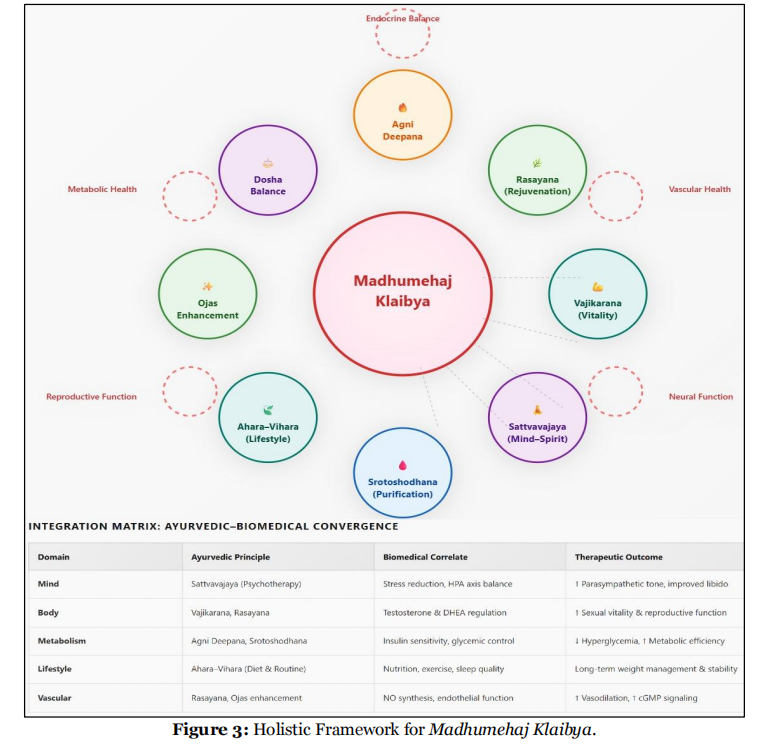
Figure 3. Conceptual framework illustrating the Ayurvedic understanding of Madhumeha as a central metabolic disorder arising from the interplay of Tridosha imbalance involving Kapha, Vata, and Pitta. The model integrates contributory factors such as metabolic dysregulation, insulin deficiency, aging, genetic predisposition related to Rasayana, and lifestyle influences, and demonstrates their impact on metabolic equilibrium, Ojas, reproductive function, Srotas, vascular integrity, and mental health [101].
At the core, Madhumeha is characterized by Kapha predominance with secondary aggravation of Vata and Pitta, primarily due to Kapha avarana, leading to Dhatu kshaya with particular involvement of Meda, Rasa, and Shukra dhatu. These alterations manifest clinically as systemic complications including vascular dysfunction and neuropathy [102]. The lower intervention matrix depicts Ayurvedic and biomedical correlations, highlighting therapeutic strategies such as Sattvavajaya, Vajikarana, and Panchakarma for dosha balance alongside biomedical approaches including hormonal regulation, glycemic control, physical activity, sleep optimization, and long term metabolic and neurological management aimed at restoring endocrine function and preventing disease progression [103].
Conclusion
Diabetes mellitus induced erectile dysfunction, described in Ayurveda as Madhumehaj Klaibya, represents a complex interplay of metabolic, vascular, neurological, and psychological factors. From an Ayurvedic perspective, this condition arises due to Vata and Kapha imbalance associated with Meda and Shukra dhatu dushti, culminating in Ojas kshaya.
These concepts may be conceptually correlated with endothelial dysfunction, oxidative stress, and hypogonadism described in contemporary biomedical science. Ayurvedic management, encompassing Agnideepana, Srotoshodhana, Rasayana, and Vajikarana chikitsa, provides a holistic therapeutic framework that addresses both metabolic dysregulation and psychosexual impairment.
Classical formulations such as Ashwagandha Rasayana, Shilajatu, Musali Pak, Gudmar churna, and Gokshuradi Guggulu are recognized for their adaptogenic, hypoglycemic, antioxidant, and androgen supporting properties. The integration of these interventions with modern therapeutic modalities including phosphodiesterase type five inhibitors, hormone replacement therapy, and structured lifestyle modification may enhance endothelial function, improve treatment responsiveness, and reduce long term pharmacological dependence.
Despite promising outcomes, further validation through well designed multicentric randomized controlled trials employing standardized formulations, objective biomarkers, and integrative diagnostic frameworks is essential to substantiate the role of Ayurvedic therapies within evidence-based management strategies for diabetic erectile dysfunction.
Acknowledgement
The authors sincerely acknowledge the guidance of senior faculty and colleagues in the field of Ayurveda and integrative medicine. The authors also thank the librarians and digital resources that facilitated access to classical Ayurvedic texts and contemporary biomedical literature.
Author Contributions
RRM: Literature survey.
HS: Critical analysis of literature.
SKB: Manuscript drafting.
SKJ: Conceptualization of the review.
SKT: Supervision and final approval.
SC: Interpretation of published studies.
PK: Reference management.
Conflict of Interest
The authors declare that there is no conflict of interest related to this manuscript.
Source of Funding
This review did not receive any specific grant from funding agencies in the public, commercial, or not-for-profit sectors.
Ethical Statement
As this article is a narrative review and conceptual analysis, it did not involve human participants or animal experimentation. Hence, approval from an institutional ethics committee was not required.
Use of Artificial Intelligence Tools
The authors used AI-based language tools (ChatGPT and Grammarly Premium) only for language editing and clarity. All scientific content was created, reviewed, and approved by the authors.
Data Availability Statement
No new data were generated or analyzed in this study. All information is derived from previously published literature.
References
- M. R. Bhise, V. Trivedi, S. Devi, A. Kumar, T. Jayendra, and K. Sunand, “Graphene Quantum Dots in Cancer Diagnostics and Therapeutics: Advances in Biosensing, Imaging, and Treatment Applications,” Curr. Med. Sci., no. 0123456789, 2025, doi: 10.1007/s11596-025-00155-8.
- V. S. Thorve, A. D. Kshirsagar, N. S. Vyawahare, V. S. Joshi, K. G. Ingale, and R. J. Mohite, “Diabetes-induced erectile dysfunction: Epidemiology, pathophysiology and management,” 2011. doi: 10.1016/j.jdiacomp.2010.03.003.
- L. Sun et al., “Hirudin-Based Treatment of Diabetes-Induced Erectile Dysfunction Through Inhibition of the HIF-1α to Regulate RhoA/ROCK Signaling Pathway: An In Vivo Animal Experiment,” Am. J. Mens. Health, 2025, doi: 10.1177/15579883241310763.
- P. Vishvakarma et al., “Nanocarrier Mediated Delivery of Gepotidacin: A Novel Triazaacenaphthylene Antibiotic Targeting Drug-Resistant Bacterial Infections,” Anti-Infective Agents, pp. 1–18, 2026, doi: 10.2174/0122113525430497251211145738.
- C. H. Zhang, G. J. Li, L. X. Jiang, H. Q. Fan, H. L. Fang, and Y. Y. Wu, “Mechanism of the Xuefu Zhuyu decoction in treating diabetes mellitus erectile dysfunction based on the CaSR/Gq-PLC-PKC pathway,” Tradit. Med. Res., 2023, doi: 10.53388/TMR20230406001.
- R. Ahmad et al., “Mechanistic insights into the neuroprotective effects of Radix Astragali (Huang Qi): Bridging Traditional Chinese Medicine and modern pharmacology,” Pharmacol. Res. – Mod. Chinese Med., vol. 17, no. July, p. 100711, 2025, doi: 10.1016/j.prmcm.2025.100711.
- X. Li et al., “Efficacy and safety of PDE5 inhibitors in the treatment of diabetes mellitus erectile dysfunction Protocol for a systematic review,” Med. (United States), 2018, doi: 10.1097/MD.0000000000012559.
- S. Ali, S. A. Ali, S. Shamim, and N. A. Farooqui, “Emerging Trends in the Pathogenesis, Diagnosis, and Management of Human Metapneumovirus-Associated Respiratory Infections,” Anti-Infective Agents, vol. 24, 2025, doi: 10.2174/0122113525396349251011213223.
- C. H. Li et al., “Increased serum asprosin is correlated with diabetes mellitus-induced erectile dysfunction,” Diabetol. Metab. Syndr., 2024, doi: 10.1186/s13098-024-01333-9.
- S. Azmi et al., “Small-fibre neuropathy in men with type 1 diabetes and erectile dysfunction: a cross-sectional study,” Diabetologia, 2017, doi: 10.1007/s00125-017-4245-z.
- M. K. Lee, J. H. Lee, S. Y. Sohn, S. Y. Lee, T. Y. Jeong, and S. C. Kim, “Effect of low-dose tadalafil once daily on glycemic control in patients with type 2 diabetes and erectile dysfunction: a randomized, double-blind, placebo-controlled pilot study,” Diabetol. Metab. Syndr., 2022, doi: 10.1186/s13098-022-00825-w.
- S. A. Ali, S. Ali, and S. Shamim, “Role of Artificial Intelligence in Transforming Diagnosis, Treatment, and Patient Care: A Review,” Curr. Pharmacogenomics Person. Med., vol. 23, 2025, doi: 10.2174/0118756921404728251019182202.
- A. Ragab, M. H. Ahmed, A. Reda Sayed, D. A. K. EldinAbdelbary, and S. F. GamalEl Din, “Serum nesfatin-1 level in men with diabetes and erectile dysfunction correlates with generalized anxiety disorder-7: A prospective comparative study,” Andrology, 2023, doi: 10.1111/andr.13237.
- Mukesh Kumar, Shadab Ali, and Smriti Gohri, “Microsponge Drug Delivery Systems: Advancing Methotrexate Delivery for Rheumatoid Arthritis Management,” Curr. Pharm. Res., vol. 1, no. 1, pp. 15–29, 2025, doi: 10.63785/cpr.2025.1.1.1529.
- M. Luo et al., “Methyl protodioscin reduces c-Myc to ameliorate diabetes mellitus erectile dysfunction via downregulation of AKAP12,” Diabetes Res. Clin. Pract., 2023, doi: 10.1016/j.diabres.2023.111012.
- F. Ding et al., “Simvastatin alleviated diabetes mellitus-induced erectile dysfunction in rats by enhancing AMPK pathway-induced autophagy,” Andrology, 2020, doi: 10.1111/andr.12758.
- I. Jahan, S. Ali, J. Hak, S. Shamim, M. Kumar, and T. Ali, “Emerging Trends in Magnetic Nanoparticle Delivery, Synthesis and Applications in Biomedicine,” Drug Deliv. Lett., vol. 16, pp. 1–17, 2025, doi: 10.2174/0122103031400035251014115919.
- D. J. Kadhim, A. M. Almomin, and A. A. Mansour, “Hypogonadism among Type 2 Diabetes Mellitus Patients with Male Erectile…
- D. J. Kadhim, A. M. Almomin, and A. A. Mansour, “Hypogonadism among Type 2 Diabetes Mellitus Patients with Male Erectile Dysfunction,” Ibnosina J. Med. Biomed. Sci., 2023, doi: 10.1055/s-0043-1769493.
- Tarmeen Ali, “Nanomedicine Approaches to Overcome Barriers in Pulmonary Drug Delivery for Respiratory Diseases,” Curr. Pharm. Res., vol. 1, no. 1, pp. 30–44, 2025, doi: 10.63785/cpr.2025.1.1.3044.
- S. Guo and M. J. Rezaei, “The benefits of ashwagandha (Withania somnifera) supplements on brain function and sports performance,” 2024. doi: 10.3389/fnut.2024.1439294.
- K. Singh et al., “Emerging Applications and Innovations in Emulgel Technology for Enhanced Topical Drug Delivery,” Drug Deliv. Lett., vol. 15, pp. 1–16, 2025, doi: 10.2174/0122103031384904250930153320.
- R. Singh, P. Yadav, A. Patel, and P. K. Prajapati, “The synergy between Shilajatu (Asphaltum punjabinum) and Daruharidra (Berberis aristata DC.), curtails the glycaemic indicators and alleviates the symptoms of type 2 diabetes: a case report,” J. Med. Case Reports, 2025, doi: 10.1186/s13256-025-05572-w.
- T. Sharma, A. Ramamurthy, S. Nathani, and G. Sharma, “A comparative pharmacognosy study of black and
- R. Singh, S. Shamim, S. Ali, R. Kumar, and T. Ali, “A Global Public Health Review of the Mumps Virus: Epidemiology, Pathogenesis, and Advances in Vaccination,” Anti-Infective Agents, vol. 24, 2025, doi: 10.2174/0122113525412555250922164155.
- E. Manhas, A. K. Singh, and S. Kumar, “A Systematic Medico Historical Review of Gokshura (Tribulus terrestris L.): A Traditional Indian Medicine,” J. Pharm. Res. Int., 2022, doi: 10.9734/jpri/2022/v34i13a35570.
- A. Shrivastava et al., “Heart Failure Management in the Modern Era: A Comprehensive Review on Medical and Device-based Interventions
- S. S. Rahangdale and S. R. Rahangdale, “Fluorescence and FTIR markers for different taxa of Gymnema drug complex from Maharashtra,” Plant Sci. Today, 2020, doi: 10.14719/PST.2020.7.3.731.
- S. et al. Singh, K., Gupta, J. K., Chanchal, D. K., Khan, S., Varma, A., Shanno, K., Kumar, S., & Shamim, “Deciphering the Genetic Landscape: Exploring the Relationship Between HLA-DQA1, HLA-DQB1, and HLA-DRB1 Genes in Diabetes Mellitus,” Curr. Pharmacogenomics Person. Med., vol. 21, no. 3, pp. 1–11, 2024, doi: 10.2174/0118756921310081240821065036.
- S. Akhtar et al., “Exploring pharmacological properties and food applications of Asparagus racemosus (Shatavari),” 2024. doi: 10.1016/j.focha.2024.100689.
- F. Hasan, P. K. Gaur, K. Thippamma, N. Shahreen, and M. Talebi, “A comprehensive overview of phytochemical composition and therapeutic applications of Sida cordifolia L.,” 2025. doi: 10.1016/j.phyplu.2025.100856.
- Angad Kumar Kushwaha, Sarita Kumari, M. P. Singh, and Raman Ranjan, “Critical Review on Vidarikanda (Pueraria tuberosa Dc.),” J. Ayurveda Integr. Med. Sci., 2025, doi: 10.21760/jaims.10.6.18.
- A. Anand et al., “Neuroprotective Efficacy and Complementary Treatment with Medicinal Herbs: A Comprehensive Review of Recent Therapeutic Approaches in Epilepsy Management,” CNS Neurol. Disord. – Drug Targets, vol. 24, no. 1, pp. 60–73, 2024, doi: 10.2174/0118715273332140240724093837.
- R. Mamgain et al., “The efficacy of an ayurvedic preparation of yashtimadhu (Glycyrrhiza glabra) on radiation-induced mucositis in head-and-neck cancer patients: A pilot study,” J. Cancer Res. Ther., 2020, doi: 10.4103/jcrt.JCRT_831_16.
- Robin Singh, “Revolutionizing Antimicrobial Therapies Through Biofilm-Targeted Nanomedicine,” Curr. Pharm. Res., vol. 1, no. 1, pp. 78–97, 2025, doi: 10.63785/cpr.2025.1.1.7897.
- Neha Yadav and Amarendra Kumar Singh, “Amalaki (Emblica officinalis Gaertn.): A review on its therapeutic properties,” J. Ayurveda Integr. Med. Sci., 2023, doi: 10.21760/jaims.8.8.23.
- P. Kumar et al., “Fused Deposition Modeling 3D-Printed Scafolds for Bone Tissue.pdf,” Appl. Biochem. Biotechnol., vol. 12, no. 22, pp. 1–11, 2024, doi: 10.54085/ap.2023.12.2.19.
- A. K. Jha and N. Sit, “Methods of extraction of bioactive compounds from Terminalia Chebula (Haritaki) and their application in food and pharmaceutical industry: A review,” 2023. doi: 10.1002/fbe2.12053.
- P. Sharma, K. K. Verma, H. Raj, and N. Thakur, “A review on ethnobotany, phytochemistry and pharmacology on Terminalia belerica (Bibhitaki),” J. Drug Deliv. Ther., 2021, doi: 10.22270/jddt.v11i1-s.4739.
- W. Wang et al., “Insights into the potential benefits of triphala polyphenols toward the promotion of resilience against stress-induced depression and cognitive impairment,” 2023. doi: 10.1016/j.crfs.2023.100527.
- Shamim, S. Ali, T. Ali, H. Sharma, B. N. Kishor, and S. K. Jha, “Recent Advances in Monodisperse Gold Nanoparticle Delivery, Synthesis, and Emerging Applications in Cancer Therapy,” Plasmonics, no. 0123456789, 2025, doi: 10.1007/s11468-024-02732-4.
- I. M. Menon, J. Eapen, and D. M. S., “Comparative HPTLC fingerprinting profile and GC-MS analysis of raw and purified Guggulu (Commiphora wightii. Arn. Bhand) by Ayurvedic purification method,” J. Complement. Integr. Med., 2022, doi: 10.1515/jcim-2020-0347.
- H. Tahir et al., “Nutritional Composition, Phytochemical Profile, Extraction Methods of Bioactive Components, and Health Benefits of Terminalia Arjuna Bark,” 2025. doi: 10.1002/efd2.70038.
- Bhanu Pratap and Pankaj Singh Jadaun, “Hydrogel Microneedles: A Breakthrough in Disease Treatment and Drug Delivery Systems,” Curr. Pharm. Res., vol. 1, no. 2, pp. 60–77, 2025, doi: 10.63785/cpr.2025.1.1.6077.
- S. Tamta, S. Chaubey, R. Tiwari, and G. Singh, “A CRITICAL REVIEW OF PUNARNAVA (BOERHAAVIA DIFFUSA LINN.),” Int. J. Nov. Res. Dev., 2023.
- S. K. Koppala Narayana et al., “Integrating macro-microscopy, DNA barcoding and HPTLC for quality assessment of berberine containing botanicals traded as Maramanjal/Daruharidra,” J. Ayurveda Integr. Med., 2025, doi: 10.1016/j.jaim.2025.101192.
- M. R. Khan, D. Kumar, S. Shamim, K. Sunand, S. Sharma, and G. Rawat, “Ethnopharmacological relevance of Citrus limon (L.) Burm. f. as adjuvant therapy,” Ann. Phytomedicine An Int. J., vol. 12, no. 2, pp. 169–179, 2023, doi: 10.54085/ap.2023.12.2.19.
- A. Sharma, “The review study on Haridra medicinal plant (Curcuma longa),” J. Med. Plants Stud., 2024.
- Rani Khan et al., “Formulation and Characterisation of Herbal Ethosomal Gel of Luliconazole and Clove Oil for Modified Drug Diffusion to the Skin,” World J. Adv. Res. Rev., vol. 18, no. 4, pp. 488–501, 2025, doi: 10.1016/j.jaim.2024.100947.
- H. Singh et al., “Ashwagandha (Withania somnifera) and Shunthi (Zingiber officinale) in mild and moderate COVID-19: An open-label randomized controlled exploratory trial,” Complement. Ther. Med., 2023, doi: 10.1016/j.ctim.2023.102966.
- T. Ali, “Chromatography and Spectroscopic Characterization of Nano-Carrier Pharmaceuticals,” Pharm. Nanotechnol., 2024, doi: 10.2174/0122117385319695240911115239.
- V. Y. Rao, “Role of Rasa Vaha Srotas Dushti in Tvak Vikruti,” Natl. J. Res. Ayurved Sci., 2021, doi: 10.52482/ayurlog.v9i02.844.
- P. HT, M. B. Naika, S. Nishani, K. V, V. Rathod, and S. D, “Quantitative determination of phytochemical constituents in seeds of common methi and Kasuri methi,” Pharma Innov., 2023, doi: 10.22271/tpi.2023.v12.i2a.18703.
- H. S. S. & A. B. Pawan Kumar, Shamim, Mohammad Muztaba, Tarmeen Ali, Jyoti Bala, “Fused Deposition Modeling 3D-Printed Scafolds for Bone Tissue.pdf,” 2024, Springer Nature. doi: 10.1007/s10439-024-03479-z.
- S. A. Naik, V. S. Wasedar, and P. B. Tukanatti, “Effect of Panchakarma followed by Lashuna Rasayana in Vatakaphaja Gridhrasi – Case series,” J. Ayurveda Holist. Med., 2025, doi: 10.70066/jahm.v13i7.2191.
- M. Sharma, B. Kaushik, R. Gupta, P. Sharma, and M. Kaundal, “A CRITICAL REVIEW ON MARICHA: Piper nigrum Linn,” Certif. J. │ 630 This Artic. Focus. World J. Pharm. Res. SJIF Impact Factor, 2022.
- K. Singh et al., “Recent Advances in the Synthesis of Antioxidant Derivatives: Pharmacological Insights for Neurological Disorders,” Curr. Top. Med. Chem., vol. 24, no. 22, pp. 1940–1959, 2024, doi: 10.2174/0115680266305736240725052825.
- S. B. Shah, G. K. Guttal, U. Chikkanna, and N. J. Sajjanar, “Efficacy of Pippali in vardhamana and fixed dosage pattern in primary hypothyroidism – A randomized clinical trial,” J. Ayurveda Integr. Med., 2022, doi: 10.1016/j.jaim.2022.100555.
- K. Singh et al., “Deciphering the Genetic Landscape: Exploring the Relationship Between HLA-DQA1, HLA-DQB1, and HLA-DRB1 Genes in Diabetes Mellitus,” Curr. Pharmacogenomics Person. Med., vol. 21, pp. 1–11, 2024, doi: 10.2174/0118756921310081240821065036.
- M. Mandal, D. Misra, N. N. Ghosh, S. Mandal, and V. Mandal, “GC-MS analysis of anti-enterobacterial dichloromethane fraction of mandukaparni (hydrocotyle javanica thunb.) – a plant from ayurveda,” Pharmacogn. J., 2020, doi: 10.5530/pj.2020.12.205.
- S. Gautam and A. K. Pandey, “Ashwagandha: A rasayana from ayurveda,” Med. Plants, 2020, doi: 10.5958/0975-6892.2020.00024.6.
- H. Sharma, A. P. Singh, D. Pathak, D. Taumar, and V. Chaudhary, “The Role of approved Kinase Inhibitors in Cancer Treatment: Medicinal Chemistry and Pharmacological Insights,” Med. Chem. (Los. Angeles)., pp. 1–18, 2025, doi: 10.2174/0115734064404334251024112120.
- K. S. P. Das, R. Kumari Gupta, G. Raut, and B. P. Patel, “Traditional uses, Phytochemistry and Pharmacology of Asparagus adscendens Roxb.: A Review,” J. Ayurveda Campus, 2024, doi: 10.51648/jac93.
- J. Kumar et al., “CFTR mRNA-Based Gene Therapy for Cystic Fibrosis: A Mutation-Agnostic Strategy to Restore Ion Transport Function,” Curr. Gene Ther., no. January, pp. 1–18, 2025, doi: 10.2174/0115665232413980251103133741.
- M. M. Wanjari et al., “Oral toxicity evaluation of gokshuradi guggulu, an ayurvedic formulation,” Drug Chem. Toxicol., 2022, doi: 10.1080/01480545.2021.1894725.
- A. P. Singh et al., “Revolutionizing Drug and Gene Delivery: Cutting-Edge Smart Polymers for Precision Release,” Curr. Gene Ther., no. January, pp. 1–19, 2025, doi: 10.2174/0115665232390238251121074917.
- P. Chandel, S. Shamim, and S. Ali, “A Comprehensive Review on Nanoemulsions for Improved Bioavailability and Therapeutic Efficacy in Gastrointestinal Disorders,” Drug Deliv. Lett., no. August, pp. 1–18, 2021, doi: 10.2174/0122103031410345251205075031.
- X. Peng and J. Liu, “Research Progress of Diabetes and Erectile Dysfunction,” J. Contemp. Med. Pract., 2024, doi: 10.53469/jcmp.2024.06(10).06.
- P. Kumar et al., “Trends of Nanobiosensors in Modern Agriculture Systems,” Appl. Biochem. Biotechnol., vol. 197, no. 1, pp. 667–690, 2024, doi: 10.1007/s12010-024-05039-6.
- Y. Mao et al., “Combining transcriptomic analysis and network pharmacology to explore the mechanism by which Shaofu Zhuyu decoction improves diabetes mellitus erectile dysfunction,” Phytomedicine, 2023, doi: 10.1016/j.phymed.2023.155006.
- S. A. Ali, S. Ali, S. Rastogi, B. Shivhare, and M. Muztaba, “A Comprehensive Review on Advancements in Nanocarriers-Based Peptide Delivery for Cancer Therapeutics,” Micro Nanosyst., vol. 17, no. 4, pp. 283–297, 2025, doi: 10.2174/0118764029358553250325040749.
- H. Wang, H. Chang, D. Sun, A. Wang, B. Yan, and E. Chung, “Therapeutic Challenges of Diabetes Mellitus-Related Erectile Dysfunction and The Potential Therapeutic Role of Medicinal Plants: A Narrative Review,” 2025. doi: 10.2147/DDDT.S515403.
- Manisha Dev and Pallavi Chandel, “Nanostructured Lipid Carriers in Pulmonary Drug Delivery: Progress and Prospects,” Curr. Pharm. Res., vol. 1, no. 1, pp. 131–143, 2025, doi: 10.63785/cpr.2025.1.1.131143.
- J. Yang et al., “Preconditioning of adipose-derived stem cells by phosphodiesterase-5 inhibition enhances therapeutic efficacy against diabetes-induced erectile dysfunction,” Andrology, 2020, doi: 10.1111/andr.12661.
- W. Wang et al., “Research Advances in Stem Cell Therapy for Erectile Dysfunction,” 2024. doi: 10.1007/s40259-024-00650-9.
- C. Pakpahan et al., “Stem cell therapy and diabetic erectile dysfunction: A critical review,” World J. Stem Cells, 2021, doi: 10.4252/wjsc.v13.i10.1549.
- H. Rani, Navdeep Singh, and Anjana Devi, “Targeting Metabolic Liver Disorders with Sodium Orthovanadate: A Novel Therapeutic Strategy,” Curr. Pharm. Res., vol. 1, no. 3, pp. 274–284, 2025, doi: 10.63785/cpr.2025.1.3.274284.
- T. Kataoka, Y. Hotta, and K. Kimura, “A review of experimental techniques for erectile function researches and development of medical technology using animal erectile dysfunction models in sexual and reproductive medicine,” 2023. doi: 10.1002/rmb2.12513.
- D. Kounatidis et al., “The Impact of Glucagon-like Peptide-1 Receptor Agonists on Erectile Function: Friend or Foe?,” 2025. doi: 10.3390/biom15091284.
- A. Seyoum, A. Motuma, B. Hawulte, T. Getachew, A. Debella, and A. Eyeberu, “Erectile dysfunction and associated factors among patients with diabetes in Public hospitals of Harari region, Eastern Ethiopia: modified poisson regression model,” BMC Endocr. Disord., 2024, doi: 10.1186/s12902-024-01815-x.
- S. Chawla, R. Gupta, S. K. Jha, and K. T. Jha, “Stereoisomerism in Chemistry and Drug Development: Optical, Geometrical, and Conformational Isomers,” Med. Chem. (Los. Angeles)., 2025, doi: 10.2174/0115734064366389250923044201.
- A. Desai, R. Chen, A. Cayetano, C. N. Jayasena, and S. Minhas, “Understanding and treating ejaculatory dysfunction in men with diabetes mellitus,” 2023. doi: 10.1111/andr.13262.
- D. Kumar, Rohan Kumar, Harsh Raj Singh, Rajni Tanwar, and Vrinda Gupta, “Duvyzat (Givinostat) in Duchenne Muscular Dystrophy: Mechanisms, Clinical Impact, and Future Directions,” Curr. Pharm. Res., vol. 1, no. 3, pp. 308–322, 2025, doi: 10.63785/cpr.2025.1.3.308322.
- A. Sansone et al., “The Sexual Long COVID (SLC): Erectile Dysfunction as a Biomarker of Systemic Complications for COVID-19 Long Haulers,” Sex. Med. Rev., 2022, doi: 10.1016/j.sxmr.2021.11.001.
- J. Hernández-Cerda, V. Bertomeu-González, P. Zuazola, and A. Cordero, “Understanding erectile dysfunction in hypertensive patients: The need for good patient management,” 2020. doi: 10.2147/VHRM.S223331.
- A. et al. Kumar, J., M., T., Musayev, “Stimuli-responsive Hydrogels for Targeted Antibiotic Delivery in Bone Tissue Engineering,” AAPS PharmSciTech, vol. 26, no. 217, pp. 1–23, 2025, doi: https://doi.org/10.1208/s12249-025-03218-0.
- R. Cannarella et al., “Erectile Dysfunction in Diabetic Patients: From Etiology to Management,” 2021. doi: 10.3390/diabetology2030014.
- K. P.A., G. L.E., and T. A.G., “How might yoga help depression? A neurobiological perspective,” 2012.
- Nofzinger, “Sexual Dysfunction in Patients with Diabetes Mellitus: The Role of a ‘Central’ Neuropathy,” Semin. Clin. Neuropsychiatry, 1997.
- J. Ma et al., “The multifaceted nature of diabetic erectile dysfunction: uncovering the intricate mechanisms and treatment strategies,” 2024. doi: 10.3389/fendo.2024.1460033.
- H. Chen et al., “Endothelin-1 and diabetes mellitus-induced erectile dysfunction: from pathogenesis to therapeutic potential,” 2025. doi: 10.1016/j.diabres.2025.112352.
- C. Zhao et al., “Nitro-oleic acid (NO2-OA) ameliorates erectile dysfunction in a rat model of diabetes mellitus via modulation of fibrosis, inflammation and autophagy,” Transl. Androl. Urol., 2024, doi: 10.21037/tau-23-547.
- J. Cai et al., “Assessment of the efficacy of α-lipoic acid in treatment of diabetes mellitus patients with erectile dysfunction: A protocol for systematic review and meta-analysis,” 2020. doi: 10.1097/MD.0000000000022161.
- L. Niu et al., “Inhibition of the RIP3/MLKL/TRPM7 necroptotic pathway ameliorates diabetes mellitus-induced erectile dysfunction by reducing cell death, fibrosis, and inflammation,” Front. Pharmacol., 2024, doi: 10.3389/fphar.2024.1436013.
- G. Defeudis et al., “Diabetes and erectile dysfunction: The relationships with health literacy, treatment adherence, unrealistic optimism, and glycaemic control,” Diabetes. Metab. Res. Rev., 2023, doi: 10.1002/dmrr.3629.
- P. Chandel, T. Singh, A. Sharma, F. Sahib, and M. Gobindgarh, “Emerging Biomarkers for Early Detection of Alzheimer’s Disease: Progress and Challenges School of Pharmacy, Deshbhagat University, off to NH-44, Amloh Road, Mandi Gobindgarh District,” Curr. Pharm. Des., vol. 1, no. 3, pp. 364–372, 2025.
- L. Zhang et al., “Current status and prospects of diabetes mellitus induced erectile dysfunction: A bibliometric and visualization study,” Front. Endocrinol. (Lausanne)., 2023, doi: 10.3389/fendo.2023.1168744.
- J. S. Wang et al., “Effect of leech-centipede medicine on improving erectile function in diabetes-induced erectile dysfunction rats via PDE5 signalling pathway-related molecules,” Pharm. Biol., 2021, doi: 10.1080/13880209.2021.1878237.
- S. K. Kushwaha, P. Chandel, T. Singh, M. Thakur, and U. Pradesh, “Formulation and Evaluation of a Multicomponent Herbal Shampoo for Enhanced Hair and Scalp Health Department of Pharmacy, IIMT College of Medical Sciences, IIMT University, Ganga Nagar, Meerut-School of Pharmacy, Deshbhagat University Amloh Road, Ma,” Curr. Pharm. Res., vol. 1, no. 3, pp. 373–383, 2025.
- J. Kang, Y. Song, Z. Zhang, S. Wang, Y. Lu, and X. Liu, “Identification of Key microRNAs in Diabetes Mellitus Erectile Dysfunction Rats with Stem Cell Therapy by Bioinformatic Analysis of Deep Sequencing Data,” World J. Mens. Health, 2022, doi: 10.5534/wjmh.210147.
- J. X. Ma et al., “Uncovering the mechanisms of leech and centipede granules in the treatment of diabetes mellitus-induced erectile dysfunction utilising network pharmacology,” J. Ethnopharmacol., 2021, doi: 10.1016/j.jep.2020.113358.
- S. Rana, B. Pratap, P. S. Jadaun, and U. Pradesh, “Development and Evaluation of Liquorice Root Extract-Based Cream for the Management of Hyperpigmentation,” Curr. Pharm. Res., vol. 1, no. 3, pp. 384–392, 2025.
- A. A. Adebayo, G. Oboh, and A. O. Ademosun, “Nutraceutical potential of almond fruits in managing diabetes-related erectile dysfunction: Effect on Nrf-2 level and smooth muscle/collagen ratio,” Andrologia, 2022, doi: 10.1111/and.14636.
Raja Ram Mahto – All India Institute of Ayurveda (AIIA), Government of India, New Delhi – 110076, India
Himani Sharma – Sanjeevani Ayurvedic Medical College, Gajraula, Amroha, Uttar Pradesh – 244235, India
Santosh Kumar Bhatted– All India Institute of Ayurveda (AIIA), Government of India, New Delhi – 110076, India
Sudhanshu Kumar Jha– All India Institute of Ayurveda (AIIA), Government of India, New Delhi – 110076, India
Sanjay Kumar Tiwari– All India Institute of Ayurveda (AIIA), Government of India, New Delhi – 110076, India
Sonam Chauhan– All India Institute of Ayurveda (AIIA), Government of India, New Delhi – 110076, India
Prachi Khandelwal– All India Institute of Ayurveda (AIIA), Government of India, New Delhi – 110076, India