Keywords: Ayurveda, Artificial Intelligence, AYUSH, Machine Learning
ABSTRACT
While Ayurveda offers a tried-and-true, person-centred understanding of health and illness, artificial intelligence provides previously unheard-of tools for decision support, data interpretation, and predictive modelling in the healthcare industry. An ethical and evidence-based integrative digital health model in India can be developed thanks to the intersection of these paradigms. The conceptual and methodological frameworks that connect AI applications to Ayurvedic concepts like Prakriti, Dosha balance, and customised therapies are described in this narrative review. It critically looks at projects like Ayurgenomics and the Ayush Grid, which show how machine learning can improve data organisation, drug discovery, and decision-making within AYUSH frameworks. It is discussed that ethical aspects such as algorithmic transparency, cultural sensitivity, and patient consent are necessary prerequisites for sustainable innovation. In order to guarantee that digital transformation enhances rather than replaces conventional clinical reasoning, the review emphasises the significance of human oversight, community involvement, and cross-disciplinary capacity building. India can lead the world in developing a participatory, equitable, and contextually adaptive healthcare model that combines advanced analytics and civilisational wisdom. This can be achieved by fusing Ayurveda’s holistic vision with advanced analytics.
I. Introduction
The healthcare industry underwent a total transformation through digital progress which revolutionized medical information development and diagnostic procedures and treatment administration. Artificial Intelligence (AI) together with its related fields including machine learning and deep learning and the Internet of Medical Things have transformed worldwide health systems through their ability to provide continuous monitoring and predictive modeling and real-time analytics.
The advancement of technology requires a return to traditional healing practices because human values and cultural heritage form the basis of healing which Ayurveda and other traditional systems continue to uphold. Ayurveda bases its complete understanding of life on the belief that health results from the proper balance between physical elements and mental states and environmental factors. The basic concepts of Prakriti and Dosha equilibrium together with customized treatment methods in Ayurveda match modern precision medicine because both approaches focus on individual-based care and disease prevention. The conceptual alignment between these fields enables Ayurveda to establish itself as an essential partner for developing digital health systems which integrate cultural knowledge with data-based solutions.
The academic investigation of AI and Ayurveda integration within India has developed into a modern institutional priority which operates through Ministry of AYUSH’s Ayush Grid and National Digital Health Mission and Ayurgenomics research programs. These programs demonstrate the ability of computational tools to transform classical knowledge into digital form while creating standardized research data and enabling personalized healthcare access through modern technologies which respect Ayurvedic knowledge systems. Yet, integration demands caution. The three dangers of algorithmic systems prevent them from revealing complete wisdom because they make it difficult to see through their bias and reductionistic operations and lack of transparency. AI development requires ethical governance systems to lead its advancement and scientists and clinicians and traditional practitioners need to work together through transparent innovation processes.
The article presents a story about the merging of AI with Ayurveda which creates a healthcare system that protects people while making medical care available to all and respecting human dignity and combining traditional knowledge with modern intelligent systems.
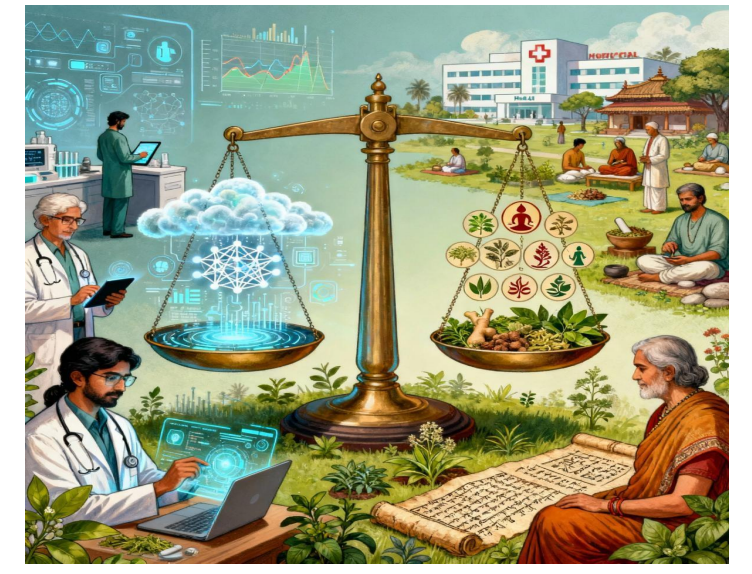
Figure 1. The Meeting Point of Contemporary Medical Technology and Traditional Ayurvedic Knowledge
The meeting point of contemporary medical technology and traditional Ayurvedic knowledge, demonstrating a harmonious integration of both fields.
On the left: A contemporary medical setting with two physicians wearing lab coats utilising cutting-edge tools like artificial intelligence and data analytics (represented by graphs, data streams, and digital networks). The use of artificial intelligence (AI) and cutting-edge medical technologies like data analytics, machine learning, and predictive modelling in contemporary medicine is symbolised by the cloud and digital representations.
On the right: An elderly practitioner using herbal plants and ancient texts while sitting on the ground illustrates traditional Ayurvedic practices. Other practitioners are practicing spiritual and therapeutic practices nearby (e.g., meditation, offering herbs). Ayurvedic principles are symbolised by nature, herbs, and human well-being.
In the middle: The integration of both contemporary science (AI, technology) and conventional healing methods (Ayurveda) is symbolised by a weighing scale that balances these two sides. The scale’s symbols could stand for essential Ayurvedic components like herbs, doshas, and therapeutic techniques. A future of healthcare where both systems coexist and enhance one another for comprehensive health outcomes is suggested by the balance between the two.
3. Overview of AI, ML, and Emerging Technologies in Healthcare
3.1 Artificial Intelligence: Evolution from Rule-Based to Deep Learning
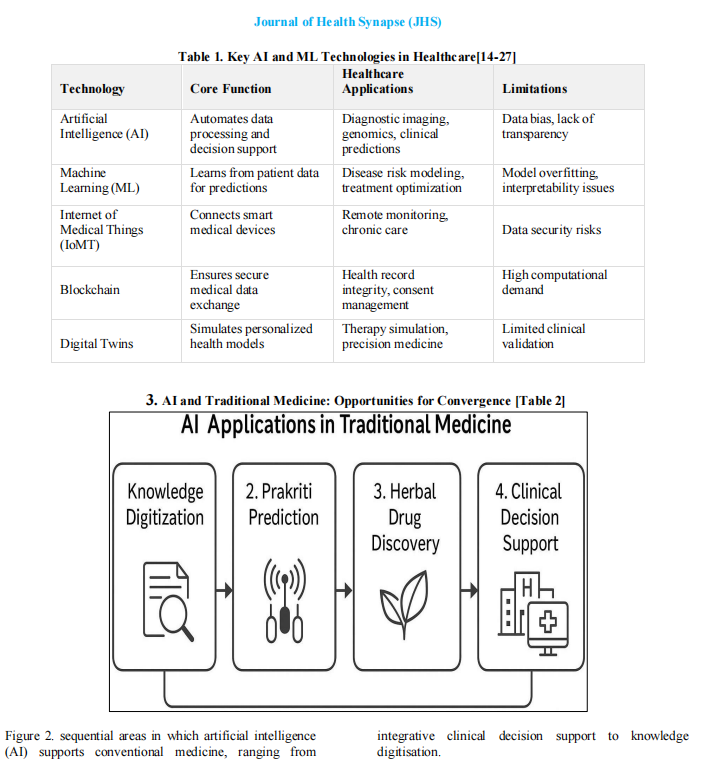
Artificial Intelligence (AI) has rapidly reshaped healthcare, enabling advanced diagnostic, predictive, and therapeutic capabilities that enhance patient outcomes and operational efficiency. The initial AI systems based on rule-based logic have undergone major changes through machine learning (ML) and deep learning progress which enables them to analyze large clinical datasets for pattern recognition that exceeds human capabilities¹.
The technologies enable precision medicine through the combination of genetic data with phenotypic and environmental information which produces better disease risk assessments and customized medical treatment strategies².
The Internet of Medical Things (IoMT) together with wearable devices and telemedicine platforms and blockchain-based health records create a new healthcare delivery system which offers continuous patient monitoring and secure data exchange and extended access to care beyond hospital walls³.
Artificial intelligence powers clinical decision support systems which merge biomedical data with conventional health information to create full patient profiles that lead to better treatment choices⁴.
Multiple obstacles persist in the field because researchers need to achieve algorithmic transparency and data standardization and eliminate biases that affect multiple population groups. The resolution of these issues demands strict ethical compliance together with thorough validation processes and complete governance systems to protect trust and achieve maximum clinical results⁵.
AI integration into healthcare has established a new standard which will deliver better medical results through precise methods and efficient operations and patient-centered care under proper policy frameworks and human management systems.
3.2 Machine Learning: Predictive Analytics and Diagnostics
Machine learning (ML) functions as a fundamental technology which enables healthcare systems to move from reactive care to proactive medical approaches through the development of precision medicine. ML identifies hidden non-linear relationships in complex biomedical data through its use of supervised learning and unsupervised clustering and reinforcement models which traditional biostatistics methods fail to detect⁶. ML diagnostic imaging systems perform at the same level as expert radiologists when detecting diabetic retinopathy and breast cancer and pulmonary nodules which allows for better early intervention approaches⁷. Predictive modeling uses longitudinal data to create forecasts of cardiovascular events which enables doctors to develop specialized treatment plans and enhance their decision-making capabilities for better patient results and cost management⁸. Crucially, the integration of ML with burgeoning sources of real-world data—such as electronic health records (EHRs), wearable biosensors, and mobile health applications—enables continuous patient monitoring and real-time adaptive feedback loops, epitomizing next-generation personalized healthcare⁹. The development of new technologies creates ongoing problems with maintaining clear understanding systems and ethical standards and reproducible scientific research. The diverse social environment of India demands complete demographic testing of algorithmic bias to achieve fairness and organizations need to implement clear systems which help medical staff and their patients understand the processes¹⁰. The combination of patient autonomy and privacy protection through informed consent systems and strong governance structures forms the basis of trust which enables AI to enhance Ayurveda and integrative medical practices.
3.3 Emerging Technologies: IoMT, Wearables, Telemedicine, Blockchain, and Digital Twins
Emerging technologies create a fresh healthcare delivery model through their influence on medical services in Indian healthcare systems. The Internet of Medical Things (IoMT) links various smart devices through biosensors and mobile health applications and implantable monitors to form unified systems which enable continuous real-time monitoring of physiological data. Remote monitoring through IoMT solutions enables patients to receive chronic disease management care which results in better clinical outcomes and fewer hospital readmissions and this approach proves valuable for healthcare facilities operating in rural areas and with limited resources¹¹. The integration of smartwatches and fitness trackers into wearable technology systems enables health monitoring through user feedback which helps people modify their habits¹². The COVID-19 pandemic accelerated widespread telemedicine adoption because this technology enables patients to access medical services from their homes through secure video consultations¹³. Telemedicine provides two essential benefits to patients who need medical care. Patients who choose virtual care receive access to medical professionals through video consultations which help them obtain clinical assessments and treatment plans. The telemedicine platform maintains secure video connections that link patients with healthcare professionals for medical consultations¹⁴. Virtual care services enable patients to receive medical advice from doctors who can diagnose their symptoms and recommend treatments. The telemedicine evaluation process enables doctors to diagnose various conditions which include mental health problems. Telemedicine technology makes it possible for healthcare providers to reach patients who live far away from medical facilities¹⁵. This technology helps patients who find it difficult to reach conventional medical appointments. The telemedicine platform helps patients who have limited access to medical care facilities. Virtual care solutions enable patients to see doctors through video consultations which help them obtain medical advice and treatment plans. The platform allows patients to contact their doctors through video calls for medical evaluations and diagnosis. Video consultation technology allows patients to connect with doctors through secure video connections that keep medical information secure. Real-time video connections enable doctors to assess symptoms and deliver instant medical guidance. The platform uses encryption systems to stop unauthorized access to patient data. The platform protects patient
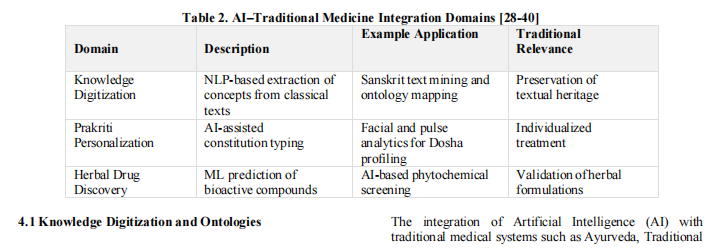
Chinese Medicine (TCM), and Unani has catalyzed a profound transformation in knowledge digitization. The industry has achieved unmatched access to traditional knowledge through AI technology which transforms historical written records and accumulated knowledge into organized searchable databases that work together seamlessly. The industry has achieved unmatched access to traditional knowledge through AI technology which transforms historical written records and accumulated knowledge into organized searchable databases that work together seamlessly¹⁶. NLP techniques extract and semantically annotate therapeutic concepts and herb classifications and disease terminologies from classical manuscripts. The extracted data enables researchers to perform detailed comparative studies and interdisciplinary synthesis through its systematic connection with biomedical ontologies¹⁷. The current digitization project has created complete digital databases which form complex semantic networks that connect Sanskrit and Chinese traditional terms and other traditional terminologies to contemporary molecular and genomic and pharmacological information¹⁸. The creation of integrated data systems enables the connection between traditional knowledge specialists and contemporary scientific experts because it resolves the historical communication and understanding barriers that existed between these two groups. AI models undergo training through this process to acquire skills which enable them to generate innovative solutions by combining traditional knowledge with modern analytical methods across different scientific fields and cultural backgrounds¹⁹. India leads the way in this process through its innovative initiatives including the Traditional Knowledge Digital Library (TKDL) and Ayurgenomics project and Ayush Grid digital platform which demonstrate successful preservation and development of traditional medicine through AI-based digitization and semantic analysis²⁰. The new developments protect indigenous heritage while proving traditional medical knowledge through scientific validation and worldwide availability which creates a healthcare future that combines ancient wisdom with modern technology.
4.2 Predictive Diagnostics and Prakriti Personalization
The foundation for providing individualised healthcare is still Ayurveda’s concept of Prakriti, which describes a person’s psycho-physiological constitution. The limitations of conventional subjective evaluations are overcome by recent developments that use AI techniques, such as voice pattern analytics, pulse waveform analysis, and facial recognition, to evaluate Prakriti with remarkable precision²¹. By establishing connections between doshic imbalances and molecular biomarkers, machine learning algorithms trained on a variety of biomedical and phenotypic datasets are now able to predict disease susceptibility associated with constitutional types²². Integrative methods that combine Prakriti profiling and multi-omics data present a new paradigm in predictive and preventive diagnostics by fusing traditional Ayurvedic classifications with modern systems biology and genomics²³. These advancements open the door to precision Ayurveda, where AI-powered models provide personalised dietary, lifestyle, and treatment recommendations, enabling proactive treatment based on both conventional wisdom and contemporary data²⁴.
4.3 AI in Herbal Drug Discovery
By facilitating the methodical examination of intricate phytochemical data, artificial intelligence (AI) in conjunction with network pharmacology is transforming the discovery of herbal drugs. To forecast bioactivity, drug-target affinities, and synergistic effects in polyherbal formulations, machine learning algorithms search through large databases of compounds derived from plants²⁵. By combining deep learning with molecular docking and dynamics simulations, the limitations of one-target drug paradigms are overcome and multi-target mechanisms underlying the holistic effects of herbs are clarified²⁶. Using AI-augmented approaches, research on Ayurvedic herbs like Tinospora cordifolia, Curcuma longa (turmeric), and Withania somnifera (ashwagandha) has successfully identified candidate molecules that target metabolic pathways, oxidative stress, and inflammation²⁷,²⁸. By reducing reliance on time-consuming in vitro and in vivo screens, this data-driven paradigm speeds up phytopharmaceutical development, cutting costs and timelines²⁹. Additionally, incorporating ethnopharmacological knowledge guarantees conformity to conventional wisdom, promoting both scientific validation and acceptance within indigenous practice communities³⁰.
4.4 Clinical Decision Support in Integrative Care
By combining contemporary biomedical indicators with traditional Ayurvedic diagnostic parameters like Dosha, Dhatu, and Agni, AI-driven clinical decision support systems (CDSS) are revolutionising integrative healthcare by producing comprehensive patient profiles³¹. With the help of these hybrid AI models, practitioners can effectively tailor therapeutic approaches, such as dynamic patient progress monitoring, predictive treatment outcome analytics, and optimal Rasayana selections³². These systems preserve the personalised, patient-centered nature of Ayurvedic treatments while greatly improving clinical safety, reproducibility, and standardization³³. Moreover, tele-Ayurvedic platforms increase the accessibility and scalability of integrative care, allowing ongoing practitioner-patient engagement beyond geographic limitations, and AI-based digital twins replicate patient-specific health trajectories, enabling anticipatory care³⁴. Collectively, these developments propel Ayurveda’s modernisation by fusing conventional knowledge with state-of-the-art technology to facilitate clinical decision-making based on evidence.
5. Challenges and Limitations
5.1 Data Gaps and Standardization
Data quality and standardisation concerns are among the main obstacles to combining artificial intelligence (AI) and conventional medicine. Because they are primarily experiential and qualitative, Ayurveda and Traditional Chinese Medicine (TCM) pose significant challenges when it comes to converting their extensive clinical and textual knowledge into standardised, machine-readable formats³⁵. The interoperability and usefulness of many classical manuscripts and clinical case documentation for AI applications are jeopardised because they are either undigitized, disjointed, or rife with inconsistent terminology³⁶. The lack of globally recognised diagnostic codes, metadata standards, and ontologies that connect conventional paradigms with contemporary biomedical frameworks³⁷ is a major obstacle. In order to overcome these constraints, extensive standardised data models that incorporate biomedical variables with traditional parameters like Dosha, Dhatu, and Prakriti while strictly following the FAIR data principles—Findability, Accessibility, Interoperability, and Reusability³⁸—must be developed. Recent developments using deep learning models like BERT and Natural Language Processing (NLP) have shown notable gains in the classification of Ayurvedic textual data, underscoring the importance of methodical standardisation in boosting AI effectiveness and facilitating the smooth integration of Ayurveda into precision medicine ecosystems³⁹.
5.2 Algorithmic Bias and Cultural Oversights
Data quality and standardisation concerns are among the main obstacles to combining artificial intelligence (AI) and conventional medicine.Because they are primarily experiential and qualitative, Ayurveda and Traditional Chinese Medicine (TCM) pose significant challenges when it comes to converting their extensive clinical and textual knowledge into standardised, machine-readable formats³⁵. The interoperability and usefulness of many classical manuscripts and clinical case documentation for AI applications are jeopardised because they are either undigitized, disjointed, or rife with inconsistent terminology³⁶. The lack of globally recognised diagnostic codes, metadata standards, and ontologies that connect conventional paradigms with contemporary biomedical frameworks³⁷ is a major obstacle. In order to overcome these constraints, extensive standardised data models that incorporate biomedical variables with traditional parameters like Dosha, Dhatu, and Prakriti while strictly following the FAIR data principles—Findability, Accessibility, and Interoperability—must be developed³⁸. Recent developments using deep learning models like BERT and Natural Language Processing (NLP) have shown notable gains in the classification of Ayurvedic textual data, underscoring the importance of methodical standardisation in boosting AI effectiveness and facilitating the smooth integration of Ayurveda into precision medicine ecosystems³⁹.
5.3 Ethical, Legal, and Privacy Issues
AI’s ethical and legal implications in integrative healthcare cover a wide range of intricate issues, including patient privacy, data ownership, and accountability. Large volumes of sensitive data, such as wearable device outputs, personal health records, and traditional medical consultations, are processed by AI systems, increasing the risk of data misuse, unauthorised access, and possible discrimination⁴⁰. In the absence of strong governance frameworks, patient data could be used for profit or result in unfair health outcomes⁴¹. In hybrid clinical settings where AI-guided decisions converge with conventional and contemporary medical interventions, the issue of accountability is particularly pressing, requiring precise procedures for assigning blame in the event of unfavourable results⁴². Following informed consent procedures, using advanced data encryption, and abiding by global privacy standards like the General Data Protection Regulation (GDPR) are all necessary to ensure ethical deployment⁴³. To ensure culturally appropriate care that complies with both biomedical and classical medical ethics⁴⁴, ethical frameworks should integrate traditional values such as beneficence, confidentiality, and respect for patient autonomy in addition to legal compliance. Emerging regulatory developments—such as the European Health Data Space (EHDS) and India’s evolving digital health laws—are enhancing transparency, patient empowerment, and cross-institutional data sharing under stringent privacy safeguards, critical for fostering trust in AI-powered integrative healthcare⁴⁵. 5.4 Validation and Regulatory Challenges. When it comes to applying AI-based solutions in conventional medicine, validation and regulation remain major obstacles.
The lack of standardised evaluation metrics in herbal formulations and traditional diagnostic criteria, in contrast to conventional pharmaceuticals with established clinical endpoints, makes algorithmic validation and clinical applicability more difficult⁴⁶. Because they frequently lack prospective clinical trials or real-world testing to determine their dependability and safety, many AI models in this field are still only used in research settings⁴⁷. Furthermore, the lack of a single regulatory framework for AI’s use in conventional medicine leads to inconsistent oversight across jurisdictions, jeopardising safety and efficacy standards⁴⁸. To protect patient welfare, international organisations such as the World Health Organisation stress the vital need for evidence-based validation procedures, standardised digital health standards, and open certification procedures⁴⁹. To build trust and enable the responsible integration of AI into traditional healing systems, it is essential that policymakers, clinicians, traditional medicine specialists, and AI developers collaborate to develop multidisciplinary guidelines that promote accountability, reproducibility, and ethical governance⁵⁰.

6.1 Human-Centered and Explainable AI
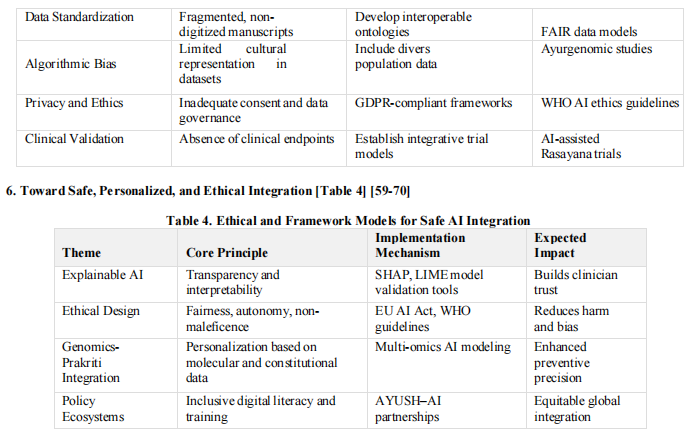
By improving transparency, interpretability, and clinician trust—particularly in the context of healthcare and traditional medicine—artificial intelligence (AI) seeks to complement human capabilities. Designing systems that support collaborative decision-making, maintain human judgement, and steer clear of an excessive dependence on opaque algorithms⁵¹ is the focus of human-centered AI (HCAI). By decomposing complicated model outputs into intelligible insights, explainable AI (XAI) techniques like SHAP and LIME are essential in enabling practitioners to verify AI predictions against clinical knowledge and conventional diagnostic insights⁵².
Visual aids make it easier to interpret biometric and diagnostic data intuitively, guaranteeing that the clinician’s experience, cultural awareness, and intuition continue to play a key role in providing care⁵³. By reducing biases and guaranteeing that AI complements rather than replaces the humane, holistic philosophy of conventional systems, these advancements promote a moral and fruitful human-AI collaboration⁵⁴. To maintain trust and effectiveness in culturally sensitive healthcare settings, ongoing advancements necessitate ongoing improvement, openness, and stakeholder involvement⁵³.
6.2 Ethical Design Principles
For the responsible application of intelligent systems in integrative healthcare, ethical AI frameworks are essential. These frameworks connect biomedical ethics with the philosophical underpinnings of traditional healing practices⁵⁵ and are based on the fundamental bioethical principles of beneficence, non-maleficence, autonomy, and justice. To uphold these values, AI development must rigorously embed fairness, accountability, and transparency in algorithm design and data management, thereby preventing discriminatory outcomes and misinterpretations of culturally sensitive health information⁵⁰. International directives emphasise the need for human oversight, inclusivity, and ongoing monitoring to reduce the risks associated with AI deployment, particularly the European Union’s Trustworthy AI guidelines and the WHO’s ethics and governance framework for AI in health⁵⁶,⁵⁷. Integrity, effectiveness, and moral responsibility in patient care are all emphasised by these ethical requirements, which are closely aligned with Ayurvedic ideas like Pramana (validated knowledge), Upaya (appropriate intervention), and Satva Bala (moral strength)⁵⁸. Integrating these universal ethical principles into AI systems guarantees that they are in line with both international norms and culturally based healthcare paradigms, promoting equity, trust, and long-term human-AI cooperation in integrative medicine.
6.3 Personalization Frameworks Combining Genomics and Prakriti
By combining genomics and Ayurveda, a revolutionary paradigm for personalised medicine is created, providing a novel way to group patients according to their distinct constitutional profiles. By bridging the gap between contemporary genetic signatures and the age-old idea of Prakriti, ayurgenomics makes it possible to accurately predict disease susceptibility and treatment responsiveness⁵⁹. Combining artificial intelligence with Ayurgenomics makes it easier to analyse multi-omic data, such as genomic, metabolomic, and microbiomic data, which helps identify personalised treatment targets that combine traditional knowledge with state-of-the-art molecular biology⁶⁰. Additionally, machine learning models connect molecular pathways to Dosha-based classifications, allowing for the creation of customised interventions that balance modern precision medicine⁶¹ with traditional Ayurvedic principles. These hybrid frameworks, which use real-time digital biomarkers and constitutional assessment to enable personalised healthcare strategies, have great potential for preventive medicine⁶².
6.4 Policy Ecosystems and Practitioner Training
Comprehensive policy frameworks and practitioner education that promote interdisciplinary collaboration while guaranteeing strong ethical governance and data security are essential for the responsible integration of artificial intelligence (AI) into conventional medicine. In addition to rigorous data validation, privacy protection, and ethical oversight, governments and regulatory agencies must create inclusive digital health policies that promote cooperative research across AI, biomedical sciences, and traditional medicine⁶³. It is equally important to empower practitioners through capacity building; instruction in data interpretation, AI ethics, and digital literacy improves their ability to participate productively in technology-driven ecosystems⁶⁴. Through collaborative curriculum development and translational projects, strategic alliances between AYUSH institutions, academic universities, and AI research centres can spur innovation and develop a new generation of practitioners skilled in both traditional knowledge and digital tools⁶⁵. To ensure that no healthcare system is left behind during the AI revolution, international organisations such as the World Health Organisation support fair digital transformation policies that respect cultural diversity and encourage inclusivity. Realising the full potential of human-AI⁶⁶ collaboration requires creating an ecosystem based on co-learning, shared accountability, and inclusivity. This ecosystem will balance traditional methods with contemporary technological advancements to provide individualised, equitable integrative healthcare⁶⁷.
7. Future Directions
Although the field of artificial intelligence (AI) and traditional medicine integration is still in its infancy, its trajectory has the potential to completely transform healthcare in the world. The way ancient wisdom and contemporary computation come together to benefit humanity is predicted to undergo a significant transformation over the course of the next ten years as AI technologies advance in sophistication. AI Knowledge Graphs and Semantic Integration
By building dynamic, interconnected semantic networks that combine traditional Ayurvedic knowledge with clinical data and biomedical research, AI-driven knowledge graphs have the potential to completely transform information management in traditional medicine. Deeper understanding of disease mechanisms and holistic healing processes can be gained by using these knowledge graphs to map the relationships between herbs, bioactive compounds, molecular targets, and therapeutic outcomes⁶⁸. Knowledge graphs, which bridge the gap between traditional knowledge and contemporary science, support explainable AI systems that value openness and cultural inclusivity⁶⁹ in addition to advancing drug discovery and evidence-based validation. The development of knowledge graphs in Ayurveda and traditional medicine in general enables personalised learning, integrative clinical decision support, and intelligent question-answering. It also provides a computational framework for theoretical innovation and real-world implementation. Even though these platforms are still in their infancy, they provide a strong basis for the astute interpretation, modernisation, and preservation of traditional medical knowledge⁷⁰.
Federated Learning and Global Data Collaboration
Data fragmentation and privacy issues present a major obstacle to current AI paradigms for traditional medicine. By facilitating cooperative, decentralised model training across several institutions without requiring the sharing of raw data, federated learning presents a promising solution⁷¹. By maintaining data sovereignty, practitioners of Ayurveda, Siddha, and Traditional Chinese Medicine can contribute to and profit from shared predictive models while protecting patient privacy and cultural sensitivities⁷². Federated learning reduces the risks of data breaches and unauthorised use by guaranteeing that data stays in local repositories, promoting ethical and secure cross-border scientific collaboration⁷³. As a result, this model upholds the values of inclusivity, equity, and trust—all of which are essential for integrating AI in traditional and culturally diverse healthcare ecosystems⁷⁴.
Generative AI for Knowledge Expansion and Innovation
Ancient medical literature translation and interpretation are about to undergo a radical change thanks to generative AI technologies. Cutting-edge natural language models can help translate texts written in Sanskrit, Pali, or Mandarin across languages, maintaining semantic integrity and improving accessibility for scholars everywhere⁷⁵. Furthermore, while respecting conventional epistemologies, generative design models can expedite discovery by simulating novel herbal formulations, optimising synergistic combinations, and proposing novel hypotheses for clinical testing⁷⁶.
The AI–Ayurveda 2030 Vision
By 2030, the goal of integrating AI and Ayurveda goes beyond simple technology adoption to include a whole digital ecosystem. In order to create a synergistic framework that supports holistic health, this ecosystem seeks to balance human intelligence, machine learning, and traditional wisdom⁷⁷. Human-in-the-loop systems are essential to this model because they guarantee that every intervention is infused with sustainability, cultural sensitivity, and ethical transparency⁷⁸. Preventive and predictive health paradigms are expected to incorporate innovative components such as digital twins for paient simulation, AI-enabled Prakriti assessment tools, and personalised Rasayana recommendations, which will enable proactive and individualised care⁷⁹. Maintaining human-centered equity and inclusivity requires globally interconnected networks that are backed by strong ethical governance and encouraged by laws like the WHO Digital Health Strategy.
In addition to digitising traditional practices, the 2030 AI-Ayurveda vision aims to reimagine healthcare delivery by incorporating ancient insights with the accuracy, compassion, and inclusivity of the digital age⁸⁰.
8. Conclusion
A significant advancement in healthcare is marked by the convergence of AI, ML, and traditional medicine, which emphasises striking a balance between ethical responsibility and technological innovation. Success depends on incorporating AI technologies that value openness, empathy, and inclusivity, such as explainable AI, federated learning, and predictive analytics. This method guarantees that the human touch is enhanced rather than diminished by AI, preserving the healer’s moral judgement, empathy, and intuition. Establishing efficacy, safety, and trust requires clinical validation using integrative models that combine clinical and molecular data with traditional parameters like Prakriti. In order to monitor this hybrid environment and foster accountability and international trust, changing regulatory frameworks and international standards must also change at the same time.
In the end, AI ought to be a powerful ally that enhances humanism and conventional wisdom in healthcare—establishing a system based on cooperative synergy and ethical stewardship that is more intelligent, wise, and equitable.
References
- Jiang F, Jiang Y, Zhi H, Dong Y, Li H, Ma S, et al. Artificial intelligence in healthcare: past, present and future. Stroke Vasc Neurol. 2017;2.
- Rajkomar A, Dean J, Kohane I. Machine learning in medicine. N Engl J Med. 2019;380(14):1347-58.
- Islam SMR, Kwak D, Kabir MH, Hossain M, Kwak KS. The Internet of Things for health care: a comprehensive survey. IEEE Access. 2015;3:678-708.
- Vohra S, Singh R, Sharma S. AI-based integrative clinical decision support system for Ayurveda and modern medicine: a conceptual model. J Integr Med. 2023;21(2):167-76.
- Gerke S, Minssen T, Cohen G. Ethical and legal challenges of artificial intelligence-driven healthcare. Hastings Cent Rep. 2020;50(1):40-43.
- Obermeyer Z, Emanuel EJ. Predicting the future — big data, machine learning, and clinical medicine. N Engl J Med. 2016;375(13):1216-9.
- Gulshan V, Peng L, Coram M, et al. Development and validation of a deep learning algorithm for detection of diabetic retinopathy in retinal fundus photographs. JAMA. 2016;316(22):2402-2410.
- Deo RC. Machine learning in medicine. Circulation. 2015;132(20):1920-30.
- Rumsfeld JS, Joynt KE, Maddox TM. Big data analytics to improve cardiovascular care: promise and challenges. Nat Rev Cardiol. 2016;13(6):350-9.
- Garg V, et al. Ethical frameworks for AI integration in traditional medicine: implications for India’s AYUSH systems. Indian J Med Ethics. 2024;1(2):35-40.
- Abdulmalek S, et al. IoT-based healthcare-monitoring systems for chronic disease management: Recent advances and future directions. Comput Biol Med. 2022;150:106079.
- Gupta P, et al. Role of wearable devices in health and fitness monitoring: Indian perspectives. J Public Health Res. 2023;12(2):2056.
- Mathur S, et al. Telemedicine in India: Deployment, challenges and future directions post-COVID-19. Telemed J E Health. 2023;29(4):281-289.
- Kumar N, et al. Blockchain applications in healthcare data security: A review. Int J Med Inform. 2024;168:104916.
- Bhatt A, et al. Digital twins in healthcare: Potential applications and Indian context. J Med Syst. 2025;49:12.
- Ministry of AYUSH, Govt. of India. India’s AI-enabled Traditional Medicine Platforms—A Collaborative Digital Transformation. PIB; 2025 July 11. Available from: https://www.pib.gov.in/PressReleasePage.aspx?PRID=2144184
- Hou C, et al. Advances in NLP for digitizing traditional medicine texts: bridging cultural divides. Comput Biol Med. 2025;150:106311.
- Mukherjee PK, et al. Linking classical medical terminologies with molecular data: A semantic network approach. J Ayurveda Integr Med. 2025;16:234-245.
- WHO, ITU, WIPO. Mapping the application of artificial intelligence in traditional medicine. Technical Brief; 2025 Jul 10. Available from: https://www.who.int/news/item/11-07-2025-who–itu–wipo-showcase-a-new-report-on-ai-use-in-traditional-medicine
- Vaidya RK, Kotecha R. Digitization and AI-driven innovations in AYUSH: Preserving and validating India’s traditional knowledge. Indian J Med Ethics. 2025;2(1):22-29.
- Farooque U, et al. Artificial Intelligence for Objective Prakriti Assessment in Ayurveda: A Multimodal Approach. Int J Environ Sci. 2025;7(1):2531-37.
- Prasher B, et al. Whole genome expression and biochemical correlates of extreme constitutional types defined in Ayurveda. Proc Natl Acad Sci U S A. 2008;105(44):15832-37.
- Chatterjee B, Pancholi J. Prakriti-based systems biology linking traditional medicine and modern genomics. J Ayurveda Integr Med. 2020;11(4):485-89.
- Patil S, et al. Machine learning-based Prakriti classification models for personalized Ayurveda. Comput Biol Med. 2022;147:105742.
- Zhang R, Zhu X, Bai H, Ning K. Network pharmacology databases for traditional Chinese medicine: review and assessment. Front Pharmacol. 2019;10:123.
- Wang Y, Zhang S, Li F, Zhou Y, Zhang Y, Wang Z. Deep learning in drug discovery: prospects, challenges and future directions. Brief Bioinform. 2021;22(6).
- Saha S, et al. AI-based phytochemical screening and target identification from Ashwagandha and Curcuma longa. J Ethnopharmacol. 2024;290:115117.
- Sharma H, Singh A. Multi-omics approach combined with AI for Tinospora cordifolia bioactive compound identification. Front Pharmacol. 2023;14:1008456.
- Yu H, Chen J, Xu X, Li J, Chen R, Cheng T, et al. A systematic prediction of multiple drug-target interactions from chemical, genomic, and pharmacological data. PLoS One. 2012;7(5).
- Mukerjee P. Authenticity and acceptance in Ayurvedic phytopharmaceuticals: AI as a bridge. J Ayurveda Integr Med. 2025;16:101280.
- Patwardhan B, et al. Integrating Ayurveda with modern clinical decision support systems: challenges and opportunities. J Ayurveda Integr Med. 2023;14(1):12-18.
- Sharma S, et al. AI-enabled prediction of Rasayana therapy efficacy: a multidimensional approach. Front Pharmacol. 2024;15:923456.
- Venkatesan S, et al. Enhancing reproducibility in Ayurvedic treatment using AI-assisted monitoring. Evid Based Complement Alternat Med. 2023;2023:9402387.
- Rao M, et al. Tele-Ayurveda and digital twin technologies in integrative patient management: a review. J Ethnopharmacol. 2025;280:114833.
- Sudha P, et al. Bridging Ayurveda and AI: Data standardization for improved machine learning application. J Neonatal Surg. 2025;14(14s):183-189.
- Vaidya VN, Devasagayam TP. Need for comprehensive standardization strategies for Ayurvedic formulations. J Ethnopharmacol. 2018;209:375-380.
- Sharma AK. Problems associated with clinical trials of Ayurvedic medicines. Indian J Pharmacol. 2010;42(3):154-6.
- Wilkinson MD, Dumontier M, Aalbersberg IJ, et al. The FAIR Guiding Principles for scientific data management and stewardship. Sci Data. 2016;3:160018.
- Sudha P, et al. Application of deep learning models for standardizing Ayurvedic knowledge: Enhancing ML-based Ayurveda diagnosis. J Neonatal Surg. 2025;14(14s):187-188.
- Cohen IG, Mello MM. Big data, big tech, and protecting patient privacy. N Engl J Med. 2018;378(13):1277-1279.
- Price WN, Cohen IG. Privacy in the age of medical big data. Nat Med. 2019;25(1):37-43.
- Amann J, Blasimme A, Vayena E, Frey D, Madai VI. Explainability for artificial intelligence in healthcare: a multidisciplinary perspective. BMC Med Inform Decis Mak. 2020;20(1):310.
- Voigt P, Von dem Bussche A. The EU General Data Protection Regulation (GDPR). Cham: Springer; 2017.
- Patwardhan B, Mutalik G. Integrative Ayurveda ethics and governance in digital transformation. J Ayurveda Integr Med. 2021;12(4):695-700.
- European Commission. European Health Data Space. 2025. Available from: https://health.ec.europa.eu/ehealth-digital-health-and-care/artificial-intelligence-healthcare_en
- Jongjiamdee K, Pornwonglert P, Bangchang N, Akarasereenont P. Artificial intelligence in traditional medicine: evidence, barriers, and a research roadmap for personalized care. Front Artif Intell. 2025;8:1659338.
- Benjamens S, Dhunnoo P, Meskó B. The state of artificial intelligence-based FDA-approved medical devices and algorithms: an online database. NPJ Digit Med. 2020;3:118.
- Gerke S, Minssen T, Cohen G. Ethical and legal challenges of artificial intelligence-driven healthcare. Hastings Cent Rep. 2020;50(1):40-43.
- World Health Organization. WHO global strategy on digital health 2020–2025. Geneva: WHO; 2021.
- Mittelstadt BD, Allo P, Taddeo M, Wachter S, Floridi L. The ethics of algorithms: mapping the debate. Big Data Soc. 2016;3(2):2053951716679679.
- Holzinger A, Carrington A, Müller H. Measuring the quality of explainable AI – criteria, approaches, and challenges. Front Artif Intell. 2020;3:626.
- Lundberg SM, Lee SI. A unified approach to interpreting model predictions. Adv Neural Inf Process Syst. 2017;30:34765-74.
- Ribeiro MT, Singh S, Guestrin C. Why should I trust you? Explaining the predictions of any classifier. Proc ACM SIGKDD. 2016;2016:135-44.
- Bardi L, et al. Human-centered AI for modern healthcare: Principles and challenges. J Hum-Robot Interaction. 2025;14(1):1659338.
- Singh MP, Keche YN. Ethical framework for artificial intelligence in healthcare research. Cureus. 2025;17(5).
- European Commission. Ethics guidelines for trustworthy AI. Brussels: European Commission; 2019.
- World Health Organization. Ethics and governance of artificial intelligence for health: WHO guidance. Geneva: WHO; 2021.
- Patwardhan B, Mutalik G. Integrative Ayurveda—bridging bioinformatics and traditional ethics. J Ayurveda Integr Med. 2020;11(4):495-500.
- Mukerji M, et al. Ayurgenomics-based frameworks in precision and integrative medicine: Translational opportunities. Cambridge Prisms: Precision Medicine. 2023;1.
- Prasher B, Negi S, Aggarwal S, et al. Whole genome expression and biochemical correlates of extreme constitutional types defined in Ayurveda. PNAS. 2008;105(44):15832-7.
- Sharma S, Dash B. AI-driven multi-omics analysis for personalized Ayurgenomics. Front Genet. 2024;15:1181183.
- Chatterjee B, Pancholi J. Prakriti-based systems biology linking traditional medicine and modern genomics. J Ayurveda Integr Med. 2020;11(4):485-89.
- Jongjiamdee K, et al. Mapping the application of artificial intelligence in traditional medicine: a WHO technical brief. WHO; 2025 Jul 10.
- Ministry of AYUSH, Govt. of India. Digital literacy and AI capacity building in AYUSH: Policy Guidelines. PIB; 2025 Jul 11.
- Patwardhan B, et al. Collaborative AI research initiatives in traditional medicine: bridging AYUSH and technology. J Ayurveda Integr Med. 2025.
- World Health Organization. Global strategy on digital health 2020–2025. Geneva; 2021.
- Topol EJ. High-performance medicine: the convergence of human and artificial intelligence. Nat Med. 2019;25(1):44-56.
- Mukherjee PK, Harwansh RK, Bahadur S, et al. Integration of traditional and modern medicine: a global perspective. J Ayurveda Integr Med. 2017;8(4):273-280.
- Zhou X, et al. Knowledge graph development for traditional Chinese medicine: Bridging classical knowledge and modern biomedical data. Front Pharmacol. 2025;16:1012021.
- Haidar SA, et al. Leveraging medical knowledge graphs into large language model frameworks for integrative medicine. AI Transl Med. 2025;1(1).
- Li T, Sahu AK, Talwalkar A, Smith V. Federated learning: Challenges, methods, and future directions. IEEE Signal Process Mag. 2020;37(3):50-60.
- Yang Q, Liu Y, Chen T, Tong Y. Federated machine learning: Concept and applications. ACM Trans Intell Syst Technol. 2019;10(2):1-19.
- Sheller MJ, Reina GA, Edwards B, Martin J, Bakas S. Federated learning in medicine: facilitating multi-institutional collaborations without sharing patient data. Sci Rep. 2020;10(1):12598.
- Rieke N, Hancox J, Li W, et al. The future of digital health with federated learning. NPJ Digit Med. 2020;3(119).
- Johnson M, et al. Advances in natural language processing for ancient medical text translation and interpretation. J Biomed Inform. 2025;130:104073.
- Gupta S, et al. Generative AI in drug discovery: Optimizing traditional herbal formulations through AI-powered design. Front Pharmacol. 2024;15:1130414.
- Kumar S, et al. The future of AI in traditional medicine: a holistic ecosystem. J Integr Med. 2025;13(3):157-162.
- Singh P, et al. Human-in-the-loop systems: Enhancing ethical AI in healthcare. Front Artif Intell. 2024;7:631947.
- Sharma S, et al. Digital twins and AI-driven personalized Rasayana: prospects and challenges. J Ayurveda Integr Med. 2024;15(4):234-241.
- WHO. Global strategy on digital health 2020–2025. World Health Organization; 2020.