ABSTRACT
Erectile dysfunction (ED) is a common complication of Type 2 Diabetes Mellitus (T2DM), often aggravated by dyslipidaemia through endothelial dysfunction and impaired penile blood flow. This case study adopts an investigative approach in a 41-year-old male with a five-year history of T2DM and dyslipidaemia, who presented with generalized weakness since diagnosis, erectile dysfunction, and premature ejaculation, and for the past two years. Baseline investigations revealed elevated fasting and postprandial blood glucose levels, marked hypertriglyceridemia (508 mg/dL), and an International Index of Erectile Function-15 (IIEF-15) score of 41, consistent with moderate erectile dysfunction and reduced sexual satisfaction. The patient received an integrated treatment regimen comprising Ayurvedic formulations aimed at glycaemic control, lipid regulation, and reproductive tissue rejuvenation (Tablet M Liv, Sugralo DM, Shilajatwadi Lauha, Gudmar Churna, and Sudarshan Churna), along with supervised and gradual tapering of allopathic medications. After three months of therapy, significant improvements were observed in metabolic and functional parameters, including fasting blood sugar (95 mg/dL), postprandial blood sugar (103 mg/dL), and triglyceride levels (291.2 mg/dL). Serum testosterone levels showed improvement, accompanied by a rise in the IIEF-15 score to 62, indicating near-normal erectile function. This case suggests the potential role of Ayurveda as a complementary therapeutic approach in the management of diabetes mellitus-induced erectile dysfunction (Madhumehaja Klaibya), with benefits extending to metabolic control and sexual function; however, conclusions are inherently limited by the single-case design and warrant validation through larger, controlled clinical studies.
INTRODUCTION:
Erectile dysfunction (ED) is defined as the persistent inability to attain or maintain a penile erection sufficient for satisfactory sexual performance.1 This is a prevalent problem among males with a history of diabetes mellitus (DM).2
Men with diabetes are approximately 3.5 times more likely to develop ED, with reported prevalence rates of 37.5% in type 1 DM and 66.3% in T2DM. The prevalence of DM-induced erectile dysfunction increases markedly with age, affecting 26.5% of diabetic men under 40 years and up to 91% of those over 70 years.3
Chronic hyperglycaemia harms the vascular, neurological, and endocrine systems, leading to T2DM with associated complications (ICD-10: E11.69), which are vital to male sexual function.4 Long-term high blood sugar levels can damage blood vessels (endothelial dysfunction), build up harmful sugar-related by-products called advanced glycation end products, increase cell-damaging oxidative stress, and impair nerve function. DM damages the peripheral and autonomic nerves. Peripheral neuropathy reduces sexual pleasure by disrupting central and peripheral neurovascular signalling involved in erectile function. It also impairs cavernosal smooth muscle relaxation and penile hemodynamics, worsening ED.5
2. Case Report:
- Patient information:
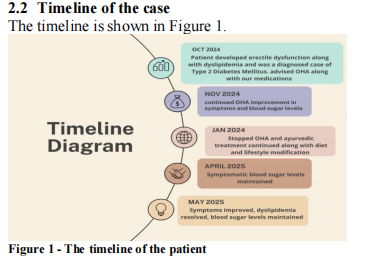
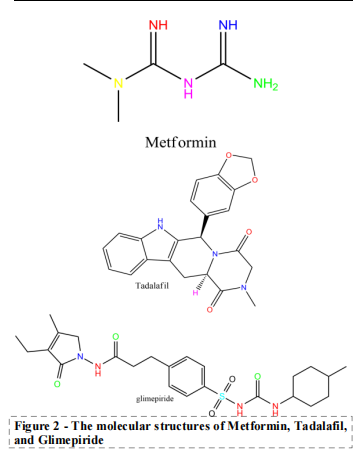
A 41-year-old male with a five-year history of T2DM and dyslipidemia presented to the Kayachikitsa outpatient department of All India Institute of Ayurveda, New Delhi on October 25, 2024. The patient had been diagnosed with T2DM five years earlier and reported generalized weakness since diagnosis, with sexual symptoms (IIEF – 15 score – 41) developing two years prior to presentation. The symptoms have escalated, resulting in significant physical discomfort and psychological distress, adversely affecting quality of life, leading him to pursue professional help. His persistent endocrine condition, particularly DM, appears to adversely affect his general health, vigor, and sexual function, thus diminishing his quality of life. The patient was on regular antidiabetic therapy; however, he had not sought prior medical consultation for his sexual dysfunction. At presentation, he was receiving metformin 500 mg once daily, glimepiride 2 mg once daily, and tadalafil 5 mg once daily.
In the course of a comprehensive examination, the patient’s body weight, heart rate, respiration rate, temperature, and blood pressure were all within normal limits. During the systemic examination, no significant findings were noted in the respiratory, gastrointestinal, or cardiovascular systems.
In the neurological examination, including cranial nerves, deep tendon reflexes, motor strength, and cerebellar function, was within normal limits. The absence of neurological deficits may suggest early-stage functional rather than advanced neurogenic erectile dysfunction.
1.1 Diagnostic Assessment:
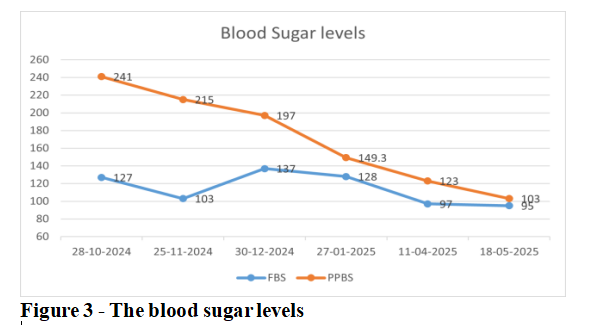
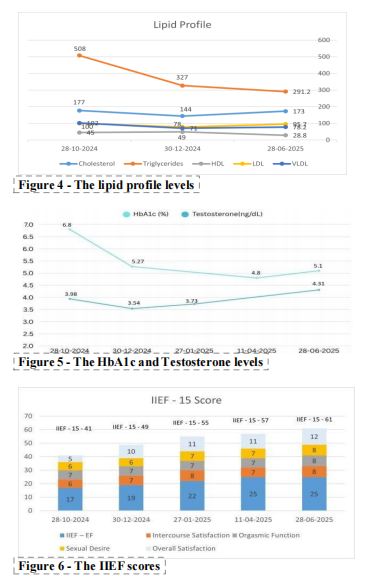
The diagnosis was established based on clinical evaluation and laboratory investigations. Blood reports revealed elevated fasting blood sugar (127 mg/dL), postprandial blood sugar (241 mg/dL), and glycated haemoglobin (HbA1c) of 6.8%, confirming impaired glycaemic control. Lipid profile assessment demonstrated total cholesterol of 177 mg/dL, serum triglycerides of 508 mg/dL, HDL cholesterol of 45 mg/dL, LDL cholesterol of 100 mg/dL, and VLDL cholesterol of 102 mg/dL, indicating significant Dyslipidaemia.
The patient exhibited clinical symptoms comprising polyphagia, polydipsia, calf muscle cramps during ambulation, exhaustion, lethargy, sweetness in the mouth, tartar on teeth, and comfort in bed.
The International Index of Erectile Function – 15 (IIEF-15) questionnaire indicated a baseline score of 41. Post-treatment, the score increased to 55, and at follow-up, it rose to 61, indicating an improvement in erectile function over time.
1.2 Therapeutic Intervention
Refer to Table 1 for details of therapeutic intervention.
Table No. 1 – Details of medicines used
| Days | Medicines advised | Allopathic Treatment |
| 1st day | Tablet M Liv 1 BD After Food | Metformin 250 mg ODGlimepiride 2 mg ODTadalafil (figure 2) 5 mg OD |
| 60th day | Tab M liv 1 BD After FoodTab Sugralo DM 1 BD After FoodGudmar Churna 3 gm BD After food.Sudarshana Churna 3 gm BD After food. | The withdrawal of allopathic medications was performed gradually to prevent glycaemic fluctuations, with regular clinical follow-up and laboratory monitoring of blood glucose, lipid parameters, and symptom progression to ensure safety and metabolic stability throughout the intervention period. |
| 90th day | Tab M liv 1 BD After FoodTab Sugralo DM 1 BD After FoodShilajatwadi lauha 250 mg After foodGudmar Churna 3 gm BD After food.Sudarshana Churna 3 gm BD After food. | |
| 120 days onwards | Patient left all medicines, was on diet and lifestyle modifications | |
2.5 Follow-up and Outcome.
The patient underwent evaluation for a period of three months. The patient continued to be followed thereafter. Their blood glucose levels, lipid profile, and serum testosterone levels were all maintained at stable levels, as seen in figures 3-6.
3. DISCUSSION:
Type 2 diabetes mellitus and dyslipidaemia are well-established, independent risk factors for erectile dysfunction. Dyslipidaemia significantly increases vascular risk and adversely affects erectile function, primarily through the progression of atherosclerosis and endothelial dysfunction. Impairment of endothelial integrity plays a central role in the pathogenesis of erectile dysfunction, as endothelial injury leads to reduced nitric oxide bioavailability, resulting in compromised cavernosal smooth muscle relaxation and penile blood flow.⁶ Given the multifactorial metabolic and vascular basis of diabetes mellitus-induced erectile dysfunction (DMED), an integrative therapeutic strategy was adopted, addressing both glycaemic control and associated metabolic derangements alongside symptomatic management.
Ayurvedic interventions traditionally aim to correct metabolic imbalance and support reproductive health. In the present case, the gradual withdrawal of oral hypoglycaemic agents and tadalafil after 60 days, while maintaining stable glycaemic parameters, suggests a possible supportive role of Ayurvedic therapies in sustaining glucose homeostasis. This metabolic stabilisation may correlate with the observed improvement in triglyceride levels, indicating a potential adjunctive benefit in dyslipidaemia management. These findings should be interpreted cautiously, as causal inferences cannot be drawn from a single-case observation.
From an Ayurvedic perspective, the therapeutic regimen was designed to balance Kapha and Vata Doshas, correct Medo-Dushti (lipid dysregulation), and enhance Agni (metabolic efficiency), thereby facilitating Dhatu-Poshana (tissue nourishment). The interventions may have contributed to Srotas-Shodhana, interpreted physiologically as improvement in microcirculation and metabolic transport, which is relevant to both lipid metabolism and erectile function. Tadalafil, a phosphodiesterase-5 inhibitor, was initially administered to provide symptomatic relief by enhancing nitric oxide-mediated vasodilation. However, the continued improvement in erectile function following its discontinuation suggests a sustained therapeutic response beyond transient phosphodiesterase-5 inhibition, possibly reflecting underlying metabolic and vascular modulation. The Ayurvedic medicines were selected to target both the core pathology of Madhumehaja Klaibya and its associated metabolic disturbances. Tab M Liv contains Kutki (Picrorhiza kurroa), Kirattikta (Swertia chirata), Kalmegh (Andrographis paniculata), and Kasni (Cichorium intybus), which possess Laghu-Ruksha (light and dry) qualities and Tikta-Kashaya (bitter-astringent) taste. These properties are traditionally associated with the enhancement of glucose and lipid metabolism. Ingredients such as Tamalaki (Phyllanthus niruri), Kakmachi (Solanum nigrum), and Bhringraj (Eclipta alba) may support hepatic function, modulate Pitta, and promote Rakta (blood) health. Haritaki (Terminalia chebula), Bhringraj, and Mandoor Bhasma exhibit Rasayana (rejuvenative) and Balya (strength-promoting) properties, which may contribute to improved circulation, tissue nourishment, and overall vitality. Collectively, these effects may support long-term metabolic regulation and recovery in DMED.⁷
Sugralo DM, with its Tikta-Kashaya rasa and Laghu-Ruksha guna, exhibits Kapha-Medohara (fat-reducing) and Rasayana properties, which may aid metabolic stabilisation and support glycaemic control while maintaining Vata balance relevant to sexual function.⁸ Shilajatwadi Lauha, used for its Rasayana action, has been reported to influence lipid metabolism and endocrine balance, and its potential anti-diabetic effects have been documented, which may support erectile function through metabolic and endocrine modulation, though receptor-level mechanisms require further validation.⁹
Gudmar Churna (Gymnema sylvestre) is known to improve glycaemic control through reduced intestinal glucose absorption, enhanced insulin secretion, and improved lipid metabolism, leading to reductions in cholesterol and triglyceride levels. Its antioxidant and vascular-supportive properties may indirectly contribute to improved sexual function in DMED.¹⁰ Sudarshan Churna, rich in Tikta Rasa, is traditionally used to correct Dhatu Agnimandya (diminished tissue metabolism), thereby enhancing metabolic efficiency. Its Deepana-Pachana (digestive stimulant) and Shoshana (drying) actions may aid in resolving metabolic disturbances and improving glycaemic regulation.¹¹ Overall, these observations suggest that a multimodal Ayurvedic approach may provide supportive benefits in the management of DMED by addressing metabolic, vascular, and functional components. However, these findings are inherently limited by the single-case design, and larger controlled studies are required to substantiate efficacy, elucidate mechanisms, and establish clinical generalisability.
4. CONCLUSION:
This case study highlights an association between T2DM with dyslipidaemia and impaired physical and mental well-being, along with ED. An integrative management approach combining Ayurvedic formulations with supervised conventional therapy yielded significant enhancements in glycaemic control, lipid profile, and sexual function. The gradual, supervised tapering of oral hypoglycaemic agents without loss of metabolic stability suggests a possible potential of Ayurveda to act as a complementary adjunct to conventional management in re-establishing systemic equilibrium. Although these findings are limited by the single-patient design and warrant validation through larger controlled studies.
FINANCIAL SUPPORT – Nil
CONFLICTS OF INTEREST – There are no conflicts of interest.
DECLARATION OF PARTICIPANT CONSENT –
The authors affirm possession of a patient consent form wherein the patient has authorized the publication of the case, images, and additional clinical information in the journal. The patient knows that even though every effort will be made to keep his identity a secret, it is not possible to guarantee anonymity. His name and initials will not be made public.
Declaration of Helsinki compliance:
This study adhered to the ethical standards established in the 1964 Declaration of Helsinki and its subsequent amendments or equivalent ethical guidelines.
Author contribution:
RRM: Conceptualization, Investigation, Supervision.
HS: Conceptualization, Project Administration, Writing Original Draft.
SKJ: Conceptualization, Resources, Editing.
SKB: Conceptualization, Investigation, Supervision.
JS: Conceptualization, Investigation, Supervision. SKT: Conceptualization, Project Administration, Writing Original Draft.
SC: Resources, Editing
PK: Resources, Editing.
RVG: Conceptualization, Editing.
VJ: Conceptualization, Editing.
RB: Conceptualization, Investigation
PG: Resources, Editing.
5. REFERENCES:
- European Association of Urology. European Association of Urology Guidelines on Sexual and Reproductive Health – Erectile Dysfunction. 2021 update. EAU; 2021.
- Binmoammar TA, Hassounah S, Alsaad S, Rawaf S, Majeed A. The impact of poor glycaemic control on the prevalence of erectile dysfunction in men with type 2 diabetes mellitus: a systematic review. JRSM Open. 2016;7(3). doi:10.1177/2054270415622602
- Wang H, Chang H, Sun D, Wang A, Yan B, Chung E. Therapeutic Challenges of Diabetes Mellitus-Related Erectile Dysfunction and The Potential Therapeutic Role of Medicinal Plants: A Narrative Review. Drug Des Devel Ther. 2025 Apr 24;19:3209-3223. doi: 10.2147/DDDT.S515403. PMID: 40297311; PMCID: PMC12036596.
- Muralikrishnan D, Tharakan B, Jeyabalan JB, Pathak S, Liu K, Nadar R, Moore T. Sexual stimulatory effects of Mucuna pruriens in rodents: An experiment following Ayurvedic perspective. J Ayurveda Integr Med. 2025;16(3):101130. doi:10.1016/j.jaim.2025.101130
- Sheenam Rani et al. A critical review on sudarshan churna. Int. J. Res. Ayurveda Pharm. 2022;13(5):128-132 http://dx.doi.org/10.7897/2277-4343.1305140 Kitaw TA, Abate BB, Tilahun BD, Yilak G, Rede MB, Getie A, Haile RN. The global burden of erectile dysfunction and its associated risk factors in diabetic patients: an umbrella reviews. BMC Public Health. 2024;24:2816. doi:10.1186/s12889-024-20300-7
- Chauhan S, Nath N, Tule V. Antidiabetic and antioxidant effects of Picrorhiza kurrooa rhizome extracts in diabetic rats. Indian Journal of Clinical Biochemistry. 2008 Jul;23(3):238-42.
- Pari L, Amarnath Satheesh M. Antidiabetic effect of Boerhavia diffusa: effect on serum and tissue lipids in experimental diabetes. Journal of medicinal food. 2004 Dec 1;7(4):472-6.
- Grover JK, Yadav S, Vats V. Medicinal plants of India with anti-diabetic potential. J Ethnopharmacol. 2002;81(1):81-100.
- Singh TR, Gupta LN, Kumar N, Kumar V. Anti-diabetic activity of ShilajatvadiLauha, an Ayurvedic traditional herbo-mineral formulation. Int J Health Allied Sci [serial online] 2016 [cited 2020 Aug 26];5:9-14. Available from: http://www.ijhas.in/text. asp?2016/5/1/9/173889
- El Shafey AAM, El-Ezabi MM, Seliem MME, Ouda HHM, Ibrahim DS. Effect of Gymnema sylvestre R. Br. leaves extract on certain physiological parameters of diabetic rats. J King Saud Univ Sci. 2013;25(2):135-41. doi:10.1016/j.jksus.2012.11.001.
- Sheenam Rani et al. A critical review on sudarshan churna. Int. J. Res. Ayurveda Pharm. 2022;13(5):128-132 http://dx.doi.org/10.7897/2277-4343.1305140