Abstract-
Background: Cancer cachexia is a multifactorial syndrome characterized by ongoing loss of skeletal muscle mass (with or without fat loss) that cannot be fully reversed by conventional nutritional support and leads to progressive functional impairment. It is common in advanced solid tumors and is associated with treatment intolerance, poor quality of life (QoL), and reduced survival.
Objective: To synthesize evidence on (i) nutritional and multimodal interventions for cancer cachexia across solid tumors, (ii) key inflammatory and metabolic pathways that drive anorexia and muscle wasting, and (iii) the potential role of Ayurveda-informed nutritional and supportive strategies as adjuncts to standard care.
Method: This structured narrative review integrates international consensus definitions and major guidelines with focused appraisal of clinical trials, systematic reviews, and widely used assessment/PRO instruments relevant to cachexia. Ayurveda-aligned interventions were included when clinical evidence plausibly mapped to cachexia domains (intake, inflammation, function, or QoL).
Result: Consensus and guidelines emphasize early screening, dietitian-led counseling, symptom control, and escalation to oral/enteral/parenteral support when appropriate. Inflammatory signaling (IL-6/STAT3, NF-κB), neuroendocrine dysregulation, and altered muscle protein turnover drive muscle loss and anorexia. Nutrition-only approaches often yield modest benefits; multimodal strategies integrating nutrition and exercise are increasingly prioritized. Pharmacologic agents (e.g., progestins, corticosteroids, ghrelin agonists) mainly improve appetite and weight and less consistently improve function. Ayurveda-informed adjuncts—anti-inflammatory phytochemicals (curcumin), adaptogens (Withania somnifera), and symptom-focused measures such as mucositis prevention—may help selected patients with intake and QoL, but cachexia-specific evidence is limited and safety/interaction assessments are essential.
Conclusion: Cachexia care should be initiated early and delivered as integrated, patient-centered multimodal management. Ayurveda-informed strategies can be positioned as adjuncts within evidence-based care pathways, with emphasis on standardization, monitoring, and clinically meaningful endpoints (function, QoL, body composition).
KEYWORDS: Cancer cachexia, solid tumors, nutrition, counseling, systemic inflammation, skeletal muscle, quality of life, Ayurveda, integrative oncology
I. Introduction
Cancer cachexia is a complex metabolic syndrome driven by tumor–host interactions and characterized by involuntary weight loss, anorexia, systemic inflammation, and progressive skeletal muscle wasting. The international consensus definition emphasizes that cachexia cannot be fully reversed by conventional nutritional support and is accompanied by functional impairment [1]. Cachexia occurs across many solid tumors and is particularly frequent in pancreatic, gastric/esophageal, lung, and head-and-neck cancers, where it contributes to symptom burden, treatment intolerance, and mortality [2,3]. Weight loss before or during cancer therapy is a long-recognized adverse prognostic factor [6,7].
Cachexia overlaps with, but is distinct from, malnutrition and sarcopenia. Malnutrition describes inadequate intake or assimilation leading to altered body composition and impaired function; GLIM criteria provide globally harmonized diagnostic constructs for malnutrition in adults [8,9]. Cachexia adds inflammation-driven metabolic dysregulation and catabolic signaling that promote muscle wasting despite increased calories. Therefore, cachexia management must move beyond calories to integrated care addressing symptoms, inflammation, and physical inactivity [3–5,11–13].
Ayurveda includes individualized dietary guidance and a pharmacopeia of botanicals traditionally used for weakness, appetite disturbances, and inflammatory conditions. Contemporary Ayurveda-oncology publications have increasingly framed these approaches as supportive adjuncts for palliative symptoms, Rasayana-based resilience, phytoconstituent-focused translational pathways, and survivorship-oriented care rather than as replacements for standard oncology treatment [35–42]. In cachexia care, Ayurveda-informed approaches should therefore be framed as adjuncts to evidence-based care: they may help optimize culturally acceptable nutrition, reduce treatment-related symptoms that limit intake, and potentially modulate inflammation and fatigue. This review synthesizes conventional and integrative evidence to support a practical, safety-first framework for adjunctive Ayurveda in cachexia across solid tumors.
2. Review Questions and Scope
This review addresses three questions:
- What inflammatory and metabolic pathways drive cancer cachexia across solid tumors and how do they relate to clinical outcomes?
- What do major guidelines recommend for screening, nutritional therapy, and multimodal management?
- Which Ayurveda-informed supportive and nutritional strategies have clinical evidence relevant to cachexia domains (intake, inflammation, function, QoL), and what safety and research gaps must be addressed?
- The focus is adults with solid tumors; pediatric cachexia and hematologic malignancies are not the primary focus.
3. Methods
This is a structured narrative review. Evidence was prioritized from (i) consensus definitions and clinical practice guidelines for cachexia and oncology nutrition [1–5,11–13]; (ii) systematic reviews and landmark trials on body composition assessment, pharmacologic agents, and supportive care [14–15,22–29]; (iii) clinical trials or controlled studies of Ayurveda-aligned botanicals and symptom-management interventions with potential to improve intake, inflammation-related symptoms, or QoL [30–34]; and (iv) published Ayurveda/integrative-oncology articles from the author’s publication list when they aligned with supportive care, Rasayana, phytoconstituent, palliative oncology, or survivorship domains [35–44]. Because cachexia-specific evidence for many Ayurveda-aligned agents remains limited, supportive-care trials (e.g., mucositis, fatigue) were included when they plausibly influence intake and QoL.
4. Conceptual Framework: From Inflammation to Function and QoL
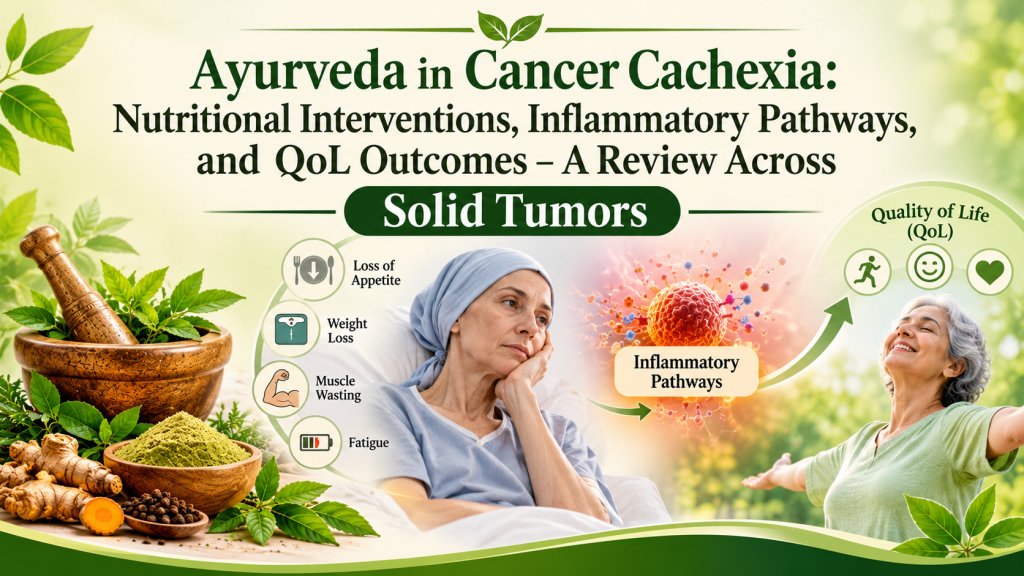
Cachexia can be conceptualized as a self-reinforcing cycle linking tumor-derived and host inflammatory signals to anorexia, altered metabolism, and progressive loss of muscle and function. Key domains include: (i) reduced intake due to anorexia and treatment-related symptoms; (ii) systemic inflammation (often reflected by CRP and cytokine profiles); (iii) altered muscle protein turnover (increased proteolysis and impaired anabolic signaling); (iv) neuroendocrine and appetite-regulation changes; and (v) reduced physical activity leading to further muscle loss. These domains translate into measurable outcomes such as weight change, CT-derived skeletal muscle index, handgrip strength, walking tests, and validated QoL instruments [1–3,14,19–21].
Table 1. Practical Assessment Domains and Outcome Measures in Cancer Cachexia
| Domain | Examples of assessments | Common endpoints |
|---|---|---|
| Nutritional intake & symptoms | Diet history; PG-SGA; symptom inventories; oral pain/swallowing assessment | Energy/protein intake; appetite NRS; PG-SGA score [10,11] |
| Body composition | Weight and % weight loss; BMI; CT at L3 for muscle area; DEXA/BIA when feasible | Skeletal muscle index; lean mass; fat mass; sarcopenic obesity risk [14,15] |
| Inflammation | CRP, albumin; mGPS | CRP change; mGPS category; association with outcomes [18] |
| Physical function | Handgrip strength; 6-minute walk test; sit-to-stand; performance status | Strength change; mobility; treatment tolerance [3–5] |
| QoL / PROs | EORTC QLQ-C30; FACT-G; cachexia-specific modules when feasible | Global QoL; appetite; fatigue; functional scales [19–21] |
5. Definitions, Staging, and Clinical Burden Across Solid Tumors
The consensus definition of cancer cachexia includes >5% weight loss over 6 months, or >2% weight loss in patients already depleted (BMI <20 kg/m² or sarcopenia) [1]. Guidelines recognize stages such as pre-cachexia and refractory cachexia, highlighting that earlier detection offers greater potential benefit [3].
Cachexia predicts reduced chemotherapy tolerance and poorer outcomes. Importantly, skeletal muscle depletion may coexist with normal or high BMI (sarcopenic obesity), which can increase treatment toxicity and mask risk if clinicians rely on weight alone [14,15].
6. Screening and Assessment in Routine Oncology Care
Guidelines recommend routine screening for weight change and nutrition-impact symptoms at diagnosis and at key treatment transitions [3–5,11–13]. PG-SGA is widely used to identify malnutrition risk and nutrition-impact symptoms in oncology practice [10].
Beyond weight/BMI, assessment should capture intake-limiting symptoms (nausea, early satiety, taste changes, mucositis, dysphagia, constipation), physical activity, and functional capacity. CT images acquired for staging can quantify skeletal muscle at L3 using validated methods, enabling identification of sarcopenia and longitudinal monitoring without additional radiation [14]. Body composition data can also inform risk of toxicity and help define clinically meaningful targets beyond weight alone [15].
Inflammatory status can be captured using CRP and albumin-based scores such as the mGPS, which correlate with outcomes and may help identify patients with prominent inflammation-driven catabolism [18].
7. Inflammatory and Metabolic Pathways Underpinning Cachexia
Cachexia reflects a network of dysregulated pathways rather than a single mechanism. Systemic inflammation is central: tumor and host immune cells release cytokines (e.g., IL-6, IL-1β, TNF) that activate signaling cascades (notably IL-6/STAT3 and NF-κB) promoting muscle catabolism and impairing appetite regulation [2,16,17]. Inflammatory signaling contributes to insulin resistance, altered lipid metabolism, and increased resting energy expenditure in subsets of patients.
At the muscle level, catabolic programs increase proteolysis through the ubiquitin–proteasome system and autophagy–lysosome pathways while suppressing anabolic pathways (e.g., IGF-1/AKT/mTOR) [2,16,17]. Mitochondrial dysfunction and oxidative stress can reduce muscle efficiency and contribute to fatigue, further limiting physical activity [16,17].
Reduced intake arises from cytokine effects on hypothalamic appetite circuits, altered ghrelin/leptin signaling, early satiety, dysgeusia, and treatment-related symptoms such as mucositis or nausea [3,16]. This mechanistic complexity explains why nutrition alone is often insufficient and supports guideline emphasis on multimodal interventions [3–5,11–13].
8. Guideline-Based Nutritional Management Across Solid Tumors
Across guidance documents, core management principles are consistent. ESPEN recommends dietitian-led counseling as first-line therapy with energy- and protein-enriched diets, management of nutrition-impact symptoms, and escalation to oral supplements, enteral feeding, or parenteral nutrition when clinically indicated and aligned with goals of care [11–13]. ASCO emphasizes early referral to dietitians and individualized counseling, and recommends cautious pharmacologic use mainly for appetite and symptom relief [4,5]. ESMO similarly prioritizes early screening and multimodal supportive care, acknowledging limited evidence for single-agent therapies [3].
Energy and protein targets should be individualized based on baseline intake, activity, and organ function. Typical guideline-based targets are approximately 25–30 kcal/kg/day and protein intakes around 1.2–1.5 g/kg/day, adjusted for renal/hepatic function and tolerance [11,12]. Practical steps include small frequent meals, energy-dense foods, texture modification, and proactive treatment of nausea, constipation, pain, anxiety, or oral symptoms that restrict intake.
9. Nutrition-Specific Interventions: What the Evidence Shows
9.1 Counseling and Oral Nutritional Supplements
Trials of oral nutritional supplements (ONS) show variable effects on weight and intake and generally modest effects on function. Benefits appear greatest when ONS are integrated with counseling and symptom management, and when adherence is actively supported.
9.2 Omega-3 Fatty Acids (EPA/DHA)
Omega-3 fatty acids have been studied as anti-inflammatory pharmaco-nutrients in cachexia. The evidence base is heterogeneous and omega-3 should not be viewed as a stand-alone cachexia therapy; however, omega-3-enriched supplements can be considered within individualized nutrition plans for selected patients, particularly where intake is low and inflammation is prominent [3,11,22].
9.3 Symptom-Targeted Supportive Care to Enable Intake
Because cachexia is frequently compounded by treatment-related symptoms, effective symptom control is itself a nutrition intervention. Oral mucositis and nausea are major barriers to intake in solid tumors (especially head-and-neck cancers). Supportive-care trials evaluating mucositis-preventive gargles/mouthwashes and anti-nausea adjuncts are therefore clinically relevant to cachexia trajectories (see Section 12) [32–34].
10. Multimodal Interventions: Nutrition Plus Physical Activity
Given the multifactorial biology of cachexia, multimodal programs aim to address intake, inflammation, and inactivity simultaneously. Guidelines endorse multimodal strategies conceptually, although implementation is constrained by disease burden and access to supportive care resources [3–5,11–13].
Exercise is mechanistically aligned with preserving function and countering anabolic resistance. Where feasible, individualized resistance and aerobic activity—scaled to performance status—should accompany nutrition counseling. In advanced disease, low-intensity supervised or home-based protocols may be required, prioritizing safety and adherence.
11. Pharmacologic Options: Benefits and Limitations
Pharmacologic therapy primarily targets appetite and short-term symptom relief. Guidelines recommend cautious, individualized use because benefits are often modest and adverse effects can be clinically significant [3–5].
11.1 Progestins (Megestrol Acetate)
Systematic reviews and Cochrane analyses show that megestrol acetate can improve appetite and may produce small weight gains, but does not reliably improve muscle mass or physical function, and increases risk of edema and thromboembolic events [25,26]. A large phase III RCT comparing megestrol acetate with dexamethasone and placebo confirmed appetite benefits with differing toxicity profiles [27,28].
11.2 Corticosteroids
Corticosteroids can improve appetite and well-being transiently (often 1–3 weeks), after which benefits wane and adverse effects (hyperglycemia, myopathy, immunosuppression) become limiting [3–5].
11.3 Ghrelin Receptor Agonists (Anamorelin)
Anamorelin improved lean body mass and some symptoms in advanced NSCLC with cachexia in phase 3 trials (ROMANA 1 and 2), while effects on functional endpoints (e.g., handgrip strength) were less consistent [23]. Safety extension data support tolerability in selected patients [24].
11.4 Emerging Approaches
ASCO guideline updates note growing interest in agents targeting nausea, inflammation, and anabolic pathways, but evidence for function and survival benefits remains limited [5].
12. Positioning Ayurveda-Informed Strategies Within Cachexia Care
Within evidence-based oncology, Ayurveda-informed strategies should be operationalized as supportive adjuncts integrated with guideline-concordant cachexia care. Recent Ayurveda/integrative-oncology publications from the author’s group support this positioning through palliative oncology, Rasayana, phytoconstituent, and survivorship frameworks [35–42]. Plausible contributions fall into three categories: (i) nutrition and appetite support using culturally acceptable, energy-dense, protein-adequate diets; (ii) symptom control that enables intake (mucositis, nausea, dyspepsia, constipation); (iii) anti-inflammatory/antioxidant and stress-modulating interventions that may influence fatigue and QoL.
Mechanistic plausibility is insufficient for routine use: standardization, dosing, interaction potential, and safety monitoring must be explicit. This safety-first stance is consistent with published integrative-oncology frameworks that emphasize complementary use, careful patient selection, and avoidance of substitution for standard cancer therapy [35,36,39,42]. The most defensible near-term application is symptom and intake support, where supportive-care trials provide clearer endpoints (e.g., mucositis severity, weight loss, treatment breaks) [32–34].
Table 2. Selected Ayurveda-Aligned Adjuncts with Clinical Evidence Relevant to Cachexia Domains
| Intervention | Clinical context | Study type | Key findings | Cachexia-domain relevance |
|---|---|---|---|---|
| Curcumin (Curcuma longa extract) | CACS (solid tumors) | Double-blind placebo-controlled RCT | Not superior to placebo for primary body composition endpoint; possible signal for slowing handgrip strength loss; feasible [30,44]. | Inflammation and function (exploratory) |
| Withania somnifera extract | Chemotherapy-related fatigue (breast cancer) | Clinical trial | Improved fatigue and QoL domains in a small trial [31]. | Fatigue/QoL; may indirectly support activity/intake |
| Triphala + povidone iodine gargle | Radiation-induced oral mucositis (head-and-neck cancer) | Randomized study | Delayed onset and reduced severity of mucositis; associated with less weight loss and fewer treatment breaks [32]. | Enables intake; reduces symptom burden |
| Alcohol-free mouthwashes (supportive care benchmark) | Radiation-induced oral mucositis | Randomized trial | Comparative benefit of mouthwash strategies for mucositis control [33]. | Context for mucositis-directed nutrition support |
| Ginger (Zingiber officinale) | Chemotherapy-induced nausea | Randomized double-blind trial | Reduced acute nausea in some settings [34]. | Enables intake via nausea reduction |
13. Evidence Synthesis: Ayurveda-Informed Interventions Across Cachexia Domains
13.1 Anti-inflammatory Phytochemicals and Pathway Alignment
Curcumin is widely studied for anti-inflammatory and antioxidant effects and is frequently discussed in integrative oncology. In a double-blind placebo-controlled phase IIa RCT in solid tumors with cancer anorexia–cachexia syndrome, curcumin was feasible but not superior to placebo for improving body composition; secondary signals suggested potential slowing of handgrip strength decline [30]. These data support further research using standardized formulations, pharmacokinetic characterization, and prespecified functional/QoL endpoints. Turmeric/curcumin-focused traditional-phytochemical discussions further support its inclusion as a research candidate, but not as a proven cachexia therapy [41,44].
Withania somnifera (ashwagandha) has clinical evidence for reducing chemotherapy-related fatigue and improving QoL in breast cancer patients [31]. The broader Rasayana literature frames such agents as adjuncts aimed at resilience, fatigue modulation, and treatment tolerance, but this requires cachexia-specific validation before routine recommendation [38,40]. Although not cachexia-specific, fatigue and reduced activity are core drivers of functional decline in cachexia, and such interventions may have indirect benefit when integrated with nutrition counseling and physical activity support.
13.2 Symptom Management Enabling Nutrition: Mucositis and Nausea
Oral mucositis is a major barrier to oral intake, particularly in head-and-neck cancers undergoing radiotherapy/chemoradiation. A randomized study evaluating Triphala combined with povidone iodine gargles reported delayed mucositis, reduced severity, less weight loss, and fewer treatment breaks compared with iodine alone [32]. Such outcomes are clinically meaningful because treatment breaks and weight loss can accelerate cachexia trajectories. Related published supportive-care experience in head-and-neck/parotid malignancy further reinforces the need to integrate symptom relief, functional support, and oncology supervision in Ayurveda-based adjunctive care [43].
Nausea and vomiting limit intake across solid tumors. Ginger has evidence as an adjunct for acute chemotherapy-induced nausea in randomized trials, with potential to support intake when used alongside guideline-based antiemetics [34].
13.3 Ayurveda-Informed Nutrition Counseling as Culturally Tailored Supportive Care
Opportunity is culturally tailored nutrition counseling that integrates patient food preferences (including traditional diets), improves palatability and tolerance, and supports adherence to energy/protein targets. The author’s published palliative-oncology and survivorship-oriented Ayurveda frameworks also support culturally aligned, symptom-focused supportive care that remains integrated with oncology supervision [36,42]. Such counseling is fully compatible with ESPEN/ASCO guidance and may improve feasibility in real-world settings [4,11,12].
14. Safety and Implementation Considerations
Integrative care must be safety-first. Herbal products vary in composition and quality, and potential interactions with chemotherapy, anticoagulants, corticosteroids, or targeted agents should be reviewed by the oncology team. This caution is particularly important when botanicals are discussed alongside chemotherapy, targeted therapy, immunotherapy, anticoagulants, or corticosteroids [37,39,41,42]. Patients should be advised to use reputable, quality-tested preparations, disclose all supplements, and discontinue products if adverse effects occur.
Because evidence for many botanicals in cachexia is limited, a pragmatic approach is to prioritize interventions with clearer supportive-care endpoints (e.g., mucositis prevention, nausea reduction) and to avoid replacing established anticancer therapies. Documentation of product name, dose, duration, and monitoring plan is essential, particularly in patients with hepatic or renal impairment or high thrombotic risk.
15. Research Gaps and Future Directions
Endpoint heterogeneity remains a major barrier in cachexia research. A systematic review highlighted wide variability in appetite and dietary intake endpoints, limiting comparability across trials [29]. Future studies should prioritize clinically meaningful endpoints: CT-based muscle index, validated physical function tests, and cachexia-relevant QoL modules alongside survival and treatment tolerance.
For Ayurveda-informed interventions, priorities include: standardization of formulations; pharmacokinetic and interaction studies relevant to commonly used anticancer regimens; and cachexia-focused RCTs that enroll earlier-stage cachexia and integrate interventions within multimodal care pathways rather than evaluating botanicals as stand-alone solutions. Author-group publications on Rasayana, phytoconstituents, supportive oncology, and survivorship provide a starting platform for hypothesis generation, but they should be followed by cachexia-specific clinical validation [37-44].
16. Conclusion
Cancer cachexia is a high-burden syndrome across solid tumors driven by intertwined inflammatory, metabolic, and behavioral pathways. Guidelines support early screening and integrated, multimodal management combining symptom control, dietitian-led nutrition counseling, and appropriately scaled physical activity. Pharmacologic agents can provide appetite benefits but rarely restore muscle function.
Ayurveda-informed strategies can be positioned as adjuncts within this evidence-based framework—particularly for culturally tailored nutrition counseling and symptom-focused measures that enable intake and improve QoL. Consistent with recent Ayurveda-oncology frameworks, such approaches should remain standardized, supervised, and tested against clinically meaningful endpoints rather than promoted as stand-alone anticachexia therapy.
References
1. Gandhi MY, Prasad SB, Kumar V, Soni H, Rawat H, Mishra SK, Grewal J, Singh S, Charde V, Gupta A, Jha SK. Quantification of phytochemicals and metal ions as well as the determination of volatile compounds, antioxidant, antimicrobial and antacid activities of the Mimosa pudica L. leaf: Exploration of neglected and under-utilized part. Chemistry & biodiversity. 2023 Oct;20(10):e202301049.
2. Shamim, Ali S, Ali T, Sharma H, Kishor BN, Jha SK. Recent advances in monodisperse gold nanoparticle delivery, synthesis, and emerging applications in cancer therapy. Plasmonics. 2025 Sep;20(9):7121-41.
3. Gandhi Y, Kumar V, Singh G, Prasad SB, Mishra SK, Soni H, Rawat H, Singh S, Charde V, Gupta A, Dhanjal DS. Chemoprofiling and medicinal potential of underutilized leaves of Cyperus scariosus. Scientific Reports. 2024 Mar 27;14(1):7263.
4. Jha SK, Islam M, Kumar R, Rana L, Saifi MA, Ali S, Alam N. Evaluation of Vernonia amygdalina del. containing phyto constituents a medicinal plant compound as new potential inhibitors of Monkey pox virus using molecular docking analysis. World J Adv Res Rev. 2023;17(1):1112-22.
5. Singh A, Jha SK, Dwivedi PC, Srivastava U, Pal A. Revolutionizing healthcare: Integrating electronics, AI, traditional, and conventional methods. World J Adv Res Rev. 2024;23:2426-34.
6. Lohiya GV. Conjunctivitis in unusual populations: A review of rare cases and challenges in diagnosis and management. World Journal of Advanced Research and Reviews. 2023 Sep 29.
7. Lohiya GV. Conjunctivitis in unusual populations: A review of rare cases and challenges in diagnosis and management. World Journal of Advanced Research and Reviews. 2023 Sep 29.
8. Doshi R, Lohiya G. Synthesis, in-silico design and spectral characterization, elucidation of Cannabis sativa L. cannabaceae containing phytoconstitutents demonstrating novel therapeutic efficacy against epilepsy.
9. Jha SK, Mishra AK, Kumar V, Dane G, Kumari S, Charde V, Saddam M, Jagtap C, Chuhan S, Chaturvedi SK, Narasimhaji CV. Ecological and Behavioral Impacts of COVID-19 on Human Existence and potential preventive measures through traditional and alternative medicine–A Narrative review. Pharmacological Research-Natural Products. 2024 Jun 1;3:100042.
10. Sonkar V, Jha SK, Tiwari S, Akarsh A, Priya S, Sharan P, Sharan A. Characterization and explanation of the soil fertility state of Sakaldiha block in the Chandauli District of Uttar Pradesh’s industrial area. World J Adv Res Rev. 2023;18:063-72.
11. Singh NK, Sengar AS, Jha SK. A review of Ayurvedic measures for preventing COVID-19 and promoting health during pregnancy. Journal of Indian System of Medicine. 2024 Apr 1;12(2):61-5.
12. Chauhan S, Jha SK, Tamta A, Sharma V, Kumar C, Lohiya G, Gadgul A, Satpute K, Chalmale N, Chauhan P, Chaturvedi SK. Descriptive analytical study based on profiling, morphological, pomological and pharmacological traits to identify the genotypes of the promising mango Mangifera indica L. World J Adv Res Rev. 2023;19:1544-53.
13. Khan R, Maheshwari D, Chauhan S, Lohiya GV, Kumar C, Antil I, Sharma S, Garg Y, Chauhan P, Jha SK. Exploring the potential therapeutic value of Solanum lycopersicum L. phytoconstituents for Parkinson’s disease through molecular docking analysis. World J Adv Res Rev. 2023;20:488-501.
14. Jha SK, Singh N, Shanker OR, Antil I, Baghel JS, Huddar V, Tripathi R. A review on integrative approaches in oncology: bridging ayurvedic medicine and modern cancer therapeutics. Frontiers in Natural Products. 2025 Aug 22;4:1635197.
15. Tamta A, Jha SK. Screening of Germplasms and Population Dynamics of Major Insect Pests of Spring Green Gram Vigna radiata (Linn.) (Doctoral dissertation, Doctoral Dissertation, Doctoral Dissertation, GB Pant University of Agriculture and Technology, Pantnagar-263145 (Uttarakhand)).
16. Mehta V, Zargar AA, Attri P, Jha SK. Bagging the role of herbal drugs in the management of cervical cancer. Ayush Journal of Integrative Oncology. 2025 Jan 1;2(1):35-43.
17. Trivedi LM, Saxena S, Sharma S, Beniwal M, Jha SK, Rao AK, Khan MR. Characterization, profiling, and molecular docking analysis of phytochemicals derived from Daucus carota for evaluating their potential role in cardiovascular disease (CVD) assessment. World J Adv Res Rev. 2023;20:159-75.
18. Patel S, Singh S, Gupta AK, Dalimbe AY, Muthoju SM, Pawar AR, Jha SK, Gupta AJ. Ayurveda and common Indian spices: A natural alternative for cancer therapy. Ayush Journal of Integrative Oncology. 2025 Apr 1;2(2):91-102.
19. Jha SK, Gupta A, Huddar VG. Botanical breakthroughs: The growing impact of plant-derived compounds in cancer treatment. Ayush Journal of Integrative Oncology. 2025 Apr 1;2(2):62-7.
20. Kumar R, Verma H, Ali M, Midha T, Kumar D, Jha SK. Review of mitigating cancer risk through Ayurvedic practices: A holistic approach to combating sedentarism. Ayush Journal of Integrative Oncology. 2025 Apr 1;2(2):86-90.
21. Sharma A, Jha SK, Huddar VG. Integrative role of Ayurvedic phytochemicals in cancer treatment: Targeting signaling pathways, boosting chemosensitivity, and utilizing traditional therapeutics. Ayush Journal of Integrative Oncology. 2025 Apr 1;2(2):77-85.
22. Jha SK, Charde V, Kumar V, Narasimhaji CV. Vitiligo treatment with natural bioactive: A narrative review. The Natural Products Journal. 2026 Mar;16(3):e22103155337960.
23. Chawla S, Gupta R, Jha SK, Kashid S, Jha KT. Stereoisomerism in Chemistry and Drug Development: Optical, Geometrical, and Conformational Isomers. Medicinal Chemistry (Shariqah (United Arab Emirates)). 2025.
24. Shrivastav S, Tyagi R, Singh M, Jha S. The effectiveness of curcumin on dysmenorrhea. International Journal of Medical Sciences and Pharma Research. 2022 Dec 15;8(4):8-12.
25. Gupta AJ, Huddar VG, Jha SK, Soni U. Traditional wisdom in modern oncology: Ayurvedic pain relief and supportive care. Ayush Journal of Integrative Oncology. 2025 Jul 1;2(3):178-87.
26. Chauhan S, Jha SK, Huddar VG, Ahlawat A, Sharma S, Tripathi A, Khurana B, Antil I, Soni U. Targeting cancer at the molecular level: A biochemical and medicinal chemistry approach. Ayush Journal of Integrative Oncology. 2025 Jul 1;2(3):169-77.
27. Antil I, Bangarwa S, Jha SK, Gupta AJ, Soni U, Huddar VG, Tripathi A, Sharma S. Exploring the chemopreventive and anticancer effects of green tea. Ayush Journal of Integrative Oncology. 2025 Jul 1;2(3):158-68.
28. Attri P, Zargar AA, Mehta V, Mushtaq SU, Jha SK, Soni U. Genetic basis of cancer: Harnessing natural remedies for therapeutic potential. Ayush Journal of Integrative Oncology. 2025 Jul 1;2(3):188-94.
29. Zargar AA, Mehta V, Gupta R, Bhandari K, Sharma MC, Balaji P, Jha SK. Incretin hormones: Mechanisms, therapeutic implications, and future directions in glucose regulation and diabetes management. Curr Proteom. 2025 Apr 1;22:100014.
30. Dhiman S, Thakur N, Dwivedi PC, Pande P, Jha SK, Lohiya GV. Phytochemicals: investigating bioactive compounds for antifungal uses and quality issues in functional foods and therapeutics.
31. Sandrepogu J, Khandelwal P, Tiwari SK, Jha SK, Chauhan S, Sharma H, Goel P. A holistic paradigm for cancer care: Merging Ayurveda with contemporary oncology. Ayush Journal of Integrative Oncology. 2025 Oct 1;2(4):254-61.
32. Sharma S, Yadav C, Chawla S, Jha SK. Beyond chemotherapy: Exploring the potential of phytomedicine in oncology. Ayush Journal of Integrative Oncology. 2025 Jul 1;2(3):133-45.
33. Ahlawat A, Chauhan S, Antil I, Jha SK, Huddar VG. Examining the impact of the microbiome on cancer immunotherapy outcomes: A review. Ayush Journal of Integrative Oncology. 2025 Jul 1;2(3):118-24.
34. Shamim PT, Khatri N, Yadav AK, Mishra B, Khan MR, Behera SK, Jha SK. Role of human chorionic gonadotropin in frozen-thawed embryo transfer cycles for secretory transformation: a narrative. Eur Chem Bull. 2023;12(8):5477-93.
35. Sharma H, Mahto RR, Jha SK, Chauhan S, Khandelwal P, Tiwari SK. Rasayana-Based Adjuvant Strategies in Cancer Care: An Ayurvedic–Oncologic Perspective. Iranian Journal of Blood and Cancer. 2025 Feb 30;17(4):35-68.
36. Raj H, Jha SK, Negi M, Khandelwal P, Chauhan S, Sharma H, Goel P, Tiwari SK. Integrative oncology: A comprehensive comparative analysis of herbal and allopathic medicine in cancer treatment. Current Pharmaceutical Research (CPR). 2025;1:427-5.
37. Kumar C, Chauhan P, Chauhan S, Jha SK, Lohiya G. Phyto-Pharmacognostic Experimental Study of Epimedium Sagittatum and Gloriosa Superba L. for the Treatment of Hypogonadism. Int J Innov Sci Res Technol. 2023;8(6):254-60.
38. Raj H, Sharma S, Tripathi A, Huddar VG, Jha SK. Herbal medicine in cancer therapy: A comprehensive review of phytoconstituents, mechanisms, and clinical applications. Ayush Journal of Integrative Oncology. 2025 Jul 1;2(3):146-57.
39. Antil I, Jha SK, Negi M, Sharma H, Tiwari SK. Baicalein from Scutellaria baicalensis as natural therapeutic agent for glioblastoma. Current Pharmaceutical Research (CPR). 2025;1:411-26.
40. Mandal P, Kumar J, Bora D, Hashmi SA, Tiwari M, Gupta R, Behera AK, Amoli M, Singh J, Jha SK. Literature review on forensic implications of illicit drug metabolism: A medicinal chemistry perspective. Journal of Forensic and Legal Medicine. 2026 Apr 24:103158.
41. Bansal KS, Mahto RR, Soni H, Tiwari SK, Goel P, Sharma H, Vishwakarma N, Jha SK, Chauhan S, Khandelwal P. Ayurveda in Renal Cell Carcinoma: A Narrative Review of Supportive Care During Targeted Therapy and Immunotherapy.
42. Bansal KS, Mahto RR, Soni H, Tiwari SK, Goel P, Sharma H, Vishwakarma N, Jha SK, Chauhan S, Khandelwal P. Ayurveda in Renal Cell Carcinoma: A Narrative Review of Supportive Care During Targeted Therapy and Immunotherapy.
43. Mahto RR, Bansal KS, Soni H, Tiwari SK, Sandrepogu J, Bhatted SK, Jha SK, Sharma H, Khandelwal P. Efficacy of Vidangadi Loha and Phalatrikadi Ghanavati with and without the prior administration of Virechana Karma in Madhumeha (Obese Diabetic): A Randomised Controlled Trial.
44. Pandey K, Negi M, Tiwari A, Tiwari SK, Sharma H. Turmeric: The golden shield of nature that can treat cancers. Journal of Health Synapse (JHS). 2026;1(1):1-8.